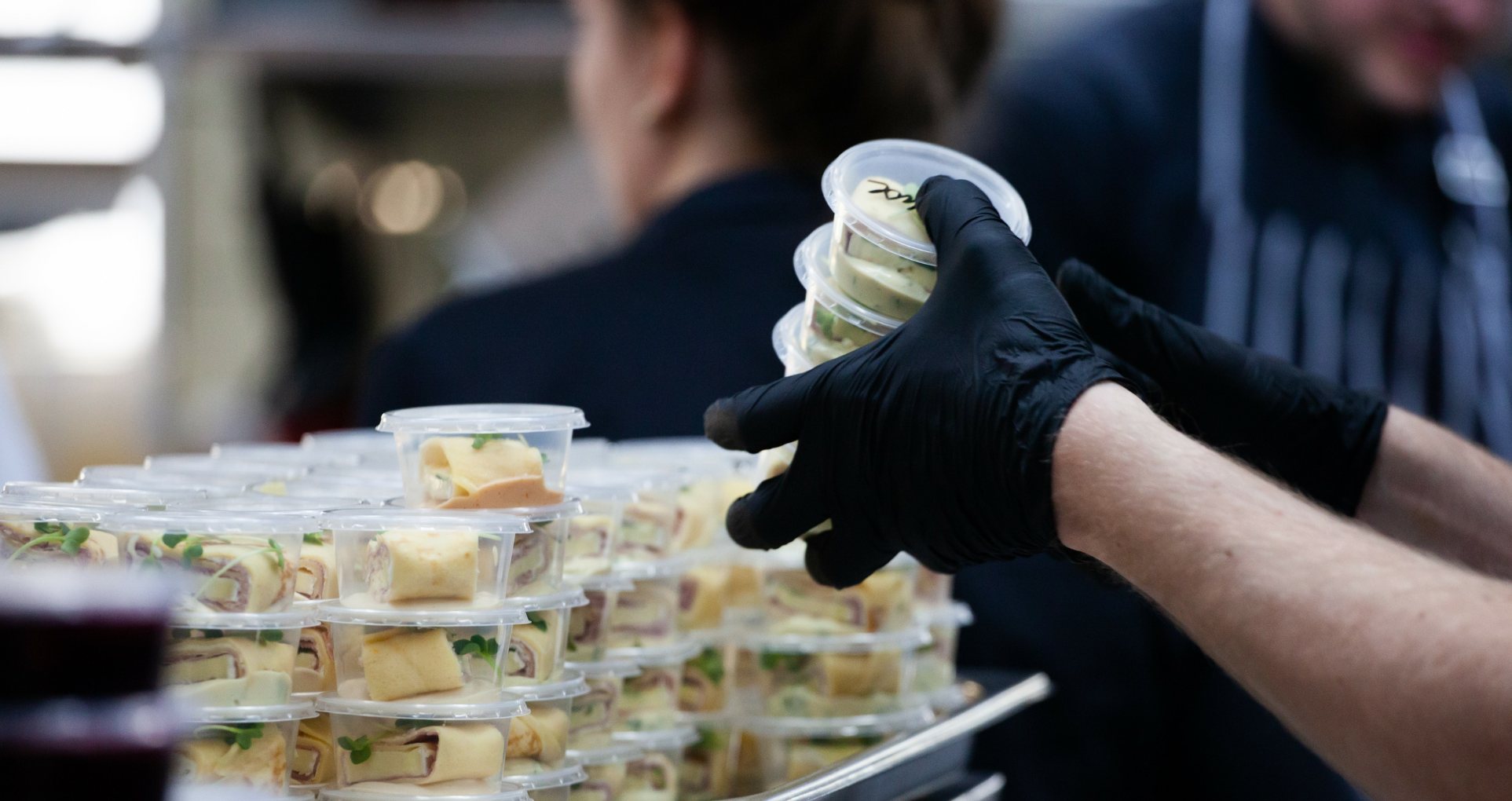
What Role Does AI Play in Reducing Food Waste?
Food waste management has always been a critical problem to solve in the hospitality industry. With AI food waste tracking, you can easily create a system that’s sustainable, profitable, and efficient. Let’s understand exactly how it impacts your business through this article.
Author
The food and hospitality industry is notorious for incurring food wastage at a large scale. This eventually leads to losses and spoilage ending up at landfills. We're living in an era where preserving food and using it judiciously is crucial. This is a space where you can actually change things around that affect your business and environment positively. While there are several ways to do this, restaurant sustainability AI is the new thing everyone's been talking about.
You don't have to choose between sustainability and profitability. AI can help you predict demand more accurately, tighten ordering, keep portions consistent, and understand the root causes of waste. It can also support you in complying with new recycling and food-waste separation laws rolling out across the UK. AI may not be a silver bullet, but when combined with the right POS system, it can help UK restaurants tackle common waste drivers like over-ordering and inconsistent portions to lost tickets and refires. The goal is simple: track where waste occurs, create more confidence in par levels, and support systems that bring in better margins. When you use AI, it analyses your food creation and delivery patterns and keeps you in check before the wastage even happens. You just have to maintain accuracy when it providing these AI tools data.
Jump to your preferred section |
Compliance and Legal Guidelines for Food Waste Management in the UK |
Why AI Food Waste Tracking Matters Now
It's a common understanding in the restaurant industry that waste equals lost profit. WRAP estimates that food waste costs UK hospitality approximately £3.2 billion a year, about £10,000 per outlet. Imagine the kind of margins that are currently going straight to the bin. If, as a restaurant owner, you don't take prudent measures, you could end up making more losses than you accounted for.
Across the UK, separating food waste is quickly becoming the norm. In fact, in some regions, it already is. England's new rules take effect soon. Wales and Scotland are already enforcing strict separation requirements, and Northern Ireland has had similar regulations in place for nearly a decade. When creating a waste management process, read about the specific legal requirements for each nation later in this article. Different areas need different kinds of care when it comes to not just managing,but also disposing of food waste, as it affects sustainability.
But the message is loud and clear: separating and managing food waste responsibly isn't just a best practice anymore; it's the new standard. As a restaurant owner, if you're ahead of the curve with all your compliance in place, you're showing your diners how much you care about the food, service, experience, and even sustainability. In fact, consumers are now willing to pay a premium price if a restaurant has sustainable systems integrated into their business.
Restaurant Operations Manual Template
Use this free Restaurant Operations Manual Template to easily outline all of your operating procedures and make day-to-day operations as consistent as possible.

How Does AI Actually Help with Reducing Food Waste
It wouldn't be a fair evaluation to say that food waste only occurs at the supply level. It happens at consumer levels, too. Albeit, that's harder to track than the one at the source. Whether you're a new restaurateur or have been in the industry for long, you need to create a waste management system that's sustainable and profitable. With the integration of AI, all you have to do is train it on restaurant data and get the appropriate measures to implement. Here are a few of them.
1. Removes the guesswork out of prep
When you own a restaurant, the most obvious fear you have is not storing adequate inventory at all times. You try to be on the safer side of things and end up storing goods that you don't need to. Thus, impacting your overall profits. This is where AI can help. It takes the guesswork out of prep by analysing your past sales, day-parts, local events, and even the weather. You get to know how busy your restaurant can get and automatically generate accurate prep lists and order guides. That means you're making enough and not overstocking or over-prepping. With AI food waste tracking software, you know where you need to manage things better to cut down spoilage and unnecessary spend.
Tools to consider include AI waste-vision systems like Winnow that recognise and quantify what you bin. See how Winnow Vision harnesses the power of machine learning to improve food management below.
2. Recipe management and portion control
It is of utmost importance that you as a restaurateur have a set recipe for each dish so you know where your inventory is being used. Recipe management and portion control tools keep every dish consistent and your margins protected. When you digitise recipes, yields, and plating weights and link them directly to your POS, every time a guest adds or removes an ingredient, the system automatically adjusts the ingredient usage. The result? Managed costs, reduced plate leftovers, and no need for remakes either.
If you want to sell something that requires more inventory, you can treat it like a special and sell it on specific days or times of day. It could even be on a first-come, first-serve basis so you're not left figuring out things last minute. When you link up your AI tools to your POS system, it actually syncs with your restaurant data and highlights trends you might've missed. This might even help you sell food quicker and rework your storage system.
3. Real-time inventory tracking
When you're using real-time inventory tracking with days-on-hand alerts, you get the benefit of using up your oldest stock first. The system can flag ingredients that are close to their shelf life and even suggest adding them to a special or limited-time offer, helping you sell through before anything goes to waste.
You won't be scrambling to see who ordered what and when. You can even track what dish doesn't get finished when you send it to customers and accordingly manage portion sizes. Everything gets recorded in your POS system. In fact, you can even notify your customers before they're ready to dine with you on your food availability, so everyone has a relaxing experience.
4. Integrated KDS for efficiency
When you have an integrated Kitchen Display System (KDS) with built-in waste logging, you can clearly see where all the major blocks are: front of house or back of house. It removes lost tickets and duplicate orders while capturing every bit of waste. AI waste tracking software calculates what, how, and why of wastage. It goes deeper to understand whether that's a spill, spoilage, refire, or over-prep. It even calculates the cost in pounds, giving you the visibility to fix the process, not just the plate.
It can also easily highlight whether dishes need modifications, specific temperature instructions, or allergen information. Fewer refires means less waste and more covers per hour.
AI Food Waste Tracking Simplified
No matter the size of your restaurant, you can still make money from it if you adopt different food waste tracking methods. You don't need to know everything perfectly; just enough to understand that it impacts your time, money, and energy. Food and inventory hold an important space in the working of the establishment. So it's essential you're mindful about managing it. AI tools are just one of the starting points for you to track the waste.
Step 1 and 2 – Establish your baseline: Run a seven-day waste audit segmented by spoilage, over-prep, spillage, and refires. Keep an elaborate waste journal and enable the POS or KDS waste tracker with reasons and quantities. Map recipes to ingredients, set standard portions, and switch to FIFO storage with date labelling. Remember every correctly labelled product is going to save your efforts in the future.
Step 3 – Forecast and pars: With AI, you can forecast and analyse orders and inventory in different ways. It can be a routine system set shift-wise and station-wise. When you tie in the supplier narrative, you need to be mindful of how much information you're disclosing. When it comes to AI-assisted pars, the AI knows where the problem area is and how to relax. In the meantime, the AI is supposed to add set alerts for items nearing end-of-life. Negotiate tighter drops on fast movers and smaller case sizes for slow movers.
Step 4 – Fix the leaks: Use the waste log to target your top three issues, such as over-portioning on chips, duplicate fires, or salad spoilage on Mondays. Update recipes, station guides, and KDS routing accordingly. Yes, every small expense accumulates and turns into a larger expenditure for your audience.
Step 5 – Menu and operations alignment: When you keep a tab on your SKUs, you'll understand what needs to be removed or updated. Maybe some ingredients don't get used at all because of what works, or if there's more wastage after using a certain product. This is where you evaluate what can stay and what has to go. Remove low-velocity SKUs inflating days-on-hand. Create one multi-use prep (e.g., roast broccoli for salad, side, and flatbread). Add allergen and preferences prompts at the start of an order to cut refires.
Step 5 – Lock in the details and report: If you're keeping a track of things without doing anything about it, you're not planning correctly. For best results, review days on hand, waste in pounds, refire percentage, and prep variance versus forecast. Create a one-page report and share it with the owners or the CFO, and cross-check you're meeting the England, Wales, or Scotland separation rules.
Compliance and Legal Guidelines for Food Waste Management in the UK
Restaurants in the UK have already started adopting separate food-waste collection systems as mandatory, even if it's yet to be applied across all of the UK. Food vs. other waste need to be labelled and disposed of separately. When you're conducting an operational induction section, remember to train your teams, add clearly labelled bins in back-of-house and prep areas, and make sure your waste-collection contract includes food-waste separation.
In England, new 'Simpler Recycling' rules mean most businesses must arrange separate food-waste collections by 31 March 2025 (with microbusinesses given until 2027). In Wales, the Workplace Recycling Regulations came into force in April 2024, requiring all hospitality businesses producing over 5 kg of food waste per week to separate it for collection. In Scotland, it's already illegal for food businesses producing 5 kg or more of food waste per week to dispose of it to sewers. Offences and fines apply under SEPA guidance. In Northern Ireland, the Food Waste Regulations (NI) 2015 already require businesses that generate food waste to separate it, store it securely, and arrange for regular collection by an authorised waste carrier.
Sewer disposal is prohibited, and fines can be issued for non-compliance. This is general guidance, so always confirm details with your local council or waste collector. Remember that when you comply with these regulatory bodies, you're helping them build a better future.
Additional Tools for Food Waste Management
If you're looking for an affordable place to start, WRAP's Guardians of Grub campaign offers free hospitality waste-reduction toolkits, calculators, and webinars. The 15-minute Cost Saving Skills Course provides practical steps and checklists. This is something you could integrate into your operations training for all staff and employees. UK Hospitality provides sector-specific guidance on reducing food waste, and The House of Commons Library research briefing on food waste in the UK offers comprehensive statistical analysis.
The Next Steps for Managing Food Waste with AI
The UK hospitality industry is preparing to make huge leaps when it comes to sustainability and food wastage. With the updated food-waste regulations coming into force, high operating costs, and labour shortages, it's more crucial than ever to use AI and future-proof your business. This isn't about just ticking off compliance-related boxes. This is the time restaurant owners can actually build a sustainable future while also focusing on their profits.
There's no better day to start this change than today. When you have an AI system that predicts and forecasts waste management behaviour, you'll cut waste, protect profits, and build a restaurant that's ready for tomorrow's guests and challenges. If you're a new restaurateur, you don't need to jump into everything instantly. Start small, but start somewhere. Turn on forecasting and days-on-hand alerts and lock your prep to what the data predicts.
Ensure that all of your data is digitised for your back-of-house checklists so FIFO and labelling become second nature. A quick way to make notes is simply adding prompts or labels related to allergens, doneness, and expiry/safety so you're aware of what you're signing up for at the start of every order. This helps in preventing refires before they happen. The important part is to keep it human. Even though your systems are trained by AI, it'll be applied to humans. Hence, remember to gather the team for a three-minute daily waste stand-up, agree on one quick fix, and track your progress each week.
Related Resources
Is this article helpful?
DISCLAIMER: This information is provided for general informational purposes only, and publication does not constitute an endorsement. Toast does not warrant the accuracy or completeness of any information, text, graphics, links, or other items contained within this content. Toast does not guarantee you will achieve any specific results if you follow any advice herein. It may be advisable for you to consult with a professional such as a lawyer, accountant, or business advisor for advice specific to your situation.

Subscribe to On the line
Sign up to get industry intel, advice, tools, and honest takes from real people tackling their restaurants' greatest challenges.
By submitting, you agree to receive marketing emails from Toast. We’ll handle your info according to our privacy statement. Additional information for California residents available here.