
How to Design a Café Floor Plan in the UK
Opening a cafe in the UK? Bring your vision to life with cafe floor plan.
Author
Do you want to learn how to create a space that supports your guests, empowers your team, and boosts your revenue?
In this guide, we explore how to design a practical, customer-first café layout — with insights from UK restaurateurs, consumer data, and accessibility guidelines to help you get it right the first time.
What Is a Café Floor Plan?
A café floor plan is the architectural layout of your entire café — from the entrance and ordering counter to seating zones, kitchen, staff space, and toilets. It’s the blueprint that defines how people move, where work happens, and how guests feel in your space.
In cities like London or Manchester where square footage is at a premium, smart space planning can make or break your bottom line.
Steps To Follow
Step 1: Define Your Concept
What kind of place are you building and what are you thinking of serving? Are you making elaborate meals that need a proper kitchen? Or focusing on coffees and pastries that need less prep space?
Your answers will shape everything that follows - from how many seats you can fit to where your baristas will stand.
Aim for a 60/40 split: 60% front of house, 40% back of house. This is a standard in UK hospitality that balances guest comfort with operational efficiency.
Step 2: Comply with UK Building and Accessibility Standards
Your layout must follow:
UK Building Regulations (e.g. fire exits, ventilation)
Local council planning and alcohol licence requirements
Equality Act 2010 guidelines (step-free access, accessible WCs, clear signage)
According to the Toast Consumer Preferences Survey 2025, in which 200 UK consumers were asked about their restaurant design preferences, 30.50% of UK guests ranked accessible toilets as their most important accessibility feature.
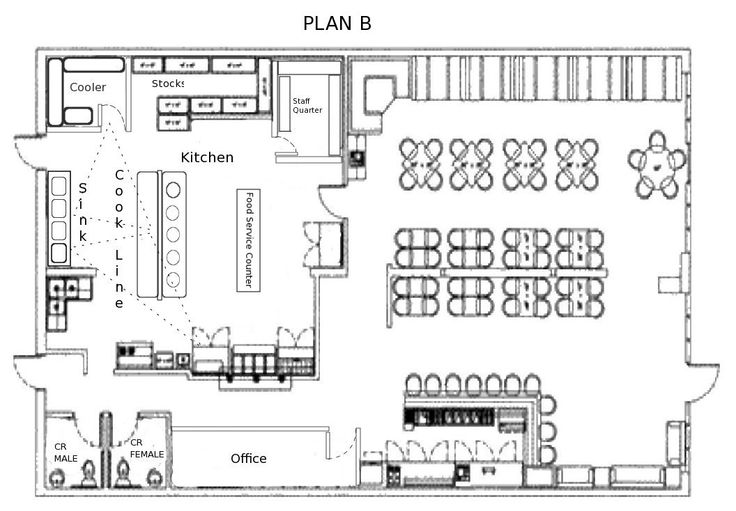
The floor plan example below is a good instance of a design with accessible features, including wide corridors, grab bars, and individually accessible restrooms integrated into both the men’s and women’s facilities.
Source: AutoCad
Step 3: Map Your Key Zones
A well-designed café layout clearly separates zones while maintaining flow. These core zones should be considered:
Entrance and exits area: Make it inviting with signage and space to queue
Order area: POS systems and menu boards should be highly visible
Coffee bar or kitchen: Prioritise workflow and safety
Seating zones: Include a mix of lounge, table, and bar seating
Pickup station: Designated space for takeaway and app orders
Toilets: At least one accessible toilet is mandatory
Staff area: For breaks, storage, and admin
Outdoor patio (if applicable): Heated and step-free access encouraged
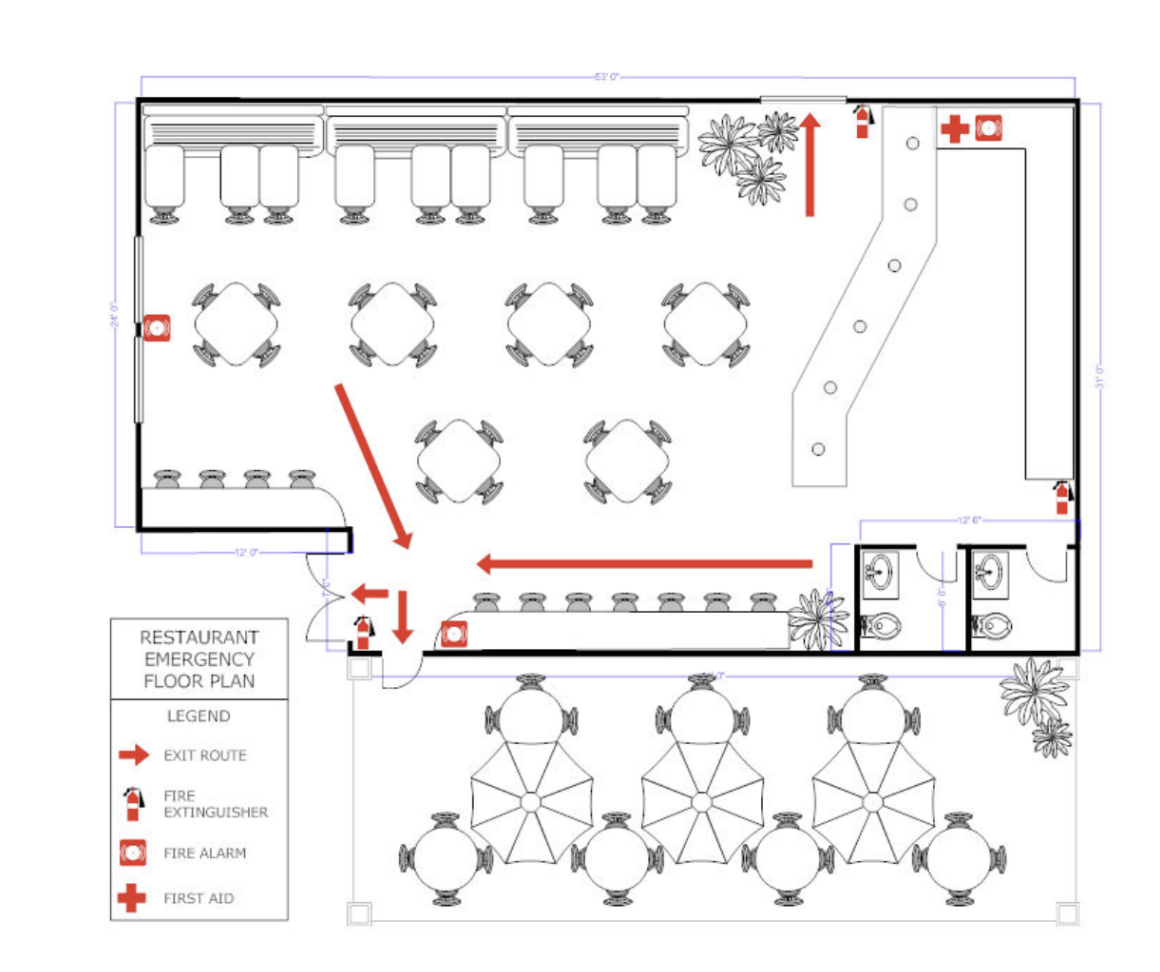
Take a look at the example below for a well-executed entrance and exit — every route is clearly marked and easily accessible.
Source: AutoCad
Step 4: Design for Guest Flow
The journey should be effortless — from entering to ordering to dining to leaving.
Clear order/pickup path
No bottlenecks or dead zones
Furniture and signage that guide the flow naturally
Toast Tip: According to Toast research, over 86% of UK diners say visible ordering queues are important to their overall experience.
Step 5: Make it Comfortable and On-Brand
UK customers have strong preferences around comfort and style. Over 50% of guests prefer cafés with a rustic, cosy design over modern or industrial looks. Also, 54% of UK customers say seating comfort is the biggest factor in how long they stay.
Warm lighting, natural textures, and intimate layouts go a long way. Learn from Ye Olde Reine Deer Inn, whose atmosphere keeps guests coming back.
Step 6: Prioritise Staff Workflow
Behind every smooth customer experience is a well-designed workspace that supports the team. An efficient staff workflow minimises unnecessary movement, reduces fatigue, and speeds up service — especially during busy hours.
When planning your layout, make sure to:
Design clear pathways wide enough for two staff members to pass safely
Place prep, cooking, and plating stations in logical, uninterrupted sequences
Use strategically placed POS stations to minimise cross-traffic
Include designated break areas or quiet corners for admin work
Restaurant Business Plan Template
No matter where you’re at in your restaurant ownership journey, a business plan will be your north star. Organise your vision and ensure that nothing is overlooked with this free template.

Step 7: Plan for Outdoor Space
Outdoor seating is now a customer expectation. Nearly 90% of UK diners say they prefer venues with outdoor seating.
If your location allows, create a patio space that’s:
Heated or covered for UK weather
Fully accessible
Styled to match your interior
Step 8: Test and Improve Before You Launch
Before signing off:
Mock it up in 3D or on paper
Walk through it yourself
Get feedback from staff or other operators
Look for blind spots, tight walkways, or design features that could confuse guests.
Building for The Future
The best floor plans aren’t fixed — they’re flexible. Leave room for growth, future upgrades, Your café floor plan isn’t just a one-time decision — it’s the starting point for long-term success.
As trends shift and your customer base evolves, your layout should be able to adapt. Whether it’s expanding your kitchen, adding a new ordering channel, or redesigning for better accessibility, flexibility is your best asset.
 TOAST TECH
 Built for restaurants just like yours.
Toast’s restaurant technology includes point of sale, kitchen display screens, online ordering and more.
Is this article helpful?
DISCLAIMER: This information is provided for general informational purposes only, and publication does not constitute an endorsement. Toast does not warrant the accuracy or completeness of any information, text, graphics, links, or other items contained within this content. Toast does not guarantee you will achieve any specific results if you follow any advice herein. It may be advisable for you to consult with a professional such as a lawyer, accountant, or business advisor for advice specific to your situation.

Subscribe to On the line
Sign up to get industry intel, advice, tools, and honest takes from real people tackling their restaurants' greatest challenges.
By submitting, you agree to receive marketing emails from Toast. We’ll handle your info according to our privacy statement. Additional information for California residents available here.