Best Self-Ordering Kiosk for Restaurants in the UK
Looking for the best self-ordering kiosk for your UK restaurant? Learn what matters most, how kiosks impact operations, and how to choose the right setup.
Author
Choosing the best self-ordering kiosk is about solving very real, day-to-day problems that UK restaurant operators are facing right now: rising labour costs, unpredictable footfall, pressure on margins, and guests who expect fast, frictionless ordering without losing the human touch.
This article walks through what makes a top self-ordering kiosk in the UK, how to evaluate your options, and where an integrated approach can make a practical difference on a busy service.
What Is a Self-Ordering Kiosk in a Restaurant?
A self-ordering kiosk is a touchscreen terminal that allows guests to browse your menu, customise their order, and pay without needing to queue at the counter. In a modern setup, the kiosk connects directly to your restaurant POS, kitchen display system, and payments infrastructure, so orders flow straight through to the kitchen and bar.
Here's the thing: the kiosk itself is only one part of the system. The real value comes from how tightly it integrates with the rest of your operation. When a guest removes an ingredient or selects an allergen-safe option then that information needs to land instantly and accurately where food is being prepared. If your kiosk is bolted onto your operation rather than built into it, small issues can quickly turn into service problems.
In UK restaurants, kiosks are most commonly used in quick-service, fast-casual, pubs with food, and high-volume counter-service environments, but they are increasingly being adopted in hybrid models where guests can choose between self-service and staffed ordering.
Why UK Restaurants Are Taking a Closer Look at Kiosks
Running a restaurant in the UK has felt like a constant squeeze lately. Staffing costs are up, and at the same time diners are watching their spending more closely. In Toast’s Voice of the UK Restaurant Industry 2025 report, operators said profitability is their biggest challenge, and nearly seven in ten expect to increase their tech spend over the next year to help protect margins and keep service running smoothly.
That’s usually where self-ordering kiosks come in. They’re not about replacing your team. They’re about answering practical, day-to-day questions like: how do we get through a busy service with the staff we’ve got, how do we cut down on mistakes when the queue is out the door, and how do we move orders through faster without making the experience feel rushed?
Guests have changed too. A lot of UK diners are perfectly happy to order digitally when it’s quick, clear, and easy to use. They still want friendly hospitality, but they also want options and they don’t want to waste time standing in a slow-moving line, especially at lunch, before the theatre, or on a packed Friday and Saturday night.
What Makes the “Best” Self-Ordering Kiosk?
There isn’t a single kiosk that is right for every restaurant, but the best systems tend to share a few characteristics that matter far more than flashy hardware or novelty features.
One of the biggest factors is how closely the kiosk is tied into your POS and kitchen systems and when everything is properly connected, menu updates go live instantly, prices stay consistent wherever guests order, and tickets land on kitchen screens exactly as they should.
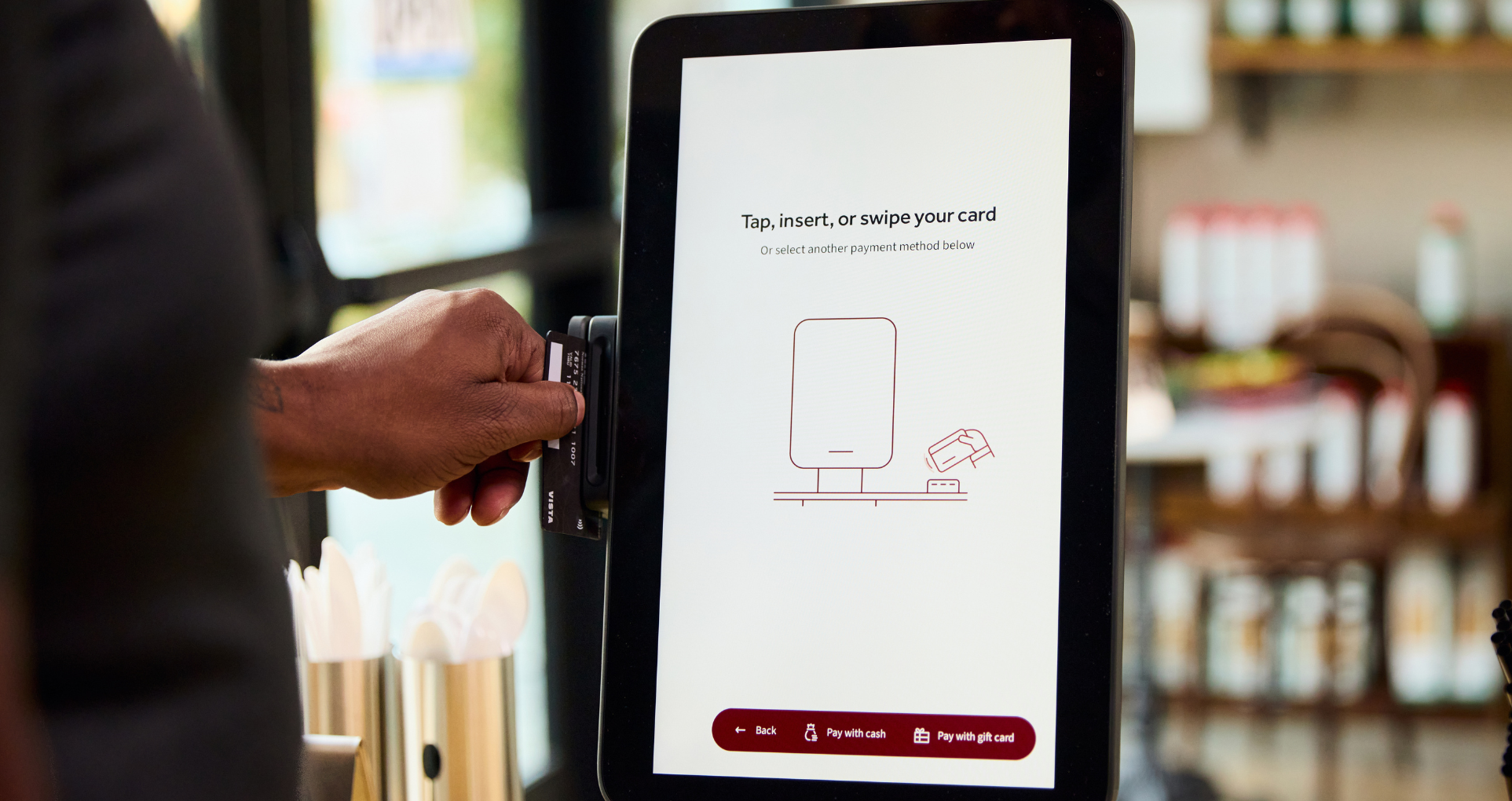
Payments matter too. In the UK, most guests expect to tap and go. The best kiosks are built around fast contactless and mobile wallet payments, with chip and PIN there when it's needed. When card readers are fully integrated rather than sitting off to the side as a separate device, the whole flow feels quicker and more natural for guests, and easier for staff to support during busy periods.
Accessibility is another area that’s often underestimated. A good kiosk should be easy to read, simple to navigate, and positioned so guests can actually use it comfortably. Clear layouts and sensible screen design don’t just help with accessibility requirements, they make the experience better for everyone, especially in loud, high-traffic environments.
Finally, the best kiosks are built around real restaurant workflows. They handle modifiers properly and suggest add-ons in a way that feels helpful rather than pushy. Orders are routed to the right kitchen stations without staff having to step in and fix things. When a kiosk reflects how your team already thinks about the menu and service, it’s much easier for both staff and guests to get on board with it.
The Operational Impact of Self-Ordering Kiosks
From an operational point of view, kiosks tend to earn their keep during the busiest parts of the day. By taking some of the ordering and payment load away from the counter, they can help shorten queues and take the edge off peak service. That doesn’t automatically mean running with fewer staff. More often, it means your team can spend less time stuck at a till and more time doing the things guests actually notice, like running food, checking in on tables, or stepping in quickly when something needs fixing.
Order accuracy is another area where kiosks can make a real difference. Fewer mistakes mean fewer remakes, less waste, and fewer uncomfortable conversations when an order isn't quite right.
Kiosks can also make upselling feel more consistent and less stressful for staff. Instead of relying on server, the system can surface sensible suggestions at the right moment. Because these prompts are managed centrally, they’re easier to tweak over time based on what actually works, rather than being locked into a one-size-fits-all approach.
Just as importantly, kiosks create useful data in the background. When they’re connected to your POS, you can start to see clear patterns in what people order, which modifiers are most popular, and when kiosks are used the most. Over time, those insights can feed into smarter menu decisions, better staffing plans, and even changes to how your space is laid out to handle busy periods more smoothly.
How to Evaluate Self-Ordering Kiosk Options for Your Restaurant
When evaluating kiosk options, it helps to start with your service model rather than the hardware itself. A high-volume quick-service restaurant will have very different needs from a pub offering food alongside table service. Think about where bottlenecks occur today, and whether kiosks would meaningfully reduce them.
It’s also worth thinking about how much day-to-day control you want over your menus. If every small change means waiting on a third party, that can get frustrating fast (especially if make regular changes - for example, you run specials, switch menus seasonally, or need to tweak prices regularly). The easier it is for your team to make updates themselves, the smoother things tend to run.
Support and reliability matter too, often more than people expect at the outset. Kiosks need to hold up during your busiest services, not just on a quiet weekday afternoon. And when something does go wrong, you want help from people who understand how a restaurant actually works, not just someone reading from a generic hardware checklist.
Lastly, look at how kiosks fit into the rest of your setup. Toast Kiosk is designed to work as part of an integrated restaurant platform rather than as a standalone ordering tool. As it connects directly with Toast POS and Kitchen Display Systems, orders placed at the kiosk flow straight to the kitchen, with the same menu logic, modifiers, and routing rules as other channels.
For high-volume or growing operators, this kind of integration can simplify day-to-day management and reduce the risk of errors that come from stitching together multiple vendors.
Next Steps
When you're ready to explore how self-ordering kiosks could work in your operation, start by thinking about your busiest service periods, where your team feels most stretched, and what kind of guest experience you want to create. The answers to those questions will point you toward the solution that makes the most sense for your restaurant.
Is this article helpful?
DISCLAIMER: This information is provided for general informational purposes only, and publication does not constitute an endorsement. Toast does not warrant the accuracy or completeness of any information, text, graphics, links, or other items contained within this content. Toast does not guarantee you will achieve any specific results if you follow any advice herein. It may be advisable for you to consult with a professional such as a lawyer, accountant, or business advisor for advice specific to your situation.

Subscribe to On the line
Sign up to get industry intel, advice, tools, and honest takes from real people tackling their restaurants' greatest challenges.
By submitting, you agree to receive marketing emails from Toast. We’ll handle your info according to our privacy statement. Additional information for California residents available here.