
How to Run a Restaurant Successfully - 10 Things That Make a Restaurant Successful
So many factors come together to ensure a restaurant's success. Read on to learn about seven of the most important areas to consider with what makes a restaurant successful.
작성자
 RESOURCE
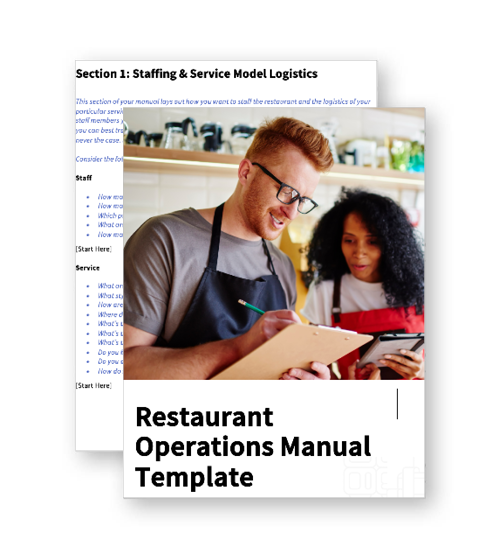
 Restaurant Operations Manual Template
Use this free template to easily outline all of your operating procedures and make day-to-day operations as consistent as possible.
무료 다운로드 받기The most successful restaurants have a few things in common: they understand what guests value, manage food and labor costs carefully, price menus strategically, deliver consistent service, and make it easy for customers to order, pay, and come back.
That’s not always easy when restaurants are managing dine-in service, takeout, delivery, staffing, loyalty, reporting, and daily operations at the same time. A modern restaurant POS system like Toast can help connect those workflows, but long-term success still depends on strong fundamentals.
In this guide, we’ll break down ten things that make a restaurant successful, from value and pricing to loyalty and technology.
Key takeaways
Successful restaurants understand what guests value and make the meal feel worth the money.
Strong operators protect margins by managing labor costs, food costs, pricing, and waste carefully.
Consistent execution across food, service, ordering, and fulfillment helps turn first-time guests into repeat customers.
Off-premise ordering, loyalty, and connected restaurant technology can help restaurants create smoother experiences and stronger guest relationships.
Long-term restaurant success depends on using real data to make better decisions across staffing, menus, pricing, and operations.
SOPs Template
This template will help you create SOPs for your entire business, so you can create consistency and easily train employees.

10 things that make a restaurant successful
1. A strong value proposition
Guests don’t always need the cheapest option, but they do need the meal to feel worth it. That could mean better portions, better ingredients, faster service, a memorable dish, or an experience they can’t get somewhere else.
McKinsey found that when consumers said dining out “wasn’t worth the money,” food quality and portion size were major reasons, not just price. For restaurants, the goal is simple: make the guest feel good about what they spent.
2. Labor cost control
Labor is one of the biggest restaurant expenses, so successful operators watch it closely. The National Restaurant Association reported that labor costs reached a median 36.5% of sales for full-service restaurants and 31.7% for limited-service restaurants in 2024.
That doesn’t mean you should cut staff until service suffers. It means scheduling smarter, forecasting demand, and making sure the right people are in the right roles at the right times are key.
For example, Toast Payroll & Team Management can help restaurants manage payroll, tips, overtime, employee onboarding, and labor data in one connected system.
3. Food cost discipline
The National Restaurant Association found that food and non-alcoholic beverage costs were a median of 32.0% of sales for full-service restaurants and 32.4% for limited-service restaurants in 2024.
Successful restaurants know what each menu item costs, how much gets wasted, and which dishes are actually profitable. Tools like xtraCHEF by Toast can help with invoice automation, recipe costing, inventory management, and margin visibility.
4. Smart pricing
Raising prices can help cover costs, but only up to a point. The James Beard Foundation found that independent restaurants that raised menu prices by more than 10% were most likely to expect lower profits.
That’s why successful restaurants price carefully. They look at demand, menu mix, food costs, guest expectations, and perceived value. Toast IQ can help operators analyze business data, surface menu opportunities, update menu items, and make changes across Toast from one place.
5. Consistent execution
The American Customer Satisfaction Index said “execution is now the dividing line” for restaurants, with full-service restaurants holding a satisfaction score of 82 and quick-service restaurants holding at 79 in 2026.
Execution is the everyday stuff: accurate orders, clean spaces, reasonable wait times, friendly service, and food that tastes the same every time.
For instance, Toast’s Kitchen Display System can help orders flow from the front of house to the kitchen in real time, track prep times, and reduce missed or incorrect orders.
6. Off-premise convenience
The National Restaurant Association reported that nearly 75% of restaurant traffic now happens off-premises, including takeout, delivery, and drive-thru. That means successful restaurants need to think about how food travels, how easy it is to order online, and how smooth pickup feels for guests and staff.
Toast Online Ordering supports pickup, delivery, curbside, drive-thru, POS integration, order tracking, upsells, and commission-free ordering channels.
7. Repeat business and loyalty
Repeat customers are built through consistency, hospitality, and reasons to return. The National Restaurant Association reported that more than three-quarters of restaurant customers are more likely to visit a restaurant where they can earn points, even if it’s less convenient.
Loyalty programs work best when the restaurant already delivers a good experience. The points help bring people back, but the food and service keep them there. Toast Loyalty helps restaurants create customizable rewards, track points automatically, and connect loyalty experiences across in-store and online ordering.
8. Intentional technology
The James Beard Foundation found that 28% of restaurant respondents use only one technology, while 29% use four or more, showing how difficult it can be to find the right balance. The best restaurant technology connects the work that already happens every day: ordering, payments, reporting, loyalty, staffing, and guest communication.
For example, Toast Now gives owners and managers live sales data, delivery channel controls, manager logs, multi-location views, item 86ing, and team visibility from a mobile app.
9. Happy staff members
If you want to run a successful restaurant, look no further than the people who work for it. Ensuring accessibility and a supportive environment for your staff will have a positive effect on work morale, which is often reflected in the service provided to guests.
To learn how to keep your staff happy, check out this guide.
10. Guest feedback
While receiving feedback is an exercise in having thick skin, it’s a vital part of improving customer experience and ensuring high customer satisfaction for your restaurant’s growth. Don’t be afraid of any feedback — positive or negative — and ask for it often. Whether it’s from the checkout process on the screen of a handheld POS, a comment card, or a Yelp or Google review, respond to all feedback—especially negative — and if you notice trends, make changes.
What successful restaurants have in common
There’s no single formula for restaurant success. A neighborhood café, fast-casual spot, full-service restaurant, and multi-location brand may all define success differently.
But the fundamentals are often similar: successful restaurants know what guests value, protect their margins, support their teams, and deliver a consistent experience across every channel. They make decisions with real data instead of guesswork, and they use systems that help the business run more smoothly.
That’s where a connected restaurant POS system can make a difference. Toast helps restaurants bring ordering, payments, reporting, labor, loyalty, and more into one platform. This means you can spend less time chasing disconnected details and more time building a restaurant guests want to come back to.
Restaurant Business Plan Template
No matter where you’re at in your restaurant ownership journey, a business plan will be your north star. Organize your vision and ensure that nothing is overlooked with this free template.
Frequently asked questions
What is the most important factor in restaurant success?
There isn’t one single factor that guarantees restaurant success, but consistency is one of the most important. Guests are more likely to return when food quality, service, speed, value, and overall experience feel reliable.
What is the most common reason restaurants fail?
Restaurants can fail for many reasons, but common risks include high operating costs, inconsistent sales, cash flow challenges, staffing issues, and pricing that does not support healthy margins.
How do you measure restaurant success?
Restaurant success can be measured with a mix of financial, operational, and guest experience metrics, including revenue, profit margin, food cost percentage, labor cost percentage, average check size, repeat customer rate, online reviews, and order accuracy.
What is menu engineering?
Menu engineering is the process of analyzing menu items based on profitability and popularity. Restaurants use it to decide which dishes to highlight, reprice, adjust, promote, or remove from the menu.
Restaurant Opening and Closing Checklist
The beginning and end of a shift can be frantic. Use this free PDF checklist to set your front-of-house staff up for success.


이 문서가 도움이 되었나요?
면책 조항: 이 정보는 일반 정보 제공 목적으로 작성되었으며 당사의 권고를 의미하는 것은 아닙니다. Toast는 본 콘텐츠에 포함된 정보, 텍스트, 그래픽, 링크 및 기타 항목의 정확성이나 완전성을 보장하지 않습니다. Toast는 본 문서의 조언을 따른다고 해서 특정한 결과를 얻을 수 있음을 보장하지 않습니다. 귀하의 상황에 맞는 조언이 필요한 경우 변호사, 회계사 또는 비즈니스 자문가 등 전문가와 상담하시기 바랍니다.
