The BEST Supermarket Marketing Ideas: How to Create a Supermarket Marketing Plan
Running a supermarket marketing campaign is necessary to attract customers. Here is a guide to your next supermarket marketing strategy.

작성자
How to Create a Supermarket Marketing Plan
Marketing spend has become an essential component of supermarket business strategy, and it continues to grow in importance as the industry evolves. In fact, by 2028, retail media is projected to account for nearly a quarter of all US media ad spending. This rapid growth is reflected in the anticipated rise in US omnichannel retail media ad spend, which is forecasted to soar from $54.85 billion in 2024 to a staggering $129.93 billion in 2028m according to eMarketer. These figures underscore the significance of investing in marketing to stay competitive in an increasingly digital marketplace.
A well-executed marketing strategy not only drives brand visibility but also connects with consumers across multiple touchpoints, from in-store experiences to online interactions. For retailers, it is critical to align marketing efforts with overall business goals to generate growth, attract and retain customers, and build long-term profitability. Without a thoughtful, data-driven approach to marketing, retailers risk falling behind in an intensely competitive landscape. Thus, a comprehensive marketing strategy is indispensable to achieving sustainable retail success.
Toast Retail can help create seamless guest experiences for your retail and foodservice needs
Get a free demoWhat is a Marketing Strategy for a Supermarket?
Supermarket marketing plans encompass a diverse range of tactics aimed at achieving various objectives, such as increasing brand awareness and nurturing existing customer relationships.
Brand Awareness Marketing
Building brand awareness is crucial for supermarkets to establish a strong presence in the market and differentiate themselves from competitors.
Implementing advertising campaigns across multiple channels
Maintain an active presence on social media platforms
Sponsor local events
Engage in public relations efforts
Direct Response Marketing
Direct response marketing focuses on prompting immediate actions or responses from potential customers.
Deploy targeted advertising campaigns
Run direct mail campaigns
Try promotional offers
Use email marketing to encourage specific actions such as making a purchase
Customer Marketing
This plays a crucial role in nurturing and retaining existing customers to foster loyalty and encourage repeat business.
Implement loyalty programs
Send personalized communications
Hold customer appreciation events
Use referral programs to strengthen relationships
How Much Should I Spend and How Do I Create a Marketing Budget?
While there isn't a one-size-fits-all answer, supermarkets typically allocate around 1% to 3% of their total revenue towards marketing efforts. This can vary based on the size of the supermarket, its growth stage, the competitive landscape, and specific marketing objectives.
For instance, a newly launched supermarket or one aiming for aggressive growth may allocate a higher percentage of revenue towards marketing to build brand awareness and acquire new customers, whereas a more established supermarket may focus on maintaining customer loyalty and optimizing marketing efficiency.
Return on ad spend (ROAS) is a key metric used to evaluate the effectiveness of marketing campaigns and determine their profitability. A typical ROAS for supermarkets can range from 3:1 to 5:1, meaning for every dollar spent on advertising, the supermarket generates three to five dollars in revenue. However, achieving a favorable ROAS requires continuous optimization and refinement of marketing strategies over time.
How to Increase Supermarket Sales: Best Supermarket Promotion and Advertising Ideas
When launching a new supermarket or promoting an existing one, several common and effective marketing strategies come into play. These include:
Grand Opening Events: This can generate buzz and attract a large crowd. Offering special promotions, discounts, and giveaways during the launch can help create a positive first impression.
Loyalty Programs: Implementing a loyalty program featuring points-based rewards, exclusive discounts and personalized offers helps validate customers for their repeat business, encouraging them to shop more frequently.
Offline Marketing: Traditional offline marketing tactics such as print advertisements, direct mail campaigns, billboards, community sponsorships and in-store events can help supermarkets increase brand awareness and attract foot traffic.
Digital Marketing: Supermarkets can leverage various online channels to reach a wider audience and drive sales. This includes having a user-friendly website with e-commerce capabilities, optimizing search engine visibility (SEO), running targeted pay-per-click (PPC) advertising campaigns, engaging with customers on social media platforms, and sending out personalized email newsletters and promotions.
“Digital customer experiences are now the most important factor in a retailer’s success, as digital is almost always a part of the shopping experience,” Mike Wallgren, Vice President of marketing technology at Hero Digital, told Forbes. “Retailers must create and optimize their online and offline digital customer experience to increase customer satisfaction and loyalty.”

Creative Marketing Ideas for Supermarkets
Marketing Ideas for a supermarket encompass a wide array of creative strategies aimed at attracting customers, increasing sales, and enhancing brand visibility. Here are some innovative examples of how a supermarket can market itself:
Farm-to-Store Events: Collaborate with local farmers and producers to host events where customers can meet the suppliers, learn about the origins of the products, and sample fresh produce.
Cooking Classes: Organize cooking classes or workshops within the supermarket, where customers can learn new recipes and techniques using ingredients available in-store.
Theme Nights: Host events centered around specific cuisines or cultural celebrations. For example, "Taco Tuesday" featuring Mexican cuisine or a "Mediterranean Night" with tastings of olive oils, cheeses, and wines from the region.
Interactive Social Media Campaigns: Develop campaigns that encourage user-generated content and participation from customers. For example, launching a recipe contest where customers can submit their favorite recipes using products from the supermarket, with the chance to win prizes.
Customer Appreciation Days: Dedicate special days or weekends to show appreciation for loyal customers, offering exclusive discounts, free samples, or loyalty rewards.
How to Position Your Supermarket Amongst Competitors
By identifying and leveraging key differentiators, you can carve out a unique space in the market and establish a compelling value proposition. Here's how to approach positioning for your supermarket:
Identify Unique Selling Points (USPs): Conduct market research to understand the specific needs and preferences of your target audience, then identify your unique selling points. This could include factors such as competitive pricing, offering a wide selection of products, specialty or niche items, providing superior customer service, or having a convenient location.
Differentiate Based on Market Factors: Focusing on areas where there is underserved demand or unmet needs. Perhaps this will lead you to offering organic or locally sourced products, catering to specific dietary needs or cultural preferences, or providing value-added services such as meal kits or cooking demonstrations.
Leverage Pricing Strategies: You can differentiate your supermarket by offering competitive pricing, implementing price-matching policies, or promoting special discounts and promotions to attract price-conscious shoppers. Alternatively, you can position your supermarket as a premium destination by offering higher-end products, gourmet items, or exclusive imports at a premium price point.
Cross-Sell with Complementary Products: Enhance the shopping experience and drive additional sales by cross-selling complementary products that pair well together. For example, if you offer a wide selection of fresh produce, you can cross-sell with recipe ingredients, spices, sauces, or cooking utensils. By strategically merchandising and promoting complementary products, you can increase basket size, encourage impulse purchases, and provide added value to customers.
Developing a comprehensive marketing strategy is essential for supermarkets, in order to carve out a competitive edge and drive sustained growth. At its core, a marketing strategy for a supermarket involves a systematic plan to attract, engage, and retain customers while maximizing profitability. This encompasses various elements such as market segmentation, product positioning, pricing strategies, promotional tactics, and customer relationship management.
Overall, positioning your supermarket effectively requires a deep understanding of your target market, competitive landscape, and key differentiators. By leveraging unique selling points, and creative marketing tactics, you can establish a strong position amongst competitors and attract loyal customers to your supermarket.
Why Toast Retail is Perfect for Supermarket Stores
In today's competitive retail landscape, selecting the right technology is essential for both new ventures and established businesses aiming for success. Solutions like Toast retail not only streamline operations, making them more efficient, but also provide invaluable insights to optimize the financial health of the business.
By harnessing the power of point of sale technology, retailers can gain a competitive edge, improve customer satisfaction, and drive sustainable growth. Choosing the right technology sets the foundation for long-term success, empowering businesses to adapt to evolving market demands and thrive in an increasingly digital world.
The tech that redefined restaurants is now here to transform retail. Supercharge your store with the POS built for high volumes and complexity, offering everything you need to run your business on one platform. Toast's retail offering is a game-changer for businesses like convenience stores, liquor stores, and retail stores, revolutionizing how they operate and interact with customers. Here's why Toast is the perfect fit for these retail environments.
1. Helps Modernize How You Sell
Toast's intuitive, cloud-based system simplifies daily operations. Its user-friendly interface makes staff training a breeze, ensuring seamless adoption across your team. Whether it's processing payments in-store or integrating with online sales channels, Toast ensures a smooth and consistent experience for your customers regardless of how they shop.
Intuitive Cloud-Based System: Our intuitive, cloud-based system is easy to learn and easy to use. Say goodbye to complicated interfaces and hello to streamlined processes. Toast is designed to simplify your day-to-day operations, from staff training to consolidated operations, ensuring maximum efficiency and productivity.
Seamless Payment Processing: Toast’s seamless payment processing easily integrates with online payments for smoother sales every time, no matter how your customers are shopping. This integration ensures a hassle-free experience for both customers and staff, leading to increased satisfaction and faster transactions.
Flexible Order and Checkout Options: Offer flexible and efficient order and checkout options with reliable hardware including handhelds, kiosks, and guest-facing terminals. Adapt to the diverse needs of your customers and reduce wait times at checkout with Toast's versatile hardware solutions, enhancing the overall shopping experience.
2. Streamline Retail Management
Efficiency is key in retail, and Toast delivers with automated, mobile-first inventory management. Say goodbye to manual inventory tracking and hello to SmartScan, a feature that enables quick product scanning and shelf placement. Managing thousands of SKUs becomes effortless with Toast's intuitive product database and bulk update capabilities.
Automated, Mobile-First Inventory: Experience the freedom of automated, mobile-first inventory management with Toast. Create and print barcodes in bulk, and take new products from scan to shelf in seconds with our SmartScan feature. Say goodbye to tedious manual inventory tasks and hello to streamlined operations.
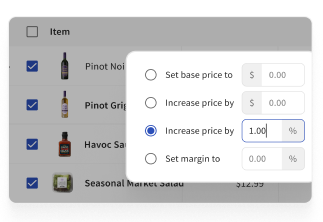
Efficient SKU Management: Easily manage thousands of SKUs with our intuitive product database and bulk updates feature. Modify, reprice, and import multiple products at once, saving valuable time and resources. With Toast, keeping track of your inventory has never been easier.
Retail-Enhanced Dashboards: Stay on top of your business with retail-specific dashboards and cost-tracking reports. Monitor trends, maximize margins, and ensure your top-selling products are always stocked, empowering you to make data-driven decisions that drive profitability.
3. Tailor Your Customer Experience
Toast empowers you to tailor the customer experience to fit your unique retail concept. Whether you're considering adding food service or expanding your offerings, Toast's flexible platform accommodates creative expansion.
Creative Expansion Opportunities: Thinking of adding food service to your retail concept? Including Kitchen Display Systems and Order Ready Boards, our flexible platform allows for creative expansion. Explore new revenue streams and enhance the overall customer experience with Toast's versatile features.
Online Ordering and Delivery Integrations: Give your guests the option to order from home with Toast’s Online Ordering and our third-party delivery integrations. Meet your customers where they are and provide convenience that keeps them coming back, increasing customer loyalty and satisfaction.
Loyalty Rewards and Personalized Offers: Be your neighborhood's favorite shop (and incentivize repeat visits) with loyalty rewards and personalized offers. Transform one-time shoppers into loyal patrons by engaging with your community and offering enticing rewards, making your store the go-to destination for your customers.
In conclusion, Toast's retail solution is more than just a point of sale system; it's a comprehensive toolkit designed to elevate your retail store to new heights. From modernizing sales processes to streamlining management and enhancing the customer experience, Toast empowers retail businesses to thrive in today's competitive market.
Toast Retail can help create seamless guest experiences for your retail and foodservice needs
Get a free demoRelated Resources
이 문서가 도움이 되었나요?
면책 조항: 이 정보는 일반 정보 제공 목적으로 작성되었으며 당사의 권고를 의미하는 것은 아닙니다. Toast는 본 콘텐츠에 포함된 정보, 텍스트, 그래픽, 링크 및 기타 항목의 정확성이나 완전성을 보장하지 않습니다. Toast는 본 문서의 조언을 따른다고 해서 특정한 결과를 얻을 수 있음을 보장하지 않습니다. 귀하의 상황에 맞는 조언이 필요한 경우 변호사, 회계사 또는 비즈니스 자문가 등 전문가와 상담하시기 바랍니다.