Retail Store Licenses and Permits: What to Know in 2025
Ready to open your first retail store? Make sure you have these 10 licenses and permits first!
작성자
 RESOURCE
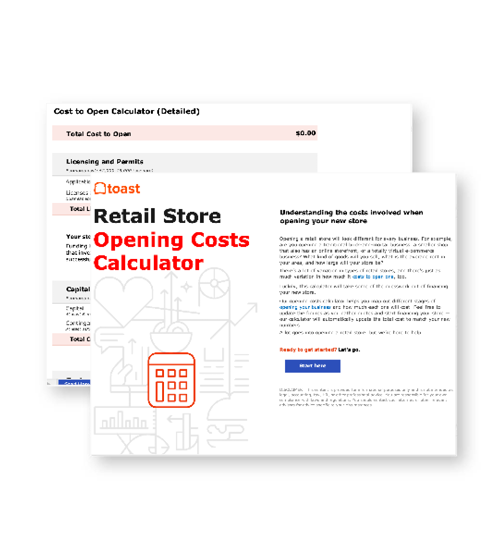
 Retail Store Opening Costs Calculator
This free calculator lays out some of the fundamental financial costs of opening a retail store, so you can start planning and bring your dream business to life.
무료 다운로드 받기You may know that the formula for launching a retail store includes writing a solid business plan, creating a memorable brand, lining up your suppliers, and securing the funding to bring your vision to life. However, one critical aspect that can significantly impact your success if not managed properly is obtaining the necessary licenses and permits. As a retail store business owner, you want to cover your legal bases before opening to the public to avoid fines, lawsuits, and the possibility of being shut down.
Don’t let an overlooked health permit or a missing sales tax license derail your plans, especially when the possibilities for success in the retail industry are greater than ever. Shopping patterns are returning to a “new normal” after the pandemic, as brick-and-mortar locations continue to grow alongside the rising popularity of e-commerce, according to the “State of Retail” analysis by the National Retail Federation. A 2024 study found that 80% of shopping still occurs in physical stores, and two-thirds of retailers currently offer, or plan to offer, buy online, pick up in-store options.
Retailers often experience a “halo effect” between their physical and online stores; for instance, opening a new brick-and-mortar location can drive up online traffic and sales.
To help you succeed in this dynamic industry, we’ve identified ten general licenses and permits that most retail store owners should be familiar with, and we’ve mapped out a timeline for you to complete them.
Toast Retail can help create seamless guest experiences for your retail and foodservice needs
Get a free demoWhat Licenses Do You Need to Open a Retail Store?
1. General Business License
Almost every state government requires businesses to obtain a general business license to legally operate. While it may seem simple, the process can become complicated when dealing with different local, state, and federal jurisdictions, especially since there’s no one-stop shop to gather all the information online. While your business may not be required to have a general business license, your city, county, and industry will all have unique applications and requirements.
The reason a business license is required is to ensure your retail store is safe for the public. That’s why certain “riskier” businesses have stricter requirements. For example, while a street vendor might not need a license to sell t-shirts, a deli or bakery, which must adhere to strict food handling regulations, certainly will.
How to get a general business license
Check out your local city or county’s zoning office to find the business license application. If you Google “Your State + Business License Application,” you should find the correct information and any additional requirements. You can also call your mayor’s office, county administrator, or Secretary of State.
How much does a general business license cost?
The cost varies depending on the region and your business type. That said, most business licenses cost $25 to $400 depending on the type of business, and there is often a registration fee of $50. Keep in mind that you may need to renew your business license annually.
2. Employer Identification Number (EIN)
Think of an EIN as the Social Security Number for your retail store. This number will be used for tax purposes; all businesses need one, except for sole proprietors with no employees. This should be one of the first licenses you secure since you will likely need this on applications for business licenses and other permits.
How to get an EIN
You can obtain your EIN through the IRS online, but they only allow you to apply for one per day. The application portal is open Monday through Friday, 7 a.m. to 10 p.m. EST.
How much does an EIN cost?
Obtaining an EIN is free!
3. Certificate of Occupancy
A Certificate of Occupancy is a legal document that proves a structure, such as an office building or storefront, is safe to inhabit. It serves as proof that your business property complies with local codes and is being used for its intended purpose.
Without a CO, your store cannot legally operate.
How to get a Certificate of Occupancy
Contact your local building or zoning inspection office to determine what documentation you need to provide to secure your CO. The information will also be posted on your local government's website.
How much does a Certificate of Occupancy cost?
The cost varies from jurisdiction to jurisdiction, but they typically run around $100 plus an additional fee for every square foot in the building.
4. DBA or “Doing Business As”
This is also known as a “trade name,” “assumed name,” or a “fictitious business name.” Any business that uses a name different from the owner’s legal name may be required to file this paperwork. When a company is formed, the legal name automatically defaults to the business owner’s name if it's a sole proprietorship or partnership, unless it’s launched as a Limited Liability Company (LLC) or corporation. While many shops share names with their original owners (e.g., Eddie Bauer, Fred Segal, and Kate Spade), chances are you’ll be filing a DBA.
How to get a DBA
Just like the general business permit, DBA requirements vary by jurisdiction. You can file your paperwork with your county clerk’s office or your state government.
How much does a DBA cost?
You can expect filing fees to cost between $10 to $100, and some states may ask you to place a fictitious name ad in a local newspaper for a set amount of time to fulfill a public notice requirement.
5. Food Service Licenses and Permits
Maybe you’re opening a bookstore with an attached coffee shop, or you plan to open a corner bodega or produce market. If your retail store sells food, you’ll likely need a food seller’s license and a food handler’s permit.
The city or county health departments issue food service licenses and require in-person inspections to ensure compliance with regulations. The health inspector will continue to visit your retail store up to three times a year to ensure compliance with high standards. The FDA and USDA also require a variety of permits.
How to get food service licenses
You can start by researching the food vendor requirements for your state with the U.S. Food and Drug Administration. When applying for a food service license, you'll need the name of your store, an address for a permanent kitchen facility (even for food trucks), and the owner's personal information. Your food service license may expire automatically in certain locations, so read the fine print and renew your license.
A food handlers permit can be easily obtained online through ServSafe, Learn2Serve, and StateFoodSafety, which provide training and exams. Most food handler cards are good for at least two to three years.
How much do food licenses cost?
The fee for a food service license, which can vary by location and number of employees, ranges from $100 to $1000. Food handler’s permits run around $10 to $15.
6. Commercial Sign Permit
For retail stores, signage can be a cornerstone of your marketing strategy. After all, it’s an inexpensive but highly effective way to entice new customers to your business. Before installing a sign, you’ll need to obtain a permit from the city, which will specify restrictions on the size, style, and lighting intensity. Elon Musk learned this the hard way when he installed a giant flashing “X” sign atop his San Francisco headquarters after acquiring Twitter. When complaints flooded in from nearby residents, the city discovered he didn’t have a permit, and he was forced to take it down after a few days (a permit might be required for dismantling, too).
How to get a commercial sign permit
Outdoor signs often need to be approved by the local government. In San Francisco, for example, you can research the sign rules on the city’s website and then visit the permit center in person to complete the appropriate application. Shop owners may need to submit construction drawings drafted by a licensed architect, engineer, or contractor. Be sure to check with your city about obtaining awning permits as well.
How much does a commercial sign permit cost?
A sign permit can cost between $20 and $50.
7. Sales Tax License
Some states call this a “seller’s permit.” This permit allows the state to identify your retail store as a sales tax collector and is needed to sell almost all products and services. Most businesses, especially in retail, must secure a seller's permit and a resale certificate (more on that next).
How to get a seller's permit
You can register online for a seller's permit by visiting your state’s Department of Revenue. Online registration, phone assistance, and in-person assistance are often available.
How much does a seller's permit cost?
Applying for the sales tax license is free, but you may have to leave a security deposit if you have unpaid taxes. The amount of this deposit will be determined when you apply.
8. Resale Permit
No retailer wants to pay unnecessary taxes. If you buy goods from other suppliers solely for resale, you’ll need a resale permit to ensure you pay sales tax only once on these products. In other words, it enables you to make specific non-taxable purchases (e.g., wholesale sneakers) if they are then marked up for resale. Without a resale permit, you’ll be paying tax twice: first, when you buy the shoes from a supplier, and then again when you sell them to a customer. Instead, goods purchased exclusively for resale will be subject to sales tax only when they are finally sold to a customer for personal use.
How to get a resale permit
Each state has its own rules regarding resale permits, and not all states require one. To get started, visit the Department of Taxation and Finance for the state in which you conduct business. Typically, the forms and documents are available online. Keep in mind that if you conduct business in other states, you’ll need to apply for “nexus” permits in each state where your goods or services are sold. You’ll be asked to provide your bank account numbers and projected monthly sales.
How much does a resale permit cost?
This permit can cost from $0 to $50.
9. Liquor License
If you plan on selling alcoholic beverages in the U.S., you must apply for a liquor license. Some states may require a liquor license and a beer and wine license, and there are two major types: on-licenses and off-licenses. On-licenses are for those who intend to sell alcohol consumed on premises, like a bar or restaurant. Off-licenses are for businesses that sell alcohol that will be consumed off-premises, like a bottle shop or market. The application process can sometimes take months, so apply for a liquor license as soon as possible.
How to get a liquor license
Liquor licenses: Start your journey here to find out which department you’ll be dealing with in your state and the specific rules and regulations that apply.
How much does a liquor license cost?
The price varies by state. A liquor license costs as little as $100 in Idaho and as much as $13.800 in California.
10. Health Permit
If you are selling or preparing food at your retail location, you’ll need to look into a health permit. And many businesses other than restaurants require health permits, too, like hair and nail salons, yoga studios, laundromats, hotels, tattoo parlors, and more. This permit, also known as an “environmental health permit,” ensures that the business premises meet all hygiene and health safety regulations. You must demonstrate your property has proper sanitation, ventilation, lighting, equipment, and even bathroom configurations.
How to get a health permit
To obtain this permit, you may have to provide a floor plan that indicates room dimensions, the number of occupants, and emergency exits. You should also have a list of all materials used for your small business, including cleaning products and any special equipment.
How much does a health permit cost?
The cost of obtaining a health permit varies by certification area, so it’s best to check with your local health department for further information. For example, in California, a health permit can cost between $700 to $2000.
Retail Marketing Plan
Create a marketing plan that'll drive repeat business with this customizable marketing playbook template and interactive calendar.

Timeline for Opening a Retail Store
12 Months Out
First, register your business with the federal government, state, and local municipality.
DBA - “Doing Business As”
The name of your business is the bedrock of your brand and must be established before you want to think about things like marketing, signage, and a website. Check your state's official database to find out if the name you want is available. Once your DBA is established, you can open a business bank account, undertake transactions for your shop, and search for your website domain name to get your e-commerce component up and running.
In some states, you’ll need to publish a statement in a local newspaper near your place of business within a month of filing and let the ad run for several weeks. You may also be required to file an affidavit after the last publish date. Check with your local Registrar-Recorder/County Clerk’s Office for specific requirements.
EIN
A tax ID number (EIN) is another crucial piece to have in place early on. Without it, your retail store simply won’t get off the ground. You’ll need an EIN to file federal tax returns, to open a business bank account, or to apply for a credit card. When it comes to invoicing, many companies won’t even pay you without an EIN. It’ll also come in handy when you apply for your general business license, as many states require this number on their applications.
You can apply online or using IRS Form SS-4 (“Application for Employer Identification Number”). You’ll need to provide basic information about your business, including your industry type and projected number of employees.
General Business License
Since you likely need this to conduct business legally, it’s best to get this as soon as you complete your business plan. You’ll be asked for basic info, including your business name, EIN, business type (e.g., LLC), and anticipated revenues and expenses. Gathering your key details could take a while, so we recommend checking these requirements well in advance.
Nine months Out
Now that you’ve established your retail store in the eyes of the government, it’s time to tackle the most notorious licenses and permits: Liquor, Food, and Health — if these apply to you. While some businesses sail through these with ease, these three licenses are notorious for delays. You’ll want a lot of lead time before your launch.
Liquor License
Alcohol is one of the most heavily regulated products in the U.S., so it’s no surprise that obtaining a liquor license can be complicated and expensive. The entire process can take anywhere from 30 days to 6 months or more, so jumping on this early is essential. Each jurisdiction differs in how liquor licenses are approved: some rely on state agencies, often called Alcoholic Beverage Control (ABC), to handle the process, while some counties and cities may also require their own approvals. You’ll likely have a preliminary application followed by an in-person appointment with an official who screens applicants. Expect to share personal financial information and undergo credit and background checks.
Food Service Licenses
There’s no one central resource for food service licenses, which means you’ll be doing some digging to find the requirements in your area. Since some permits are city and county-based while others are administered by the state, processing times can vary widely.
At the Federal level, food products are heavily regulated by the FDA or the USDA, which require a variety of registrations depending on the nature of your business.
Then, there are the state and local health departments that require permits for differing food-related businesses, from food trucks to vending machines. Check with your State Department of Agriculture and State Department of Health for more information.
Health Permit
Many businesses beyond food-related ventures require health permits to ensure the safety of customers and employees. When you apply for a health permit, which can often be done online with your local health department, you’ll need an inspection to ensure your space and practices will fit all applicable codes and ordinances. This is an area where problems and delays can potentially arise and you may be asked to revise your shop’s layout or change your building. You will receive your health permit once your business is deemed safe to operate.
6 Months Out
Resale Permit
Businesses that purchase products from a wholesaler or supplier for resale need this permit to avoid being double-taxed. While you may not be stocking up your inventory just yet, obtaining this permit early on will give you the flexibility to focus on the other permits you'll need later. You’ll need basic personal information for every partner or owner in your business. This ranges from easy stuff (e.g., EIN) to projected monthly sales, which you can pull from your business plan.
Sales Tax License
The resale permit and the sales tax license go hand-in-hand. Every state with a sales tax requires businesses to register for a sales tax permit before collecting or paying taxes. Most states encourage businesses to register online, and you’ll need to provide similar information as required for a resale permit. You’re required to hold a seller’s permit in states where you have a “nexus.” Registration for your sales tax license, or “seller’s permit,” can take up to a month.
3 Months Out
Certificate of Occupancy
Your retail shop can’t open to the public unless the certificate of occupancy is in place. A building inspector will review your city permits and conduct an interior and exterior inspection of your property to ensure compliance with all building codes. If any violations are noticed, you’ll typically have 60 days to make changes to avoid additional fees.
Commercial Sign Permit
Installing a sign early can create excitement and curiosity in your community, so it’s up to you how far in advance you want your sign on your building. The average time for obtaining a sign permit is 10 to 30 days, but it can vary depending on the specific requirements. Keep in mind that many cities require plans from a licensed architect or consultant, so you'll need to have your brand identity finalized and a designer on board well before applying. Remember that historic districts may take longer than other areas because of stricter regulations.
Food Handler’s Permit
Once the longer lead-time licenses — liquor, food, and health — come through, it’s important to ensure that all staff who serve food and beverages are certified for safe handling. If you’re a wine retail shop with a tasting room, your employees will need to notice (and step in) when a customer is approaching their limit. Generally, new employees have 30 days from the hire date to get certified, and the process takes only a few hours.
Time to Open Your Retail Shop!
Navigating business permits and licenses is no easy feat, but then you wouldn’t be an entrepreneur if you didn’t relish a challenge. But these are hurdles every business owner must overcome. Once you've tackled it, you can focus on the exciting aspects: mastering economies of scale, reducing costs, and growing your incredible new business.
Retail Store Opening Costs Calculator
This free calculator lays out some of the fundamental financial costs of opening a retail store, so you can start planning and bring your dream business to life.
Why Toast Retail is Perfect for Retail Stores
In today's competitive retail landscape, selecting the right technology is essential for both new ventures and established businesses aiming for success. Solutions like Toast retail not only streamline operations, making them more efficient, but also provide invaluable insights to optimize the financial health of the business.
By harnessing the power of point of sale technology, retailers can gain a competitive edge, improve customer satisfaction, and drive sustainable growth. Choosing the right technology sets the foundation for long-term success, empowering businesses to adapt to evolving market demands and thrive in an increasingly digital world.
The tech that redefined restaurants is now here to transform retail. Supercharge your store with the POS built for high volumes and complexity, offering everything you need to run your business on one platform. Toast's retail offering is a game-changer for businesses like convenience stores, liquor stores, and retail stores, revolutionizing how they operate and interact with customers. Here's why Toast is the perfect fit for these retail environments.
1. Helps Modernize How You Sell
Toast's intuitive, cloud-based system simplifies daily operations. Its user-friendly interface makes staff training a breeze, ensuring seamless adoption across your team. Whether it's processing payments in-store or integrating with online sales channels, Toast ensures a smooth and consistent experience for your customers regardless of how they shop.
Intuitive Cloud-Based System: Our intuitive, cloud-based system is easy to learn and easy to use. Say goodbye to complicated interfaces and hello to streamlined processes. Toast is designed to simplify your day-to-day operations, from staff training to consolidated operations, ensuring maximum efficiency and productivity.
Seamless Payment Processing: Toast’s seamless payment processing easily integrates with online payments for smoother sales every time, no matter how your customers are shopping. This integration ensures a hassle-free experience for both customers and staff, leading to increased satisfaction and faster transactions.
Flexible Order and Checkout Options: Offer flexible and efficient order and checkout options with reliable hardware including handhelds, kiosks, and guest-facing terminals. Adapt to the diverse needs of your customers and reduce wait times at checkout with Toast's versatile hardware solutions, enhancing the overall shopping experience.
2. Streamline Retail Management
Efficiency is key in retail, and Toast delivers with automated, mobile-first inventory management. Say goodbye to manual inventory tracking and hello to SmartScan, a feature that enables quick product scanning and shelf placement. Managing thousands of SKUs becomes effortless with Toast's intuitive product database and bulk update capabilities.
Automated, Mobile-First Inventory: Experience the freedom of automated, mobile-first inventory management with Toast. Create and print barcodes in bulk, and take new products from scan to shelf in seconds with our SmartScan feature. Say goodbye to tedious manual inventory tasks and hello to streamlined operations.
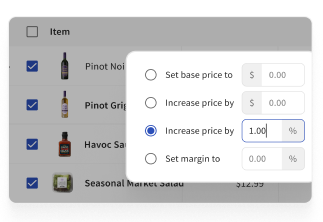
Efficient SKU Management: Easily manage thousands of SKUs with our intuitive product database and bulk updates feature. Modify, reprice, and import multiple products at once, saving valuable time and resources. With Toast, keeping track of your inventory has never been easier.
Retail-Enhanced Dashboards: Stay on top of your business with retail-specific dashboards and cost-tracking reports. Monitor trends, maximize margins, and ensure your top-selling products are always stocked, empowering you to make data-driven decisions that drive profitability.
3. Tailor Your Customer Experience
Toast empowers you to tailor the customer experience to fit your unique retail concept. Whether you're considering adding food service or expanding your offerings, Toast's flexible platform accommodates creative expansion.
Creative Expansion Opportunities: Thinking of adding food service to your retail concept? Including Kitchen Display Systems and Order Ready Boards, our flexible platform allows for creative expansion. Explore new revenue streams and enhance the overall customer experience with Toast's versatile features.
Online Ordering and Delivery Integrations: Give your guests the option to order from home with Toast’s Online Ordering and our third-party delivery integrations. Meet your customers where they are and provide convenience that keeps them coming back, increasing customer loyalty and satisfaction.
Loyalty Rewards and Personalized Offers: Be your neighborhood's favorite shop (and incentivize repeat visits) with loyalty rewards and personalized offers. Transform one-time shoppers into loyal patrons by engaging with your community and offering enticing rewards, making your store the go-to destination for your customers.
In conclusion, Toast's retail solution is more than just a point of sale system; it's a comprehensive toolkit designed to elevate your retail store to new heights. From modernizing sales processes to streamlining management and enhancing the customer experience, Toast empowers retail businesses to thrive in today's competitive market.
Refund Policy Template
Use this free template to quickly outline your refund terms, reduce customer confusion, and handle returns or cancellations with confidence.
Toast Retail can help create seamless guest experiences for your retail and foodservice needs
Get a free demoRelated Resources
이 문서가 도움이 되었나요?
면책 조항: 이 정보는 일반 정보 제공 목적으로 작성되었으며 당사의 권고를 의미하는 것은 아닙니다. Toast는 본 콘텐츠에 포함된 정보, 텍스트, 그래픽, 링크 및 기타 항목의 정확성이나 완전성을 보장하지 않습니다. Toast는 본 문서의 조언을 따른다고 해서 특정한 결과를 얻을 수 있음을 보장하지 않습니다. 귀하의 상황에 맞는 조언이 필요한 경우 변호사, 회계사 또는 비즈니스 자문가 등 전문가와 상담하시기 바랍니다.
 트렌드
트렌드