Restaurant Etiquette: How to Be a Thoughtful & Respectful Guest
Restaurant etiquette shapes how enjoyable dining out feels for everyone. Learn simple habits that show respect in any restaurant setting.
작성자
 RESOURCE
SOPs Template
This template will help you create SOPs for your entire business, so you can create consistency and easily train employees.
무료 다운로드 받기Restaurant etiquette plays a bigger role in the dining experience than many people realize. From how you arrive to how you order and pay, small behaviors can affect not only your own meal but the atmosphere of the entire restaurant.
While expectations can vary depending on the type of restaurant, good etiquette generally comes down to courtesy and awareness. It isn’t about being fancy or knowing the “right” fork—it’s about feeling comfortable in shared spaces. As Philadelphia educator Patrice Lamar-Bey, who teaches dining etiquette to students, puts it:
“It’s so much more than just learning how to act at a restaurant… It gives them a sense of belonging. It gives them a sense of, "I belong here.”
In this guide, we’ll walk through common restaurant etiquette basics so you know what to expect—and how to be a thoughtful guest—whether you’re grabbing a quick bite or sitting down for a longer meal.
Key takeaways
Restaurant etiquette is about awareness and respect, not knowing rigid or formal rules.
Etiquette expectations vary by restaurant type, so understanding the setting helps guide behavior.
Clear, calm communication with staff leads to smoother service and better outcomes.
Being mindful of shared space—noise, seating, and phones—improves the experience for everyone.
Restaurant Business Plan Template
No matter where you’re at in your restaurant ownership journey, a business plan will be your north star. Organize your vision and ensure that nothing is overlooked with this free template.

What is restaurant etiquette?
Restaurant etiquette refers to the common expectations and behaviors that help dining experiences run smoothly. It’s less about strict rules and more about courtesy—being mindful of the people around you, the space you’re sharing, and the service staff supporting your meal.
At its core, restaurant etiquette is a form of shared respect. Guests who communicate clearly, show patience, and treat staff courteously help create a more enjoyable experience not just for themselves, but for everyone in the restaurant. In return, staff can provide better service when interactions are respectful and cooperative.
Etiquette differences by restaurant type
Restaurant etiquette isn’t one-size-fits-all. Expectations vary depending on the type of restaurant, the level of service, and how the space is designed. Understanding the context helps guests know what’s appropriate and what to expect.
Casual vs. fine dining expectations
In casual restaurants, etiquette tends to be more relaxed. Guests may have more flexibility with ordering, pacing, and seating, and the atmosphere is generally informal.
Fine dining settings, on the other hand, often come with higher expectations around dress, timing, and table behavior, as well as a more structured service flow.
Fast-casual and counter-service norms
Fast-casual and counter-service restaurants typically prioritize speed and efficiency. Guests are usually expected to order at the counter, clear their own tables, and be ready to move along quickly during busy periods.
Courtesy and awareness still matter, but the pace and structure are different from full-service dining.
Bars, cafes, and coffee shops
Bars, cafes, and coffee shops each come with their own etiquette norms. Bars often involve shared space and standing service, making awareness of crowding and ordering turns important.
Cafes and coffee shops may encourage guests to linger, but it’s still considerate to be mindful of seating during peak hours—especially when others are waiting.
Before you arrive at the restaurant
Good restaurant etiquette starts before you sit down. A little consideration ahead of time helps restaurants plan service and creates a smoother experience for everyone.
Reservation etiquette
Reservations help restaurants manage seating, staffing, and timing. When plans change, clear communication makes a big difference.
Show up on time: Arriving close to your reservation time helps keep seating on schedule, especially during busy hours.
Notify the restaurant of changes or cancellations: Letting the restaurant know if you’re running late, changing plans, or need to cancel allows them to adjust and offer the table to other guests.
Be accurate about party size and special requests: Providing correct headcounts and advance notice for needs like high chairs or accessibility helps staff prepare appropriately.
Arrival and seating etiquette
Once you arrive, following the restaurant’s seating process helps service flow smoothly.
Check in with the host: Let the host know you’ve arrived instead of seating yourself, even if the restaurant appears open.
Be patient with wait times: Hosts often balance multiple tables and service needs. Waiting calmly helps the process move faster.
Respect seating policies and table assignments: Seating arrangements are based on staff availability, table size, and reservations, even if open tables are visible.
Ordering etiquette
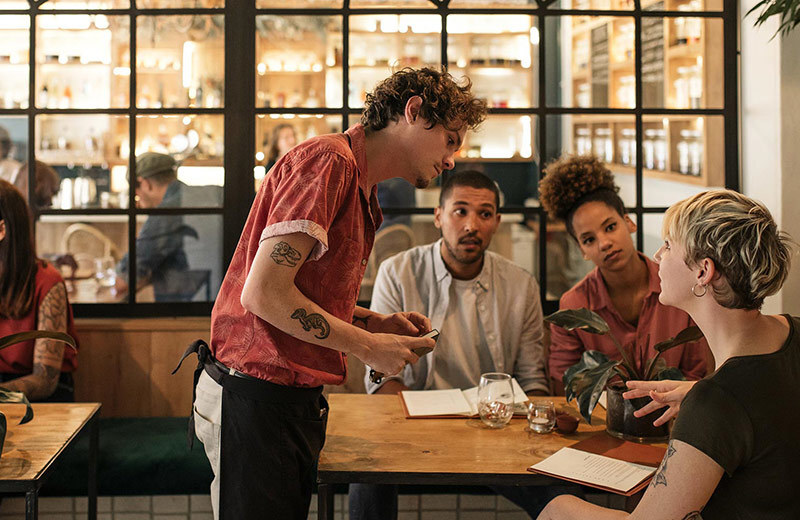
Dining works best when communication is collaborative rather than confrontational. As restaurant veteran Adam Reiner notes, “hospitality is a dialogue.” Calmly explaining concerns and giving staff the information they need helps them resolve issues quickly and effectively.
Reading the menu and asking questions
Menus are designed to guide guests through available options. Reviewing them carefully makes ordering easier for everyone.
Take time to review the menu: Looking over the menu before ordering helps reduce delays and confusion during busy service periods.
Ask thoughtful, respectful questions: It’s okay to ask about ingredients or preparation, especially if you’re unfamiliar with an item. Being concise and polite helps servers assist you more effectively.
Understand what’s reasonable to customize: Some substitutions are easy to accommodate, while others may not be possible due to how dishes are prepared. Being flexible helps keep expectations realistic.
Special requests and dietary needs
Clear communication is especially important when it comes to allergies or dietary restrictions.
Communicate allergies clearly: Let your server know about allergies early so the kitchen can take appropriate precautions.
Be flexible when substitutions aren’t possible: Not all requests can be accommodated safely or efficiently, particularly during peak hours.
Understand kitchen limitations: Kitchens follow specific workflows and ingredient availability, which can limit last-minute changes or complex requests.
Handling issues or mistakes
Mistakes can happen during service, especially during busy periods. How concerns are raised often determines how quickly and effectively they’re resolved.
Address concerns calmly: Speaking politely and clearly helps staff understand the issue without escalating tension.
Give staff a chance to fix the problem: Servers are usually empowered to correct mistakes or involve a manager when needed.
Know when to escalate politely: If an issue isn’t resolved, asking to speak with a manager in a respectful way keeps the situation productive.
Dining etiquette at the table
Once you’re seated, small considerations can go a long way in creating a comfortable environment for everyone sharing the space. In more formal dining settings, restaurants often signal expectations through how food is presented and served. As etiquette consultant Nikki Sawhney explains:
“Whether eating with your hands is acceptable depends on the occasion, the venue, the host’s cultural background, or the country you are visiting.”
Following the cues set by the restaurant—such as plating, utensils, and service style—can help you navigate etiquette without guesswork.
Table manners and shared space
Restaurants are shared environments, and being aware of how your table affects others helps maintain a pleasant atmosphere.
Be mindful of noise levels: Keeping conversations at a reasonable volume helps maintain the restaurant’s atmosphere, especially in smaller or quieter spaces.
Respect personal space and shared tables: Avoid spreading belongings into neighboring seats or aisles, and be considerate when seating is communal.
Manage kids, strollers, and personal items: Keeping walkways clear and children safely within your table area helps staff move easily and prevents accidents.
Phone and technology etiquette
Phones are part of everyday life, but using them thoughtfully helps maintain a respectful dining environment.
Use phones respectfully: Quick messages or photos are fine, but extended use can distract from interactions with staff.
Avoid loud calls or videos: Phone calls, speakerphone use, or videos with sound can disrupt other guests.
Be present during service interactions: Putting phones down when servers approach makes communication smoother and more courteous.
Paying and tipping etiquette
How you handle payment and tipping is often the final interaction of a dining experience. Being prepared and considerate helps service wrap up smoothly for both guests and staff.
When and how to pay
Wait for the check: In full-service restaurants, the check is typically brought after the meal is complete or when requested.
Split checks respectfully: If you need separate checks, letting your server know early helps avoid confusion at the end of the meal.
Be prepared to pay when ready: Having payment ready when the check arrives helps staff turn tables efficiently, especially during busy periods.
Tipping expectations
General tipping norms: In the U.S., tipping is customary for full-service dining, with typical tips based on a percentage of the total bill.
Tipping for different service types: Expectations may vary for counter service, takeout, delivery, or bar service.
Showing appreciation for good service: Tipping is one way to recognize attentive, thoughtful service and contributes to a positive dining culture.
Check, please... but ask nicely
Restaurant etiquette isn’t about following strict rules or trying to be perfect. It’s about awareness, courtesy, and understanding that dining out is a shared experience between guests, staff, and the people around you.
Small actions—showing up on time, communicating clearly, and treating staff with respect—can make a big difference in how smoothly a meal goes. When guests are considerate, restaurants can focus on delivering better service and creating a more enjoyable atmosphere for everyone.
Ultimately, good restaurant etiquette helps turn a meal into a positive experience, not just for you, but for the entire dining room.
FAQ
How long should I wait before requesting my check?
There’s no required waiting period. If you’re ready to leave, it’s perfectly acceptable to ask for the check politely, especially if you’re on a time constraint. In full-service restaurants, servers often wait for cues so they don’t rush guests.
Is it rude to split the check?
Splitting the check isn’t rude, but it’s courteous to mention it early in the meal. Letting your server know upfront makes it easier to track orders and avoids confusion at the end, particularly with larger groups.
What if I need to leave during the meal?
If you need to leave early, communicate clearly and calmly with your server as soon as possible. Settling your portion of the bill before departing and thanking the staff helps keep things smooth and respectful for everyone involved.
How do I politely decline a dish I don’t like?
If a dish isn’t to your taste, explain the issue politely without assigning blame. A simple statement like, “This isn’t quite what I expected—would it be possible to look at another option?” gives staff the information they need to help.
Should I help servers clear plates?
It’s thoughtful but not required. If you’d like to help, small gestures—such as stacking plates neatly or moving items to the edge of the table—can be helpful. Avoid over-handling dishes, as servers are trained to clear tables safely and efficiently.


이 문서가 도움이 되었나요?
면책 조항: 이 정보는 일반 정보 제공 목적으로 작성되었으며 당사의 권고를 의미하는 것은 아닙니다. Toast는 본 콘텐츠에 포함된 정보, 텍스트, 그래픽, 링크 및 기타 항목의 정확성이나 완전성을 보장하지 않습니다. Toast는 본 문서의 조언을 따른다고 해서 특정한 결과를 얻을 수 있음을 보장하지 않습니다. 귀하의 상황에 맞는 조언이 필요한 경우 변호사, 회계사 또는 비즈니스 자문가 등 전문가와 상담하시기 바랍니다.
 트렌드