
The New Economics of Dining: How Successful Restaurants Are Navigating Rising Costs
An inside look at how independent restaurants are surviving razor-thin profit margins — and how the ones still standing have learned to find opportunity inside the pressure.

작성자
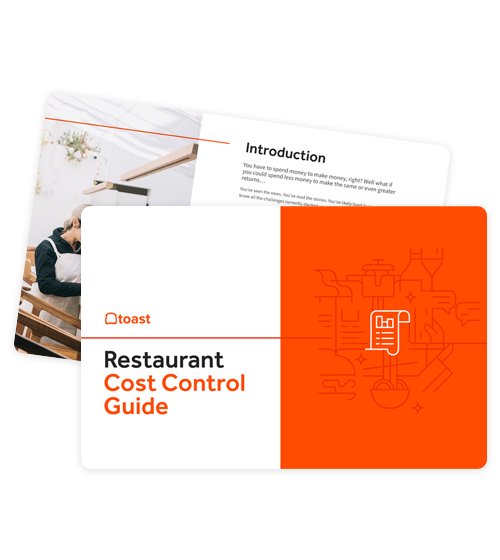
 RESOURCE
Restaurant Cost Control Guide
Use this guide to learn more about your restaurant costs, how to track them, and steps you can take to help maximize your profitability.
무료 다운로드 받기Charlie Eblen remembers the moment clearly. He was standing in the wholesale aisle, staring at a price tag on some brisket. Three dollars a pound.
“I was just flabbergasted at the time.”
That was a few years ago, when he was just getting Single Tree BBQ off the ground as a food truck in Murfreesboro, Tennessee. Today, Eblen runs a brick-and-mortar operation — and brisket is running $7 to $8 a pound. Beef prices are up roughly 17% over this time last year, and the USDA projects another 5.5% increase in 2026, driven by a cattle herd that has shrunk steadily since 2019.
For a barbecue restaurant, this shows up on the P&L every week
“At some point, restaurants just can’t keep absorbing the hit,” Eblen says. “We had to take a modest price increase. I hate doing that to guests, but I can’t have one of my highest-selling items also be one of my lowest-margin items.”
The story of restaurants in 2026 is, in many ways, the story it’s been for years: costs climbing, margins thinning, operators adapting to keep the lights on and the food worth eating. But for restaurants, it looks like the pressure may have shifted. The pandemic-era chaos has given way to something more sustained — not a spike, but a slow, persistent squeeze that tests whether the fundamentals are actually there.
We spoke with a mix of restaurant owners, operators, and managers from around the country to learn about their experiences navigating rising costs. These unique concepts have unique approaches to the same issues facing independent operators: food and operational costs, labor costs, operational expenses, and market changes. Let’s explore how they’re adapting, and what they’re doing to stay competitive.
Restaurant Menu Costing 101 Infographic
From ingredients and labor to rent and insurance, help your guests see what really goes into every dish.

When did life get so expensive?
The Consumer Price Index for Food Away from Home is a monthly measure of nationwide restaurant purchases. For the 12 months ending December 2025, that index rose 4.1% — a sign that restaurant dining remains a priority for American consumers even as costs climb. The most recent data, from January 2026, shows food-away-from-home prices running 4.0% higher than a year prior.
Toast’s Menu Price Monitor, which tracks median pricing across our network of restaurant locations, puts real numbers on what guests are seeing on menus right now.
In January 2026, the median burger price was $14.62, up 2.9% year-over-year. Burritos came in at $13.51, up 3.2%. Regular coffee reached $3.61, up 3.4%, while cold brew climbed to $5.55, up 3.9%. Beer saw a more modest 2.0% increase at a median of $6.48. Wings held relatively steady at $13.82, up just 1.8%.
Operators are watching these numbers closely. Nearly half (48%) say they plan to increase menu prices if inflation continues to be a factor, a direct reflection of the tough choices required to protect margins in a high-cost environment.
I remember walking into Sam's and seeing brisket eclipsing $3 a pound. I was just flabbergasted at the time.

Charlie Eblen
Founder, Single Tree BBQ
The math behind the meal
Those numbers play out differently depending on where you sit. For guests, it's a line item on a credit card statement. For operators, it's a daily negotiation between what things cost and what people will pay.
Shaz Khan, co-founder of Tono Pizzeria and Cheesesteaks — a seven-location concept in the Minneapolis–St. Paul area — breaks it down.
“Whether it’s labor, food, or anything else, ultimately the customer ends up bearing a good portion of the cost,” he says. Even when restaurants try to absorb increases, “there is a significant portion, including SaaS fees, that’s going to be passed along to the customer.”
Most restaurants target a prime cost — the combined total of food and labor — of 60–65% of sales, with each ideally clocking in around 30%. But when brisket has more than doubled in price, and when natural gas climbs 10.8% year-over-year and electricity rises 6.7%, that 30% becomes harder to hold.
Michael Ungaro, CEO of San Pedro Fish Market — a fourth-generation family restaurant with three locations in Long Beach, California — has spent years pushing back on a persistent misconception.
“A lot of people think that well, you're an owner, so you must be rich,” he says. “They don't understand that in the average restaurant, you're lucky if you could pull 8 to 10% as your profit margin.”
The labor market
Labor is the other lever. In some markets, wages have pushed labor costs to 20–25% of revenue.
Eblen saw that pressure firsthand. When we spoke in 2024, he noted that wages had jumped quickly since opening — from an average of $13 an hour to entry-level workers coming in at $14–15 before they'd ever worked a shift. Now, he says, that rapid climb has leveled off. Entry-level wages in his Tennessee market have stabilized around the same range, and he's shifted how he thinks about compensation, moving away from a fixed rate tied to experience.
“I try to pay people based on what they bring to the table, not just their years of experience,” he said. “It’s more skill-based than resume-based.”
What the operators doing well have in common
To succeed right now, operators need to be ready to redefine efficiency without losing what makes their restaurant great.
When pickle costs started adding up at Single Tree, Eblen started making his own — better product, lower cost. The trim and excess weight from butchering brisket became the raw material for house-made hot dogs, burgers, and chili.
“We’ve done a lot of things to reduce costs on the menu,” he says. “We make pretty much everything ourselves now — sausage, hot dogs, burgers, pickles, tallow for cooking. We try to eliminate as much waste as possible, and by doing that we can give guests more and keep leveling up the quality.”
He also increased his lunch burger patty from 5 ounces to 8 ounces at the same $6.99 price point — well below the national median of $14.62.
“A lot of people would say that’s counterintuitive — giving more for less money — but if I sell more and waste nothing, I might not make more money, but I’m not losing it either,” said Eblen. His real priority right now is driving value. “The average person is looking for value,” he said. “Not necessarily cheap, just high value. And we try to make that obvious on the plate.”
Across the industry, Toast data shows 37% of operators have adjusted food suppliers, 36% are tracking ingredient prices more closely, and 26% have trimmed their menu offerings to protect margins.
Playing offense
The numbers will keep shifting. Beef could stay volatile. Labor markets can change.
“Food cost and labor — those are always the two biggest levers in any restaurant,” Eblen says. “And the answer to both is always driving top-line revenue.”
That means marketing, consistency, and hospitality that keeps guests coming back. It's a bet the industry is making broadly: If consumer spending were to slow, 47% of operators say their top response would be to increase marketing — well ahead of cutting hours or reducing headcount.
“We learned early on: If you become an expert at the basics and do them better than everyone else, you're going to win,” Eblen says. “So we stay focused on nailing our food, nailing our hospitality, and nailing our storytelling. If we can market and advertise, provide undeniable hospitality, and serve the perfect plate of barbecue — I've got a pretty good feeling we'll be alright."
이 문서가 도움이 되었나요?
면책 조항: 이 정보는 일반 정보 제공 목적으로 작성되었으며 당사의 권고를 의미하는 것은 아닙니다. Toast는 본 콘텐츠에 포함된 정보, 텍스트, 그래픽, 링크 및 기타 항목의 정확성이나 완전성을 보장하지 않습니다. Toast는 본 문서의 조언을 따른다고 해서 특정한 결과를 얻을 수 있음을 보장하지 않습니다. 귀하의 상황에 맞는 조언이 필요한 경우 변호사, 회계사 또는 비즈니스 자문가 등 전문가와 상담하시기 바랍니다.
 트렌드


