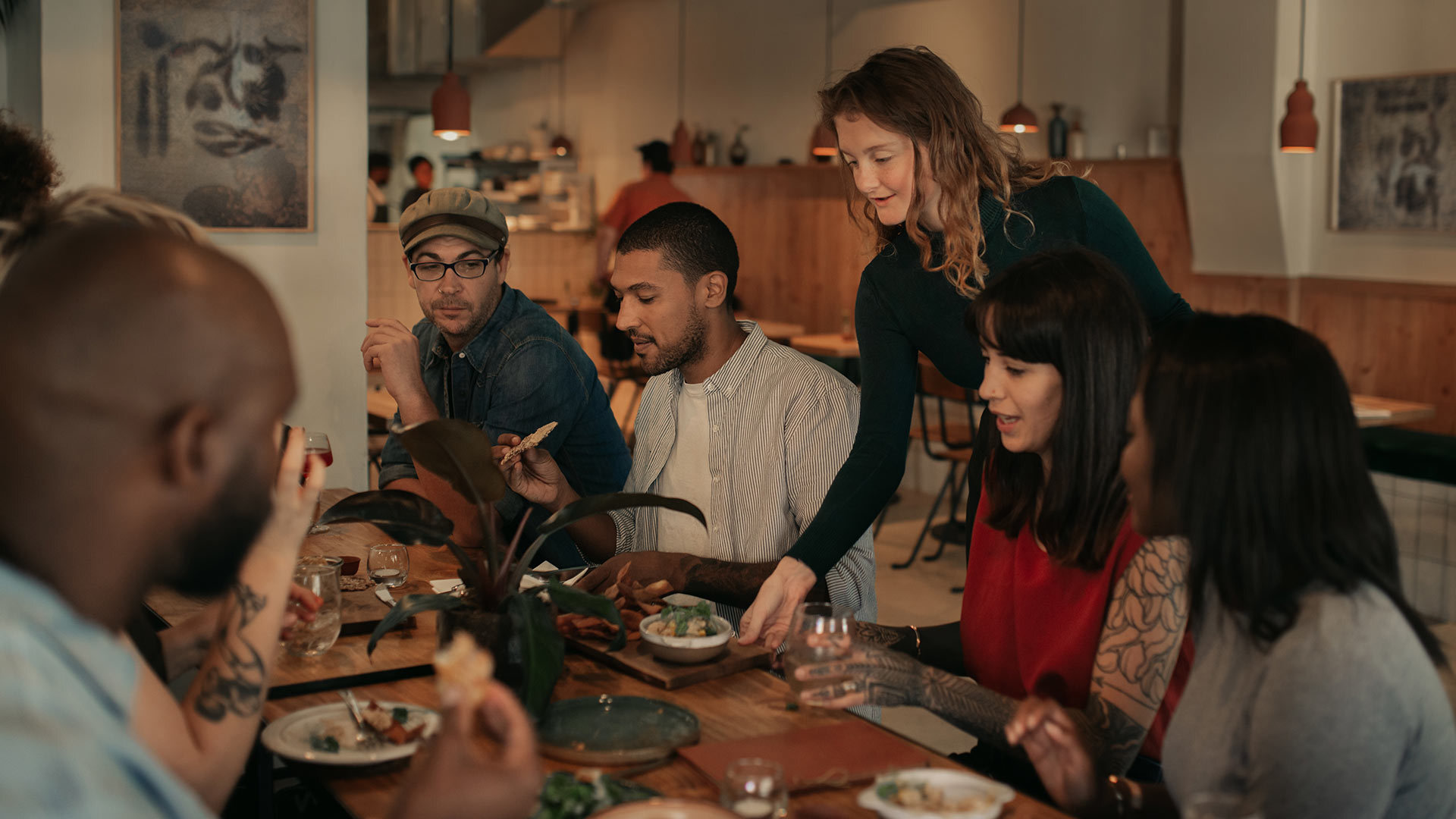
How Millennials Decide Where and What to Eat
Millennials have a lot of spending power. Make sure your advertising to this audience is backed by data.
작성자

The Millennial audience has become the major focus for multi-unit dining organizations and rightfully so. With 87 million people, aged 18-34, this audience is larger than the Baby Boomer generation and three times the size of Generation X. They are approaching $600 billion in annual spending according to the Pew Research Center. Yet dining occasions have shrunk among this group by estimates as high as 20%.
In an effort to better understand their attitudes toward dining out and predict future behavior on behalf of our restaurant clients, we conducted a national survey of millennials.
From this restaurant data, it was clearly shown that their frequency of dining out has decreased. Millennials are staying home to eat more often and planning to prepare more meals than eating out.
What does this mean for restaurants? Their toughest competition is now... the refrigerator.
To understand this better and see how restaurant brands can gain back some of this market share, we dove into how this demographic decides where and what to eat.
How Do They Decide?
The millennials we polled go through a long decision checklist quickly and subconsciously. They factor in type of food, location, past experience, timing, their party, and mood, among other factors. They want to maximize each occasion for quality. They cannot afford to have a bad experience. In the absence of a clearly great option, they will opt for the refrigerator. The initial decision is whether to stay in or go out at all.
They rated a list of factors for us on this single decision point in our poll:

As you can see, these top four factors are out of the control of restaurant brands. A restaurant can offer a special, discount, or promotional item, but they cannot control the discretionary income of their audience on an individual level. Restaurants can celebrate holidays, but cannot create a personal occasion for customers. And as we’ve discussed, there is no way to compete with the contents of millennials' refrigerators.
Where To Dine?
Once millennials decide to venture away from the refrigerator, they continue down the funnel to help choose the best location for their meal.
We asked them to select factors that help them decide.

As you can see, they believe they are always deserving of a great experience. This is critical for marketers, as millennials base future expectations on past experiences with the brand. A restaurant may lure them in with an offer, but if they encounter any friction, they carry that weight with them into the next decision period.
This means that delivering great service and meeting food expectations is critical to winning millennial loyalty.
They will return if they have a memorable, share-worthy experience.
Note that price was also high on the list, reminding us that cost is always on the millennial mind.
We also noted that factors like “Chef Reputation” (17%) and “Local Grown Food” (16%) were not demonstrably important to the millennials we surveyed. Despite the trendiness of both, our respondents suggested these were not critical factors. Of course, individual restaurants and markets vary greatly. Every restaurant can be unique in its presentation of each factor.


How Can Restaurants Capture Millennial Diners?
There are a variety of ways you can learn how to speak millennial and help your brand grow in a no-growth category.
For this post, we are going to focus on one critical factor: awareness.
Because the decision comes and goes so quickly, awareness is critical. A consumer cannot consider what isn’t known; and as our poll revealed, millennials put a lot of weight on past experience and a lot of pressure on a positive predicted experience. They are willing to explore, but are not likely to engage in a complex search to find new choices.
We asked questions to reveal the relationship between brand awareness and their favorite restaurant brands. It became immediately clear that there was a very strong correlation between brands highest in awareness and ranked as “favorite” in both fast-casual and casual dining categories.
How to Market to Millennials
Awareness is critical, but that doesn’t have to mean national or regional awareness. It's possible to create geo-based marketing campaigns to drive immediate action on a local store level. Using relevant, focused campaigns, brands today can create awareness with a local target.
If you take these insights into consideration when marketing a restaurant to millennials, you will be successful in reaching the right audience. Millennials are also more and more attracted to restaurants with loyalty programs, gift card programs, easy online ordering, and digital receipts.
For a full recap of our study, you can download the whitepaper ‘Understanding the Millennial Decline in Dining Out’ now.
Related Restaurant Resources
Restaurant Marketing Plan
Create a marketing plan that'll drive repeat business with this customizable marketing playbook template and interactive calendar.

이 문서가 도움이 되었나요?
면책 조항: 이 정보는 일반 정보 제공 목적으로 작성되었으며 당사의 권고를 의미하는 것은 아닙니다. Toast는 본 콘텐츠에 포함된 정보, 텍스트, 그래픽, 링크 및 기타 항목의 정확성이나 완전성을 보장하지 않습니다. Toast는 본 문서의 조언을 따른다고 해서 특정한 결과를 얻을 수 있음을 보장하지 않습니다. 귀하의 상황에 맞는 조언이 필요한 경우 변호사, 회계사 또는 비즈니스 자문가 등 전문가와 상담하시기 바랍니다.
 트렌드
트렌드