
The Fundamentals of Restaurant Employee Scheduling
Learn how to create a restaurant employee schedule that keeps your staff happy and your restaurant running smoothly.

작성자
 Resource
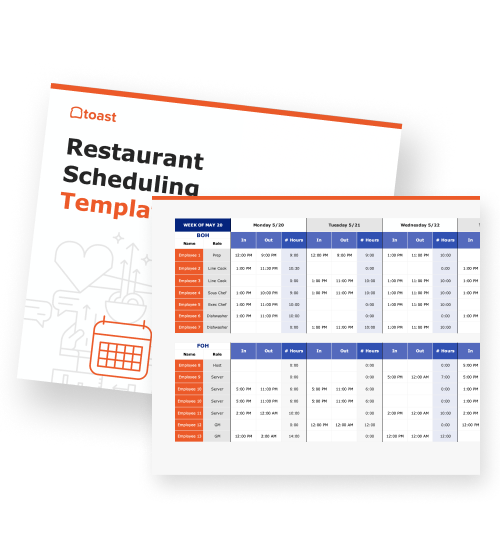
Restaurant Scheduling Template
Use the Restaurant Scheduling Template to easily schedule your restaurant staff's shifts.
무료 다운로드 받기Building a staff schedule can be deeply time-consuming because it comes down to balancing the needs and priorities of everyone on your team.
Restaurant work can be physically and emotionally demanding, so ensuring that the staff schedule includes time off for every employee is crucial. But it’s a balancing act: if a shift is understaffed, those who are scheduled will be way more likely to end up in the weeds, which negatively impacts the customer experience. And since restaurants operate on notoriously slim margins, overstaffing is an issue, too: scheduling too many people on a shift means spending unnecessary labor budget that could seriously eat into the day’s profit margins (and leave employees bored).
Front-of-house employees often all want to be scheduled on the busiest, most lucrative shifts — and each back of house employee needs to be scheduled to stations they know how to work. This complexity is compounded by the fact that only 45% of employees work full-time in restaurants — which means it’s likely your staff are juggling multiple jobs and multiple schedules.
Mastering the art of the restaurant employee schedule is a key skill for restaurant owners, and an important way to keep employees engaged, happy, and working at your restaurant for years to come.
When done correctly, a restaurant schedule perfectly matches up the number of staff needed to cook for and serve the number of guests that are likely to come in. Getting it right takes a lot of meticulous planning, research, and trial and error.
Luckily, the restaurant industry has evolved past manual time clocks and spreadsheet-based scheduling. There are many great restaurant schedule software options, with POS integrations that yield actionable insights and mobile apps for easy staff communication. These employee scheduling tools make everything from building a schedule to clocking in easier than ever.
Restaurant scheduling software is a gamechanger
By integrating your POS system with an employee scheduling software like Sling, you’ll gain access to a wealth of scheduling and sales data that can inform your future schedules. This data helps you staff strategically and accurately, and spend more time on the interpersonal side of employee management — because going high-tech drastically minimizes the amount of time you’ll spend in the office making the schedule.
Here’s some of the functionalities that your employee scheduling software should have:
Drag-and-drop schedule creation
Real-time schedule updates and in-app team communication and announcements
Anytime, anywhere work schedule access
Employee messaging within the app
Quick-change scheduling features, like shift swap requests
In-app time-off requests and manager approvals
Integration with your time clock (which is typically on a POS or an iPad these days), so clock-ins are logged in the app
Automatic timesheet creation
Time-tracking that sends alerts for overtime and labor budget alerts
How to Build a Staff Schedule
1. Choose how often you’ll create your employee schedule
Some restaurants schedule week-to-week — but that keeps the whole team on short notice and wreaks havoc on work-life balance. It also keeps schedule writers scrambling to accommodate requests, because last-minute scheduling means that every time-off request is also last-minute.
Many team members appreciate a schedule that reaches further into the future. Monthly schedules might seem like a good idea, but especially since so many restaurant workers have multiple jobs, it’s not always possible to plan that far ahead.
Two weeks is often a happy medium.
Remember to consider your schedule lead time – from how soon it’s published to when it begins. Even a two-week schedule can feel last-minute if Monday’s shifts aren’t posted until Sunday morning.
2. Create and communicate time-off request policies
Designate a regular time (monthly or biweekly) for staff to submit or update their availability and time-off requests so that you’re able to quickly provide manager approval and always have access to their most up-to-date scheduling needs and wants.
3. Gather all the moving pieces
When you sit down to build a schedule, have all of the schedule’s moving pieces at hand: the last schedule, employee availability, their time off requests, sales forecasts, weather forecasts, and your local event calendar. Then, open your restaurant employee scheduling software (or your employee scheduling template).
4. Analyze previous schedule data and populate the schedule
Dig into the data and make the changes you and your team need. Incorporate questions and insights, like:
What are the best shifts to schedule some training? Can your trainer and the new team member work the same shift?
The rain last week really didn’t impact lunch sales.
Are there too many requests for the same shifts?
Then, fill in the schedule, by dragging and dropping in an app or by filling out a spreadsheet template.
Restaurant Shift Notes Template
Download our easy-to-use Microsoft Word templates to keep your team organized and informed throughout every shift. From pre-shift planning to end-of-day wrap-up logs, our template helps ensure smooth communication and a well-run restaurant.

5. Publish the schedule
If you’re using a restaurant scheduling app or software, fill in the blanks, save it, and hit “Publish”. Your team will automatically be alerted to a new schedule being posted, and they can check it from their mobile devices.
If you’re using and printing a schedule from a restaurant scheduling template, fill in the blanks, save it, print it, and post it in a high-visibility space in the restaurant. You should also take a photo of it and send it to your team, either in a text thread, an email, or through an employee communications tool.
Try to always post or publish the schedule at the same time every two weeks so employees aren’t left wondering when they’re working. Aside from paychecks, the schedule is the most important document you provide to your team members, so consistency is appreciated.
6. Prepare for (and accommodate) last-minute changes
Something always comes up. No matter how well-planned your schedule is, life happens — people get sick, call out, have transportation issues, need to care for a family member, and need to manage school closures. Every once in a while, all employees can expect to have to cover for a teammate, so get on the phone and find out who can cover for the missing employee.
Some restaurateurs use sites like Pared or Instawork to find last-minute and temporary staff. Calling in a temp teammate requires fast onboarding and trust in your core team, but it can relieve some of the pressure around no-shows and around the holidays.
Once you have someone to fill in, make the changes in the schedule. In an app, just change the schedule and publish it again, ensuring your team gets a notification about the update. If you’re creating and printing a physical schedule, adjust it, reprint it, post it again, and send out a photo of the new schedule.
7. Reflect and ask for feedback
No schedule is perfect. How many schedule changes were needed? Were the sales forecasts accurate? Did we have the coverage we needed? How closely do team members' clock-outs match the schedule? Did you gather the data you need to make the next schedule more accurate?
Regularly ask your team members how the schedule has been for them. Team member perspectives can be very different from yours, and this anecdotal information is a great complement to all of the hard data you’ll get from a restaurant scheduling tool.
Restaurant staff scheduling tips
Beyond the basic how-tos, there are a lot of strategies you can incorporate into staff management and scheduling.
1. Lead by example - take time off!
The restaurant industry’s notoriously long hours and physically demanding work make time off non-negotiable if you want to stay in the industry long-term. Make this clear to your employees by taking time off yourself. If your team sees you working to the point of burnout, they’ll feel the need to do the same.
2. Plan for and honor time off requests
When you hire a new team member, make sure they understand your expectations of how much they’ll typically work and when, and tell them your time off policy.
To show you care about your staff’s wellbeing, do your best to honor their requests for time off. If they’re reliable, hard workers with a good attitude, the hassle of managing without them for a bit is worth it to make sure they stick around.
To minimize last-minute time-off requests, check in with your staff frequently about their availability. Don’t wait for them to come to you the week before a long weekend.
3. Try open shifts or set shifts
If you’re getting feedback from staff that they don’t like the shifts they’ve been scheduled, try changing things up completely. Here are two approaches you can take:
Open Shifts
Every two weeks, publish your schedule with a few unassigned shifts and give your staff a time frame in which they can sign up for them. This is a great way to accommodate the needs of staff who want to get in as many hours as possible while keeping your less-available staff happy with the shifts they want. When employees get to choose these extra shifts, you offer them the chance to work by choice, not obligation. You’ll have final approval, but by offering employees the chance to choose the shifts that interest them, you’ll introduce collaboration, flexibility, and ownership into the scheduling process – and make things like shift swaps easier.
Set Shifts
Set shifts mean all your employees have a firm schedule that rarely changes. Set shifts aren’t flexible, but they’re stable – and this can work for both full-time and part-time employees. If your staff are the type that craves a little bit of stability in a hectic industry — especially if they have kids or relatives to care for — they’ll appreciate this scheduling tactic.
"Working [the] exact [same] shifts every week sounds kind of boring, and you're gonna mix it up some but with minor exceptions. Man, that can really be a great way of maintaining a positive relationship with your employees," says Joe Hannon, who worked front-of-house and management for 11 years before joining Restaurant365. “Obviously you have to have loyal employees to do this and pull it off. You have to have some pretty good cross-training, too, so people can fill in for other positions.”
And if a staff member quits, you know exactly which shifts you need covered, he added. “You go into the interviews and have a plan of attack. You're like, ‘I just need Tuesday through Saturday from 5:00 PM to close. You get Sunday, Monday off every time.’”
4. Schedule sidework
Instead of adding housekeeping items to the end of an already long closing shift, consider booking certain employees for shorter shifts devoted to side work, administrative work, or chores. Assigning behind-the-scenes work in smaller chunks could be the perfect scheduling solution for those with limited availability who still want to pick up hours when possible.
Instead of cutting staff as soon as a lull begins, proactively keep them on and give them sidework. Cutting staff deprives your team members of hours and creates a competitive environment (instead of a collaborative one). There’s are always something to do that can be done by any team member, so have sidework tasks listed and ready to assign.
One caveat: Familiarize yourself with relevant call-out and minimum shift time bylaws in your state before introducing shorter shift times.
5. Cross-train
Cross-training is crucial in restaurants. If you can invest the time in training your line cooks to work every station, you’ll be prepared for days when you’re understaffed, and you’ll be able to schedule any cook whenever there’s a timeslot or station open.
This works in front of house as well: Make sure your servers know how to bartend — if they’re of legal age to do so — and vice-versa.
You don’t have to take on the task of cross-training alone. If you have a cook who has been shining lately, ask them to mentor a newer cook who could learn a new station or two. Mentorship can be extremely rewarding for both parties and encourages collaboration among the whole team.
6. Analyse and use your staffing data
Using a staffing platform (instead of an Excel spreadsheet) not only saves time, but it generates useful data on labor costs, sales, and staff performance. For example, you can find out which of your servers are top performers at lunch versus dinner, and make sure you’re scheduling them accordingly. Your lunch superstar might be amazing with kids, and your dinner champion might have a knack for upselling wine. Bringing those insights into your scheduling process helps.
There’s an unspoken rule in many restaurants that “good” shift schedules and sections are reserved for your most senior staff — but this strategy isn’t great for the team or the restaurant. There are a ton of other ways you can show appreciation to your staff, and your schedule should be made using insights from data, not feelings.
7. Plan for holidays
Create a holiday time off policy. And if you can, pay time and a half for especially sought-after days off like Christmas and New Years Day, and consider providing a small gift to employees who work the big holidays. Also make sure they have a good amount of time off scheduled for shortly after the holiday rush.
Ask your staff to submit their holiday availability at least a month in advance to help with your holiday scheduling, and communicate to your staff that last-minute holiday day off requests can’t be accommodated.
Another option is to consider not opening on the big holidays at all if you think that giving that day off to your staff will make them happier. The lost revenue from Christmas Day diners could be worth it if it means you don’t have to replace staff.
Restaurant Scheduling Template
Use the Restaurant Scheduling Template to easily schedule your restaurant staff's shifts.
Seamless, effective restaurant staff scheduling
Strategic scheduling gives you the chance to create shifts employees will want to work. The right scheduling platform, and an emphasis on work-life balance, can inspire engagement, maximize efficiency, increase retention, and encourage accountability. When employees can count on transparency and support in their workplace, they’ll actually look forward to punching in.
Related Restaurant Resources



이 문서가 도움이 되었나요?
면책 조항: 이 정보는 일반 정보 제공 목적으로 작성되었으며 당사의 권고를 의미하는 것은 아닙니다. Toast는 본 콘텐츠에 포함된 정보, 텍스트, 그래픽, 링크 및 기타 항목의 정확성이나 완전성을 보장하지 않습니다. Toast는 본 문서의 조언을 따른다고 해서 특정한 결과를 얻을 수 있음을 보장하지 않습니다. 귀하의 상황에 맞는 조언이 필요한 경우 변호사, 회계사 또는 비즈니스 자문가 등 전문가와 상담하시기 바랍니다.
 트렌드

