How old do you have to be to work at a bar?
Wondering how old you have to be to work at a bar? Learn the minimum age requirements by state, job role, and type of establishment in this comprehensive guide.
작성자
 RESOURCE
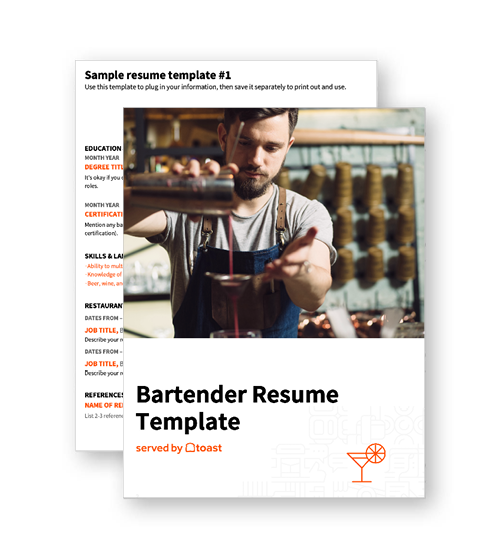
 Bartender Resume Template
Use this easy-to-use Microsoft Word template to showcase your experience and secure your next bartending role!
무료 다운로드 받기The allure of crafting cocktails behind a busy bar attracts many aspiring hospitality professionals, but understanding age requirements for bar work creates complex considerations across different roles and jurisdictions.
Unlike restaurant serving positions, bar employment involves direct alcohol handling and mixing, which significantly raises age thresholds in most states. Whether you're a young adult planning your career path or a bar owner navigating hiring regulations, this comprehensive guide examines everything you need to know about minimum age requirements for bar employment in 2025.
Bartender Resume Template
Use this easy-to-use Microsoft Word template to showcase your experience and secure your next bartending role!

Federal framework sets baseline standards
The Fair Labor Standards Act establishes fundamental protections for young workers in hospitality settings. The FLSA sets 14 years old as the minimum age for employment, and limits the number of hours worked by minors under the age of 16. However, these federal guidelines primarily address non-alcohol related work, leaving states to determine their own alcohol service requirements.
Federal child labor protections become particularly relevant for younger bar employees who might work in supporting roles. The child labor provisions of the FLSA were enacted to ensure that when young people work, the work does not jeopardize their health, well-being, or educational opportunities. Also, the FLSA generally prohibits the employment of a minor in work declared hazardous by the Secretary of Labor, which can affect certain bar operations.
State-by-state age requirements create a complex landscape
State laws specify a minimum age for employees who serve or dispense alcoholic beverages in on-premises establishments. In many States, however, on-premises servers may be younger than 21. In some cases, persons under 21 may be allowed to serve alcohol or tend bar only in certain types of on-premises establishments (e.g., restaurants), or may be allowed to serve or dispense only some beverage types (e.g., beer, wine).
Most states require workers who serve alcoholic beverages to be at least 18 years old, though significant variations exist across jurisdictions. Several States place conditions on on-premises servers and bartenders under 21 years of age.
Recent legislative trends show movement in both directions. Maine used to be the only state where anyone under the age of 18 could legally serve alcohol, but since the COVID-19 pandemic, labor shortages in the food and beverage industries have prompted a few other states to lower the minimum age for alcohol service. As of early 2025, Maine and Michigan both allow bartenders as young as 17, and Iowa allows 16-year-olds to serve alcohol under restricted conditions.
Critical distinction between bartending and serving alcohol
Understanding the difference between bartending and serving alcohol proves essential for navigating age requirements. Bartending involves not only serving alcohol but also preparing, mixing and creating drinks for customers. This direct alcohol handling typically requires higher age minimums than simply carrying prepared drinks to customers.
Serving alcohol, on the other hand, refers to the act of bringing already prepared alcoholic beverages to customers. This distinction allows some establishments to employ younger workers as servers while requiring older employees for bartending positions.
Many states create additional complexity by differentiating between types of alcoholic beverages. In Maryland and North Carolina, you can serve wine and beer at 18, but you have to be at least 21 to serve spirits. In Ohio, you can serve beer as a bartender at 18, but have to be 21 to serve wine and spirits.
The type of establishment also influences requirements. High-end establishments and venues that serve a wide range of complex cocktails may prefer older, more experienced bartenders. Conversely, casual dining restaurants or family-owned bars may focus more strictly on legal minimums.
Licensing and certification requirements by state
Beyond age requirements, many states mandate specific licensing or certification for bar employees. It's common for jurisdictions to set other requirements for bartenders and alcohol servers, including mandatory compliance training, especially for those under 21.
These programs, often called responsible beverage service training or alcohol seller/server training, provide essential knowledge about legal requirements, safety protocols, and responsible service practices. Successful completion of one of the courses is often referred to as a bar card, bartending license, or bartender certification.
Certification requirements vary significantly by state. Some jurisdictions require all alcohol service employees to complete training regardless of age, while others mandate additional training specifically for younger employees.
Nevada represents one of the more stringent licensing states. Like the rest of Nevada, you have to be at least 21 to work as a bartender in Las Vegas. Nevada also requires you to hold a bartending license and renew it every four years.
Supervision and workplace restriction considerations
Many states impose additional requirements on younger bartenders beyond basic age thresholds. Some states place conditions on on-site bartenders under age 21, such as requiring that a supervisor 21 or older be present.
These supervision requirements can significantly impact scheduling and operational flexibility. Establishments must ensure appropriate oversight while managing labor costs and maintaining service standards during all operating hours.
Individual employer policies can also influence the minimum age for bartenders. Some employers set higher age limits based on their own standards or insurance requirements. Bars and restaurants with reputations for serving mature clientele may prefer older bartenders to align with their brand image and customer expectations.
Local ordinances can override state minimums, creating additional complexity. Beyond state laws, local municipalities can impose additional regulations. Cities and counties might have their own rules regarding legal bartending age, which can be stricter than state laws.
Frequently asked questions
What is the youngest age someone can work as a bartender in the United States?
As of early 2025, Maine and Michigan both allow bartenders as young as 17, making 17 the youngest legal bartending age in the country. However, most states require bartenders to be at least 18 or 21 years old.
Can 18-year-olds bartend in all types of establishments?
No. Some states allow younger individuals to serve alcohol in restaurants, but not in bars or clubs. Additionally, many states differentiate between beer/wine service and spirits service, with higher age requirements for spirits.
Do all states require bartending licenses or certifications?
Requirements vary significantly by state. Some states mandate responsible beverage service training for all alcohol servers, while others require licenses only for certain types of establishments or younger employees. Make sure you know the rules and regulations of your state.
How do supervision requirements affect younger bartenders?
Some states place conditions on on-site bartenders under age 21, such as requiring that a supervisor 21 or older be present. This can limit scheduling flexibility and may influence hiring decisions.
What's the difference between working at a bar versus working at a restaurant that serves alcohol?
Age requirements often differ between bar and restaurant environments. Restaurants may have more flexibility for younger workers in non-bartending roles, while standalone bars typically require all alcohol-handling employees to meet bartending age requirements.
Can local laws be stricter than state requirements?
Yes. Beyond state laws, local municipalities can impose additional regulations, including higher age requirements than state minimums. Cities and counties may set their own rules that bars must follow.
이 문서가 도움이 되었나요?
면책 조항: 이 정보는 일반 정보 제공 목적으로 작성되었으며 당사의 권고를 의미하는 것은 아닙니다. Toast는 본 콘텐츠에 포함된 정보, 텍스트, 그래픽, 링크 및 기타 항목의 정확성이나 완전성을 보장하지 않습니다. Toast는 본 문서의 조언을 따른다고 해서 특정한 결과를 얻을 수 있음을 보장하지 않습니다. 귀하의 상황에 맞는 조언이 필요한 경우 변호사, 회계사 또는 비즈니스 자문가 등 전문가와 상담하시기 바랍니다.
 트렌드
트렌드