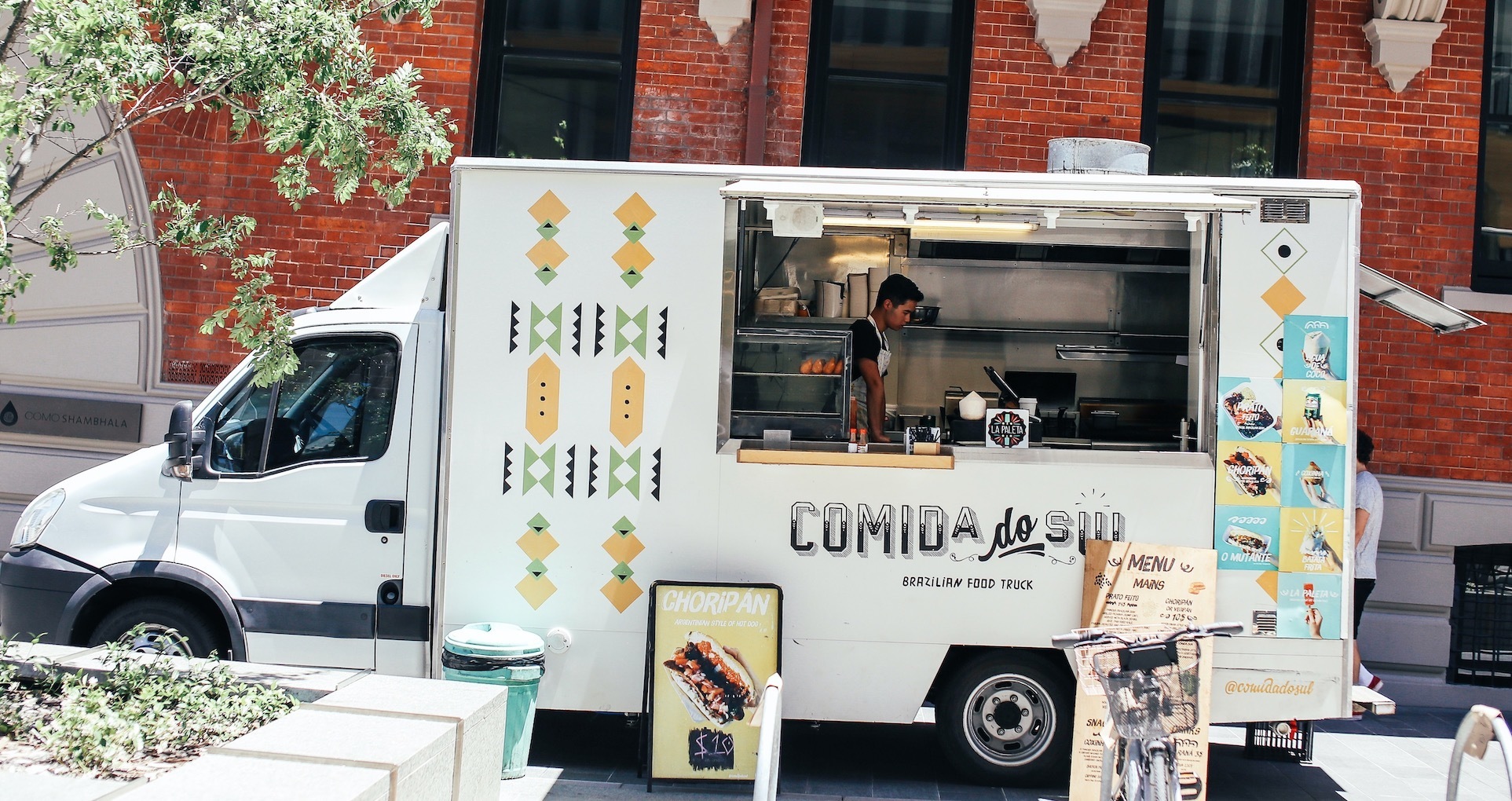
How Much Do Food Trucks Make in 2026?
Knowing your earning potential helps you plan a successful food truck. Learn how much food trucks make and how to estimate your own earnings.
작성자

Food Truck Profit Margin Calculator
Use this free Food Truck Profit Margin Calculator to help consistently capture and track your profit margin.
무료 다운로드 받기Food trucks can generate hundreds of thousands of dollars in annual sales, but what an owner takes home depends on expenses and how they pay themselves. Revenue is the money the truck brings in; profit is what remains after costs.
Those numbers can look different from one lunch stop or event booking to the next. Keeping a consistent sales record makes them easier to compare. Toast’s food truck POS system helps operators track sales across service periods and menu items, providing a starting point for understanding where the business earns its money.
This guide breaks down food truck revenue and profit, explains how to estimate your own earnings, and explores practical ways to grow them.
Key takeaways
Food truck revenue is total sales, while profit is what remains after business expenses.
Food truck owner pay depends on the owner’s role, business performance, and available cash.
Estimate food truck revenue by multiplying daily orders by average order value and operating days.
Catering, repeat customers, efficient service, and cost control can help increase food truck profits.
Comparing sales with costs reveals which menu items, locations, and events are most profitable.
Opening a Food Truck Checklist
So many things go into opening a food truck. With this free PDF checklist, you'll set your new business up for success.

How much revenue do food trucks make?
U.S. mobile food businesses with employees brought in an estimated $3.64 billion in revenue in 2024, according to Census Bureau data released in 2026. For an individual-business benchmark, the 2022 Economic Census works out to approximately $297,000 in annual revenue per establishment.
Those numbers describe sales before expenses. The Census category includes food trucks, carts, and other mobile vendors, and one establishment can operate multiple vehicles. It also excludes businesses without paid employees.
There’s a wide range behind that average. Among the 5,326 establishments that operated throughout 2022, annual sales fell into these groups:
Annual revenue | Share of establishments |
Less than $100,000 | 17.7% |
$100,000-$249,999 | 32.6% |
$250,000-$499,999 | 25.5% |
$500,000-$999,999 | 15.0% |
$1 million or more | 9.1% |
Percentages calculated from the Census Bureau’s revenue-size data, rounded to one decimal place.
Some established brands report much higher sales. For example, Cousins Maine Lobster reported average truck sales of approximately $1.3 million in 2024. That’s one franchise brand’s performance, so it shouldn’t be treated as the average for independent food trucks.
What could your truck earn? Start with how often you’ll operate and where you’ll sell. A seasonal truck serving three days a week has different opportunities from one handling weekday lunches and private catering. These published figures provide context, but your schedule, demand, and costs will shape your results.
Once you’re operating, your own sales records become more useful. Toast Reporting + Analytics helps you compare sales over time, see which days bring in the most business, and track your best-selling items. That makes it easier to spot what’s working and plan your next service.
What is a food truck’s profit margin?
A food truck’s profit margin measures how much of its revenue remains after specified costs. Gross profit subtracts the cost of goods sold, while net profit also accounts for the business’s remaining expenses.
Margins can be thin even when sales look strong. CNBC reported that food truck profit margins averaged 5% between 2020 and 2025, citing IBISWorld. That historical figure is a reference point, not a guaranteed result or a target that fits every truck.
Ingredients and packaging: Food, beverages, containers, utensils, and other supplies.
Labor: Wages, employer payroll costs, and paid time spent preparing, serving, and cleaning.
Commissary access and storage: Kitchen rental, refrigeration, dry storage, and related fees.
Vehicle operations: Fuel, maintenance, repairs, and insurance.
Permits and locations: Licenses, inspections, parking, and event fees.
Other overhead: Technology, payment processing, marketing, accounting, and financing expenses.
To calculate net profit margin, use:
Net profit margin = Net profit ÷ Revenue × 100
Here’s a simplified monthly example, assuming all applicable business expenses have been included:
Monthly financial measure | Illustrative amount |
Revenue | $30,000 |
Total expenses | $28,500 |
Net profit | $1,500 |
Net profit margin | 5% |
In this example, the business keeps five cents of each sales dollar after expenses. The $30,000 in sales is not the owner’s paycheck.
Food Truck Opening & Closing Checklist
The beginning and end of a shift can be frantic. Use this free PDF checklist to set your food truck staff up for success.
How much do food truck owners make?
The truck’s sales, its profit, and the owner’s income are separate numbers. An owner who cooks, serves, purchases ingredients, and manages bookings is doing work the business would otherwise need to pay someone else to perform. That’s different from an owner who hires a manager and crew.
When deciding how much to pay yourself, use both the business’s financial records and the responsibilities you handle. An accountant can help you choose the appropriate payment method and avoid confusing business profit with available spending money.
Compensation for your work: If an owner’s salary is recorded as a business expense, it has already been deducted when calculating profit.
Money taken from profits: An owner’s draw or distribution is generally treated differently from a salary expense.
Cash the business needs to retain: Upcoming bills, tax obligations, debt payments, repairs, and planned purchases affect how much can safely leave the business.
Seasonal fluctuations: A strong summer may need to help fund a quieter winter.
How to estimate your food truck’s earnings
A useful earnings forecast starts with the number of orders you can realistically serve. From there, you can estimate sales, subtract expenses, and see what remains.
Estimate average spending: Calculate the expected amount per order, including likely drinks, sides, and add-ons. Keep sales tax and employee tips separate from sales revenue.
Forecast daily orders: Consider foot traffic, service hours, competition, and how many orders your team can prepare. A long line only creates revenue if you can serve it.
Count realistic operating days: Allow for weather, seasonality, maintenance, days off, and other interruptions.
Add catering and private events: Forecast bookings separately, accounting for any regular service they replace so you don’t count the same capacity twice.
Subtract expected expenses: Include costs that rise with sales and those you pay even when the truck is closed.
Compare forecasts with actual results: Review where order volume, average spending, or expenses differed from expectations and update the next forecast.
A basic revenue calculation looks like this:
Expected revenue = Orders per day × Average order value × Operating days
For example:
100 orders × $15 × 20 operating days = $30,000 in monthly revenue
That’s an illustration, not an industry benchmark. If the same truck serves 60 orders per day, monthly revenue falls to $18,000 while many fixed expenses remain.
Keep your startup costs separate from recurring operating expenses, too. Earning a monthly profit and recovering the money invested in opening the business are different milestones.
How to increase food truck revenue and profit
Improving earnings can mean serving more customers, increasing the value of each order, reducing avoidable costs, or choosing better opportunities. Start with the part of your operation where a practical change could make the biggest difference.
1. Choose locations and events based on profit
In Westword’s reporting, The Crock Spot owner Steven Smith described the changing relationship with event organizers: “We used to be seen as a value add, but now we are part of their revenue stream.” Before accepting a booking or returning to a location, review:
Participation costs: Entry fees, revenue-sharing arrangements, parking, and required equipment.
Expected demand: Attendance, competing vendors, service hours, and previous sales.
Total working time: Shopping, preparation, travel, setup, service, and cleanup.
Money remaining: Sales after the costs associated with that service.
Track these results alongside your sales reports. A smaller event with predictable demand and modest fees may contribute more to the business than a crowded festival.
2. Build a catering and private-event business
Corporate lunches, weddings, parties, and recurring bookings can give your truck another source of revenue. Confirmed guest counts and agreed pricing can also make purchasing and staffing easier to plan.
Each booking still needs to cover its costs. Account for travel, preparation, service time, packaging, special requests, and any regular sales you give up to attend.
Toast Catering & Events helps manage quotes, invoices, payment status, and preparation documents. Keeping those details together makes it easier to organize bookings and follow through on what you’ve promised customers.
Food Truck Standard Operating Procedures Template
Use this free Food Truck Standard Operating Procedures (SOPs) Template to easily create and outline standard operating procedures, create operational consistency, and easily train employees.
3. Review menu prices and ingredient costs
Your best-selling item isn’t necessarily the one contributing the most money toward labor and overhead. Review both how often items sell and what they cost to prepare.
Update recipe costs: Supplier price changes can reduce margins without changing the menu price.
Standardize portions: Consistent portions make costs more predictable.
Reduce waste: Adjust preparation quantities to expected demand and track what gets discarded.
Offer relevant additions: Drinks, sides, and combinations can increase spending when their pricing covers the added costs.
Consider preparation time: A profitable item on paper may slow the kitchen enough to limit total sales.
xtraCHEF by Toast digitizes supplier invoices, tracks ingredient-price changes, and supports recipe costing. That helps operators spot cost increases and review menu margins before deciding what to change.
4. Make ordering and pickup easier
Food trucks often have a limited window to serve a crowd. Reducing avoidable delays can help your team make better use of that time.
Keep the menu easy to read, make pickup instructions clear, and separate ordering from collection where space allows. Before adding another ordering channel, confirm that the kitchen can handle the extra demand.
Toast Online Ordering lets customers place orders ahead, while Toast Go handhelds let employees take orders and payments beyond the truck’s service window. These tools give teams more flexibility when a line builds.
5. Give customers reasons to return
Customers need to know where to find you, when you’ll be open, and what makes the next visit worthwhile. Consistent marketing and communication can help turn a successful first purchase into repeat business.
Toast Marketing connects guest and order information with email and SMS campaigns, giving operators a way to stay in touch with customers who have opted in. For a food truck, that can mean reminding regulars about the next stop or introducing them to catering options they didn’t know were available.
Colorado Grill grew its food truck revenue from $61,000 in 2020 to more than $500,000 in 2025.* Owner Wahed Jawad described how collecting customer contact information helped the business promote food truck catering to people who already knew its restaurants.†
*Based on Colorado Grill’s self-reported food truck revenue for 2020 and Toast-derived data for 2025. Individual results will vary.
†Wahed Jawad is a member of Toast’s Independent Customer Advisory Board, which provides hardware discounts and certain covered travel costs. No testimonial was required.
Build on what works
Your food truck’s next opportunity might be more catering bookings or a few menu changes. Knowing what each service earns after expenses helps you choose where to put your time.
Toast’s food truck POS system turns everyday orders and payments into sales reports you can use to make those decisions. Compare that information with your costs, and you can build on the dishes, locations, and bookings that are paying off.
Food Truck POS Comparison Tool
A free, customizable Food Truck POS Comparison Tool to research and compare point of sale systems in one Excel spreadsheet or editable PDF.
FAQ
How much does a food truck make a month?
Monthly revenue depends on daily sales and operating days. For example, $1,500 a day over 20 days produces $30,000 before expenses.
How much does a food truck make a day?
Daily revenue equals orders multiplied by average spending. For example, 100 orders at $15 each generate $1,500 before expenses.
Are food trucks profitable?
Yes, food trucks can be profitable when sales exceed total expenses. Pricing, customer demand, and cost control all affect profitability.
What is the profit margin on a food truck?
Margins depend on sales and expenses. For example, $1,500 in profit from $30,000 in sales equals a 5% profit margin.
How much do food truck owners make a year?
Annual owner income varies with their role, business profits, and available cash. The truck’s sales aren’t the owner’s take-home pay.
How long does it take for a food truck to break even?
There’s no set timeline. Covering operating costs reaches operating break-even, while recovering the startup investment requires additional earnings.
What is the best-selling or most profitable food truck item?
Best sellers depend on your customers. To identify profitable items, compare selling prices, ingredient costs, preparation time, and sales volume.
이 문서가 도움이 되었나요?
면책 조항: 이 정보는 일반 정보 제공 목적으로 작성되었으며 당사의 권고를 의미하는 것은 아닙니다. Toast는 본 콘텐츠에 포함된 정보, 텍스트, 그래픽, 링크 및 기타 항목의 정확성이나 완전성을 보장하지 않습니다. Toast는 본 문서의 조언을 따른다고 해서 특정한 결과를 얻을 수 있음을 보장하지 않습니다. 귀하의 상황에 맞는 조언이 필요한 경우 변호사, 회계사 또는 비즈니스 자문가 등 전문가와 상담하시기 바랍니다.
 트렌드