How Much Does It Cost to Open a Liquor Store? [Liquor Store Startup Costs]
Here's the breakdown of the costs to consider before opening a liquor store.
작성자
 RESOURCE
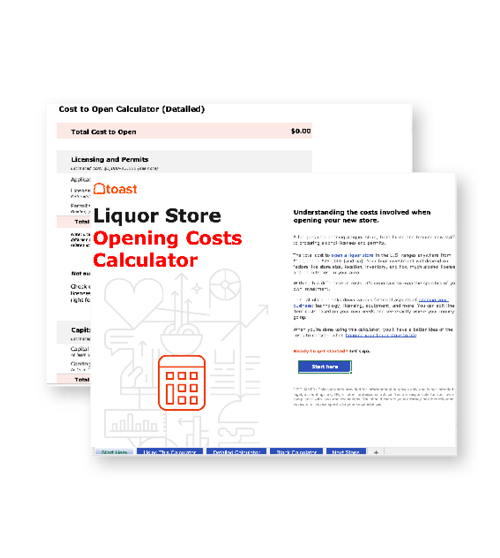
Liquor Store Opening Costs Calculator
This free calculator lays out some of the fundamental financial costs of opening a liquor store, so you can start planning and bring your dream business to life.
무료 다운로드 받기Everything to Know About Liquor Store Startup Costs
If you have a passion for wine, beer, and spirits, you may have toyed with the idea of opening a liquor shop. What better way to make a living than to discover new and exciting bottles, chat with customers, and indulge in your love of Pilsners and whiskey? It sounds like a dream come true. But the reality is that a passion for a product doesn’t always mean you’ll have a successful career selling it.
Opening a liquor store requires a big upfront investment and tons of research. Determining the actual cost to open a liquor store will be your biggest challenge — but also the secret to your success. There are obvious costs that immediately jump to mind, like utilities, rent, and wages for your staff. And then there are stealthier expenses that tend to sneak up, such as marketing costs and interior design — yes, even for liquor stores. There will be sleepless nights trying to figure it all out, for sure. But hopefully, armed with our cost breakdown, you can rest a little easier knowing you’re prepared for any curve balls.
If you’ve dreamed about owning a liquor store, here’s some advice about how much it costs — and how to do it well.
Liquor Store Opening Costs Calculator
This free calculator lays out some of the fundamental financial costs of opening a liquor store, so you can start planning and bring your dream business to life.

How Much Does It Cost to Open a Liquor Store?
We won’t sugarcoat it: The startup costs will be some of the highest expenses you’ll ever have to face, and figuring it out will feel like a crash course in business finance.
According to Nerdwallet, you can expect to spend a minimum of $100,000 to open a liquor store. The location of your shop will impact the price, as will licenses and registrations required by your state, which can run upward of $10,000. Many factors come into play, including the rental market in your area, the size of your inventory, the number of employees, and how much you’ll be tricking out your space.
The good news is that alcohol seems recession-proof, and liquor stores can easily change their inventory to respond to consumer trends. According to NielsenIQ research, today’s drinkers are focused on “wellness” (including low-calorie and sustainable options), convenience, ease of purchasing, authenticity, and “premiumization,” a fancy word for imbibing high-quality tipples.
There’s also been a skyrocketing interest in low-alcoholic and non-alcoholic (NA) drinks since at least 2023, and liquor stores have been tapping into the demand by expanding their offerings.
Price Range: $100,000 – 250,000
Liquor Store Opening and Closing Checklist
Use this free PDF checklist to help your staff keep track of opening and closing tasks and set them up for success, every single day.
Business Opening Cost by Square Foot
Expect to pay about $100 per square foot to open a liquor store. Some suburban and rural areas can be as low as $40 per square foot, whereas in premium city locations, well, the sky’s the limit. Perhaps more important is how you utilize those square feet. While there’s no “correct” floor plan, there’s a psychology to store layout that has been known to optimize sales.
Since liquor bottles, wine bottles, and beer cans generally come in standardized sizes, successful liquor stores often take a cue from Costco and put most of the inventory out on the retail floor. You’ll want to devote most of your shop’s square footage to shelf space, with a smaller area dedicated to inventory storage. Straight, tall shelving along the walls, with special displays and some open space in the middle, feels familiar to customers and provides an easy view of all the intriguing selections in your store.
Pro tip: Customers tend to veer right as they enter, so you’ll want to place impulse buys and highlight special bottles there. Your most popular items and refrigerated cases should be at the back of the shop, so customers must walk past other tempting merchandise to get there.
Price Range: $40 - $500 per square foot
Opening a Liquor Store Checklist
So many things go into opening a liquor store. Use this free checklist to set your new business up for success.
Startup Costs to Expect
When creating a lasting budget for your business, it’s important to differentiate between fixed and variable costs. A fixed expense is one that typically does not change from month to month, like rent. A variable expense goes up and down from month to month, depending on your business's needs.
When starting out, do as much research as you can. You’ll want to plot out a long-distance course to know what to expect at every turn — and how you’ll pay for it.
Here are some of the most significant liquor store startup costs and expenses you can expect.
1. Utilities
Utilities such as gas, water, electricity, internet, and phones must be set up before you open your doors, and the costs can add up quickly. On average, expect to pay about $2.10 per square foot for commercial space in the U.S.
Lighting and HVAC systems tend to be the biggest “energy hogs” for most small businesses.
Price Range: Around $2 per square foot
2. Location
While the interior of your liquor store can always be changed to create the right vibe, the address of your shop can make or break it. A convenient location with parking is key for liquor stores, as many shoppers can simply pick up a bottle at the grocery store. With that in mind, you may be paying a bit more than the average.
Retail rents in U.S. shopping centers have reached an average of $23.98 per square foot per year, according to Statista. Western states have the highest rents in the country, averaging $29.01 per square foot per year. The Midwest clocks in at $18.26, making it the most affordable region. Of course, rents can spiral into the stratosphere for premium, high-traffic locations (think: New York’s Fifth Avenue).
Before you pass out from sticker shock, remember that rent will be by far the most expensive upfront cost of opening a retail store, especially since you should have more than a month — ideally two years — in accessible capital.
Price Range for a 1000 square foot store: $1,500 to $2500 per month on average.
3. Interior Design
You might be a financial stickler, negotiating the lowest rents and keeping your utilities in check. But when it comes to interior design, things can add up fast. Most interior designers charge for their services by the hour, ranging from $50 to $500 depending on their experience.
Before you balk at hiring a designer for a liquor store, consider that many premium liquor shops double as community spaces, hosting in-store tastings, live music, and light food. Some, like Cask in California’s Bay Area, offer educational seminars on niche topics like the history of “tequileros” in Mexico, which requires proper space and seating. The bottom line: your liquor store’s unique brand and purpose will greatly impact the design costs.
Price Range: $100 to $200 per hour
4. Finishes and Equipment
Even the most utilitarian liquor stores will need some décor — and we’re not talking about a neon Bud Light sign above the coolers. You’ll need sturdy shelving, display tables, signage, lights, and a music system at a minimum. If you’re hosting tastings, add glassware to your list and a comfortable place to sit and sip.
Price Range: Renovating a retail store costs about $56 per square foot, but it largely depends on how swanky or bare-bones you want it to be.
5. Pre-opening expenses
Whether opening a wine shop filled with rare Cabernet or a corner store with tall boys in a cooler, you’ll need everything in place the minute you fling open your doors. Grand openings often draw a crowd, so plan on stocking extra inventory to meet the demand.
Many liquor stores distinguish themselves with personal service, recommending wines to oenophiles or guiding beer nerds to the latest releases. You’ll want to invest in training your staff before the official launch, including training employees on your POS system.
6. Marketing and PR
Your brand identity is the cornerstone of your business and should be at the top of your to-do list. According to a recent Forbes article, a small business owner can expect to spend anywhere from $1,000 to $5,000 on startup branding. This includes everything from website design to logo creation and establishing a social media presence. All your future marketing and PR efforts will flow from your brand, so it’s essential to make an investment upfront.
After establishing your business, ongoing marketing and public relations efforts will typically cost 5 to 10 percent of annual revenue but can go higher during times of growth, like if you expand to a second location. Things to consider: You may want to build an app, hire social media managers or influencers, create customer loyalty programs with product giveaways, circulate coupons and discounts, and purchase an email marketing service.
7. Capital and Loans
There’s nothing wrong with having big dreams of running the coolest liquor store in town, but you must ensure it’s backed up with capital and contingency funding. First, the good news: the demand for liquor stores is constant and not tied to seasons or trends. If your startup expenses are kept low, you could be turning a profit within a year.
But, you’ll need to put aside at least six months of funding to get your small business through the bumpy startup phase while establishing your customer base. Learn more about financing and loans here.
Price Range: $20,000–$100,000
8. Exterior Finishes and Design
If you’re allowed to change the exterior of your building, you may want to invest in sprucing it up. Painting your logo on the building, installing lighting, and adding light landscaping can attract customers to your shop. Liquor stores often place signage in the window or on the sidewalk with “blackboard specials” and news of exciting arrivals, just like restaurants do. An exterior business sign alone can range from a few hundred dollars to a few thousand.
Price Range for 1,000 square feet of exterior renovations: $1,000 - $4,000. Based on national averages provided by Angi, painting the same-sized exterior space will run an additional $3,000.
9. Organizational and Development Costs
It’s all fun and games until your liquor store is closed down because you didn’t have the right permits. Opening any store that sells alcohol will require a deep dive into local laws. Unless you plan to hire a business consultant or a lawyer (which you should seriously consider), it’s a good idea to start your research yesterday.
Costs for liquor licenses vary by state and, just like many other expenses on this list, can go into the tens of thousands of dollars — and beyond. Start your journey here to find out which department you’ll be dealing with in your state and what rules and laws your state requires. For more information about licenses, including the difference between an on-license and an off-license, refer to our Liquor License Guide.
Price Range: A liquor license costs as little as $100 in Idaho and as much as $1,400 in California.
10. Professional Services
If this is your first foray into retail — or even liquor stores — you might want a few professionals in your back pocket during the tumultuous startup process. There is one professional that every entrepreneur already has on deck: an accountant. And now you can add two more into the mix: a lawyer and a retail business consultant.
A good attorney will assist in every aspect of your business, from permits and licensing to trademarking your logo and formally incorporating your business. A business consultant will guide you in improving your business, from branding development and market research to advising on point-of-sale and technology.
Business consultants typically charge $150 to $200 per hour. The average attorney rate in 2022 was $313.00, but it varies widely, from as low as $150 to $600 or more per hour.
Price Range: between $1,000 and $5,000
11. Technology and Point of Sale
Every retailer needs a point-of-sale system to run smoothly. Depending on your liquor store’s needs, you’ll likely want a robust system with technologies for inventory tracking management and customer loyalty rewards, at the very least. Larger liquor stores might want tools that help manage employee scheduling and payroll.
Research a great digital ordering system as well. Consumers love the convenience of ordering wine and spirits online and having it delivered straight to their doorstep. Currently, 12 states allow delivery of any type of alcohol, and 31 states allow beer and wine.
Price Range: Get a Quote
13. Staffing and Management
You can’t be at your liquor store all the time to oversee customer exchanges and wax poetic about IPAs vs. lagers. You’ll need to have adequate staff, which entirely depends on the size of your shop and the function it serves: are you a grab-and-go outfit, or do you host tastings? Consumers seek out liquor stores over supermarkets mainly for employee expertise and deep inventory. Training your staff in the nuances of all brands and bottles that line your shop should be a top priority.
Price Range: Employees are a big expenditure: According to the Bureau of Labor Statistics, the mean hourly wage for a retail salesperson in the U.S. was $17.64. When you factor in taxes and employee benefits (if you offer them), the Small Business Administration estimates total employee costs to be 1.25 to 1.4 times their salary.
Price Range: $11.42 per hour to $23.13, plus taxes and benefits.
Industry averages can help you understand how much you can expect to spend when starting a liquor store. But as you build your customer base and grow your business, you’ll need to keep strategizing and researching to keep costs low and see big returns on your investment. Being a small business owner is not just a job, it’s a journey.
Liquor Store Profit Margin Calculator
Use this free Liquor Store Profit Margin Calculator to help consistently capture and track your profit margin.
Why Toast Retail is Perfect for Liquor Stores
In today's competitive retail landscape, selecting the right technology is essential for both new ventures and established businesses aiming for success. Solutions like Toast retail not only streamline operations, making them more efficient, but also provide invaluable insights to optimize the financial health of the business.
By harnessing the power of point of sale technology, retailers can gain a competitive edge, improve customer satisfaction, and drive sustainable growth. Choosing the right technology sets the foundation for long-term success, empowering businesses to adapt to evolving market demands and thrive in an increasingly digital world.
The tech that redefined restaurants is now here to transform retail. Supercharge your store with the POS built for high volumes and complexity, offering everything you need to run your business on one platform. Toast's retail offering is a game-changer for businesses like convenience stores, liquor stores, and grocery stores, revolutionizing how they operate and interact with customers. Here's why Toast is the perfect fit for these retail environments.
1. Helps Modernize How You Sell
Toast's intuitive, cloud-based system simplifies daily operations. Its user-friendly interface makes staff training a breeze, ensuring seamless adoption across your team. Whether it's processing payments in-store or integrating with online sales channels, Toast ensures a smooth and consistent experience for your customers regardless of how they shop.
Intuitive Cloud-Based System: Our intuitive, cloud-based system is easy to learn and easy to use. Say goodbye to complicated interfaces and hello to streamlined processes. Toast is designed to simplify your day-to-day operations, from staff training to consolidated operations, ensuring maximum efficiency and productivity.
Seamless Payment Processing: Toast’s seamless payment processing easily integrates with online payments for smoother sales every time, no matter how your customers are shopping. This integration ensures a hassle-free experience for both customers and staff, leading to increased satisfaction and faster transactions.
Flexible Order and Checkout Options: Offer flexible and efficient order and checkout options with reliable hardware including handhelds, kiosks, and guest-facing terminals. Adapt to the diverse needs of your customers and reduce wait times at checkout with Toast's versatile hardware solutions, enhancing the overall shopping experience.
2. Streamline Retail Management
Efficiency is key in retail, and Toast delivers with automated, mobile-first inventory management. Say goodbye to manual inventory tracking and hello to SmartScan, a feature that enables quick product scanning and shelf placement. Managing thousands of SKUs becomes effortless with Toast's intuitive product database and bulk update capabilities.
Automated, Mobile-First Inventory: Experience the freedom of automated, mobile-first inventory management with Toast. Create and print barcodes in bulk, and take new products from scan to shelf in seconds with our SmartScan feature. Say goodbye to tedious manual inventory tasks and hello to streamlined operations.
Efficient SKU Management: Easily manage thousands of SKUs with our intuitive product database and bulk updates feature. Modify, reprice, and import multiple products at once, saving valuable time and resources. With Toast, keeping track of your inventory has never been easier.
Retail-Enhanced Dashboards: Stay on top of your business with retail-specific dashboards and cost-tracking reports. Monitor trends, maximize margins, and ensure your top-selling products are always stocked, empowering you to make data-driven decisions that drive profitability.
3. Tailor Your Customer Experience
Toast empowers you to tailor the customer experience to fit your unique retail concept. Whether you're considering adding food service or expanding your offerings, Toast's flexible platform accommodates creative expansion.
Creative Expansion Opportunities: Thinking of adding food service to your retail concept? Including Kitchen Display Systems and Order Ready Boards, our flexible platform allows for creative expansion. Explore new revenue streams and enhance the overall customer experience with Toast's versatile features.
Online Ordering and Delivery Integrations: Give your guests the option to order from home with Toast’s Online Ordering and our third-party delivery integrations. Meet your customers where they are and provide convenience that keeps them coming back, increasing customer loyalty and satisfaction.
Loyalty Rewards and Personalized Offers: Be your neighborhood's favorite shop (and incentivize repeat visits) with loyalty rewards and personalized offers. Transform one-time shoppers into loyal patrons by engaging with your community and offering enticing rewards, making your store the go-to destination for your customers.
In conclusion, Toast's retail solution is more than just a point of sale system; it's a comprehensive toolkit designed to elevate your retail store to new heights. From modernizing sales processes to streamlining management and enhancing the customer experience, Toast empowers retail businesses to thrive in today's competitive market.
Liquor Store Business Plan Template
Use this free template to easily create a great business plan that organizes your vision and helps you start, grow, or raise funding for your liquor store.
Related Resources
이 문서가 도움이 되었나요?
면책 조항: 이 정보는 일반 정보 제공 목적으로 작성되었으며 당사의 권고를 의미하는 것은 아닙니다. Toast는 본 콘텐츠에 포함된 정보, 텍스트, 그래픽, 링크 및 기타 항목의 정확성이나 완전성을 보장하지 않습니다. Toast는 본 문서의 조언을 따른다고 해서 특정한 결과를 얻을 수 있음을 보장하지 않습니다. 귀하의 상황에 맞는 조언이 필요한 경우 변호사, 회계사 또는 비즈니스 자문가 등 전문가와 상담하시기 바랍니다.