
7 Brunch Menu Ideas for Restaurants to Try in 2027
Brunch brings breakfast and lunch lovers to the same table. Explore brunch menu ideas, sample dishes, service formats, and prep tips.

작성자
 RESOURCE
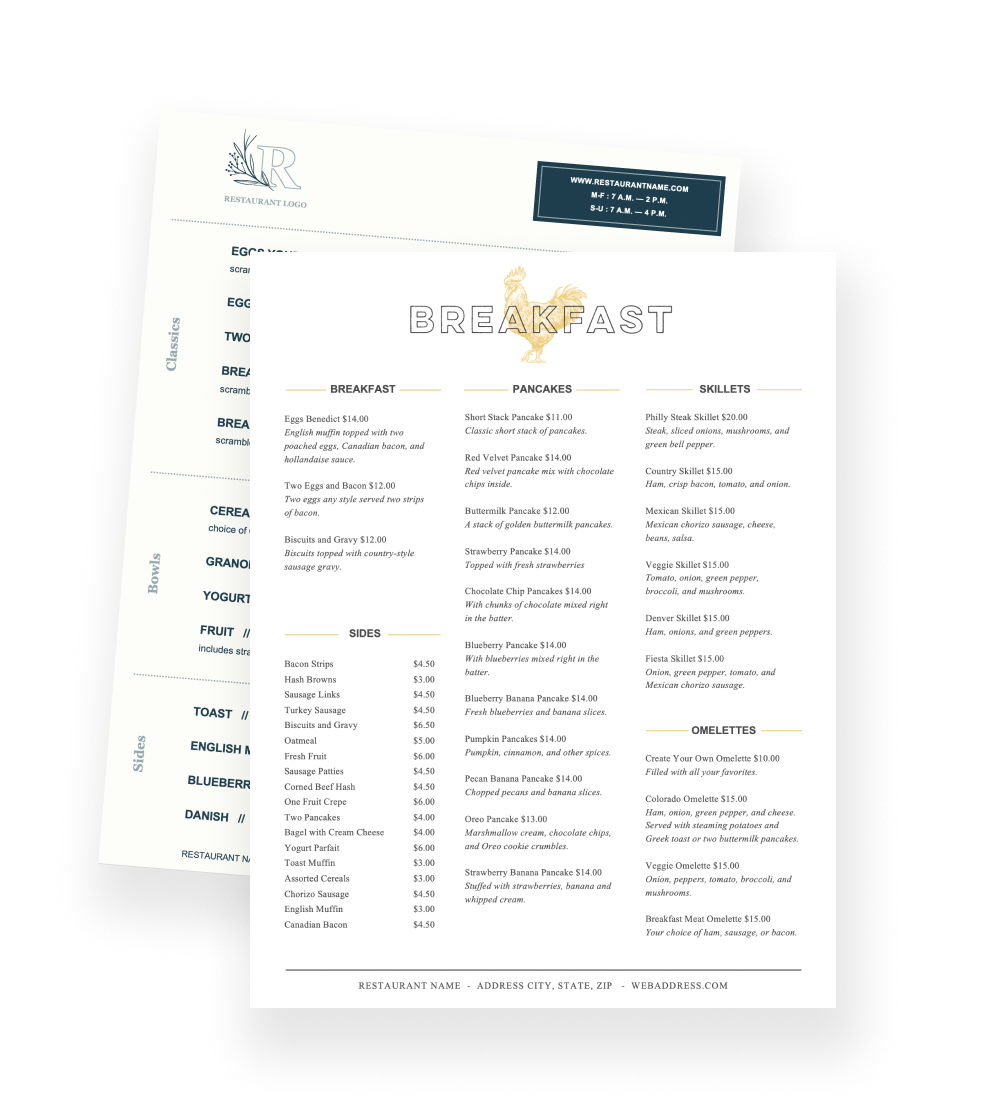
Breakfast Menu Templates
Use these breakfast menu templates as a starting point for your menu design or to give your menu a refresh.
무료 다운로드 받기A restaurant brunch menu combines breakfast and lunch favorites, such as egg dishes, pancakes, sandwiches, and salads. A focused selection gives guests variety while keeping preparation manageable for your team.
The menu should make those choices easy to understand. Toast Menu Checker reviews your menu’s descriptions, structure, and pricing presentation, helping you identify ways to make it clearer.
Here are seven brunch menu ideas, plus practical tips for choosing a service format and preparing for the rush.
Key takeaways
A balanced brunch menu combines savory breakfasts, sweet dishes, lunch options, vegetable-forward meals, and drinks.
Signature sauces, breads, and toppings give familiar brunch dishes a distinct identity.
Brunch service formats should fit the restaurant’s staffing, kitchen capacity, and guest experience.
Planning prep and testing mixed orders help kitchens manage station workloads and finish brunch dishes together.
Restaurant Menu Templates
Use these menu templates as a starting point for your menu design or to give your menus a refresh.

What should a restaurant brunch menu include?
A restaurant brunch menu should balance savory breakfast dishes, sweet options, lunch choices, vegetable-forward meals, and drinks. The mix will look different across brunch restaurants, depending on their cuisine, service style, and kitchen capacity.
Savory breakfast dishes: Eggs, breakfast sandwiches, and other substantial plates.
Sweet options: Pancakes, waffles, French toast, or pastries.
Lunch choices: Burgers, sandwiches, and salads.
Vegetable-forward dishes: Bowls, hashes, and toasts that work as complete meals.
Drinks: Coffee, tea, juice, nonalcoholic specialties, and cocktails where appropriate.
You don’t need several versions of everything. A café might build brunch around sandwiches, pastries, and coffee, while a full-service restaurant might offer egg dishes, sweet plates, and a few lunch favorites.
Make the essentials clear: when brunch is available, what comes with each dish, and what additions cost. Guests should be able to understand their options without asking a server to explain every plate.
Brunch menu ideas for restaurants
Choose dishes that fit your restaurant, then consider how they work together during service. Pancakes, poached eggs, and a burger may appeal to three guests at the same table, but your kitchen needs to finish them at roughly the same time.
1. Egg dishes and savory breakfast plates
Egg dishes give guests a breakfast option and leave room for your restaurant’s own sauces, breads, and seasonings. Familiar diner-style breakfast dishes can provide a starting point.
What to serve: Eggs Benedict, a mushroom and herb omelet, shakshuka with bread, or eggs with breakfast potatoes and toast.
Make it your own: Choose a signature accompaniment, such as a house hot sauce, herb potatoes, or bread from your bakery.
Plan for: Cooked-to-order egg preparations, included sides, and the modifications your team can handle consistently.
A familiar dish can still reflect your restaurant’s cuisine. For example, Philadelphia’s Rice & Sambal served an Indonesian omelet filled with shallots and accompanied by sambal ketchup.
2. Pancakes, waffles, and French toast
Sweet breakfast dishes give guests another direction to take their brunch order. Keep a manageable number of base preparations, then use seasonal menu specials to introduce temporary flavors or toppings.
What to serve: Lemon ricotta pancakes, waffles with seasonal fruit, brioche French toast, or a small pancake flight.
Make it your own: Develop a signature fruit compote, flavored butter, or topping combination that fits your menu.
Plan for: Griddle space, waffle-iron capacity, batter preparation, and the time needed to finish each plate.
“Pancakes serve as a platform,” Andrew Jaffe, then chief marketing officer at Snooze, told Nation’s Restaurant News. That approach gives a familiar dish room for creative variations.
Test the complete preparation before adding it to the menu. A pancake flight gives guests several flavors to try, but it also adds finishing steps. Check whether your team can assemble it consistently alongside other orders.
3. Breakfast sandwiches, bagels, and savory toasts
Sandwiches and toasts bring bread, spreads, and fillings together in a flexible brunch format. Deli menu ideas can help you explore breakfast combinations and adaptations of familiar sandwiches.
What to serve: An egg and cheddar sandwich, a smoked salmon bagel, avocado toast with pickled onions, or a biscuit sandwich.
Make it your own: Use a distinctive bread, spread, or filling, with suitable ingredients shared across other brunch dishes.
Plan for: Toaster capacity, assembly space, egg preparation, and the number of substitutions available.
Think through the complete plate, too. State whether the sandwich comes on its own or includes potatoes, fruit, or salad, and make alternative sides easy to understand.
4. Vegetable-forward hashes and breakfast bowls
Vegetable-forward brunch dishes should feel complete and satisfying. Build plant-based menu options around vegetables, grains, beans, tofu, and sauces that contribute flavor and substance.
What to serve: Sweet potato and kale hash, a tofu scramble bowl, roasted vegetable hash, or a grain bowl with chickpeas and a signature sauce.
Make it your own: Use the seasonings, vegetables, and condiments already associated with your restaurant.
Plan for: Components that can be prepared ahead, finishing steps during service, and clearly defined additions.
For example, a roasted vegetable and potato hash could be a plant-based main with an optional egg. Make sure the base dish stands on its own, then price and describe additions separately.
If you identify a dish as vegan, check the full preparation, including bread, sauces, and garnishes. Accurate descriptions help guests choose and give servers a clear explanation of the dish.
5. Lunch dishes that fit a brunch menu
Lunch options give guests a choice when they want something beyond breakfast. Café menu ideas offer inspiration for sandwiches, soups, and salads that can sit alongside your breakfast dishes.
What to serve: A brunch burger, crispy chicken sandwich, grilled cheese with tomato soup, or a seasonal salad.
Make it your own: Adapt an existing favorite with a brunch-appropriate accompaniment or optional addition.
Plan for: The equipment and station space each dish needs while breakfast orders are also coming through.
Snooze expanded its lunch selection in April 2026 with options including a turkey Reuben, a grilled three-cheese sandwich, a burger, and a Cobb-style salad. The launch illustrates how lunch choices can complement a breakfast-focused concept.
6. Pastries and shareable brunch starters
Pastries and shareable starters give guests something to enjoy together before their main dishes arrive. Start with bakery menu items that suit your restaurant, then decide on individual or shared portions.
What to serve: A pastry basket, mini cinnamon rolls, biscuits with jam and butter, or sticky buns.
Make it your own: Add a seasonal preserve, flavored butter, or signature glaze.
Plan for: Batch sizes, freshness, reheating or finishing, and how quickly the starter can reach the table.
Del Frisco’s Grille included pull-apart sticky buns in its revamped brunch menu. Chef Ariel Contreras-Fox, vice president of culinary, described an experience that “celebrates the social nature of weekend dining.”
7. Coffee, brunch cocktails, and nonalcoholic drinks
A brunch drink menu should cover everyday favorites and give guests a few appealing specialty choices. Seasonal coffee drinks can introduce variety alongside dependable coffee, juice, and nonalcoholic options.
What to serve: Drip coffee, espresso drinks, cold brew, juice, iced tea, a fruit spritz, mimosas, or Bloody Marys.
Make it your own: Develop a seasonal syrup, house lemonade, or garnish that fits several drinks.
Plan for: Coffee refills, espresso preparation, glassware, garnishes, and who handles drink orders during the rush.
Technomic data reported by Nation’s Restaurant News found that 41% of consumers order hot coffee at weekend breakfast at least occasionally, while 36% order orange juice. Here, “occasionally” means at least once every 90 days.
Ingredient overlap can also guide selection. NRN’s reporting describes Vicious Biscuit developing spiked coffees with spirits already stocked and coffee already being prepared.
Choose a brunch format that fits your restaurant
Your restaurant’s service model shapes how guests order and how the kitchen organizes service. Choose the brunch format alongside the food selection so the menu, staffing, and dining experience work together.
Format | What it looks like | What to plan |
Dedicated brunch menu | A separate selection during defined brunch hours. | A focused menu and a clear transition into or out of brunch service. |
Brunch specials alongside the regular menu | A few brunch dishes supplement the existing selection. | Ingredient overlap and enough capacity to prepare both menus. |
Prix fixe brunch | Guests choose from a defined prix fixe menu for a set price. | Included courses, sides, drinks, and any additional charges. |
Buffet or station-based brunch | Guests help themselves or visit staffed food stations. | Quantities, replenishment, space, and staffing for any cooked-to-order stations. |
Event-style brunch | Themed, ticketed, or occasion-based event ideas. | The underlying food service format, seating arrangements, and timing. |
An event-style brunch can use à la carte, prix fixe, or buffet service. The occasion sets the experience; you still need to decide how guests will order and receive their food.
For restaurants serving several dayparts, brunch also needs to fit the wider business. Ryan Keogh, General Manager of White Horse Tavern, describes that flexibility: “Toast helps us wear a lot of hats, from a family brunch spot to a busy late-night bar.”
How to build a brunch menu
Building a brunch menu involves checking how the dishes perform together, from preparation through the final plate leaving the kitchen. Work through these three steps before expanding the selection.
1. Choose dishes that work together
Use recipe cards to document ingredients, portions, and preparation. Then consider what the full menu asks of your kitchen during a busy service.
Share suitable ingredients: Use a vegetable, sauce, or bread across dishes where it makes culinary sense.
Map the equipment: Identify which items need the griddle, fryer, toaster, oven, or egg station.
Check station workloads: Look for dishes that compete for the same equipment or require several last-minute steps.
Toast’s Shy Bird brunch case study shows why this matters. An AI-assisted analysis found that 67% of dishes bottlenecked at one grill station. After the team implemented operational changes, the restaurant reported reducing waits from 31 minutes to nine at comparable volume.
Use your own service results to find pressure points. A dish’s popularity matters, but so does its effect on the rest of the kitchen.
2. Set portions, prices, and additions
Calculate the cost of the complete plate, including sides, sauces, and garnishes. Account for preparation and service labor when deciding whether a dish works financially.
Standardize portions: Specify quantities for the main dish and its accompaniments.
Define what’s included: Make sides, bread, and other components clear.
Price additions consistently: Explain charges for extra proteins, alternative sides, and other upgrades.
A breakfast sandwich with potatoes is a different offer from a sandwich sold on its own. Clear menu descriptions make that distinction visible so guests understand what they’re ordering.
3. Plan prep, staffing, and ticket timing
Use a kitchen prep list to separate advance preparation from work that happens after an order arrives. Include the front of house in your review. Repeated questions about sides, substitutions, or serving sizes may point to menu details that need clearer wording.
Prepare components: Assign quantities and responsibilities for sauces, vegetables, batters, and other suitable items.
Cover each station: Include eggs, griddle items, assembly, drinks, and expediting.
Test mixed tickets: Check whether sweet dishes, savory plates, and lunch orders finish together.
Review actual service: Look for recurring delays and adjust preparation, staffing, or menu choices.
Toast Kitchen Display System sends orders from the POS to kitchen screens and supports station-specific setups and prep-time reporting. That helps teams coordinate orders and identify where service slows down.
Turn brunch ideas into signature dishes
Give guests a reason to choose your restaurant for brunch, whether it’s a signature egg dish, a shareable pastry, or a favorite lunch option. Build around dishes your team can prepare consistently, then use guest feedback and service experience to refine the selection.
Toast Menu Checker reviews your menu’s descriptions, structure, pricing presentation, and seasonality, helping those dishes make an impression before the first order even arrives.
Menu Engineering Worksheet
Use this menu engineering worksheet, complete with intricate menu engineering formulas, to determine areas of strength and weakness in your restaurant's menu.
FAQ
What is a brunch menu?
A brunch menu combines breakfast and lunch dishes, usually served from late morning into early afternoon.
What are good brunch menu ideas for restaurants?
Popular brunch options include Eggs Benedict, pancakes, breakfast sandwiches, vegetable hashes, burgers, shareable pastries, and specialty drinks.
How many dishes should a brunch menu include?
There’s no fixed number; offer enough variety to suit different appetites while keeping preparation manageable for your kitchen.
What brunch formats can restaurants offer?
Restaurants can offer dedicated brunch menus, brunch specials, prix fixe meals, or buffets, including as part of themed events.
What drinks should a brunch menu include?
A brunch drink menu can include coffee, tea, juice, nonalcoholic specialties, and cocktails.
How can restaurants prepare for a busy brunch service?
Prepare suitable components ahead, assign station responsibilities, and test mixed orders so each table’s dishes finish together.


이 문서가 도움이 되었나요?
면책 조항: 이 정보는 일반 정보 제공 목적으로 작성되었으며 당사의 권고를 의미하는 것은 아닙니다. Toast는 본 콘텐츠에 포함된 정보, 텍스트, 그래픽, 링크 및 기타 항목의 정확성이나 완전성을 보장하지 않습니다. Toast는 본 문서의 조언을 따른다고 해서 특정한 결과를 얻을 수 있음을 보장하지 않습니다. 귀하의 상황에 맞는 조언이 필요한 경우 변호사, 회계사 또는 비즈니스 자문가 등 전문가와 상담하시기 바랍니다.
