
Restaurant Manager Bonus Structure: Simple Plans that Drive Results
Learn how to design an effective restaurant manager bonus structure that drives performance, improves retention, and boosts profitability.

Autor
 RESOURCE
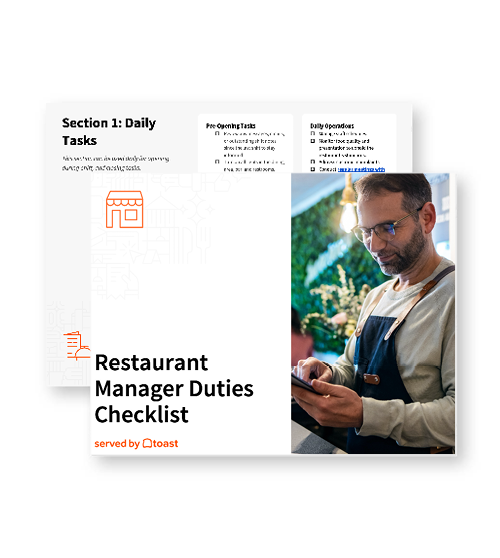
 Restaurant Manager Duties Checklist
Use this free checklist to help streamline daily tasks, make sure weekly duties get completed, and ensure your manager stays organized.
Obtener descarga gratisEffective restaurant manager bonus structures create win‑win scenarios that drive profitability while retaining top talent. A study from the Incentive Research Foundation shows that well-designed incentive programs can boost performance by 25% to 44%, making them a powerful tool for improving outcomes across restaurant operations. A manager who’s aligned with company goals, empowered to influence results, and rewarded accordingly is a manager who thinks like an owner. The key lies in balancing competitive base compensation with measurable performance metrics that drive the right behaviors.
Smart restaurant operators design bonus programs that give managers a real stake in performance, creating the motivation for excellence while protecting the bottom line. A well‑structured plan doesn’t just reward effort; it transforms managers into business partners committed to operational and financial success.
Key takeaways
Bonus plans supplement competitive base salaries, never replace them
Financial metrics (profit, costs) combined with operational metrics (customer satisfaction) create balanced incentives
Quarterly or monthly payouts maintain motivation better than annual bonuses
Simple, transparent calculations build trust and drive consistent performance
Regular monitoring and communication ensure program effectiveness
Restaurant Manager Duties Checklist
Use this free checklist to help streamline daily tasks, make sure weekly duties get completed, and ensure your manager stays organized.

Essential bonus structure components
Successful restaurant manager bonus plans share common characteristics that create sustainable motivation while protecting business interests. These plans are built on foundational principles that ensure managers are fairly compensated and clearly guided toward performance goals.
Foundation principles
A management bonus plan is meant to incentivize performance, not replace their salary with variable pay. At its core, a bonus structure should provide additional earning potential for managers who drive results, while ensuring their base salary remains competitive and reliable.
Competitive base salary
Before bonuses even come into play, managers should be paid a market-rate salary. This financial stability allows them to focus on delivering strong performance, not just staying afloat.
What competitive base salary provides:
Market-rate pay: Match compensation to what’s offered at similar restaurants in your region.
Reduced financial stress: Ensure managers aren’t relying on bonuses to meet basic financial needs.
Performance-driven focus: Stable income supports better focus on team leadership and goal achievement.
Realistic achievement targets
Setting fair, achievable goals is critical. Bonus plans should challenge managers while still being within reach — otherwise, they risk doing more harm than good.
Why realistic targets matter:
Win-win structure: Goals should benefit both owners and managers when achieved.
Avoid burnout: Unreachable targets can frustrate even the most motivated managers.
Stretch, not break: Keep goals aspirational yet achievable to sustain morale.
Clear performance measurement
To be effective, bonuses must be based on clearly defined metrics that reflect your restaurant’s priorities. When managers understand how they’re being measured, they’re more likely to engage and perform consistently.
What clear metrics should include:
Weighted metrics: Prioritize what matters most — whether that’s labor cost, guest satisfaction, or food quality.
Controllability: Focus on KPIs that managers can actually influence.
Clear communication: Lay out expectations and performance standards up front.
Financial performance metrics
Financial metrics are the backbone of most restaurant bonus structures. These indicators directly impact profitability and provide quantifiable, objective targets that managers can influence through operational decisions.
EBITDA-based bonuses
One of the most common and effective ways to tie compensation to performance is by linking manager bonuses to profits. Many restaurants use EBITDA — earnings before interest, taxes, depreciation, and amortization — as a simplified measure of profitability that reflects actual operating performance. It removes external factors outside a manager’s control, making it a fairer basis for bonus calculations.
You can choose to offer a bonus based on a percentage of profits from the P&L or use a fixed bonus amount. While both approaches have pros and cons, many operators find that fixed bonus amounts tied to controllable profits work best.
Why controllable profit works
This approach focuses managers' incentives on areas they can directly influence, making the bonus structure both fair and effective. Key advantages include:
Excludes uncontrollable expenses: Removes costs like rent, depreciation, insurance, accounting, and legal fees.
Focuses on manager impact: Keeps managers accountable for costs they influence, not fixed overhead.
Creates fair measurement: Offers a more accurate picture of management performance.
Simple and transparent: Easier to calculate and communicate than a full P&L model.
Real-world example: At Texas Roadhouse, general managers receive a performance bonus of 10% of store-level controllable profit, aligning their pay directly with how well they manage costs and drive restaurant-level performance. This structure has become a key part of the brand’s financial strategy and high manager retention rates.
How to implement this model
To put a controllable profit bonus structure into action, follow a few clear steps that connect profit goals to manager incentives, such as:
Set profit targets: Use your budget to define quarterly controllable profit goals.
Establish bonus percentages: Pay managers 10% to 15% of profit exceeding those targets.
Example payout: $10,000 over budget = $1,000 to $1,500 bonus.
Direct performance link: Managers are rewarded in proportion to how much they improve the bottom line.
Prime cost management
Prime cost — the sum of cost of goods sold (COGS) and labor — typically accounts for 60% to 65% of a restaurant’s total expenses. Because it's made up of the two most controllable costs in the business, it makes an ideal metric for bonus plans. A well-structured bonus tied to prime cost can incentivize efficiency without sacrificing quality.
Why prime cost works
This combined metric gives managers a clear, focused area to optimize — one they can influence daily. Benefits include:
Combines food costs and labor into a single metric: Simplifies tracking and highlights total controllable spend.
Represents 60% to 65% of typical restaurant expenses: Targets the largest cost categories for maximum impact.
Directly controllable by management decisions: Reflects daily choices in scheduling, purchasing, and portioning.
Easy to track and calculate from POS data: Enables quick reporting and transparent bonus calculations.
How to set targets
To make prime cost bonuses actionable, define thresholds and reward savings. Common strategies include:
Set a budget for the ideal prime cost ceiling: Aim for 60% or lower as a benchmark.
Share savings below target with managers: Allocate 50% of the cost savings as a bonus pool.
Example: If quarterly sales are $300,000 and prime cost is 58% (2% under budget), that’s a $6,000 savings.
Bonus payout: Half of that savings — $3,000 — is distributed among eligible managers.
Food cost percentage targets
Food cost is one of the most visible and volatile expenses in a restaurant, making it a popular performance metric for bonus programs. If a restaurant’s target food cost is 35% but it's trending above that — say, at 36.4% — it signals a need for better control. Managers and chefs can directly influence this number through portioning, purchasing, and waste reduction.
Why a balanced approach matters
Instead of encouraging aggressive cost-cutting, an effective bonus structure should reward sustainable improvements that preserve food quality. Benefits include:
Prevents extreme cost-cutting that damages quality: Maintains guest satisfaction and brand integrity.
Rewards incremental improvements over time: Encourages steady progress toward the goal.
Maintains customer satisfaction while controlling costs: Balances financial discipline with a great guest experience.
Encourages sustainable operational improvements: Supports long-term gains in consistency and efficiency.
How a sliding scale works
Using a tiered structure keeps managers motivated to improve food cost performance while avoiding quality dips. For example:
34% food cost = $500 quarterly bonus
33% food cost = $1,000 quarterly bonus
32% food cost = $1,500 quarterly bonus
Below 30% = Penalty to discourage cutting corners that compromise food quality
This model creates a clear path for improvement while reinforcing high standards.
Operational performance indicators
While financial metrics drive profitability, non-financial metrics ensure that bonus plans don’t sacrifice long-term growth or team well-being. These operational indicators focus on service quality, customer loyalty, and employee retention — all of which play a crucial role in sustainable success.
Customer satisfaction metrics
Customer experience is a direct reflection of management quality. Bonus plans can reward improvements in guest feedback, loyalty, and review scores. Here are some ways to track customer satisfaction.
Online review management
Online reviews are a public reflection of your restaurant’s guest experience. Incentivizing managers to monitor and improve review scores can boost brand reputation and directly influence sales. Track and reward improvements based on metrics like:
Target rating: Increase the average rating from 4.2 to 4.5 stars.
Review platform tracking: Monitor Google, Yelp, and social media reviews monthly
Sales impact: Recognize that digital reputation directly affects future customer visits
Service quality feedback: Use reviews as measurable indicators of guest satisfaction
Mystery shopper programs
Mystery shoppers provide objective evaluations of service and cleanliness, supplementing customer feedback with a more controlled perspective. These evaluations can be tied to bonuses using criteria such as:
Professional assessments: Evaluate service standards, cleanliness, and consistency.
Objective data: Supplement subjective guest feedback with neutral third-party insights.
Staff performance review: Gauge how well employees follow procedures and deliver service.
Bonus eligibility: Award bonuses when quarterly scores exceed 85%.
Return customer tracking
Repeat business is one of the strongest signs of guest satisfaction and operational consistency. Managers can be incentivized to build guest loyalty by improving return customer rates using strategies like:
POS data tracking: Use your system to monitor returning guests.
Visit frequency analysis: Measure how often customers come back and what they spend.
Loyalty insights: Determine whether operational improvements translate into customer retention.
Bonus trigger: Reward managers when return customer rates reach 35% or higher.
Employee retention targets
Hiring and training new employees is one of the most expensive and disruptive parts of running a restaurant. Bonus structures that reward managers for reducing turnover and completing staff training help build a more stable, high-performing team.
Turnover reduction benefits
Reducing turnover not only saves money but also improves team morale and customer service. Key benefits include:
Replacement cost savings: High turnover costs $3,000 to $6,000 per employee.
Lower operational disruption: Recruiting, training, and lost productivity drain time and resources.
Improved workplace culture: Positive environments retain skilled, motivated staff.
Stronger service quality: Stable teams provide more consistent and personalized guest experiences.
Measurable retention goals
Tracking retention with specific targets ensures accountability and provides a clear framework for manager incentives. Effective goals include:
Monthly turnover target: Reduce turnover from 8% to 5%.
Departure type tracking: Track voluntary versus involuntary separations separately.
Retention focus: Prioritize keeping top performers and key roles.
Bonus qualification: Trigger payouts only when targets are met for the full quarter.
Real-world example: Starbucks emphasizes leadership development and internal promotion as key metrics for store manager performance. In many markets, store leaders are rewarded not just for hitting sales targets, but also for building strong teams and retaining high-potential employees.
Training completion standards
Bonus eligibility can also be tied to training benchmarks, ensuring all new hires are set up for success early on. Metrics to track include:
Training timeline: New employees complete training within two weeks.
Completion rate requirement: Achieve at least a 90% completion rate to qualify for a bonus.
Service quality improvement: Reduce mistakes and elevate guest experience through consistent training.
Standardized performance: Ensure operational consistency across all shifts and locations.
Real-world example: Panda Express places a strong emphasis on training completion and leadership development. Managers are evaluated in part on how effectively they onboard and prepare team members for internal promotion, with bonuses tied to both training benchmarks and team growth outcomes.
Compensation structure models
There’s no one-size-fits-all approach to restaurant manager bonuses. Different compensation models suit different restaurant types and leadership philosophies. Whether you prioritize consistency, flexibility, or precision, the right structure should support your operational goals and motivate your management team.
Percentage-based bonuses
This model offers managers the opportunity to earn a bonus as a percentage of their base salary. It provides a predictable and scalable incentive that aligns with performance while maintaining budget control.
Salary percentage model
This straightforward approach allows managers to earn a bonus tied directly to a percentage of their annual pay. Benefits include:
Bonus opportunity: Managers can earn up to an additional 20% of their base salary.
Budget-friendly structure: Offers upside potential while keeping bonus costs within clearly defined limits.
Consistency across teams: Easier to administer across multiple locations or roles with similar responsibilities.
Performance weighting system
This variation assigns different weights to multiple performance metrics, allowing restaurants to emphasize the areas most important to their business. These metrics include:
Customized metric weighting: Align bonus components with strategic goals (e.g., food cost control = 40%).
Balanced performance focus: Includes a mix of cost control, customer satisfaction, and growth-oriented goals.
For example, here's how a bonus might be split based on a cost-focused restaurant's priorities:
Food cost control: 40%
Customer satisfaction: 30%
Labor cost management: 20%
Sales growth: 10%
This model works well for restaurants with complex priorities that want to encourage well-rounded management performance.
Real-world example: Chipotle uses a performance weighting system that evaluates managers on a combination of factors, including transaction throughput, guest experience scores, food safety compliance, and sales performance. This blended approach ensures managers focus on both operational speed and quality, two pillars of their business success.
Fixed amount systems
Fixed bonus systems provide managers with set reward amounts tied to specific levels of achievement. These models are easy to understand, communicate, and implement, making them a strong option for many restaurant operators.
Tiered achievement levels
This model rewards managers based on how far they exceed expectations, offering multiple incentive levels to maintain motivation, such as:
Basic performance: $1,000 bonus for meeting minimum targets
Above expectations: $2,000 bonus for exceeding goals
Outstanding performance: $3,000 bonus for surpassing all benchmarks
This structure creates clear milestones that encourage managers to push beyond baseline performance.
Real-world example: Raising Cane’s uses a tiered bonus system based on mystery shop scores, operational execution, and cleanliness. Managers receive structured bonus payouts tied to these performance categories, reinforcing the company’s emphasis on high operational standards and customer experience.
Threshold-based payouts
In this system, bonuses are only paid out once a minimum level of performance is achieved, helping protect the business from overpaying when results fall short. This includes:
All-or-nothing trigger: No bonus is paid until a minimum target is met.
Full reward on achievement: Once the threshold is crossed, the entire bonus is paid.
Avoids mediocrity: Encourages high performance and prevents rewarding average results.
Hybrid approaches
Hybrid models combine fixed and variable components, offering managers a degree of bonus certainty while still incentivizing performance.
Base plus variable
This approach gives managers a guaranteed bonus base with performance-based upside potential — blending stability with motivation:
Guaranteed portion: A $500 quarterly bonus is paid regardless of performance.
Performance-driven upside: Additional bonuses up to $2,500 are awarded based on results.
Balanced incentive: Provides reassurance while still rewarding high achievers.
Implementation of best practices
Even the best bonus structure will fall short if it’s poorly executed. Successful programs require clear communication, manager buy-in, and ongoing attention to stay relevant and effective over time. Strong communication strategies ensure that managers understand how the bonus works, trust the process, and stay motivated.
Communication strategies
Regular communication helps managers feel informed, empowered, and aligned with business goals. These strategies build trust and improve performance outcomes.
Monthly performance reviews
Keeping managers in the loop with regular performance reviews ensures they know where they stand and what needs adjustment:
Timely feedback: Pay bonuses soon after the performance period ends.
Invoice tracking: Uploading invoices throughout the month simplifies the close-out process.
Course correction: Frequent reviews help managers fix issues before they affect bonus eligibility.
Transparent calculations
Bonuses tied to financial performance must be easy to understand. Managers should always know how their bonus is being calculated and what variables are involved:
Clarity builds trust: Clearly define what controllable profit includes and excludes.
Avoid disputes: Document calculations and share them with management to prevent confusion.
Financial literacy: Teach managers how the numbers work so they can actively manage toward their targets.
Goal-setting collaboration
To truly motivate, bonus programs need manager buy-in. Involving them in the goal-setting process increases ownership and accountability:
Inclusive process: Let managers help shape goals so they feel realistic and achievable.
Avoid demotivation: Goals imposed from the top down can feel arbitrary and out of reach.
Boost engagement: Managers are more likely to aim high when they believe in the targets.
David Scott Peters, a restaurant operations consultant and founder of Smile Button Enterprises, emphasizes the importance of involving managers early. “If they feel like they have no input, then the bonus structure can be a de-motivator,” Peters says. “Managers need to 'buy in' to the program and understand that the goals set are achievable.”
Timing considerations
How often and when bonuses are paid plays a big role in keeping managers engaged. Timely, predictable payouts reinforce performance and help managers plan financially, which is especially important in the fast-moving restaurant industry.
Frequent payout periods
The restaurant industry experiences high turnover, so waiting a full year for a bonus can sap motivation. More frequent payouts keep the reward within reach:
Quarterly cadence: Quarterly bonuses are more effective than annual payments at maintaining momentum.
Timely incentives: Shorter reward cycles help managers connect their efforts to tangible outcomes.
Retention boost: Frequent payouts reduce the chance of managers leaving before they’re rewarded.
Consistent payment dates
Bonuses lose their power when they feel inconsistent or unpredictable. Stick to a reliable schedule so managers know when to expect payouts:
Align with bookkeeping: Whether you're using EBITDA (earnings before interest, taxes, depreciation, and amortization) or TCI (total controllable income), be sure to close the books on the same timeline each quarter to ensure accurate and timely calculations.
Predictable timing: A regular payout schedule builds trust and allows managers to plan their personal finances.
Operational efficiency: Eliminates ambiguity and sets a clear rhythm for calculating and issuing bonuses.
Program monitoring
Bonus structures aren’t a set-it-and-forget-it solution. Ongoing monitoring ensures that the plan remains aligned with evolving business goals and continues to motivate high performance. Managers also need to see that leadership is paying attention and willing to adapt.
Regular effectiveness reviews
Quarterly reviews help track program performance, identify issues early, and recognize top contributors:
Scheduled check-ins: Hold non-negotiable quarterly meetings to review the bonus plan and its results.
Performance highlights: Use this time to celebrate wins and spotlight exceptional contributions.
Agility in action: Identify problem areas and act quickly to course correct before the next cycle.
Metric adjustment capability
As business needs evolve, your bonus metrics may need to shift, too. Build flexibility into your system to keep it relevant and effective:
Adaptable targets: Revise KPIs to reflect changes in focus, such as shifting from growth to cost control.
Plan stability: Keep the overall structure stable so managers can still plan and perform with confidence.
Strategic alignment: Make sure every metric continues to reflect your most important business objectives.
Real-world example: Sweetgreen has adapted its bonus metrics over time to reflect brand priorities like sustainability and environmental impact. In some locations, manager incentives are tied to goals such as reducing food waste or meeting sourcing standards, aligning performance with the company’s mission-driven ethos.
Common pitfalls to avoid
Understanding where bonus programs typically go wrong can help restaurant owners build smarter, more effective systems. Avoiding these common mistakes ensures that your bonus structure actually motivates performance, rather than complicating or undermining it.
Overly complex calculations
Simplicity requirement
A bonus plan should be easy to understand and operate. Complexity leads to confusion, frustration, and disengagement:
Keep it straightforward: The most effective bonus structures are simple, self-sustaining, and scalable.
Avoid math fatigue: Complicated formulas discourage buy-in and can feel arbitrary to managers.
Focus on clarity: Make it easy for managers to connect actions with outcomes.
Multiple metric overload
Using too many metrics can water down the impact of a bonus and overwhelm your managers:
Streamline measurement: Limit metrics to those that matter most to your business priorities.
Maintain focus: Too many targets make it hard for managers to know where to concentrate their efforts.
Enhance effectiveness: Clear, prioritized metrics lead to more targeted and consistent improvements.
Unrealistic expectations
Even the best-designed bonus plan will fail if the targets aren’t achievable. Goals should stretch your managers, not break them. Setting unrealistic expectations leads to frustration, burnout, and disengagement.
Market-based targets
Performance goals should be grounded in the realities of your restaurant’s current situation and growth potential:
Set realistic improvement goals: Targets should be challenging but attainable based on current performance.
Avoid demotivation: Overly ambitious goals can discourage managers before they even begin.
Support incremental progress: Give managers the opportunity to build momentum with achievable milestones.
Industry benchmark alignment
Comparing your targets to industry standards helps ensure fairness and feasibility:
Use relevant benchmarks: Align goals with performance ranges seen in similar restaurant types and segments.
Encourage smart goal-setting: Ensure your expectations push managers without being impossible to meet.
Promote competitive performance: Grounded benchmarks drive effort while reinforcing what “good” looks like.
Inadequate base compensation
A bonus should be a reward for strong performance, not a substitute for a fair wage. If the base salary isn’t competitive, even the best bonus plan will fail to attract and retain the right talent.
Competitive salary foundation
Bonuses only work when built on top of solid compensation. Underpaying managers in hopes that a bonus will fill the gap often leads to poor hiring outcomes:
Maintain fair base pay: Managers should always earn a competitive salary regardless of bonus eligibility.
Avoid attracting underqualified talent: Low base pay can discourage experienced candidates from applying.
Support long-term success: A strong salary foundation improves stability, satisfaction, and performance.
Building long-term success
Effective bonus structures evolve over time, adapting to business shifts while maintaining their core purpose — aligning manager performance with profitability and growth.
The ideal incentive plan should motivate and reward key employees for boosting financial outcomes and delivering an exceptional hospitality experience. Success lies in striking a balance between operational excellence and financial performance, ensuring the business thrives while employees feel valued.
Restaurant manager bonus structures work best when they are simple, fair, and focused on controllable metrics. When paired with competitive base compensation, these incentives turn managers into proactive partners who think and act like owners, driving long-term success from the inside out.
Final thoughts
A well-structured restaurant manager bonus plan isn’t just about numbers — it’s about building a high-performance culture. The most effective programs align incentives with real, measurable outcomes while supporting long-term operational health. When managers feel fairly compensated, understand the goals, and trust the process, they’re more likely to lead with ownership, consistency, and care.
Whether you’re fine-tuning an existing plan or building one from scratch, focus on simplicity, fairness, and clarity. By doing so, you’ll not only boost profitability, you’ll also build a stronger, more motivated leadership team ready to help your restaurant grow.
Frequently asked questions
How much should restaurant manager bonuses be?
An incentive program that allows managers to earn up to an additional 20% of their base salary is a common range, though amounts vary based on restaurant size and performance targets.
What metrics should I include in manager bonuses?
Focus on controllable factors likeprime costs (COGS plus labor costs), customer satisfaction scores, and profit margins that managers can directly influence through their decisions.
How often should I pay bonuses?
In an industry with high turnover, incentive periods need to be more frequent. Quarterly payments work better than annual bonuses for maintaining motivation.
Should bonuses replace part of base salary?
No.A bonus plan is meant to incentivize a manager with additional compensation, not replace their salary with variable pay. Always maintain a competitive base compensation.
How do I calculate controllable profit for bonuses?
Controllable profit is sales minus expenses that can be controlled by management. It does not include expenses such as rent, depreciation, insurance, or accounting. Focus only on areas managers can influence.
¿Es útil este artículo?
AVISO LEGAL: Esta información se proporciona solo con fines informativos generales y su publicación no constituye un aval. Toast no garantiza la precisión ni la integridad de la información, el texto, los gráficos, los enlaces y otros elementos que incluye este contenido. Toast no garantiza que alcanzarás ningún resultado específico si sigues los consejos que aparecen aquí. Te recomendamos consultar con un profesional, como un abogado, contador o asesor comercial, para recibir asesoramiento específico para tu situación.
 Tendencias



Subscribe to On the line
Sign up to get industry intel, advice, tools, and honest takes from real people tackling their restaurants' greatest challenges.
Al enviar, aceptas recibir correos electrónicos de marketing de Toast. Trataremos tu información de acuerdo con nuestra declaración de privacidad. Información adicional disponible para residentes de California aquí.