
Restaurant Flash Report: Complete Guide and Management System
Your daily game plan for profitability starts with a restaurant flash report — here’s how to build one that delivers.
Autor
 RESOURCE
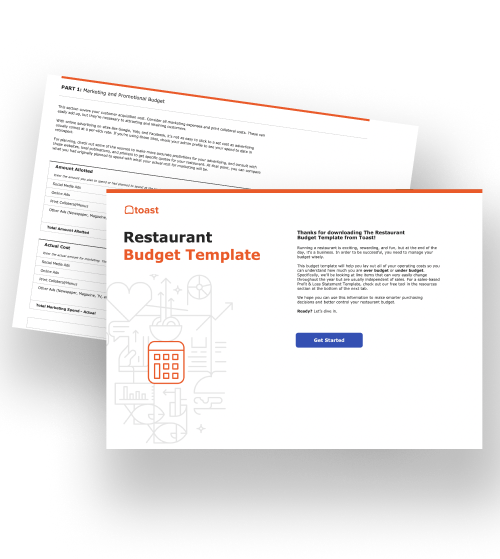
 Restaurant Budget Template
Use this template to make sure your projections are accurate and help eliminate overspending across your business.
Obtener descarga gratisA restaurant flash report is a real-time financial snapshot that provides daily or weekly summaries of critical operational metrics, including sales, labor costs, and prime cost performance across your establishment. Effective flash reporting is essential for restaurant profitability, as 78% of restaurant owners check analytics daily to stay competitive. Prime costs typically consume 60% of sales in most restaurants, making timely tracking through flash reports crucial for immediate course correction and profit protection.
Essential components of restaurant flash reports
A comprehensive restaurant flash report must capture the most volatile and controllable cost elements that directly impact profitability and operational performance.
Core financial metrics
These figures form the backbone of daily operational insight, helping managers spot trends and make swift, informed decisions. Every restaurant flash report should systematically track these fundamental data points:
Sales performance: Daily revenue, covers served, average check size, transaction counts by service period
Labor analysis: Hours worked, labor cost percentage, overtime tracking, productivity metrics per employee
Prime cost tracking: Food cost percentage, beverage cost percentage, total prime cost as a percentage of sales
Operational indicators: Comps and discounts, voids and refunds, cash handling variances, payment method breakdown
Comparative data: Previous day performance, week-over-week trends, budget variance analysis, historical benchmarks
How a restaurant might use these metrics:
A busy brunch spot might review its flash report after Saturday service and notice that the average check size is higher for tables ordering a seasonal mimosa flight. The team could then feature it more prominently on Sunday’s menu and in server recommendations.
Critical calculations
Focusing on these ratios turns raw numbers into clear, actionable guidance for improving performance and profitability. Structure your flash report around these key performance ratios for actionable insights:
Labor cost percentage: Total labor costs divided by total sales, typically targeting 25% to 35% for most restaurants
Prime cost percentage: Combined food, beverage, and labor costs divided by sales, with successful operations maintaining 55% to 65%
Average transaction value: Total sales divided by number of transactions, tracking guest spending patterns
Sales per labor hour: Total sales divided by total labor hours, measuring staff productivity and efficiency
Restaurant Budget Template
Use this template to make sure your projections are accurate and help eliminate overspending across your business.

Restaurant flash report template structure
Use this framework to create consistent daily reporting procedures that provide immediate visibility into operational performance and profitability drivers.
Template layout: Daily flash report
Header information
Start each daily flash report with clear header details to ensure accuracy, consistency, and easy reference across reports. Include:
Report date
Location
Prepared by
Period
Sales summary section
This section provides the revenue foundation for all subsequent calculations. Create fields for:
Total sales: Overall revenue generated for the day, serving as the foundation for all financial analysis
Food sales: Total income from food items, used to track menu performance and cost control
Beverage sales: Revenue from alcoholic and non-alcoholic drinks, helping monitor profitability and upselling success
Number of covers: Total guests served, offering insight into traffic patterns and service demand
Average check: The average amount spent per guest, revealing spending trends and upselling effectiveness
Previous day comparison: A side-by-side look at today’s performance versus the prior day to spot short-term trends
Payment method breakdown: Distribution of transactions by cash, credit, or other payment types for reconciliation and planning
Example of how a restaurant might use these metrics:
A steakhouse might compare its sales summary to the previous day and notice beverage sales dropped by 20% despite similar guest counts. On closer review, the manager might find that a key bartender was off that day, prompting a review of upselling consistency across the team.
Labor performance section
Track both hourly and salaried staff separately for accurate cost analysis. Include columns for:
Total labor hours: The combined hours worked by all staff, forming the baseline for labor analysis
Manager hours: Time logged by salaried or managerial staff, tracked separately for cost allocation
Hourly staff hours: Total time worked by non-salaried employees, key for scheduling and payroll control
Overtime hours: Additional hours beyond regular schedules, monitored to manage costs and compliance
Labor cost: Total wages and benefits paid, providing a clear view of staffing expenses
Labor percentage: Labor cost as a percentage of sales, indicating operational efficiency
Productivity metrics: Measures of output per labor hour, used to assess team efficiency and performance
Example of how a restaurant might use these metrics:
A fast-casual chain might notice a spike in overtime hours in its flash report. On review, managers could discover that shifts are running 30 minutes over because of late prep. Adjusting the prep schedule based on this information might help cut overtime costs the following week.
Prime cost analysis section
This section reveals your most controllable cost performance. Document:
Total COGS: The total cost of goods sold, including all food and beverage expenses
Food cost: The portion of COGS spent on food items, tracked for menu pricing and waste control
Beverage cost: The portion of COGS spent on alcoholic and non-alcoholic drinks, key to bar profitability
Combined prime cost: The sum of food, beverage, and labor costs, showing the largest controllable expenses
Prime cost percentage: Combined prime cost as a percentage of sales, a core measure of profitability
Variance from target: The difference between actual performance and the set prime cost goal, used to trigger corrective action
Example of how a restaurant might use these metrics:
A seafood restaurant might see its prime cost percentage spike mid-week. Reviewing the flash report, management could trace the jump to an over-order of fresh fish that wasn’t sold before spoilage, prompting changes to ordering quantities and delivery schedules.
Operational metrics section
Use this section to capture day-to-day operational anomalies and adjustments that can directly influence revenue and profitability. Track:
Comps given: Complimentary items provided to guests, tracked to monitor their impact on revenue
Discounts applied: Price reductions offered, measured to evaluate promotional effectiveness and profitability
Voids processed: Canceled transactions, tracked to identify potential errors or fraud
Cash variances: Differences between recorded and actual cash, signaling possible handling issues
Deposit amounts: Total funds deposited, used for reconciliation and cash flow tracking
Exceptional items requiring management attention: Unusual events or issues that could affect daily operations or revenue
Example of how a restaurant might use these metrics:
A neighborhood bar might notice a sudden 40% increase in comps over a single week in its flash report. On investigation, management could discover that a new bartender has been giving away drinks to friends, leading to immediate retraining and tighter comp authorization rules.
Advanced reporting template
For restaurants requiring detailed trend analysis and multi-location comparison, include these additional tracking elements:
Variance analysis section
These key variance points help to quickly identify performance gaps and determine where corrective action is needed. Track:
Budget comparison: Actual performance versus budgeted targets, shown in dollars and percentages
Forecast comparison: Actual results compared to projected forecasts for the period
Historical period comparison: Performance measured against the same period in previous years or months
Percentage deviation: The percent difference between actual results and the comparison metric
Dollar variance: The monetary difference between actual results and the comparison metric
Favorable/unfavorable designation: A quick indicator of whether results exceeded or fell short of expectations
Action required: Notes on corrective steps or follow-up actions to address negative variances
Example of how a restaurant might use these metrics:
A multi-location café group might review its variance analysis and see that one location’s beverage sales are 12% below forecast compared to others in the same region. The report could prompt management to investigate whether menu placement, seasonal offerings, or staff upselling techniques are contributing to the gap, and then roll out targeted training or promotions to improve performance.
Trend tracking section
Use these trend indicators to spot performance shifts early and make proactive adjustments. Monitor:
7-day rolling averages: Smooth out daily fluctuations to reveal short-term performance trends
Month-to-date performance: Compare cumulative results against monthly targets to stay on track
Seasonal patterns: Identify recurring trends tied to holidays, weather, or events for better forecasting
Best practices for flash report preparation
Implementing consistent preparation procedures ensures accurate data capture and enables rapid identification of operational issues requiring immediate attention.
William L. Bassett, a consultant with RestaurantOwner.com, compares a flash report to “cockpit instruments,” describing it as “a brief, useful, one-page summary of essential information about your restaurant.” Without it, he says, “a business owner is like a ship at sea during a storm without a compass, a map, a rudder — and the captain never learned how to sail.”
Data collection methodology
These data collection practices ensure flash reports remain timely, accurate, and actionable. Follow:
Real-time entry: Update flash reports immediately after each service period to maintain accuracy and enable same-day corrective actions when performance deviates from targets.
Standardized timing: Complete daily flash reports by 10 a.m. the following day to ensure management has current data for operational planning and staff scheduling decisions.
Quality control procedures
These quality control steps keep your flash reports accurate, reliable, and ready for decision-making. Apply:
Cross-verification: Compare flash report totals against POS system reports, cash deposits, and payroll records to ensure data accuracy and identify any discrepancies requiring investigation.
Management review: Require the manager to sign off on all flash reports with specific attention to variances exceeding 2% from targets or unusual operational items requiring explanation.
Exception documentation: Record detailed explanations for any unusual variances, equipment issues, or staffing problems that impact performance metrics and profitability measures.
Flash report frequency and distribution
Establishing regular reporting cycles provides timely performance data and ensures stakeholders receive critical information for operational decision-making.
Recommended reporting frequency
Set a clear reporting schedule so performance data stays current and supports timely decision-making. Reports vary by restaurant volume:
High-volume restaurants: Complete within 2 hours of closing for immediate operational adjustments
Medium-volume establishments: Prepare by opening the following day to guide staffing and planning
Multi-location operations: Consolidate location reports for regional or corporate management review
Weekly summary reports: Aggregate daily flash data into weekly trend analysis showing cumulative performance against targets and identifying patterns requiring strategic attention
Distribution protocols
Flash reports reach the right people at the right time with prompt, swift action. Ensure:
Management circulation: Email automated flash reports to general managers, area supervisors, and ownership within established timeframes for immediate review and action planning
Action thresholds: Set up automatic alerts when key metrics exceed predetermined variances, triggering prompt management intervention and corrective measures
Cost analysis and performance tracking
Transform flash report data into actionable business intelligence through systematic analysis and comparison against industry benchmarks and internal targets.
Key performance indicators
KPIs turn flash report data into clear strategies for boosting profitability and efficiency. Focus on:
Prime cost management: Monitor daily prime cost percentage with successful restaurants maintaining 60% to 65% of sales through effective food and labor cost control
Labor efficiency tracking: Compare labor cost percentage against sales volume to ensure staffing levels align with business demand and productivity expectations
Sales performance analysis: Track daily sales trends against historical performance, identifying opportunities for revenue optimization and operational improvements
Variance investigation
Act quickly on variances to address issues before they escalate into larger profitability problems. Implement:
Immediate response protocols: Investigate any prime cost variance exceeding 3% of the target within 24 hours, implementing corrective measures to prevent recurring issues
Trend identification: Monitor 7-day rolling averages to identify emerging patterns that could impact monthly profitability and operational efficiency before they become systemic problems
Digital vs. manual reporting systems
Choose reporting tools that align with your operational complexity, staff capabilities, and real-time data requirements for optimal efficiency and accuracy.
Manual reporting systems
Manual flash reporting can work well for some restaurants, but it comes with both benefits and drawbacks.
Benefits include:
Low cost: Requires minimal investment and can be deployed immediately
Fully customizable: Easily tailored to specific operational needs without software constraints
No training required: Management can use it without learning new technology
Tech-independent: Works reliably without relying on software or internet access
However, they also have significant limitations:
Time-intensive: Data entry and calculations take longer to complete
Prone to errors: Higher risk of human mistakes in figures and calculations
Limited analysis: Lacks built-in tools for trend tracking or comparative reporting
Inconsistent across locations: Harder to standardize procedures for multi-location operations
Digital flash reporting solutions
Digital solutions streamline flash reporting, improve accuracy, and offer deeper insights for faster decision-making.
Key benefits include:
Automated integration: Pulls data directly from POS and payroll systems to eliminate manual entry errors
Real-time alerts: Instantly calculates metrics and flags variances for immediate action
Trend and forecast tools: Enable historical analysis and predictive performance modeling
Mobile access: Allows managers to review reports and monitor operations from anywhere
Popular platforms include:
Toast Reporting & Analytics: Integrated POS-based flash reporting with mobile access
Restaurant365: All-in-one accounting platform with automated flash reports
MarketMan: Inventory-focused reporting with detailed cost analysis
SynergySuite: Multi-location flash reporting with labor optimization features.
Common reporting mistakes to avoid
Prevent ineffective flash reporting by avoiding these frequent restaurant reporting pitfalls that compromise data accuracy and management effectiveness:
Delayed preparation: Completing reports late reduces their usefulness for same-day adjustments and next-day scheduling
Missing data: Leaving out metrics like overtime, comps, or operational exceptions creates blind spots in performance analysis
Inconsistent methods: Changing calculation formulas or data sources makes trends and variances unreliable
Poor documentation: Skipping explanations for unusual variances or operational issues limits learning and prevention
No follow-through: Gathering data without acting on it wastes effort and allows problems to grow
Advanced flash reporting strategies
Optimize your restaurant flash reporting system with these proven strategies for enhanced operational control and profitability management. Implement:
Predictive analytics: Leverage historical data to forecast staffing, inventory needs, and revenue for better planning and cost control
Benchmark integration: Compare metrics to industry standards and competitors to spot opportunities and gain an edge
Mobile dashboards: Give managers real-time report access on mobile devices for faster response to issues
Automated alerts: Set variance-based notifications so management can act immediately when key metrics exceed thresholds
Multi-location consolidation: Combine reports from multiple sites into unified dashboards for enterprise-level monitoring and resource allocation
Final thoughts
A well-structured restaurant flash report is more than just a snapshot of daily numbers — it’s a decision-making tool that keeps your business agile and profitable. By tracking the right metrics, maintaining consistent reporting practices, and acting quickly on variances, operators can address issues before they escalate and uncover opportunities for growth. Whether you choose a manual or digital system, the key is consistency, accuracy, and follow-through. With the right approach, your flash reports become a powerful driver of operational excellence and long-term success.
FAQ
How quickly should flash reports be completed?
Daily flash reports should be completed within 2 to 4 hours of closing to enable immediate operational adjustments and next-day staffing optimization based on current performance.
What's the most critical metric to track?
Prime cost percentage is typically the most important single metric, as it combines your two largest controllable costs — food and labor — into one actionable indicator of operational efficiency.
Should flash reports include inventory data?
While daily inventory tracking isn't always practical, weekly flash reports should include food cost calculations and any significant inventory variances that impact prime cost calculations.
How do I handle weekend reporting?
Establish weekend reporting protocols, ensuring Sunday and Monday flash reports receive the same attention as weekday reports, as weekend performance often drives weekly profitability.
What variance levels require immediate action?
Any prime cost variance exceeding 3% of the target or labor percentage variance over 2% should trigger immediate investigation and corrective action within 24 hours.
¿Es útil este artículo?
AVISO LEGAL: Esta información se proporciona solo con fines informativos generales y su publicación no constituye un aval. Toast no garantiza la precisión ni la integridad de la información, el texto, los gráficos, los enlaces y otros elementos que incluye este contenido. Toast no garantiza que alcanzarás ningún resultado específico si sigues los consejos que aparecen aquí. Te recomendamos consultar con un profesional, como un abogado, contador o asesor comercial, para recibir asesoramiento específico para tu situación.
 Tendencias


Subscribe to On the line
Sign up to get industry intel, advice, tools, and honest takes from real people tackling their restaurants' greatest challenges.
Al enviar, aceptas recibir correos electrónicos de marketing de Toast. Trataremos tu información de acuerdo con nuestra declaración de privacidad. Información adicional disponible para residentes de California aquí.