
The Ultimate Restaurant Allergy Guide: Protect Guests and Your Business
Learn about the most common allergies and how to best protect your customers from having a reaction.

Autor
 RECURSO
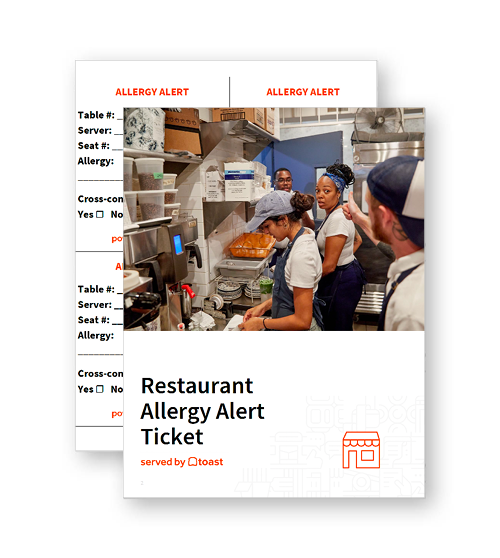
 Plantilla de tarjeta de alerta por alergias para restaurantes
El personal del restaurante puede utilizar esta plantilla de tarjeta de alergias como medida adicional para proteger a los clientes.
Obtener descarga gratisAs a restaurant operator, you’re responsible for creating a safe dining experience for every guest, including those with allergies. Food allergies affect many people and can lead to life-threatening reactions if not handled correctly. For restaurants, this directly impacts trust, reputation, and legal responsibility.
In this comprehensive guide, we’ll cover:
What food allergies are and why they matter
How to build allergy safety into your restaurant’s operations
Staff training strategies for allergy management
How allergy preparedness impacts guest loyalty and your bottom line
Let’s dive in.
Understanding food allergies
Food allergies occur when the body’s immune system mistakenly identifies a harmless food protein as a threat and triggers a defense response. This reaction can range from mild symptoms like hives or stomach discomfort to severe and potentially fatal anaphylaxis.
Key facts about food allergies every restaurant operator should know:
Even a trace amount of an allergen can cause a reaction. That means a crumb, a splash of sauce, or a utensil that wasn’t cleaned properly can pose serious danger.
Symptoms vary by person and by exposure level. Common reactions include swelling, itching, nausea, difficulty breathing, and, in severe cases, anaphylactic shock.
Timing matters. Allergic reactions can happen within seconds or minutes of exposure, making quick and accurate responses critical.
Why does this matter for your restaurant? Because one mistake can lead to an emergency, and in the age of social media, that one mistake can spread quickly. On the flip side, if guests with allergies feel safe dining with you, they’ll become loyal customers and hopefully bring their friends.
The most common food allergens
The FDA recognizes nine major allergens, commonly referred to as the “Big 9”:
Milk
Eggs
Peanuts
Tree nuts (e.g., almonds, walnuts, pecans)
Fish
Shellfish (e.g., shrimp, crab, lobster)
Soy
Wheat
Sesame (recently added as the ninth major allergen)
These allergens account for the majority of food allergy reactions. However, always take any allergy seriously, even if it’s not on the Big 9 list. To learn more, check out this article: The Big 9 Food Allergens: A Comprehensive Guide for Restaurant Operators.
Guía de gestión y kit de recursos para el personal de servicio
Esta guía y kit de recursos te ayudará a desarrollar un sistema de gestión eficiente para el personal de servicio a fin de asegurar la calidad y la coherencia en la cocina de tu restaurante.

How restaurants should handle allergies
Creating an allergy-safe environment is all about systems, communication, and training. Here’s how to build a process that protects your guests and your team:
1. Build a food bible - A Food Bible is a comprehensive document that lists every ingredient in every dish on your menu. It’s the single source of truth for your team when checking for allergens. Your food bible should include:
A full ingredient list for every dish
Notes on cross-contamination risks
All allergen information, clearly labeled
This resource should live in your employee handbook, be accessible to all staff, and be available digitally through your POS system. If a guest asks about a dish, your team should never guess. They should reference the Food Bible.
2. Use allergy alert systems in the POS - Modern POS systems make it easy to flag allergies. When a server takes an order, they should input the allergy details so the kitchen sees it immediately. Many systems can print or display a special allergy alert ticket for the chef, reducing the risk of mistakes.
3. Provide physical allergy alert cards - In addition to POS alerts, give your staff physical allergy alert cards to hand directly to the chef when an allergy-sensitive dish is being prepared. This creates redundancy in your safety process, ensuring the message is clear and visible at every step.
4. Create clear communication protocols - Your allergy system should include mandatory communication steps:
Server to guest - Confirm the allergy and repeat the information back to the guest.
Server to kitchen - Verbally notify the chef in addition to POS alerts.
Kitchen to expo or runner - Re-confirm that the dish is allergen-free before it leaves the line.
Training your staff on allergy procedures
Your allergy management plan is only as strong as your team’s ability to follow it. Here’s how to build training into your operations:
Include allergies in onboarding - Every new hire should be trained on your allergy policy, including how to handle guest inquiries, input allergies into the POS, and communicate with the kitchen.
Teach the right language - Staff should never say “I think” or “I’m pretty sure” about allergens. Train them to say, “Let me double-check in our Food Bible.”
Run regular refreshers - Hold quarterly or bi-annual training sessions to keep procedures top of mind.
Role-play scenarios - Practice allergy situations during pre-shift meetings so staff are confident in real-time conversations.
Train the kitchen thoroughly - Front-of-house communication is essential, but the kitchen carries the final responsibility. Train cooks and prep staff on:
Cleaning protocols for allergy-safe dishes
Using separate utensils and surfaces when possible
Recognizing high-risk cross-contact situations (like shared fryers)
Preventing cross-contamination in the kitchen
Cross-contact is one of the biggest risks for guests with allergies. Here are practical steps to reduce that risk:
Separate prep stations - If possible, dedicate areas for allergen-free prep.
Clean and sanitize thoroughly - Use fresh gloves, utensils, and cutting boards for allergy orders.
Watch for shared equipment - Fryers, toasters, and grills are common contamination points.
Label everything - Ingredients and containers should be clearly marked.
Why this matters for your business
Taking allergies seriously isn’t just about compliance. It’s also about hospitality and trust. Guests with allergies will return (and tell their friends) if they feel safe in your restaurant. On the other hand, one mistake could lead to a severe reaction, bad press, or even legal consequences.
By creating a system that includes: ✅ A detailed Food Bible ✅ POS-integrated allergy alerts ✅ Allergy alert cards for chefs ✅ Robust staff training
…you protect your guests and your brand.
Make allergy awareness part of your culture
Your team should see allergy safety as second nature. When your restaurant makes guests with allergies feel confident and cared for, you turn a potential risk into a competitive advantage.
Food allergy management isn’t optional; it’s essential. The good news? With the right systems and training in place, your restaurant can provide an inclusive, safe experience for every guest. And that kind of hospitality doesn’t just save lives; it builds loyalty and trust that keeps guests coming back for years to come.
¿Es útil este artículo?
AVISO LEGAL: Esta información se proporciona solo con fines informativos generales y su publicación no constituye un aval. Toast no garantiza la precisión ni la integridad de la información, el texto, los gráficos, los enlaces y otros elementos que incluye este contenido. Toast no garantiza que alcanzarás ningún resultado específico si sigues los consejos que aparecen aquí. Te recomendamos consultar con un profesional, como un abogado, contador o asesor comercial, para recibir asesoramiento específico para tu situación.

Subscribe to On the line
Sign up to get industry intel, advice, tools, and honest takes from real people tackling their restaurants' greatest challenges.
Al enviar, aceptas recibir correos electrónicos de marketing de Toast. Trataremos tu información de acuerdo con nuestra declaración de privacidad. Información adicional disponible para residentes de California aquí.