
Why You Should Reevaluate Your Tip Structure This Year
Discover why 2026 is the perfect time to reassess your restaurant's tip structure. Learn about emerging alternatives and proven strategies to boost staff retention, morale, and customer satisfaction.
Autor
 RESOURCE
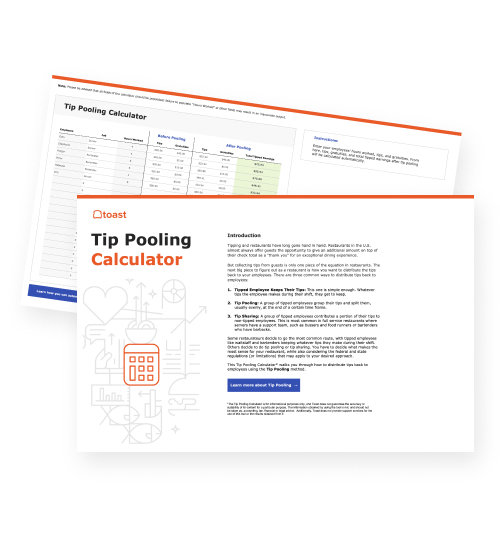
 Tip Pooling Calculator
Use the Tip Pooling Calculator to learn how to distribute tips back to your restaurant’s employees using the tip pooling method.
Obtener descarga gratisFor many restaurants, tipping has been treated as a “set it and forget it” part of operations. Structures are often determined before opening day, and then left untouched. But the reality is the world of hospitality is evolving, and so are employee expectations, labor laws, and service models. If your tip structure hasn’t been revisited in years, it could be quietly creating compliance risks, hurting morale, and making your team vulnerable to leaving for another opportunity that better rewards their work.
Why old tip systems don’t cut it anymore
Your tip structure is the framework that decides how tips are collected, shared, and paid out to your team. But it’s more than a behind-the-scenes payroll setting. The way you handle tips sends a clear message to employees about fairness, transparency, and trust, and it has a direct impact on morale, retention, and how long people choose to stay with your restaurant.
It’s time for operators to ask themselves: When was the last time you reviewed your tip structure? Could your team comfortably handle a tip audit tomorrow? Are you confident your system aligns with current labor laws and regulations?
These are conversations that need to happen today, not tomorrow.
As Scott Rodney, Director of HR and Payroll at Bartaco, shared in the Tipped Off podcast, compliance in hospitality is a moving target. Operators are constantly adapting to new regulations at every level, and with so much uncertainty around what’s coming next, staying proactive is the only safe approach.
That’s especially true with legislation like the One Big Beautiful Bill Act (OBBBA), which aims to simplify how service charges and wages are categorized. Changes like this can directly impact how restaurants classify and distribute tips. If your current system doesn’t reflect these shifts, you could easily fall out of compliance without realizing it.
The state of tipping in 2025
Despite all the buzz around “tip fatigue,” recent data from Toast’s restaurant trends report shows tipping has remained steady, averaging about 18–19% across restaurants. What’s changed isn’t how much people tip, but how they expect those tips to be handled.
Guests want transparency. Teams want fairness. And operators are realizing that tip distribution isn’t just about payouts, it’s about culture, compliance, and retention.
How forward-thinking restaurants are adapting tip structures
The best operators aren’t waiting for issues to arise; they’re proactively redesigning their tip structures to better reflect modern realities.
When Big Red F Restaurant Group evaluated its system, leadership realized the traditional pool wasn’t capturing everyone’s contributions fairly. They introduced a point-based system, weighting each role by impact on the guest experience. It not only improved transparency but also boosted engagement across roles.
Similarly, SuViche Hospitality Group shifted toward a commission-style model that ties tips to both individual performance and team sales. The change aligned incentives across departments and gave employees a stronger sense of ownership over their earnings.
Other restaurants are updating their systems in response to regulatory changes. For example, California operators are adjusting their structures after local tip pooling updates clarified which back-of-house positions could participate, like at The Brigantine Restaurants.
In all cases, what started as a compliance need led to broader improvements in fairness and communication.
Hire and Retain Great Restaurant Employees
Toast and Homebase teamed up to share tips on how to effectively hire and retain employees so you can have a happier team and reduce turnover.

Listening first: staying compliant and competitive
Updating your tip structure isn’t just about avoiding fines; it’s about building a business where people want to stay, where managers and employees feel heard, and where your approach keeps pace with what’s actually working in the industry.
Take time this year to talk with your team: ask what they like about the current tipping structure, what frustrates them, and what would make them feel more rewarded. Then, reach out to peers in other restaurants and see how they’ve addressed similar challenges, what systems they’ve changed, why they changed them, and what the results have been.
Once you’ve gathered those insights:
Reflect on the laws and wage rules, but then ask how those rules intersect with your team’s experience. Compliance isn’t enough unless it also feels fair.
Encourage collaboration and transparency by involving staff in conversations around how tips are pooled, shared, or distributed. Their input will boost trust and retention.
Leverage automation and streamlined systems so that you’re not spending hours each week reconciling tips manually. But don’t let automation replace the conversation; use it to support what your team has already told you matters.
Tools and integrations can help by taking the heavy lifting off your plate, giving you a system that’s adaptable and compliant. But the most important part is keeping your ear to the ground and making sure that the system serves the people in your business.
Rethink your tip strategy this year
Your tipping system should do more than just redistribute money; it should reflect how your business values its people, how it keeps pace with regulation, and how it adapts to the talent market. In a world where employees can walk out the door for something better, your tip structure is a key part of your competitive edge.
Pre-subscribe for early access to the 2026 Tipping Insights and Trends Report from TipHaus to see how top brands are modernizing their approach to tipping, compliance, and team satisfaction.
¿Es útil este artículo?
AVISO LEGAL: Esta información se proporciona solo con fines informativos generales y su publicación no constituye un aval. Toast no garantiza la precisión ni la integridad de la información, el texto, los gráficos, los enlaces y otros elementos que incluye este contenido. Toast no garantiza que alcanzarás ningún resultado específico si sigues los consejos que aparecen aquí. Te recomendamos consultar con un profesional, como un abogado, contador o asesor comercial, para recibir asesoramiento específico para tu situación.
 Tendencias



Subscribe to On the line
Sign up to get industry intel, advice, tools, and honest takes from real people tackling their restaurants' greatest challenges.
Al enviar, aceptas recibir correos electrónicos de marketing de Toast. Trataremos tu información de acuerdo con nuestra declaración de privacidad. Información adicional disponible para residentes de California aquí.