How to Handle Restaurant Incident Reports (Why They Matter + Free Template)
Understand why restaurant incident reports matter and how to document them properly. Get tips, best practices, and a free incident report template.

Autor
 RESOURCE
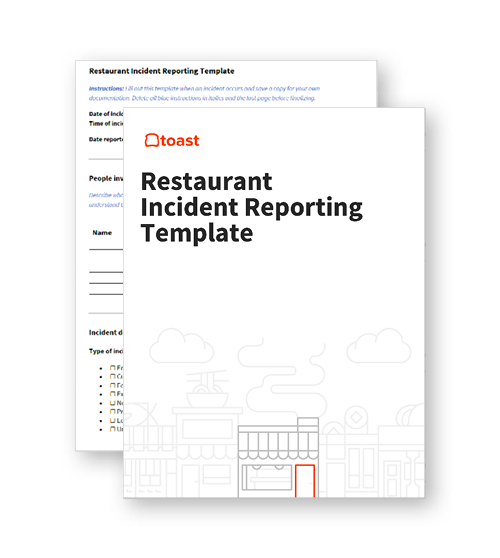
 Restaurant Incident Reporting Template
Use this free template to keep a clear, consistent record of accidents, employee issues, and guest complaints while protecting your business in the process.
Obtener descarga gratisRunning a restaurant is full of unpredictable moments. From a guest slipping near the host stand to a kitchen accident involving a fryer, or even a disciplinary moment for a staff member—anything can happen on any given shift. While you can’t prevent every incident, how you respond to them can make a big difference.
That’s where restaurant incident reports come in.
These simple documents are a critical part of running a safe, professional, and legally protected business. Yet, too often, incident reporting is treated like an afterthought. In this guide, we’ll walk through why they matter, how to handle them effectively, and what to include in every report.
Need a ready-made form? We’ve got you covered! Check out our free, downloadable Restaurant Incident Reporting Template.
Key takeaways in this article:
Incident reports document injuries, accidents, or unusual events in your restaurant and serve as a protective record for your business.
Filing reports promptly helps reduce liability, support insurance claims, and identify patterns to improve safety.
All reports should include detailed facts, names, contact info, actions taken, and any witness statements.
Every staff member should be trained on what incidents need to be reported and how to do so.
Use a free incident reporting template to standardize and streamline the process.
What is a restaurant incident report?
A restaurant incident report is a written record of any unusual event that occurs in or around the restaurant. This could involve staff, customers, equipment, or the facility. These reports can include:
Workplace injuries (cuts, burns, slips)
Customer injuries (slips, allergic reactions, confrontations)
Equipment failure or property damage
Security issues or theft
Verbal or physical altercations
An act conducted by a staff member that caused problems in daily operations
Think of them as a paper trail, one that can help protect your team, support insurance claims, and prove due diligence in case of legal action.
Lista de verificación de inspección sanitaria para restaurantes
Esta lista de verificación gratis te brinda todos los consejos y trucos que necesitas para aprobar tu próxima inspección.

Why incident reports matter
They protect your business - If an injury leads to a lawsuit or a workers’ comp claim, an accurate incident report can serve as a key piece of evidence. It shows when and where the incident occurred, who was involved, and what action was taken.
They help identify risk patterns - Are slips happening more often during rainy nights? Are cuts common during the dinner rush? Documenting incidents helps you spot trends and address the root causes, before something worse happens.
They improve communication and accountability - Reporting incidents fosters a culture of transparency and responsibility. It encourages staff to speak up and gives management a clearer picture of what’s happening on the floor.
They support insurance and HR documentation - Your insurer, local regulators, or HR department may require documentation after certain types of incidents. A clear, timely report keeps you compliant and reduces liability.
They leave a paper trail - If you’re writing up the same employee every week, consistent documentation helps build a clear record of behavior. This can be essential if you ever need to issue a formal warning, assign consequences, or make the case for termination.
When should you file an incident report?
Rule of thumb: if something happened that could lead to injury, damage, or liability, report it.
You should file a report as soon as possible after the event. Ideally, you want to at least start the documentation on the same day. Reports should be filled out by the manager on duty, with input from any team members or guests who were involved or witnessed the incident.
What to include in a restaurant incident report
Every report should be clear and very detailed. Avoid assumptions or emotional language. Here's what you should include:
Date, time, and location of the incident
Names and contact info of everyone involved (including witnesses)
Description of what happened (chronological, factual)
Injuries sustained or property damage
Actions taken immediately following the event (first aid, emergency services, guest comped, etc.)
Signatures from the reporting manager and staff member responsible or who witnessed the incident
Pro Tip: Keep incident reports in a secure but easily accessible file, digital or physical, and retain them for several years in case of future claims.
Common mistakes to avoid
Not documenting minor incidents - A small fall or burn might not seem worth noting at the time, until it turns into a medical claim days later.
Letting too much time pass - Memory fades quickly. Details matter, and waiting too long can weaken your documentation.
Missing signatures or contact info - Make sure all involved parties are accounted for and that you have a way to follow up if needed.
Train your team to take it seriously
Reporting shouldn’t feel like punishment or extra paperwork. It’s about protecting people and preventing bigger problems. Train your staff on:
What types of incidents should be reported
Who to notify when something happens
Where to find the incident report form
How to properly fill it out
Consider incorporating incident report training into onboarding and hosting regular refreshers for your team.
Lista de verificación de la incorporación de nuevos empleados a un restaurante
Incorporar nuevos empleados a tu equipo puede ser emocionante y desafiante a la vez. Usa esta lista de comprobación en PDF gratuita para que tu personal tenga éxito.
A small step that can save you big
In the whirlwind of daily service, it’s tempting to skip the paperwork. But handling restaurant incident reports promptly and professionally is one of the simplest ways to protect your staff, your guests, and your business. It’s about building a safer, more resilient restaurant.
FAQs:
What is an incident report in a restaurant?
An incident report is a written record of any unusual event that occurs in or around a restaurant, such as injuries, accidents, equipment malfunctions, or security issues. It helps protect the business, supports insurance claims, and improves workplace safety.
Who should fill out a restaurant incident report?
The manager on duty should complete the report, ideally with input from any staff involved or witnesses. Reports should be filled out as soon as possible after the incident.
How long should restaurants keep incident reports?
Restaurants should keep incident reports for at least 2–3 years, though this can vary depending on state laws, insurance requirements, or legal risks. Digital storage is recommended for easier access and organization.
Can restaurant incident reports be used in court?
Yes. A properly documented incident report can serve as legal evidence in the event of a lawsuit, insurance claim, or employee dispute. That’s why accuracy and factual reporting are essential.
Restaurant Incident Reporting Template
Use this free template to keep a clear, consistent record of accidents, employee issues, and guest complaints while protecting your business in the process.


¿Es útil este artículo?
AVISO LEGAL: Esta información se proporciona solo con fines informativos generales y su publicación no constituye un aval. Toast no garantiza la precisión ni la integridad de la información, el texto, los gráficos, los enlaces y otros elementos que incluye este contenido. Toast no garantiza que alcanzarás ningún resultado específico si sigues los consejos que aparecen aquí. Te recomendamos consultar con un profesional, como un abogado, contador o asesor comercial, para recibir asesoramiento específico para tu situación.
 Tendencias


Subscribe to On the line
Sign up to get industry intel, advice, tools, and honest takes from real people tackling their restaurants' greatest challenges.
Al enviar, aceptas recibir correos electrónicos de marketing de Toast. Trataremos tu información de acuerdo con nuestra declaración de privacidad. Información adicional disponible para residentes de California aquí.