
How to Reduce No-Shows at Your Restaurant (And Protect Your Bottom Line)
Restaurant operators: Stop losing revenue to no-shows! Here's how.

Autor
 RESOURCE
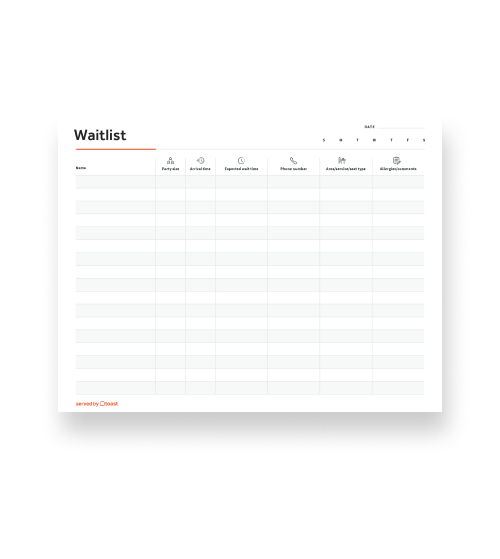
 Restaurant Waitlist Template
A template to help your host keep track of walk-ins and provide estimated wait times, keeping guests happy and staff organized.
Obtener descarga gratisHow do you reduce restaurant no-shows?
Restaurants can reduce no-shows by sending automated reservation reminders, making cancellations simple, requiring a credit card hold with a clear cancellation policy, and quickly filling empty tables with walk-ins.
On the Toast platform, 17% of reservations were canceled in Q3 2024. In the restaurant industry, every table matters. When guests make a reservation and don’t show up, it’s more than a minor inconvenience. It’s a hit to your staff, your schedule, and your bottom line.
No-shows leave empty seats that could have gone to paying guests, throw off your kitchen’s prep, and can sour the mood of your team, who spent time getting ready for a busier night. Learning how to reduce no-shows is one of the most impactful steps restaurant operators can take to protect their revenue. Let’s get into it.
Why no-shows are a problem
At first glance, one empty table might not seem like a big deal. But multiply that by a few reservations per shift, and the cost adds up fast.
Here’s why no-shows sting so much:
You’ve already invested in the guest. Restaurants pay for reservation platforms to make booking seamless, but those systems aren’t free. Plus, the labor cost of having a host or manager monitor the book is already on the books.
They throw off planning and staffing. Reservations help operators plan how much staff to schedule, how much food to prep, and how to pace the night. When someone no-shows, that seat sits empty — but the prep and payroll don’t go away.
Margins are already tight. According to Toast’s Restaurant Success Report, many operators run on single-digit profit margins. Losing out on just a handful of covers each week can eat into that already-slim margin.
In short, reservations aren’t just a convenience for guests. They’re a crucial business tool for restaurants, and when guests don’t show up, it undermines the entire system.
SOPs Template
This template will help you create SOPs for your entire business, so you can create consistency and easily train employees.

How to reduce no-shows
While no-shows can’t be eliminated entirely, there are proven ways to cut them down and protect your bottom line. Let’s walk through the most effective strategies restaurants are using today.
1. Confirm reservations
One of the simplest ways to reduce no-shows is to make sure guests remember they actually made a reservation. A lot of missed reservations aren’t malicious. People forget, get busy, or double-book.
Reservation platforms like Toast Tables allow for automated text or email confirmations. A friendly reminder sent the day before or a few hours prior gives guests the nudge they need to either show up or cancel.
Pro tip: Make your reminders conversational. Instead of a cold “Reservation confirmed,” try something warm and branded, like:
“Hi there! Just confirming your table for 7:30 PM at Toast Tavern tomorrow night. We can’t wait to see you. If your plans change, please let us know here: [link].”
This approach reduces no-shows while maintaining hospitality.
2. Make cancellations easy
Sometimes, guests don’t cancel because they don’t know how. If your system requires calling the restaurant and waiting on hold, many people simply skip it. The easier it is to cancel, the more likely guests are to do it (if needed). This will give you more time to fill the table.
Booking reservations should also be a simple process. About 44% of diners find a restaurant less appealing and get frustrated/stop trying to book when it’s difficult to make a reservation. Needless to say, make reservations and cancellations as straightforward as possible.
3. Overbook strategically
Airlines have been doing it for decades, and while it can be risky, some operators overbook to account for the expected no-show rate.
If your data shows that, say, 10% of reservations don’t show, you may consider taking a few extra reservations each night to compensate. Just make sure your host stand is trained to handle the flow so it doesn’t lead to long waits for paying guests.
4. Create a clear reservation policy
Transparency is key. Guests should know upfront what’s expected when they book. That’s why many restaurants are adopting clear, visible reservation policies.
Your policy should include:
Cancellation window. How far in advance guests need to cancel (24 hours, 48 hours, etc.).
No-show or late-cancel fee. A flat rate per person (like $25) or a percentage of the check average.
Flexibility for emergencies. Make sure guests know that genuine emergencies or illnesses will be handled with empathy.
By setting expectations upfront, you’ll deter casual no-shows and reinforce that reservations are a commitment.
5. Implement a credit card hold or cancellation fee
Perhaps the most effective strategy to reduce no-shows is requiring a credit card to book.
Here’s how it works:
Guests provide a credit card when making the reservation.
They’re charged only if they fail to show or cancel outside the cancellation window.
The fee is clearly stated when they book, so there are no surprises.
This policy weeds out noncommittal reservations and signals that your restaurant values its time and resources.
Restaurants across the country are embracing this approach. Some charge a modest $10–$25 per person for no shows, while fine-dining spots may charge closer to the average per-head spend.
Example: If your average check is $50 per guest, a $25 no-show fee helps cover at least half the lost revenue if someone skips out.
6. Reward guests who respect reservations
It’s not all about penalties. You can also encourage good behavior with small perks. Consider:
Priority booking for guests who consistently honor reservations.
Loyalty points or discounts for frequent diners.
A simple “thank you” email for canceling on time.
Positive reinforcement makes guests feel appreciated and builds loyalty.
7. Leverage walk-in management
Not every empty table has to stay empty. With Toast Tables, hosts can manage both reservations and walk-ins in real time. If a guest no-shows, your host can immediately seat a waiting guest. According to Toast data, 45% of diners are more likely to dine at a restaurant that offers a waitlist you can join online or via app.
By balancing reservations with a steady flow of walk-ins, you can reduce the revenue hit of no-shows. For more information on how to perfect this flow, check out our article, How to Run an Efficient Restaurant Host Stand in 2025.
8. Educate guests on the impact of no-shows
Some guests don’t realize how harmful no-shows can be. A polite message on your website or reservation confirmation can go a long way:
“Each missed reservation impacts our small business. If your plans change, please cancel so another guest can enjoy your spot.” This humanizes the issue and appeals to diners’ sense of fairness.
Plantilla de manual de operaciones para restaurantes
Usa esta plantilla gratuita para describir fácilmente todos tus procedimientos operativos y lograr que las operaciones diarias sean tan uniformes como sea posible.
Building a reservation policy that works
So what should your restaurant’s reservation policy look like? Here’s a template you can adapt:
[Restaurant Name] Reservation Policy
We require a credit card to hold all reservations.
Cancellations made more than 24 hours in advance will not be charged.
No shows or cancellations made within 24 hours will incur a $25 per person fee.
We understand emergencies happen. Please contact us directly if something unexpected arises.
By being clear, fair, and consistent, you set expectations without alienating guests.
How Toast can help reduce no-shows
Toast is designed to help restaurants run smoother shifts and minimize no-shows. With Toast Tables, operators can:
Accept online reservations directly through their website, as 65% of diners go directly to the restaurant’s website to book a reservation.
Automatically send confirmation and reminder texts.
Require credit card holds for bookings.
Track reservation data to identify peak times, no-show rates, and guest behaviors.
By integrating reservations directly into your POS, you reduce the chance of double-booking, make life easier for your staff, and ensure fewer empty seats on your busiest nights.
A Balanced approach: Hospitality meets accountability
No shows aren’t going away entirely. But with the right tools and policies, you can drastically reduce their impact. By combining automated reminders, easy cancellations, clear policies, and card holds, restaurants strike the right balance: protecting their revenue while maintaining great hospitality.
Learning how to reduce no-shows is about more than just saving a few tables. It’s about creating a culture of respect between guests and operators, one that keeps your dining room full, your staff energized, and your bottom line secure.
Key Takeaways
No shows harm restaurants by wasting labor, food, and reservation system costs.
Automated reminders, easy cancellations, and walk-in management help reduce them.
A clear reservation policy with cancellation fees protects revenue while setting expectations.
Tools like Toast Tables make managing reservations and no-shows seamless.
Your turn: Have you set up a reservation policy at your restaurant yet? If not, now’s the time to test one out, and let Toast help you keep your tables full.
Frequently asked questions
What's the most effective way to reduce restaurant no-shows? Implement automated reminder systems 24-48 hours before reservations, combined with easy cancellation processes. This two-pronged approach helps guests remember bookings while enabling advance communication about changes.
Should I charge no-show fees for all reservations? Start with high-risk situations like large parties or peak dining times. A $20 per person deposit can significantly reduce no-shows without deterring most guests. Monitor booking patterns and adjust policies based on results.
How do I implement no-show fees without alienating guests? Communicate policies clearly during booking and explain operational impacts rather than presenting fees as profit-seeking. Offer flexible cancellation windows (24-48 hours) and maintain positive, understanding language in all communications.
What technology helps reduce no-shows most effectively? Integrated reservation platforms with automated reminders, SMS communication, and POS integration provide the best results. These systems reduce staff workload while improving guest communication and enabling data-driven policy decisions.
How should I handle repeat no-show guests? Track guest history through reservation systems and implement targeted strategies. Consider requiring deposits for known repeat offenders while maintaining opportunities for guests to rebuild reliability through consistent behavior.
What's the best way to fill tables when no-shows occur? Maintain active waitlists with SMS notification capabilities and accommodate walk-in guests efficiently. Quick communication and flexible seating policies enable rapid table reallocation that minimizes revenue loss.


¿Es útil este artículo?
AVISO LEGAL: Esta información se proporciona solo con fines informativos generales y su publicación no constituye un aval. Toast no garantiza la precisión ni la integridad de la información, el texto, los gráficos, los enlaces y otros elementos que incluye este contenido. Toast no garantiza que alcanzarás ningún resultado específico si sigues los consejos que aparecen aquí. Te recomendamos consultar con un profesional, como un abogado, contador o asesor comercial, para recibir asesoramiento específico para tu situación.
 Tendencias


Subscribe to On the line
Sign up to get industry intel, advice, tools, and honest takes from real people tackling their restaurants' greatest challenges.
Al enviar, aceptas recibir correos electrónicos de marketing de Toast. Trataremos tu información de acuerdo con nuestra declaración de privacidad. Información adicional disponible para residentes de California aquí.