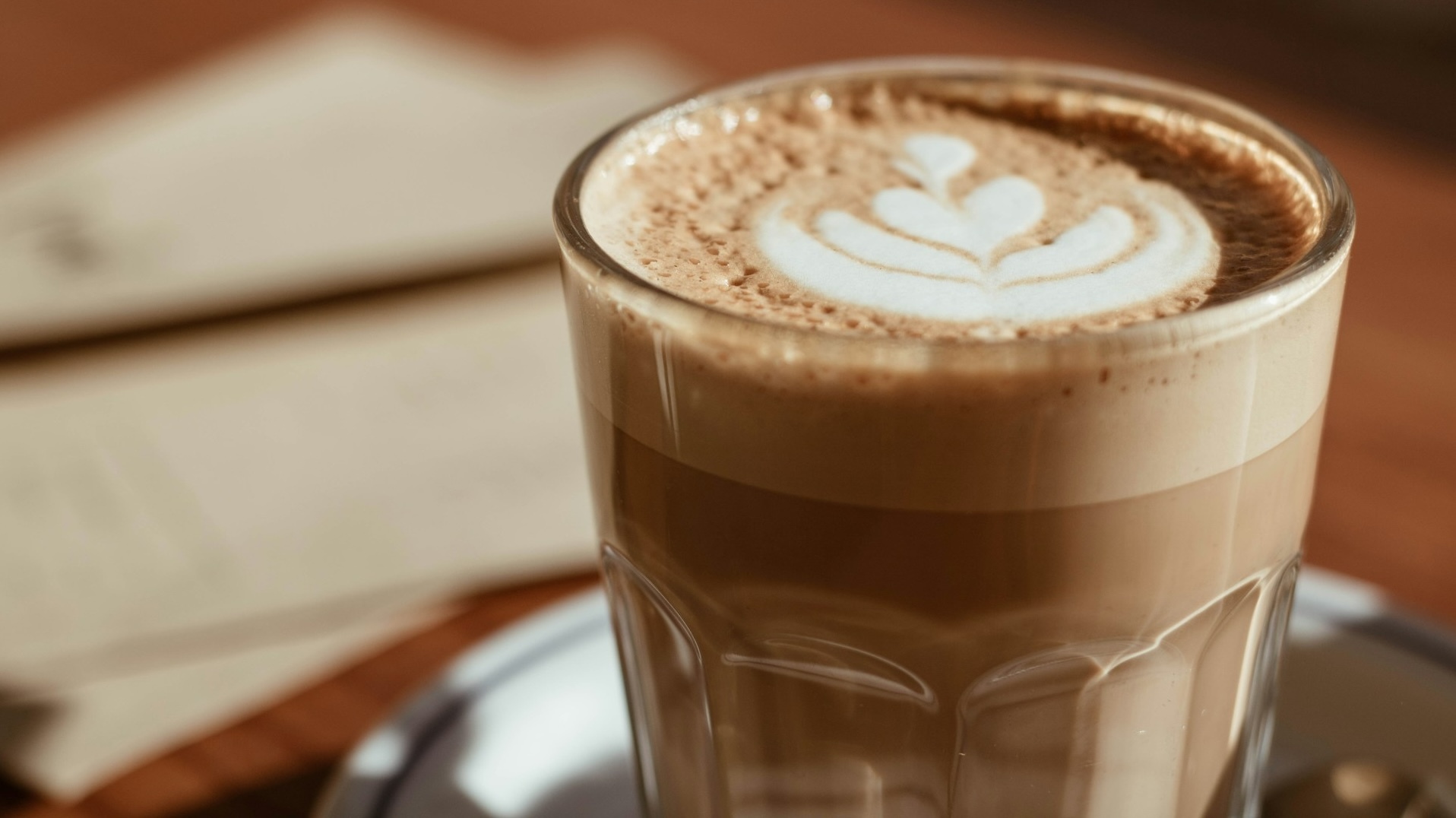
How Much Caffeine Is in Coffee? Espresso, Cold Brew & More
Discover how much caffeine is in your favorite coffee drinks. From drip and espresso to cold brew and decaf, learn what’s really in your cup.
Autor
 RESOURCE
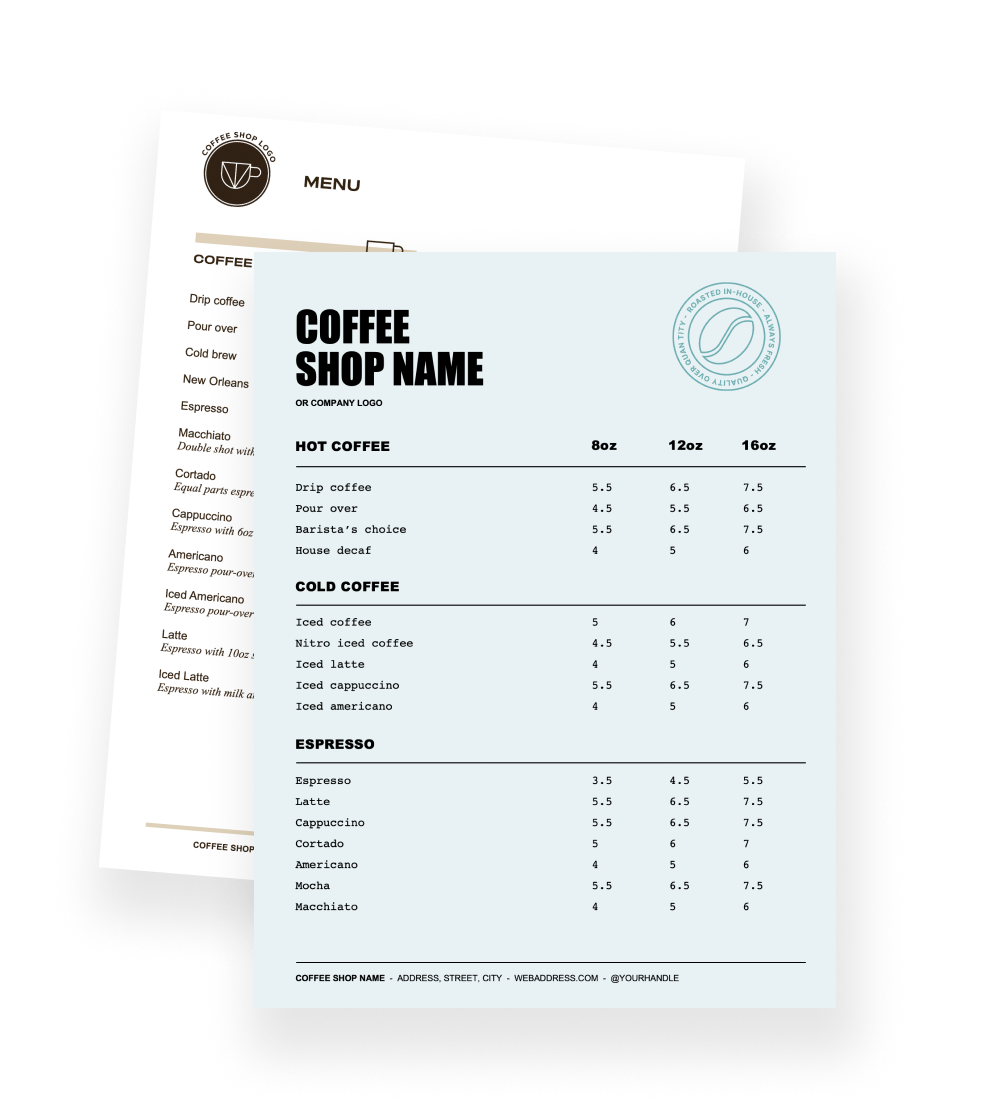
 Coffee Shop Menu Templates
Use these coffee shop menu templates as a starting point for your menu design or to give your menu a refresh.
Obtener descarga gratisAccording to Drive Research, 73% of Americans drink coffee every day, with 36% consuming three to five cups daily—and for good reason! Recent findings show that even a 9 mg dose of caffeine can enhance focus and mental performance, fueling the rise of micro-dosing, precision brews, and other modern coffee trends.
From brew methods to bean types, here’s how much caffeine is really in your cup—and what factors influence the strength of your daily brew.
Key takeaways
Not all coffee delivers the same caffeine kick—brew method, bean type, and cup size all play a role.
Espresso has the most caffeine per ounce, but drip coffee usually has more overall per serving.
Cold brew packs a serious punch thanks to its long steep time and high coffee-to-water ratio.
Decaf still contains caffeine—just a lot less—so multiple cups can still add up.
Coffee Shop Menu Templates
Use these coffee shop menu templates as a starting point for your menu design or to give your menu a refresh.

How much caffeine is in different types of coffee?
Coffee can range from a mellow morning boost to a high-powered jolt—depending on the drink, brand, and serving size. Here's how much caffeine you’re actually getting from popular types of coffee.
Note: All data comes from the Center for Science in the Public Interest.
Brewed coffee (drip, pour-over, French press)
Brewed coffee is typically the most caffeinated choice by volume. Starbucks consistently serves some of the strongest drip coffee, with a venti (20 oz) topping out around 490 mg. Even a 14 oz Dunkin’ medium can deliver 210 mg.
General range: 95–200 mg per 8 oz
Examples:
Starbucks (16 oz grande): 315–390 mg
Dunkin’ (20 oz large): 270 mg
Espresso and espresso-based drinks
Espresso delivers the most caffeine per ounce, but the smaller serving size means less total caffeine than a full cup of drip coffee.
General range for a single shot (1 oz): 63–75 mg
Examples:
Dunkin’ Latte or Cappuccino (14 oz): 166 mg
Starbucks Latte or Cappuccino (16 oz): 150 mg
Starbucks Caffè Americano (16 oz): 225 mg
Cold brew
Cold brew is steeped for longer and often uses more grounds, resulting in high caffeine levels.
General range: 200–300 mg per 16 oz
Examples:
Starbucks Black Unsweetened Cold Brew (12 oz): 255 mg
High Brew Nitro Black (10 oz): 200 mg
Flavored café drinks (mocha, frappuccino, etc.)
Sweetened café beverages like mochas and Frappuccinos may taste indulgent, but their caffeine content varies. Frappuccinos tend to be lower in caffeine due to ice and dairy content, while mochas (espresso-based) are a bit stronger.
General range: 90–180 mg per 16 oz
Examples:
Starbucks Mocha (16 oz): 175 mg
Starbucks Coffee Frappuccino (16 oz): 95 mg
Instant coffee
Instant coffee is typically lower in caffeine, but some brands—like Death Wish—break the mold with extreme levels.
General range: 30–90 mg per 8 oz
Examples:
Death Wish Instant Coffee (1 packet): Up to 300 mg
Folgers Classic Roast (12 oz): 120–160 mg
Keurig K-Cups (8 oz): 75–150 mg
Decaf coffee
Decaf doesn’t mean caffeine-free. Most decaf drinks still contain a small amount, which can add up if you drink multiple cups a day.
General range: 2–15 mg per 8 oz
Examples:
Starbucks Pike Place Decaf (16 oz): 25 mg
Folgers Classic Decaf (12 oz): 2–8 mg
5 key factors affecting coffee’s caffeine level
The amount of caffeine in your cup can vary a lot depending on a few key factors—like the type of bean, how it’s roasted, and even how it’s brewed.
1. Type of bean
The type of coffee bean used makes a big difference in how much caffeine ends up in your cup. Arabica and Robusta are the two most common types of beans, and they each bring something different to the table:
Arabica beans are smoother, often with sweeter or more complex flavors—and they’re lower in caffeine.
Robusta beans have a stronger, more bitter taste, and they contain about twice as much caffeine as Arabica.
Some coffee blends combine both for flavor and strength, while others stick to one or the other. If you’ve ever had a cup that hit harder than expected, there’s a good chance it included some Robusta.
2. Roast level
A lot of people assume that dark roast coffee has more caffeine because of its bold flavor—but that’s not quite true. Light roasts actually have slightly more caffeine by volume than dark roasts.
That’s because the roasting process breaks down some of the caffeine and causes the beans to lose water and expand. So, while dark roast beans might taste stronger, they’re actually less dense. Scoop for scoop, light roast ends up delivering a little more caffeine.
3. Brewing method
The way your coffee is brewed has a big impact on how much caffeine ends up in your cup. Different methods pull out caffeine at different rates, depending on things like brew time, water temperature, and how fine the coffee is ground. For example:
Espresso delivers a small, concentrated shot of caffeine—perfect if you want a quick jolt.
Drip coffee usually has more caffeine overall, thanks to a longer brew time and bigger serving size.
French press and cold brew can be especially strong, since the coffee steeps for longer and often uses more grounds.
4. Grind size
If you’re grinding beans at home, the grind size you choose can change how strong—or how mellow—your coffee turns out:
Finer grinds (like those used for espresso) expose more surface area, which can lead to a quicker and stronger caffeine extraction.
Coarser grinds (like those used for French press) take longer to brew and may extract less caffeine if not brewed long enough.
5. Coffee-to-water ratio
How much coffee you use compared to water also plays a big role in caffeine levels. A stronger ratio means more caffeine per cup.
Higher ratios (more coffee, less water) lead to a more concentrated and caffeinated brew—like in cold brew or strong espresso drinks.
Lower ratios (less coffee, more water) create a milder cup with less caffeine per sip.
6. Serving size
Even if two drinks use the same beans and brewing method, the size of the cup makes a big difference in how much caffeine you’re actually drinking. Take espresso, for example: a single shot has less total caffeine than a 12-ounce cup of drip coffee—but it’s much more concentrated. That’s why it feels so strong, even in a tiny cup.
Whether you're sipping a small latte or a large iced coffee, the bigger the cup, the more caffeine you’re likely to get.
How much caffeine is safe to drink?
According to the U.S. Food and Drug Administration (FDA), up to 400 milligrams of caffeine per day is generally considered safe for most healthy adults. This is the equivalent of:
Brewed coffee (drip, pour-over, French press): About 2.5 cups.
Espresso and espresso-based drinks: About 6 shots of espresso, or 2.5 16 oz lattes/cappuccinos.
Cold brew: About 1.5 cold brews.
Flavored café drinks (mocha, frappuccino, etc.): About 3 cups (and remember, these drinks are usually loaded with sugar!).
Instant coffee: About 5.5 cups (unless you’re drinking Death Wish or other high-caffeine blends).
Decaf coffee: About 57 cups (though we don’t suggest you try drinking that many!).
Dr. Mike Howell, a neurologist at the University of Minnesota, explains why too much caffeine can have negative effects:
"Caffeine in excessive amounts can be bad for you, especially if you have heart problems, especially if you're prone to anxiety or if you have difficulty sleeping… I think it's OK to drink caffeine in moderation. I would not drink more than three to four cups a day, even myself."
Stay caffeinated, but calculated
Whether you’re team cold brew or all about a morning latte, knowing how much caffeine you’re actually drinking can help you stay energized without overdoing it. Everyone’s tolerance is different, so listen to your body, and enjoy your coffee in moderation.
As they say, “Life’s too short to drink bad coffee.” Just don’t drink it all in one day!
¿Es útil este artículo?
AVISO LEGAL: Esta información se proporciona solo con fines informativos generales y su publicación no constituye un aval. Toast no garantiza la precisión ni la integridad de la información, el texto, los gráficos, los enlaces y otros elementos que incluye este contenido. Toast no garantiza que alcanzarás ningún resultado específico si sigues los consejos que aparecen aquí. Te recomendamos consultar con un profesional, como un abogado, contador o asesor comercial, para recibir asesoramiento específico para tu situación.
 Tendencias

Subscribe to On the line
Sign up to get industry intel, advice, tools, and honest takes from real people tackling their restaurants' greatest challenges.
Al enviar, aceptas recibir correos electrónicos de marketing de Toast. Trataremos tu información de acuerdo con nuestra declaración de privacidad. Información adicional disponible para residentes de California aquí.