
How many shots in a fifth: Complete guide to alcohol measurements
Learn exactly how many shots are in a fifth of alcohol.

Autor
 RESOURCE
 Bartender Training Checklist
Use this free Bartender Training Checklist to help streamline your training process and set your new bartenders up for success.
Obtener descarga gratisA fifth contains approximately 16-17 shots based on the standard U.S. shot size of 1.5 ounces. This measurement applies to any type of spirit—whether vodka, whiskey, rum, or gin—since a fifth refers specifically to the bottle volume of 750 milliliters, not the type of alcohol inside.
Understanding the fifth measurement
The term "fifth" originates from when liquor was measured in gallons, and these bottles contained one-fifth of a gallon. Today, a fifth equals 750 milliliters or approximately 25.4 ounces of liquid, making it the most common bottle size for spirits worldwide.
Modern fifths maintain this traditional measurement despite the shift to metric systems in most countries. The standardization helps bartenders, retailers, and consumers understand exactly what they're purchasing, regardless of whether they're buying vodka, whiskey, tequila, or any other distilled spirit.
This bottle size has become the industry standard because it provides enough alcohol for multiple drinks while remaining manageable for individual purchase and consumption. Most bars stock primarily fifth-sized bottles for their well liquors and premium selections.
Standard shot measurements explained
In the United States, a standard shot contains 1.5 ounces of liquid, though this measurement varies globally. This standardization helps bartenders maintain consistency and allows establishments to calculate costs and inventory accurately.
The 1.5-ounce standard emerged from practical bartending needs and represents a balance between providing sufficient alcohol content for cocktails while maintaining responsible serving sizes. Most jiggers—the measuring tools bartenders use—are designed with 1.5 ounces on one end and 0.75 ounces on the other.
However, shot sizes can vary within establishments. Some bars serve 1-ounce shots, which would yield 25 shots from a fifth, while others may pour larger 2-ounce servings, resulting in approximately 12-13 shots per bottle.
Calculating shots per fifth
The basic calculation divides the total volume of the fifth (25.4 ounces) by the shot size. Using the standard 1.5-ounce measurement: 25.4 ÷ 1.5 = 16.9, which rounds to approximately 17 shots per bottle.
For planning purposes, most bartenders and party hosts count on 16 shots per fifth to account for spillage, measurement variations, and pouring inconsistencies. This conservative estimate ensures adequate supplies without running short during events.
Different shot sizes yield different totals: 1-ounce shots provide 25 servings, 1.25-ounce pours yield about 20 shots, and 2-ounce doubles result in approximately 12-13 servings from a single fifth.
International shot size variations
Shot measurements vary significantly worldwide, affecting the number of servings per bottle. In the United Kingdom, a standard shot measures 25 milliliters (0.85 ounces), yielding approximately 30 shots from a fifth.
German establishments typically serve 20-milliliter shots, providing about 37 servings per bottle. Japanese bars often pour 30-milliliter shots (1 ounce), resulting in 25 shots per fifth.
These international variations reflect local regulations, cultural drinking customs, and traditional serving practices. Understanding these differences helps when traveling or working in international hospitality settings.
Party and event planning
For home entertaining, the 16-17 shot calculation helps determine how many bottles to purchase. If hosting 10 guests expecting 3 drinks each over 4 hours, you'd need approximately 2 bottles of liquor, assuming half the guests prefer spirit-based drinks.
Party planning guidelines suggest estimating 2-3 drinks per person for the first hour, then 1-2 drinks per hour thereafter. This formula accounts for varying consumption patterns and ensures adequate supplies without excessive waste.
Consider mixer requirements as well. Each cocktail typically needs 0.25-0.5 ounces of syrup and similar amounts of juice, plus 1-5 ounces of soda for mixed drinks, depending on the recipe and guest preferences.
Bartender Training Checklist
Use this free Bartender Training Checklist to help streamline your training process and set your new bartenders up for success.

Bar industry applications
Professional bartenders rely on precise measurements for inventory management, cost control, and consistent drink quality. Knowing that a fifth yields 16 shots helps calculate pour costs and set appropriate pricing for profitability.
Most bars use 80% of their clients standardizing on 1.5-ounce pours for cocktails, making the 16-shot calculation standard across the industry. This consistency helps with staff training and inventory tracking.
Establishments must also consider responsible service practices. The CDC defines a standard drink as containing 0.6 fluid ounces or 14 grams of pure alcohol, which means a 1.5-ounce shot of 80-proof spirits contains 2.5 standard drinks.
Different bottle sizes comparison
Understanding various bottle sizes helps with purchasing decisions and inventory planning. A mini bottle (50ml) contains one shot, while a pint (375ml) holds approximately 8 shots.
Larger bottles offer better value: a liter bottle contains 22 shots, while a 1.75-liter handle provides approximately 39 shots. These larger sizes are popular for high-volume establishments and large events.
The fifth remains the most versatile size for most purposes, balancing quantity with manageability and cost-effectiveness for both commercial and personal use.
FAQ
Q: Does the type of alcohol affect how many shots are in a fifth? A: No, the number of shots depends only on bottle volume (750ml) and shot size, not the type of spirit. Whether vodka, whiskey, or rum, a fifth always contains the same number of shots.
Q: How many shots are in a fifth if I pour 1-ounce shots? A: A fifth contains approximately 25 one-ounce shots (25.4 ounces ÷ 1 ounce = 25.4 shots).
Q: Why do bars sometimes get fewer than 16 shots from a fifth? A: Spillage, over-pouring, measurement inconsistencies, and free-pouring techniques can reduce the actual number of shots. Many bars budget for 15-16 shots to account for these factors.
Q: Are double shots counted as two shots from a bottle? A: Yes, a double shot (typically 3 ounces) uses twice the alcohol of a standard shot, so you'd get approximately 8 double shots from a fifth.
Q: How should I measure shots accurately at home? A: Use a jigger or shot glass with measurement markings. Standard jiggers have 1.5 ounces on one side and 0.75 ounces on the other for precise measuring.
Q: Do bars legally have to serve specific shot sizes? A: Most U.S. states don't mandate specific shot sizes, leaving it to individual establishments. However, bars must be consistent with their stated serving sizes for legal and customer service reasons.
¿Es útil este artículo?
AVISO LEGAL: Esta información se proporciona solo con fines informativos generales y su publicación no constituye un aval. Toast no garantiza la precisión ni la integridad de la información, el texto, los gráficos, los enlaces y otros elementos que incluye este contenido. Toast no garantiza que alcanzarás ningún resultado específico si sigues los consejos que aparecen aquí. Te recomendamos consultar con un profesional, como un abogado, contador o asesor comercial, para recibir asesoramiento específico para tu situación.
 Tendencias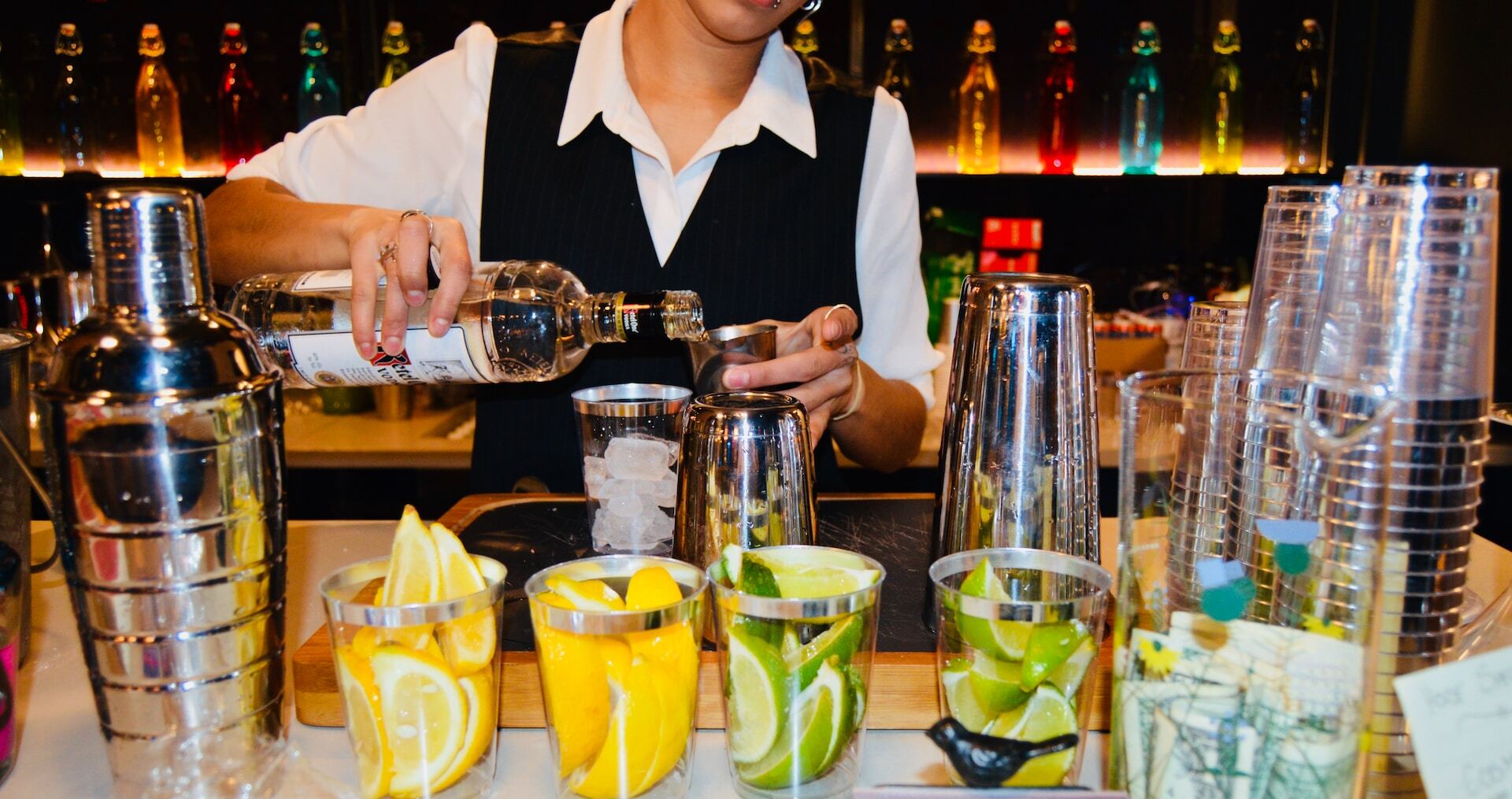


Subscribe to On the line
Sign up to get industry intel, advice, tools, and honest takes from real people tackling their restaurants' greatest challenges.
Al enviar, aceptas recibir correos electrónicos de marketing de Toast. Trataremos tu información de acuerdo con nuestra declaración de privacidad. Información adicional disponible para residentes de California aquí.