
How Long to Let Steak Rest (& Why It's Worth the Wait)
Resting steak keeps juices locked in for tender, flavorful bites. Learn how long to let steak rest and why having a little patience can pay off.

Autor
 RECURSO
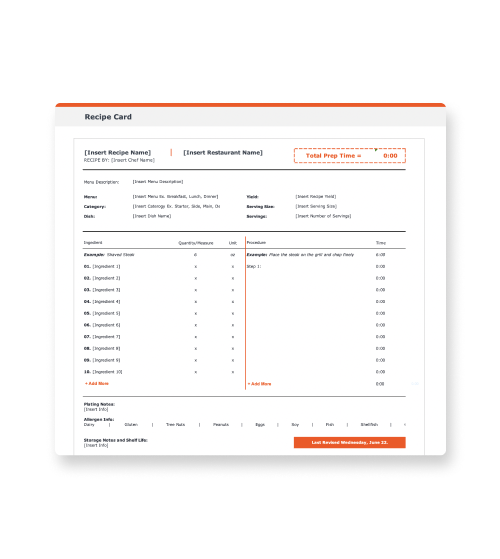
 Plantilla de fichas de recetas
Capacita a tu equipo con esta plantilla de fichas de recetas, una planilla de Excel personalizable donde se describe todo lo que los chefs y el personal de servicio necesitan para preparar una receta.
Obtener descarga gratisFor most cuts of steak, the sweet spot for resting time is about 5–10 minutes. However, thinner steaks need less time, and larger roasts can benefit from 15–20 minutes or more.
That brief pause might feel like torture when the kitchen smells amazing, but it makes all the difference. Resting allows the juices that were pushed to the center during cooking to redistribute evenly, keeping each bite tender, moist, and flavorful.
In this guide, we’ll break down why steaks need to rest, how long different cuts should sit, and a few tips to get it just right.
Key takeaways
Resting steak is essential for keeping juices locked in, so each bite stays tender, moist, and flavorful.
Thinner cuts only need a couple of minutes, while thick or bone-in steaks benefit from up to 20 minutes.
Factors like thickness, cooking method, and doneness all affect how long a steak should rest.
Simple techniques — like tenting with foil, using a warm surface, and accounting for carryover cooking — make a big difference.
Plantilla de fichas de recetas
Capacita a tu equipo con esta plantilla de fichas de recetas, una planilla de Excel personalizable donde se describe todo lo que los chefs y el personal de servicio necesitan para preparar una receta.

Why do steaks need to rest?
When you cook a steak, the heat forces its juices toward the center of the meat. If you slice into it right away, all that liquid spills out onto the plate instead of staying in each bite. That’s why a steak can look juicy on the cutting board but end up tasting dry on the fork.
Resting gives the muscle fibers time to relax and reabsorb those juices, so they’re evenly distributed throughout the steak. The result: every slice stays tender, flavorful, and moist — the way steak is meant to be enjoyed. As Chef Angie Mar, co-owner and executive chef of Les Trois Chevaux in New York, explains:
“When meat is hot, the juices are more liquid. When you cut into a very hot piece of meat, all of the liquid is going to come out. If you rest it, it allows everything to relax and redistribute the juices, which creates a more tender, juicier cut.”
Do all steaks need to rest?
Not every cut of steak needs the same amount of downtime. Thinner steaks — like flank, skirt, or hanger — don’t hold onto as much heat and cook quickly, so they only need a couple of minutes to rest. Any longer and they risk cooling off too much.
How long to rest steak
So, how long should you actually wait before digging in? The answer depends on the cut and thickness of the steak, but a general rule of thumb is to let most steaks rest for about 5–10 minutes before slicing. This window is usually enough time for the juices to redistribute without the steak cooling down too much. A few key factors influence resting time:
Thickness of the cut: Thicker steaks hold more heat and need longer rest — closer to 10 minutes. Thinner cuts can be ready after just a few minutes.
Cooking method: Grilled steaks tend to retain more heat, while pan-seared cuts may cool more quickly, so adjust accordingly.
Desired doneness: If you prefer rare or medium-rare, rest on the shorter side to keep the steak warm and pink inside. More well-done steaks can handle a longer rest without losing heat.
Steak resting times by cut
Generally, the bigger and thicker the steak, the longer the rest. While thickness is the biggest factor, here are some general resting guidelines based on common steak cuts:
Thin cuts (flank, skirt, hanger, flat iron): 2–5 minutes is enough — they cool down fast.
Medium cuts (sirloin, strip, ribeye): 5–10 minutes gives them time to reabsorb juices without losing heat.
Large or bone-in cuts (porterhouse, T-bone, tomahawk, prime rib): 10–20 minutes, depending on size. These steaks hold heat well and need more time for juices to settle.
Tips for resting steak properly
Resting steak doesn’t require much effort, but a few small tweaks can make a big difference in the final result:
Loosely tent with foil: Place a piece of foil over the steak to keep it warm, but don’t wrap it tightly — that will trap steam and soften the crust.
Use a warm plate or cutting board: Resting on a cold surface can make the steak lose heat too quickly. A pre-warmed plate or wooden board helps maintain temperature.
Remember carryover cooking: While resting, the internal temperature of the steak can rise by 3–5°F. This means you can pull the steak from heat slightly before your target doneness, knowing it will finish cooking as it rests.
Cordon Bleu–trained chef Matthew Kreider, executive chef at Miami’s Steak 954, emphasizes the importance of heat management:
“I believe high heat is typically the ideal for a great steak. If you rest the steak in a warm environment it will carry the internal temperature further than you think. I am not a fan of low and slow for most cuts of beef.”
Patience makes perfect
Resting may feel like the hardest part of cooking a steak — after all, you’ve waited this long and it smells incredible — but it’s also a pro chef tip that makes all the difference. Those extra minutes off the heat ensure the juices stay where they belong: in every tender, flavorful bite.
¿Es útil este artículo?
AVISO LEGAL: Esta información se proporciona solo con fines informativos generales y su publicación no constituye un aval. Toast no garantiza la precisión ni la integridad de la información, el texto, los gráficos, los enlaces y otros elementos que incluye este contenido. Toast no garantiza que alcanzarás ningún resultado específico si sigues los consejos que aparecen aquí. Te recomendamos consultar con un profesional, como un abogado, contador o asesor comercial, para recibir asesoramiento específico para tu situación.
 Tendencias

Subscribe to On the line
Sign up to get industry intel, advice, tools, and honest takes from real people tackling their restaurants' greatest challenges.
Al enviar, aceptas recibir correos electrónicos de marketing de Toast. Trataremos tu información de acuerdo con nuestra declaración de privacidad. Información adicional disponible para residentes de California aquí.