
Ghost Commerce: The Future of Digital Retail and Food Service
Explore the future of retail and food service with ghost commerce — a digital-first business model that eliminates physical overhead while maximizing efficiency and flexibility.
Autor
 RESOURCE
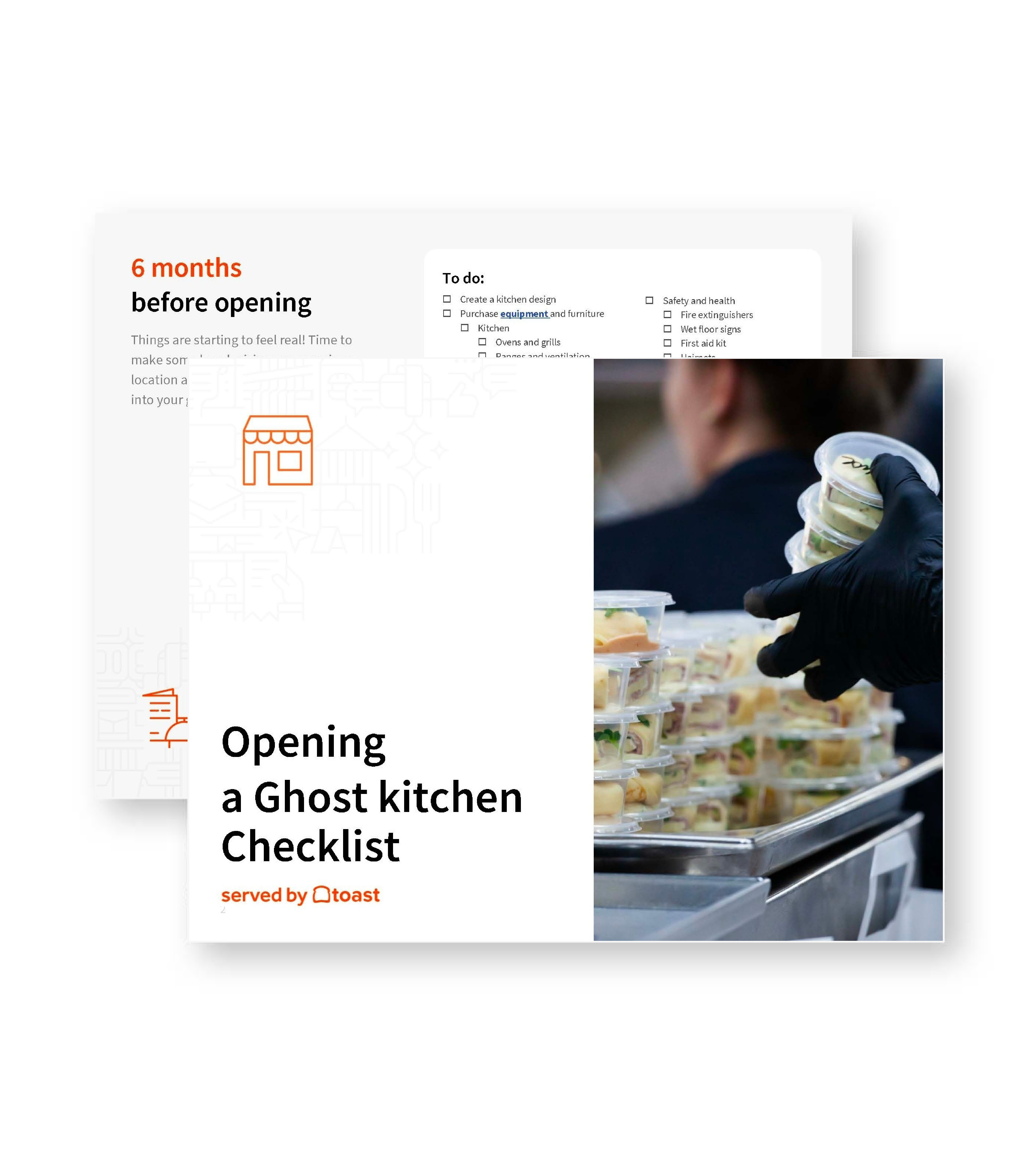
 Opening a Ghost Kitchen Checklist
So many things go into opening a ghost kitchen. With this free PDF checklist, you'll set your new business up for success.
Obtener descarga gratisGhost commerce — a term encompassing business models like dropshipping, print-on-demand, affiliate marketing, and ghost kitchens — is rapidly transforming the retail and food service industries. The global dropshipping market is projected to grow from $470.92 billion in 2025 to $3,479.1 billion by 2033, reflecting a compound annual growth rate (CAGR) of 28.43%. Similarly, the ghost kitchen market is estimated to be valued at $88.42 billion in 2025 and is expected to reach $196.69 billion by 2032, exhibiting a CAGR of 12.1%.
These innovative business models offer entrepreneurs and established brands alike a way to reach customers without the traditional overhead and physical infrastructure. In this comprehensive guide, we'll explore what ghost commerce is, how it works, its benefits and challenges, and why it might represent the future of retail and food service.
What is ghost commerce?
Ghost commerce refers to a business model where products or services are sold online without maintaining physical inventory or a traditional customer-facing storefront.
The term "ghost" highlights the behind-the-scenes nature of these operations. Unlike traditional retail models that require physical shops, extensive staff, and inventory management, ghost commerce businesses operate virtually. They focus primarily on digital marketing, customer acquisition, and order management — while outsourcing product fulfillment and logistics.
At its core, ghost commerce means:
No physical storefront
No inventory on hand
Third-party fulfillment: When an order is placed, the item is purchased from a supplier who ships it directly to the customer.
Ghost commerce models and applications
Ghost commerce encompasses several business models, each with unique characteristics:
1. Dropshipping
Dropshipping is the most common form of ghost commerce, where retailers sell products without ever handling, stocking, or shipping them. When a customer places an order, the merchant purchases the item from a third-party supplier who ships it directly to the customer.
Dropshipping captures the very spirit of ghost commerce by enabling operations with minimal overhead and no inventory. It’s so closely aligned with the ghost commerce concept that the two are often thought of as synonymous.
2. Affiliate marketing
In affiliate marketing, individuals or businesses promote products from other companies and earn a commission for each sale generated through their unique tracking links. This model requires no inventory management or product creation — just effective marketing and digital outreach.
Bo Bennett, author and entrepreneur, captures the power of this model: “Affiliate marketing has made businesses millions and ordinary people millionaires.”
3. Print-on-demand
Print-on-demand services allow retailers to offer customized products — such as t-shirts, mugs, and posters — that are only manufactured after a customer places an order. The printing and shipping are handled by a third-party service, eliminating the need for inventory.
4. White labeling
White labeling involves selling products manufactured by another company but branded with your business name. The manufacturer handles production, while the retailer focuses on marketing and customer acquisition.
5. Digital products
Selling digital products like e-books, courses, software, or subscription services is another form of ghost commerce that eliminates physical inventory entirely.
Ghost commerce in the food industry: Ghost kitchens
A notable application of the ghost commerce concept in the food industry is the ghost kitchen model. These are commercial cooking spaces that offer a carefully curated delivery-only menu to target consumers — think of them as professional kitchens without a storefront to host customers.
Also known as dark kitchens, cloud kitchens, or virtual restaurants, they operate without a traditional dining area, focusing exclusively on food preparation for delivery or takeout. This model gained significant popularity, especially during and after the COVID-19 pandemic, as restaurants adapted to changing consumer behaviors.
Ghost kitchens trim the costs of real estate, labor, and menu innovation by condensing the restaurant model to accommodate off-premise food sales without a traditional dine-in space.
Opening a Ghost Kitchen Checklist
So many things go into opening a ghost kitchen. With this free PDF checklist, you'll set your new business up for success.

Key differences between ghost commerce and traditional business models
Ghost commerce differs significantly from traditional retail and food service models in several ways:
Physical presence
Traditional businesses typically require brick-and-mortar locations, while ghost commerce operates entirely or primarily online. This fundamental difference affects nearly every aspect of the business model.
Capital requirements
Ghost commerce substantially reduces startup and operational costs:
No need for retail space or dining areas
Minimal or no inventory costs
Reduced staffing requirements
Lower utility and maintenance expenses
Ghost commerce operations are very simple. You list products, and when orders come in, you forward them to the supplier for fulfillment. Because the supplier handles storing, packaging, and shipping products, no inventory or warehousing is needed.
Scalability
Ghost commerce businesses can scale rapidly without the constraints of physical expansion:
New products can be added without warehouse space concerns
Market expansion doesn't require new physical locations
Testing new products or concepts involves minimal risk
Operational focus
Traditional retailers must balance in-store operations with online presence, while ghost commerce businesses can focus exclusively on digital marketing, customer acquisition, and experience optimization.
Benefits of ghost commerce
The ghost commerce model offers numerous advantages that explain its growing popularity:
Low startup costs
One of the most significant advantages of ghost commerce is the minimal initial investment required. Without the need for physical retail space, large inventory purchases, or extensive staffing, entrepreneurs can launch businesses with significantly less capital.
Reduced risk
Ghost commerce minimizes financial risk by eliminating the need to purchase inventory in advance or commit to long-term leases.
Location independence
Ghost commerce businesses can be operated from anywhere with an internet connection, offering entrepreneurs unprecedented flexibility and freedom. This allows entrepreneurs to operate their businesses from home, while travelling or from any location they choose.
Expanded market reach
Without the limitations of a physical location, ghost commerce businesses can reach customers globally from day one.
Agility and adaptability
Ghost commerce models allow businesses to adapt quickly to market trends, test new products or pivot strategies — all without the constraints of physical inventory or infrastructure. This flexibility also lets you experiment with different product lines and niches with minimal financial risk.
Focus on core competencies
By outsourcing fulfillment and logistics, ghost commerce entrepreneurs can focus on their strengths, whether that's marketing, product development, or customer service.
Challenges of ghost commerce
Despite its many advantages, ghost commerce also presents several challenges:
Limited control over fulfillment
Relying on third parties for product fulfillment means merchants have less control over shipping times, product quality and the overall customer experience.
Lower profit margins
Ghost commerce often involves additional costs like supplier fees, commission payments to platforms, and potentially higher marketing expenses to stand out in a crowded digital marketplace.
Increased competition
The low barriers to entry that make ghost commerce attractive also lead to intense competition, making customer acquisition more challenging and expensive.
Brand-building challenges
Without physical storefronts or face-to-face customer interactions, ghost commerce businesses must work harder to establish trust and build strong brand identities.
Dependency on platforms and partners
Ghost commerce businesses are often dependent on third-party platforms (like Amazon, Shopify, or food delivery apps) and fulfillment partners, creating potential vulnerabilities.
How to succeed in ghost commerce
To thrive in the competitive world of ghost commerce, consider these strategies:
1. Choose the right niche and products
Success in ghost commerce often depends on selecting the right niche and products. Look for products with:
Healthy profit margins
Reasonable shipping costs
Growing demand
Be sure to consider your competition and whether you can offer something unique.
2. Build a strong online presence
Since ghost commerce businesses operate primarily or entirely online, a strong digital presence is essential. This includes:
A professional, user-friendly website
Active social media profiles
Content marketing (e.g., blogs, videos, guides)
Email marketing campaigns
Search engine optimization (SEO)
3. Focus on branding and differentiation
In the crowded ghost commerce space, strong branding and clear differentiation are crucial. Develop a unique value proposition that sets your business apart from competitors. Consider:
A memorable logo and brand voice
Consistent visuals and messaging
Engaging storytelling to build trust
4. Select reliable suppliers and partners
The quality of your suppliers or fulfillment partners directly impacts customer satisfaction. Research potential partners thoroughly, test their services, and establish clear communication channels and expectations. Key actions:
Vet suppliers for product quality and reliability
Ask for references or case studies
Review service level agreements (SLAs)
Set clear communication channels
5. Prioritize customer experience
Even without face-to-face interactions, providing excellent customer service remains vital. Focus on:
Clear, transparent product information
Responsive customer support
Hassle-free returns and exchanges
Post-purchase follow-up
6. Leverage data and analytics
Use data from your website, marketing campaigns, and sales to inform business decisions. Track key metrics and continuously optimize based on performance data. Focus on:
Conversion rates and sales data
Website traffic and user behavior
Customer acquisition costs
ROI of marketing efforts
7. Implement marketing automation
Automation tools can help ghost commerce businesses scale efficiently by streamlining marketing, order processing, and customer communication. Key uses of automation:
Email marketing and drip campaigns
Abandoned cart recovery
Order tracking and fulfillment updates
Customer relationship management (CRM)
Ghost commerce in the food industry
The food industry has embraced the ghost commerce concept through ghost kitchens, which have become increasingly popular in recent years.
Types of ghost kitchen models
Several ghost kitchen business models have emerged:
Independent ghost kitchens
Standalone facilities that house one or more virtual restaurant brands with no public-facing component.
Kitchen pods
Pre-fabricated, plug-and-play kitchen units that can be set up almost anywhere, providing a turnkey solution for delivery-only restaurants.
Shared kitchen spaces
Facilities where multiple restaurant brands rent kitchen space, sharing resources and potentially reducing costs.
Restaurant spin-offs
Existing restaurants that create delivery-only brands operating from their main kitchen.
Notable ghost kitchen examples
Ghost kitchens take many forms, and several models are finding strong traction in today’s market. These operations allow restaurants to expand delivery capabilities without traditional dining areas, often reducing overhead and increasing flexibility. Here are a few standout examples:
Kitchen AF
A Florida-based operation built to be exclusively off-premises, meaning there’s no dine-in or brick-and-mortar space. Customers order online, and meals are prepared in dedicated kitchens designed solely for delivery.
CloudKitchens
Founded by Uber co-founder Travis Kalanick, this model uses real estate investments to develop multi-brand delivery kitchens. These facilities allow restaurants to rent kitchen space and quickly expand delivery services without the costs of a traditional restaurant.
Ghost Kitchen Brands
This company partners with well-known food brands to prepare multiple menus in a single kitchen location. Operating in various venues, including malls and Walmarts, they offer customers the convenience of ordering from different brands in one place.
Rebel Foods
Based in India, Rebel Foods operates over 450 cloud kitchens across multiple countries. They manage a portfolio of virtual restaurant brands, such as Faasos and Behrouz Biryani, focusing on delivery-only models to maximize reach and efficiency.
Ghost kitchens vs. traditional restaurants
Ghost kitchens offer several advantages over traditional restaurants:
Lower startup and operational costs: No need for expensive real estate or dine-in space.
Reduced labor requirements: Fewer staff needed since there’s no front-of-house service.
Flexibility to test multiple concepts: Launch new brands or menus with minimal risk.
Ability to quickly adapt to consumer trends: Pivot or update offerings to meet customer demands.
Optimized operations for delivery efficiency: Streamlined workflows designed for fast, reliable delivery.
They’re typically less expensive to operate and rent than regular restaurants. Ghost kitchens avoid costs associated with dining room supplies, décor and maintaining a front-of-house staff.
However, ghost kitchens also face challenges compared to traditional restaurants:
Dependency on delivery platforms and their fees: Traditional restaurants can rely on dine-in sales, while ghost kitchens depend heavily on third-party apps that charge commissions.
Difficulty building brand recognition: Traditional restaurants build reputation through signage, location, and community presence, while ghost kitchens must invest more in digital marketing.
Limited customer interaction: Traditional restaurants can build loyalty through personal service, while ghost kitchens rely on packaging and online communication.
Potential quality and temperature issues with delivery: Unlike dine-in meals that arrive hot and fresh, ghost kitchen deliveries may face delays or quality issues.
The future of ghost commerce
Ghost commerce represents more than just a passing trend; it's a fundamental shift in how businesses operate in the digital age. Several factors suggest ghost commerce will continue to grow in importance:
Growth projections
The ghost commerce sector, including dropshipping and ghost kitchens, is projected to continue its rapid growth in the coming years. By 2030, ghost kitchens are anticipated to have 50% of the global drive-through and takeaway foodservice market share, and they have the potential to grow to a $1 trillion global market. For dropshipping specifically, the outlook is similarly positive: The global retail and dropshipping industry will exceed $500 billion by 2025, with an annual growth rate of 8%.
Changing consumer behaviors
The ongoing shift toward online shopping and food delivery, accelerated by the COVID-19 pandemic, provides a strong foundation for ghost commerce growth. Consumers increasingly value convenience and speed, driving demand for delivery-only services. Mobile apps and digital payment systems have made it easier than ever for customers to browse, order, and pay — fueling the popularity of ghost commerce models.
Technological advancements
Improvements in e-commerce platforms, marketing automation, logistics, and customer data analytics are making ghost commerce more efficient and effective. Innovations such as AI-powered inventory management, real-time order tracking, and seamless integration with third-party apps are streamlining operations and enhancing the customer experience.
Economic uncertainties
The lower risk and capital requirements of ghost commerce make it attractive during economic downturns or periods of uncertainty. Businesses can pivot more quickly, scale at their own pace, and avoid large overhead investments, making them more resilient to shifting market conditions.
Hybrid models: The best of both worlds
As ghost commerce continues to evolve, we're seeing the emergence of hybrid models that combine elements of traditional and ghost commerce. This approach allows businesses to leverage the benefits of both physical and digital channels while reducing overhead costs and increasing market reach.
Click-and-mortar
Some primarily online retailers are establishing small physical showrooms or pickup locations to enhance the customer experience while maintaining the efficiency of ghost commerce. This model allows customers to see or pick up products in person, providing convenience and trust, while keeping operational costs lower than a full brick-and-mortar presence.
Traditional businesses going "ghost"
Established brick-and-mortar businesses are increasingly incorporating ghost commerce principles to expand their reach without the costs of additional physical locations. This allows them to scale their businesses, reach new customer segments, and test new products or concepts quickly.
Ghost kitchens, for example, can help restaurateurs grow their business by optimizing delivery operations. The way we dine has changed, and ghost kitchens allow restaurant operators to capture food delivery demand without sacrificing their bottom line.
Multi-channel retailing
Businesses are increasingly adopting an integrated approach that leverages both physical and virtual channels to provide a seamless customer experience. By blending online and offline touchpoints — such as websites, social media, mobile apps, and physical stores — brands can engage customers wherever they prefer to shop and build stronger loyalty.
FAQs about ghost commerce
Is ghost commerce the same as dropshipping?
While dropshipping is a form of ghost commerce, ghost commerce is a broader concept that includes various business models where products are sold without maintaining physical inventory or traditional storefronts. In addition to dropshipping, ghost commerce encompasses affiliate marketing, white labeling, and print-on-demand.
How much money do I need to start a ghost commerce business?
One of the primary advantages of ghost commerce is its low startup costs. Depending on the specific model and niche, you could launch a ghost commerce business with as little as a few hundred dollars for website hosting, marketing, and business registration fees.
Can ghost commerce work for any product category?
While ghost commerce can work for many product categories, some are better suited than others. Some products that tend to work best are:
Lightweight and easy to ship
Non-perishable
Not extremely fragile
Not heavily regulated
However, innovative adaptations like ghost kitchens show how the model can be applied to traditionally hands-on industries like food service.
How do I build customer trust without a physical store?
Building trust in ghost commerce requires:
Professional website design
Transparent policies
Secure payment processing
Authentic customer reviews
Active social media presence
Quality content marketing
Responsive customer service
Consistent branding
Each of these elements helps to reassure customers and create a sense of reliability, even without a physical storefront.
Is ghost commerce right for your business?
Ghost commerce represents a significant shift in how entrepreneurs can approach retail and food service businesses. By eliminating or reducing many traditional costs and constraints, it offers unprecedented opportunities for agility, efficiency, and scalability.
Whether you’re an aspiring entrepreneur launching your first business with minimal investment, an established company expanding without the costs of physical growth, or a restaurant owner adapting to the delivery-first landscape, ghost commerce models offer compelling advantages.
However, success isn’t guaranteed. Careful planning, strategic supplier partnerships, effective digital marketing, and a relentless focus on customer experience are essential — even when that experience is entirely virtual.
As consumer behaviors continue to shift toward online shopping and digital interactions — and as technology advances — ghost commerce is likely to play an even larger role in the future of retail and food service. By understanding its principles, advantages and challenges, forward-thinking entrepreneurs can position themselves to thrive in this evolving business environment. If you’re ready to explore this opportunity, now is the time to consider which model — ghost kitchens, dropshipping or print-on-demand — best aligns with your goals.
The “ghost” in ghost commerce isn’t about being scary or invisible — it’s about being nimble, efficient and perfectly adapted to the digital economy of the future.
¿Es útil este artículo?
AVISO LEGAL: Esta información se proporciona solo con fines informativos generales y su publicación no constituye un aval. Toast no garantiza la precisión ni la integridad de la información, el texto, los gráficos, los enlaces y otros elementos que incluye este contenido. Toast no garantiza que alcanzarás ningún resultado específico si sigues los consejos que aparecen aquí. Te recomendamos consultar con un profesional, como un abogado, contador o asesor comercial, para recibir asesoramiento específico para tu situación.
 Tendencias
Más información

Subscribe to On the line
Sign up to get industry intel, advice, tools, and honest takes from real people tackling their restaurants' greatest challenges.
Al enviar, aceptas recibir correos electrónicos de marketing de Toast. Trataremos tu información de acuerdo con nuestra declaración de privacidad. Información adicional disponible para residentes de California aquí.