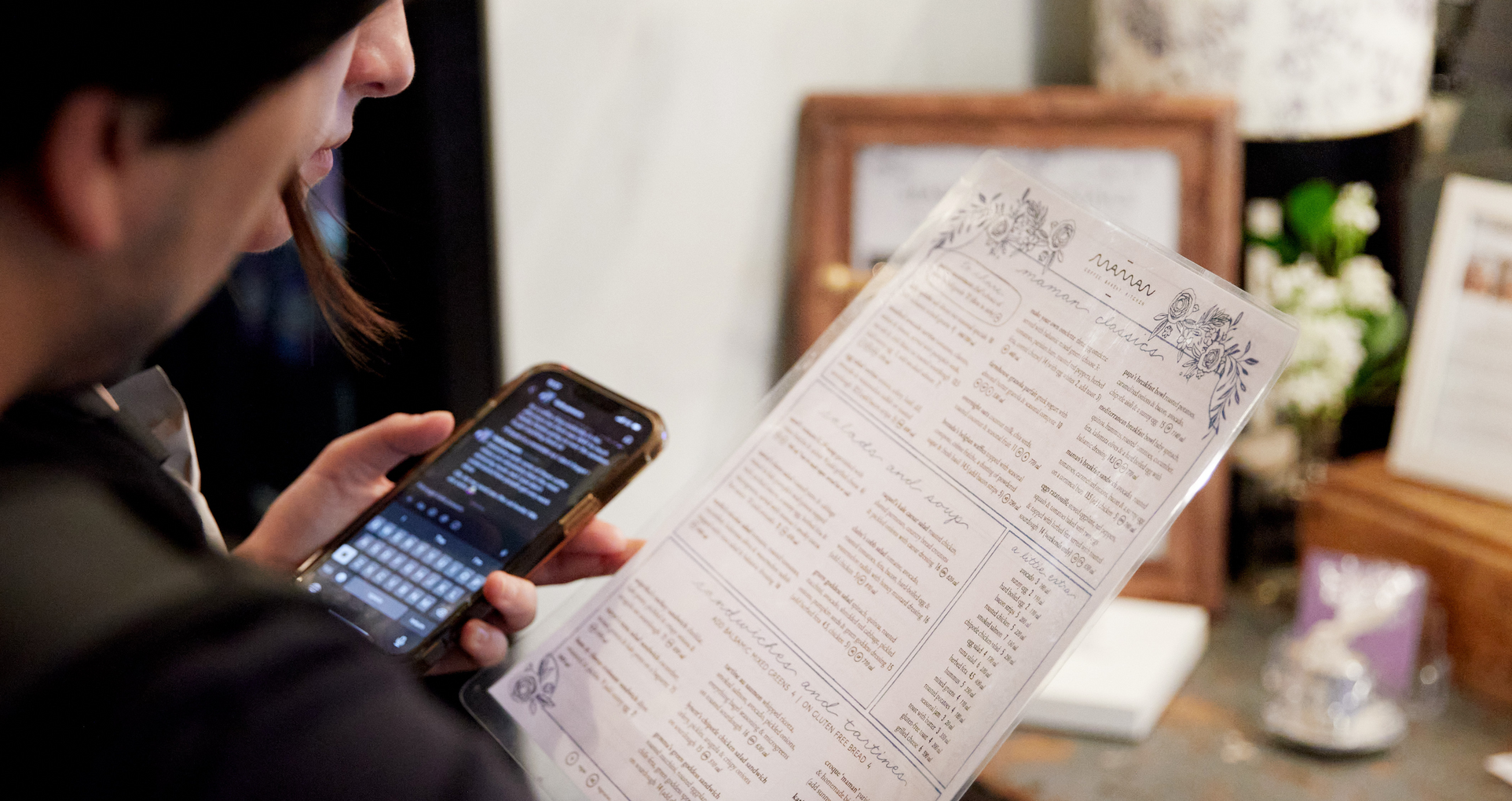
Menu Descriptions That Sell: The Words That Actually Drive Orders
Here’s how to use strategic language and a little help from AI to craft menu descriptions that will turn browsers into buyers.

Autor
 RECURSO
 Hoja de cálculo de ingeniería de menús
Usa esta hoja de cálculo de ingeniería de menús, que contiene fórmulas de ingeniería de menús de alta complejidad, para determinar los puntos fuertes y débiles de tu menú.
Obtener descarga gratisRestaurateurs put countless hours into perfecting their dishes. But how much time have you spent thinking about the actual menu, not just what’s on it, but how it’s written?
Believe it or not, the words on your menu can directly impact your bottom line. Crafting persuasive, appetizing descriptions is a key part of menu engineering—a strategy used to evaluate and optimize menus for performance.
The good news? You don’t have to be a professional writer to create compelling menu descriptions. With a little thought and inspiration, you can write copy that grabs attention and drives sales.
In this guide, we’ll walk you through how to write menu descriptions that resonate with guests and boost revenue.
Key takeaways
Menu descriptions influence what guests order, whether it’s in-store or online.
Great menu descriptions spark interest by being both clear and creative.
AI can be a powerful tool in optimizing your menu descriptions.
21 restaurants that are fortifying their branding and captivating customers with their menu descriptions.
Plantillas de menús de restaurante
Usa estas plantillas de menús como punto de partida para el diseño de tu menú o para renovar tu menú actual.

Why menu descriptions matter more than you think
Menu engineering has been shown to boost restaurant profits by 10-15%. There are several reasons for this, including eliminating underperforming items and highlighting higher-margin dishes, as well as creating more thoughtful menu designs and item descriptions.
An essential part of menu engineering is giving extra attention to your highest-earning items. Whether you're running a special, looking to reduce excess inventory, or aiming to boost sales of high-margin dishes, taking time to write compelling descriptions can help guide customers toward the items you want to sell most.
In fact, a Cornell University study found that using more descriptive language to rename basic menu items increased sales by 28% and made diners willing to pay 12% more. A few well-chosen words can make a big difference.
Descriptive menu items can shape the guest experience by offering a preview of the flavors, textures, and emotions a dish delivers. It can elevate the dining experience by showcasing key ingredients, preparation techniques, or the story behind the dish, so diners feel more connected to your brand and more confident in their orders.
While it’s a good exercise to do it yourself, this can also be a good application of AI tools to help you refine and elevate your writing.
The anatomy of an effective menu description
What does a great menu description look like? Well, it really depends on your menu, but here’s a list of words and phrases to get you started:
Texture and sensory language - Words like “crispy,” “velvety,” “charred,” and “drizzled” evoke the senses
Ingredient transparency - Highlight quality: “grass-fed,” “locally-sourced,” “organic,” “imported”
Preparation method - “Wood-fired,” “slow-roasted,” “hand-pulled,” “flash-fried” — adds value and perceived skill
Cultural or regional ties - “Sichuan-style,” “Neapolitan,” “Tex-Mex” give context and authenticity
Portion or experience cues - “Shareable,” “hearty,” “chef’s favorite,” “perfect with a glass of red”
Remember to keep it concise. There’s only so much room on the menu, and customers might feel immediately overwhelmed if they see huge chunks of text everywhere. Each menu description should be one to two sentences max. Entice customers, don’t overwhelm them.
Common mistakes to avoid in menu descriptions
Effective menu descriptions strike an elegant balance between simple and complex. They spotlight something special about an item, use colorful descriptors to make the customer feel something, and they do it quickly. There’s an art to this and, like any art, it’s easy to make mistakes.
Some of the most common include:
Using overly complicated or technical language: You may have seen words like “deconstructed,” “enhanced,” or “confit” on a fine dining menu. These words may make sense to gourmands, but most diners will likely find themselves asking, “deconstructed from what?” Inaccessible or excessively technical descriptions may turn off diners.
Negative wording: You may not even realize instances of negative wording on your menu. But even something like “this dish isn’t spicy” may be doing the opposite of what you want. Rather than focusing on a strength, this highlights something the dish is not, which immediately rules out people who might want the dish to be spicy.
Lack of detail: Vague descriptions like “sauteed vegetables” inspire more questions than provide answers and can end up hurting your table turnover rate.
Long descriptions: While it’s certainly impressive when you can speak tirelessly about a dish, its origins, and its preparation, the menu is not the place to do so. Long menus can overwhelm customers and lead to decision paralysis. Concise descriptions help diners make decisions more quickly. Leave the detailed recommendations to the wait staff.
How to use AI to perfect your menu descriptions
Writing isn’t everybody’s strong suit, and it can feel like a herculean mental task after a long day of running the restaurant. If you don’t feel particularly strongly about crafting each menu description yourself, or you just need a little help, this is a good application for AI tools like ChatGPT or Google Gemini.
A sample workflow could look like this:
Draft a description yourself.
Paste the description into your AI tool and prompt: “Make this menu description more mouthwatering, concise, and sensory-rich.” (Or something to that effect.)
Review the delivery, tweak to your liking, put it on the menu, and monitor how orders change.
Here are a couple of examples we made using Google Gemini:
Before: Roasted Pear Salad - Arugula, Dried Cherries, Candied Walnuts, Bleu Cheese, Maple Vinaigrette
After: Sweet, tender roasted pears, peppery arugula, and tart dried cherries dance with crunchy candied walnuts and sharp bleu cheese, all embraced by a golden maple vinaigrette.
Before: New England Clam Chowder - Fresh Local Clams, Celery, Leeks, Potato, Bacon, Crouton
After: A true taste of New England. Velvety, rich, and loaded with fresh local clams, savory bacon, and garden vegetables, topped with a crisp crouton.
Before: Chicken Parmigiano - Ziti, Tomatoes, Mozzarella.
After: Crispy, tender chicken breast crowned with a vibrant tomato sauce and melted, golden mozzarella, nestled beside al dente ziti. A true taste of Italy.
Top examples of great menu descriptions
If you’re looking for inspiration, check out these examples from restaurants around the country. Some are lengthier and more exuberant with their use of adjectives and adverbs, some are concise and specific with flavorful nouns, and some are just plain fun. What do they all have in common? You know what to expect, and it sounds delicious.
The Fresh Corn & Avocado Farro Bowl from Tatte Bakery & Cafe in Boston - A light grain salad of farro, fresh corn, sugar snap peas, baby arugula, heirloom cherry tomatoes, goat cheese, dill, and pickled red onion in a mustard labneh topped with sliced avocado.
The Kolokithakia at KAVA neo-taverna, which is such a wildly popular to-go item, the restaurant adds a disclaimer on the takeout menu - Zucchini chips with tzatziki. Please keep in mind that this item doesn’t travel well.
The Baked Kibbee at The Phoenician Restaurant in Haverhill, MA - A large portion of our baked kibbee. Two layers of ground beef mixed with wheat, separated by a seasoned mix of onions and beef, baked in oil.
The vegan beef kabob at Alhambra Palace in Chicago, which anticipates questions, Vegan beef substitute made from pea protein, rice protein, and a proprietary blend of spices, served with basmati rice and grilled vegetables.
The turkey leg from Binky’s Eatery in Atlanta - One turkey wing smothered in gravy. (Six words can say so much.)
The spaghetti and meatballs at Grotto in Boston - Made with Grotto's insanely fabulous tomato sauce.
KAT’s Big Brownie from KAT’s Breakfast and Lunch in Richmond, VA - Fudgy, Gooey, Chocolatey, delicious fresh-baked Brownies from Sweet n' Purdy Bake Shop. (Sourced from another business, but KAT’s still knocks the description out of the park.)
Fatty Fajita Bao from Wong Gonzalez in Richmond - Two lightly fried, pillowy-soft bao buns stuffed with your choice of chicken and fajita veggies with Malay salsa, or Asian bbq pulled pork, cilantro, and cheddar cheese with crushed cashews.
The 18” Classic NY Style pizza at Philomena’s in Queens - Tomato Sauce, Mozzarella, topped with fresh Basil and shaved Parmigiano. If you like a classic New York slice, then you’re in for a real treat.
The Happy Karaage at Rule of Thirds in Brooklyn, which makes a point of listing common allergens on the menu description - Fried chicken, ginger soy, tartar sauce. Allergens: allium (chives, tartar sauce), egg (tartar sauce), soy sauce (soy ginger), soybean (tartar sauce), gluten (cross contamination), sesame, fin fish (tartar sauce), mushroom (mushroom powder)
Paneer Chowmain from Nepa in San Francisco - Stir-fried noodles cooked with strips of paneer and seasonal vegetables in tomato-based spices.
The #2 at 4505 Burgers & BBQ in San Francisco - Best seller! Comes with your choice of two smoked meats, choice of two sides or fixin's, pickles, and a warm buttery Parker house roll.
The Coq au Vin at L’ardoise Bistro in San Francisco that tells you just what it is - Traditional Chicken(Thighs) marinated in Red Wine and Vegetables for a Few days, Seared and Braised Slowly to fall off the bone texture, mashed Potato, Spinach, and Red Wine Sauce.
The tacos at The Well in Austin, TX - Heirloom organic corn tortillas, cilantro, lime, onions, avocado, salsa verde, salsa macha, with choice of meat. Choose the mushroom option to make it VEGAN!
The Miso Salmon Bowl at Golden Boy at the Fareground Food Hall in Austin - Roasted salmon glazed with miso butter and served with seasonal veg, baby arugula, Greek yogurt, lemon vinaigrette, and pickled golden beets (gluten free).
The Catira Arepa at Four Brothers Venezuelan Kitchen in Austin, which provides some valuable insight - A classic in Venezuela! Sofrito chicken, cheese, garlic sauce & avocado sauce.
Really everything at Homeboy Diner in Los Angeles, CA, goes above and beyond most bakeries by fully listing each item’s ingredients. Here’s the coffee cake - Ingredients: Wheat flour, malted barley flour, buttermilk, brown sugar, canola oil, cane sugar, eggs, salt, baking powder, baking soda, cinnamon, nutmeg.
The shrimp at YAKITANA in LA’s Little Tokyo - Juicy Shrimp, seasoned and flame-grilled to perfection, offering a burst of fresh and smoky flavor.
The ribs at Moore Fire Grill in Coral Springs, FL - Smoked Smithfield Extra Meaty Baby Back Ribs rubbed with our blend of spices, basted with your choice of our signature BBQ sauces- Sweet, Spicy or Golden. Served with a side dish & choice of bread.
The mouthwatering NOLA Royal Burger at Penelope in Boca Raton, FL - Dry-aged New York and bone marrow burger blend, heirloom tomato, red onion, lettuce, pimento cheese.
The hot and sour soup at Dumpling Panda in South Florida - A savory, tangy soup with egg, shiitake mushrooms, bamboo shoots, and wood ear mushrooms, with a spicy kick
Bar Menu Templates
Use these bar menu templates as a starting point for your menu design or to give your menu a refresh.
Try This: Menu description writing prompt template
Starting from scratch? Try this prompt formula:
Dish Name
[Primary ingredient(s)] + [texture or prep] + [flavor or sauce] + [emotional or experience cue]
You could write out menu descriptions yourself using these guidelines, or use an AI tool to help you create descriptions quickly.
For example, here’s a prompt for the fried rice I made for dinner last night.
Monkey Fried Rice (my wife and I call each other monkey)
Basmati rice, chicken thighs, carrots, broccoli, snap peas, mushrooms, water chestnuts, garlic, ginger, and spices + boiled and fried until crispy + turmeric and curry-driven + warm and fuzzy feeling.
Here’s what I put into Google Gemini:
Write a menu description for an item called Monkey Fried Rice. Here are the key points: Basmati rice, chicken thighs, carrots, broccoli, snap peas, mushrooms, water chestnuts, garlic, ginger, and spices + boiled and fried until crispy + turmeric and curry-driven + warm and fuzzy feeling.
And what it gave me:
Monkey Fried Rice: A golden, turmeric- and curry-driven delight! Crispy wok-fried Basmati rice is packed with juicy chicken thighs, colorful vegetables like carrots, broccoli, and snap peas, plus earthy mushrooms and water chestnuts. Infused with ginger and garlic, every bite offers a warm, fuzzy feeling.
Not bad!
Don’t just list the dish — sell it
Creating a menu can be a rewarding and exciting experience. After all, you’re showcasing all of these awesome dishes that you get to share with the world! But restaurants are businesses, and it’s not enough to just list a dish; you have to sell it, too. That’s where your creativity and business acumen come in. You’ve seen some examples of great menu descriptions here and learned some tricks to spice up your menu. Now get to work and have some fun with it.


¿Es útil este artículo?
AVISO LEGAL: Esta información se proporciona solo con fines informativos generales y su publicación no constituye un aval. Toast no garantiza la precisión ni la integridad de la información, el texto, los gráficos, los enlaces y otros elementos que incluye este contenido. Toast no garantiza que alcanzarás ningún resultado específico si sigues los consejos que aparecen aquí. Te recomendamos consultar con un profesional, como un abogado, contador o asesor comercial, para recibir asesoramiento específico para tu situación.
 Tendencias


Subscribe to On the line
Sign up to get industry intel, advice, tools, and honest takes from real people tackling their restaurants' greatest challenges.
Al enviar, aceptas recibir correos electrónicos de marketing de Toast. Trataremos tu información de acuerdo con nuestra declaración de privacidad. Información adicional disponible para residentes de California aquí.