
ABV Meaning: What Is Alcohol by Volume & Why Does It Matter?
Alcohol by Volume (ABV) tells you the strength of an alcoholic drink. Explore how it affects flavor, serving size, and responsible service.
Autor
 RESOURCE
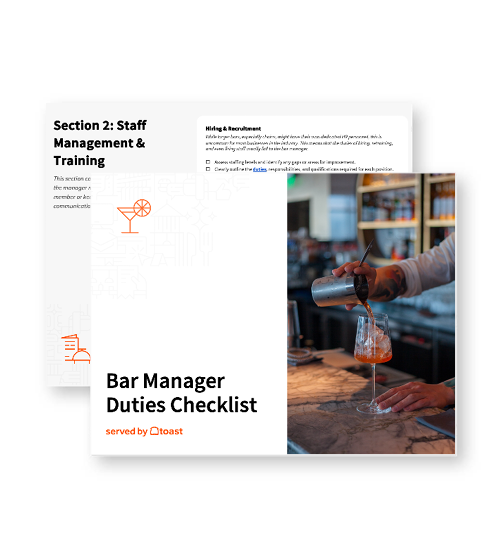
 Bartender Training Checklist
Use this free Bartender Training Checklist to help streamline your training process and set your new bartenders up for success.
Obtener descarga gratisABV stands for Alcohol by Volume, the standard way of measuring how much alcohol is in a beverage. It’s expressed as a percentage — so if a beer is labeled 5% ABV, that means five percent of the liquid is pure alcohol.
While alcohol trends come and go, ABV remains a globally recognized measurement, giving both guests and operators a consistent way to compare drinks. Whether you’re sipping a light beer, pouring a glass of wine, or mixing a cocktail, ABV is the key number that indicates strength, serving size, and how a drink should be enjoyed responsibly.
In this guide, we’ll break down why ABV matters, typical ranges across different beverages, and how it affects both flavor and the overall drinking experience. You’ll also see why understanding ABV is essential for responsible service and smarter menu planning.
Key takeaways
ABV is the universal measure of drink strength, helping customers, operators, and staff understand what’s in each pour.
It influences flavor, body, and serving size, shaping the drinking experience from light beers to bold cocktails.
ABV knowledge supports responsible drinking, allowing guests to pace themselves and staff to serve safely.
Restaurants and bars rely on ABV for smarter menu planning, portion control, pricing, and compliance with liquor laws.
Bar Menu Templates
Use these bar menu templates as a starting point for your menu design or to give your menu a refresh.

Why does ABV matter?
Understanding ABV is a must when it comes to responsible drinking. It influences how customers enjoy their drinks, how operators run their businesses, and how staff serve responsibly.
For customers: ABV helps set expectations around drink strength, which can shape how quickly they consume it and how many they order.
For operators: ABV is key for menu planning, portion control, pricing, and staying compliant with liquor laws. Higher-ABV drinks often mean smaller pours or premium pricing.
For bartenders and servers: ABV knowledge supports responsible service. It allows staff to make better recommendations, monitor consumption, and avoid overserving.
Typical ABV ranges by beverage type
ABV levels vary widely depending on the type of drink. Knowing the ranges helps both guests and operators understand what to expect.
Beer
Most beers fall between 4–7% ABV, with lighter lagers on the lower end and craft or specialty brews often creeping higher. Strong ales, stouts, or IPAs can reach 8–12% ABV or more, while certain specialty styles can go much higher.
Light lagers average around 4.0% ABV, making them crisp, refreshing, and easy to drink over longer periods.
American IPAs average closer to 6.5% ABV, delivering more intense hop flavors and stronger effects.
Eisbocks — a German specialty style made by freezing and removing water to concentrate alcohol — can push toward 15% ABV, rivaling wine in strength.
For operators, this range matters for pricing, portion sizes, and guest education. A pint of light lager might be appropriate for casual sipping, while higher-ABV beers may be served in smaller pours or premium glassware.
Wine
Table wines generally range from 9–14% ABV, depending on style and region. Fortified wines like port or sherry can climb to 15–20% ABV, since they’re made by adding distilled spirits. However, labels can sometimes be slightly misleading. According to the San Angelo Standard-Times:
“The Alcohol and Tobacco Tax and Trade Bureau dictates what goes on labels… If the label lists ABV of 14% or lower, a winery only has to be accurate within 1.5%. So an ethereal 12.5% pinot noir legally could be 14%. Or it could be 11%. When the ABV score is more than 14% ABV, the allowed margin for error is 1%. That means a 15.5% Napa cab — a common number — could be a shocking 16.5%. Or a tame 14.5%.”
For operators, this margin of error is important to keep in mind. A wine’s listed ABV isn’t always exact, which can affect how customers perceive its strength — and how servers explain it at the table.
Spirits
Distilled liquors like whiskey, vodka, rum, and tequila are much stronger than beer or wine, typically landing around 35–50% ABV (70–100 proof). Specialty spirits — like overproof rum or absinthe — can climb significantly higher, making portion size and responsible service especially important.
At the same time, consumer preferences are shifting. Some drinkers are seeking moderation without sacrificing flavor, which has opened the door to low-proof spirits. As Fabian Clark, cofounder of Quarter Proof, explained when launching his 15% ABV gin, tequila, and vodka line:
“They’re not looking to abstain, they’re looking to moderate. And we feel that we offer seamless moderation. As we like to say, ‘All of the buzz, none of the blur.’”
For restaurants and bars, that means spirits now cover a wider ABV spectrum than ever before — from bold overproof bottles to approachable low-proof alternatives designed for mindful drinking.
Cocktails
Cocktails are trickier to pin down than beer, wine, or spirits because their ABV depends on the recipe, mixers, and how much dilution happens from ice. A strong martini might sit around 20–30% ABV, while highball-style drinks like rum and Coke are usually lighter thanks to soda or juice. The more non-alcoholic mixers, the lower the final ABV.
It’s also worth noting that overpouring can significantly change a cocktail’s strength, so consistent recipes and measured pours are essential for both guest experience and responsible service.
These calculations show how dilution and mixers make a major difference in the strength of cocktails, even when the base spirit is the same:
Mai Tai: With 2 oz rum (40% ABV), ½ oz Cointreau (35% ABV), and mixers, the final cocktail comes out to around 17.7% ABV once diluted with ice.
Rum and Coke: Made with 1½ oz rum and 3 oz Coke, this drink has an approximate 13.3% ABV.
How ABV affects the drinking experience
ABV doesn’t just determine how strong a drink is — it affects everything from flavor to portion size to how guests experience it.
Flavor and body: Higher-ABV drinks often carry bolder, more intense flavors and a heavier mouthfeel. Lower-ABV options tend to taste lighter and more refreshing, making them easier to drink over longer periods.
Serving size: ABV explains why a cocktail pour might be just a few ounces, while a beer comes in a full pint. Stronger beverages are served in smaller portions to balance guest experience and safety.
Standard drinks: ABV ties directly to the concept of “standard drinks,” which measure how much pure alcohol a person is consuming. This helps guests pace themselves and make informed choices.
Responsible service: For restaurants and bars, clearly communicating ABV isn’t just informative — it’s essential for compliance and guest safety. Staff awareness of ABV helps prevent overserving and supports a positive, responsible drinking culture.
Understand ABV & keep your spirits high
Alcohol by volume is key to understanding strength, flavor, and responsible consumption. For customers, it sets expectations and helps them enjoy drinks safely. For operators and staff, it guides everything from portion sizes and pricing to compliance and responsible service.
By paying attention to ABV, restaurants and bars can craft smarter drink menus, train staff effectively, and create a safer, more enjoyable experience for every guest.
FAQs
What does ABV stand for and why is it important for restaurants?
ABV stands for Alcohol by Volume, the standard measurement of how much alcohol is in a beverage. For restaurants, understanding ABV is critical for menu planning, portion control, compliance with liquor laws, and responsible service.
How do restaurants use ABV information for pricing decisions?
Higher-ABV drinks often mean smaller serving sizes or premium pricing. Restaurants factor ABV into recipe costing and menu strategy to balance customer value with profitability.
What are typical ABV ranges for different types of alcoholic beverages?
Beer generally falls on the lower end, wine sits in the middle, and spirits have the highest levels. Cocktails vary widely depending on ingredients and dilution.
Do restaurants need to display ABV information on menus?
Requirements depend on local and state regulations. Even when not required, many operators display ABV to set clear expectations for guests and support responsible service.
How does ABV affect restaurant staff training requirements?
Staff need to understand ABV to make accurate recommendations, explain drink strength to customers, and avoid over serving. It’s often part of alcohol safety certifications like ServSafe or TIPS.
Bartender Training Checklist
Use this free Bartender Training Checklist to help streamline your training process and set your new bartenders up for success.
¿Es útil este artículo?
AVISO LEGAL: Esta información se proporciona solo con fines informativos generales y su publicación no constituye un aval. Toast no garantiza la precisión ni la integridad de la información, el texto, los gráficos, los enlaces y otros elementos que incluye este contenido. Toast no garantiza que alcanzarás ningún resultado específico si sigues los consejos que aparecen aquí. Te recomendamos consultar con un profesional, como un abogado, contador o asesor comercial, para recibir asesoramiento específico para tu situación.
 Tendencias
Subscribe to On the line
Sign up to get industry intel, advice, tools, and honest takes from real people tackling their restaurants' greatest challenges.
Al enviar, aceptas recibir correos electrónicos de marketing de Toast. Trataremos tu información de acuerdo con nuestra declaración de privacidad. Información adicional disponible para residentes de California aquí.