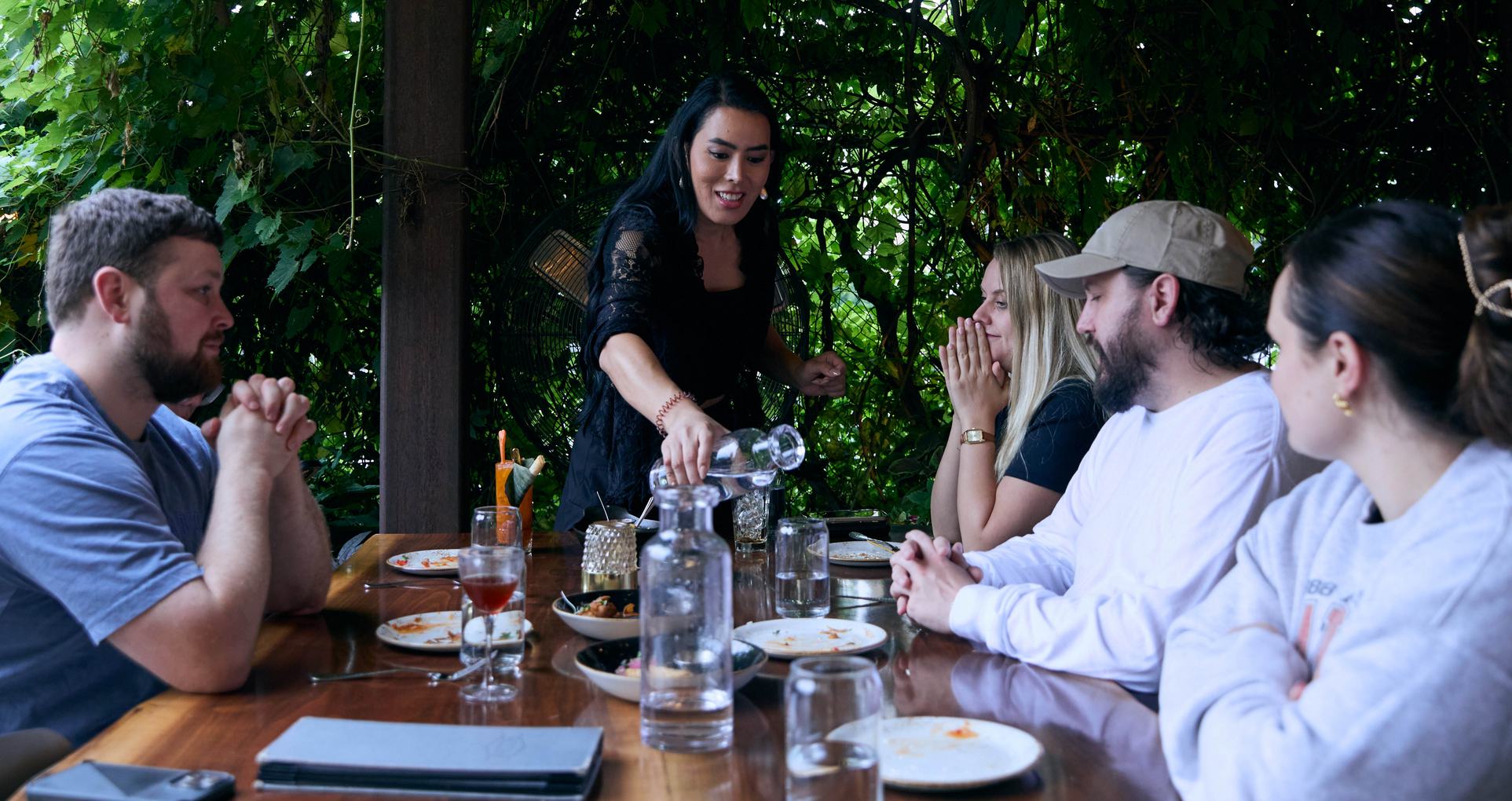
There's a woman named Vernetta who eats lunch at a pizza restaurant in Red Lodge, Montana, at least three times a week. She comes in alone. She always sits in the same booth near the front of the restaurant. And every single person on staff knows her by name.
“I would agree that our customers value us and the relationship they have with us — and being known — way more than they're looking for a $0.50-off coupon to come get a pizza,” says Tom Kuntz, who owns and operates four restaurants and a hotel through Red Lodge Hospitality in Red Lodge, Montana. His pizza restaurant is about to celebrate its 30th year in business. His Mexican restaurant has been operating in the community for 50.
In a town of about 2,000 people, Kuntz knows his customers. And more importantly, his customers know they're known. And that, he says, is worth more than any discount he could offer.
What is the recognition gap in restaurant hospitality?
Kuntz's approach might sound intuitive: Of course guests want to feel like regulars. But according to new survey data from Toast, the vast majority of diners aren't getting that experience at all.
When Toast surveyed diners on how often they experience a personalized touch when dining out, only 5% said “always” and 15% said “often.” Nearly 80% said “sometimes,” “rarely,” or “never.”
Most guests, in other words, feel invisible.
The gap isn't felt equally across demographics. Boomers and Gen X experience personalization significantly less frequently than Gen Z and Millennial diners, yet they're the ones who value it most. For Boomers, preferential seating (37%) and staff recognition (35%) — simply being known by the team — matter as much as or more than a digital coupon.
There's a geographic divide, too. Diners in the Northeast report the highest frequency of personalization. Those in the South and Midwest report the lowest. Urban diners say they experience it far more often than those in suburban or rural areas, which means that for operators outside major metro markets, even basic recognition can be a real competitive advantage.
Plantilla de encuesta de restaurante
Usa esta plantilla para preguntar a tus clientes sobre sus experiencias en tu restaurante. Estas preguntas te proporcionarán la información necesaria para implementar cambios informados y mejorar la experiencia gastronómica general.

Points are nice, but being known is better
None of this means that loyalty programs don't matter. Red Lodge Hospitality uses Toast's loyalty program across all four of its restaurants, and Kuntz considers it a cornerstone of the business. He's been using it since 2017.
But the way his customers actually use it tells a different story than you might expect.
“When I work in the restaurant and you ask someone if they want to redeem their points, the answer is almost universally no,” Kuntz says. “They build up their points, and then they use it for something special.”
His multi-concept operation creates a natural flywheel: Guests accumulate points at the pizza restaurant and the Mexican restaurant, where they eat regularly, and then save them for a special occasion at the steakhouse — an anniversary, a birthday, a family dinner. The loyalty program becomes less about discounts and more about milestones.
Kuntz also sees the loyalty program as a relationship-building tool. When an employee asks whether a guest is a loyalty member, it gives them a reason to ask for the guest's name. When that guest comes back, the program gives staff a way to recognize them.
“Customers will sometimes bring it up themselves — ‘Hey, I want to make sure I get my loyalty points’ — and that's a way for the employee to know this is a regular,” Kuntz explains. “It gives us that conversation.”
Down in Tennessee, Charlie Eblen takes an even more direct approach. Eblen owns Single Tree BBQ in Murfreesboro, where about 80% of his business comes from repeat customers. He uses Toast's loyalty program too, but when he wants to connect with a guest, he picks up the phone.
“I probably have a couple hundred phone numbers in my phone that I call or text regularly,” Eblen says. “‘Hey, I'm trying something new, come check it out.’
When Single Tree started developing a new house-made smoked hot dog, Eblen didn't run a promotion. He called a few regulars, invited them in to try it on the house, and asked for feedback. “It makes them a part of the business,” he says, “not just another customer at a restaurant on the corner.”
On Valentine's Day, Eblen skips the discount entirely. Instead, he sends an email telling his customers he loves them and appreciates their support. “Sending out a coupon has its value,” he says, “but it's not the end-all be-all.”
Subscribe to Data by Toast
Use Toast’s data insights to get ahead of the curve and track market trends on menu pricing, industry patterns, and more.
Al enviar, aceptas recibir correos electrónicos de marketing de Toast. Trataremos tu información de acuerdo con nuestra declaración de privacidad. Información adicional disponible para residentes de California aquí.
A drink before you sit down
In Kuntz's restaurants, the human side of recognition shows up in small, specific ways. At the bar, his bartenders know what regulars drink and how they like it. For some customers, the drink is on the bar before they sit down — the staff sees them walking past the window and starts making it.
At the Mexican restaurant, known for its margaritas, knowing a guest's exact preferences is personal and practical. At the pizza place, it's knowing a customer like Vernetta's booth and order.
This is where the data reinforces what Kuntz has figured out through three decades of running restaurants. The Toast survey found that, while savings-related perks like tailored loyalty rewards (49%) and personalized discounts (48%) are universally popular, the guests with the most spending power — older, more established diners — place a premium on something that costs a restaurant nothing: being recognized.
Eblen holds his front-of-house team to a specific standard: “When people sit in their car after leaving, I want them to say, ‘Holy sh**, are those people really that nice?’ If they say that, we did our job. If they don't, we failed.”
It's an approach that reaches well beyond Murfreesboro. Someone drove three and a half hours to eat at Single Tree recently after seeing Eblen on YouTube. When guests like that walk in asking for Charlie by name, his team pays attention. “The whole city of Murfreesboro feels like my friends to them,” Eblen says, “because everyone comes in using my name.”
The technology bridge
Of course, not every restaurant is in a town of 2,000 people where the staff has known every family for decades. Scale makes personal recognition harder. Turnover makes it harder. Multiple locations make it harder.
Kuntz sees technology as a way to reinforce the human connection. Guest data, loyalty history, and reservation tools can surface context that helps a host or server treat someone like a regular even if they've never met.
How technology enables personal recognition:
Surfacing guest names at checkout — Staff can greet returning guests by name even on first interaction
Checking order history — Servers can reference past favorites or dietary preferences
Noting seating preferences — Hosts can save preferred tables or booths for regulars
Enabling personalized outreach — Operators can send targeted messages for birthdays, anniversaries, or new menu items
“Sometimes you'll be like, ‘God, what's his name? Is it Bill or is it Ben or is it Bob?’ Kuntz says. “When the technology can help you and be like, ‘No, it's Ben,’ then you're like, ‘Hey, Ben, thanks for coming in.’ And that helps you remember it the next time. It's that reinforcing piece that is so helpful.”
The community effect
For both Kuntz and Eblen, recognition extends well beyond the four walls of their restaurants.
Red Lodge Hospitality donated over $100,000 locally last year and is committed to giving back 1% of total revenue to the community. They sponsor the senior center, the transportation program, the boys and girls club. They employ high school kids whose parents are also customers. One of their signature events is the Chef's Invitational — a fundraising dinner where chefs from competing restaurants cook together to raise money for the local boys and girls club.
“That's a big part of our presence — being an integral part of the community and supporting the things that are important to our employees and our customers,” Kuntz says.
Eblen sees it the same way. “As a small business in this community, the community is what keeps us alive,” he says. His restaurant's media presence — TV, radio, YouTube, social — works less like marketing and more like an extension of that relationship. People feel like they know him before they walk in, and his team treats that familiarity accordingly.
The opportunity
The Toast data makes the opportunity clear: When 80% of guests say they rarely or never feel personally recognized at a restaurant, even small gestures stand out.
For operators in suburban or rural markets where personalization is especially rare, the bar is even lower. You don't need an elaborate program. You might just need to remember a name, save a booth, or start making the drink before the guest sits down.
Kuntz has been doing this for 30 years. Eblen has built an operation where 80% of his revenue comes from people who keep showing up. Both invest heavily in apps and points and digital infrastructure. But they're clear about what actually brings people back.
Some customers don't want discounts because they value being personally recognized—through a remembered name, a saved booth, or a drink waiting at the bar—more than transactional savings.
“It gives us that conversation,” Kuntz says. “That really is our focus — not discounts.”
Eblen puts it differently: “You can have mediocre food and survive. But you cannot have anything less than undeniable hospitality.”
Frequently Asked Questions
What do some restaurant customers value more than discounts?
Many customers, especially older diners, value being personally recognized over receiving discounts.
According to Toast survey data, Boomers rate preferential seating (37%) and staff recognition (35%) nearly as highly as digital coupons (48%).
Gestures like remembering a guest's name, saving their preferred booth, or knowing their usual order create emotional loyalty.
How can restaurants personalize the guest experience?
Restaurants can personalize experiences through simple human touches: training staff to remember regular customers' names, noting preferred seating, asking about and remembering drink preferences, and making personal phone calls or texts to invite loyal guests to try new menu items.
As one restaurant owner puts it, the goal is for guests to leave saying, "Are those people really that nice?"
What is recognition-based loyalty in restaurants?
Recognition-based loyalty is the practice of making guests feel personally known through gestures like remembering names, preferred tables, or drink orders—rather than relying solely on discounts or points. It focuses on emotional connection and hospitality, and research shows it can be especially effective with older diners.
AVISO LEGAL: Esta información se proporciona solo con fines informativos generales y su publicación no constituye un aval. Toast no garantiza la precisión ni la integridad de la información, el texto, los gráficos, los enlaces y otros elementos que incluye este contenido. Toast no garantiza que alcanzarás ningún resultado específico si sigues los consejos que aparecen aquí. Te recomendamos consultar con un profesional, como un abogado, contador o asesor comercial, para recibir asesoramiento específico para tu situación.