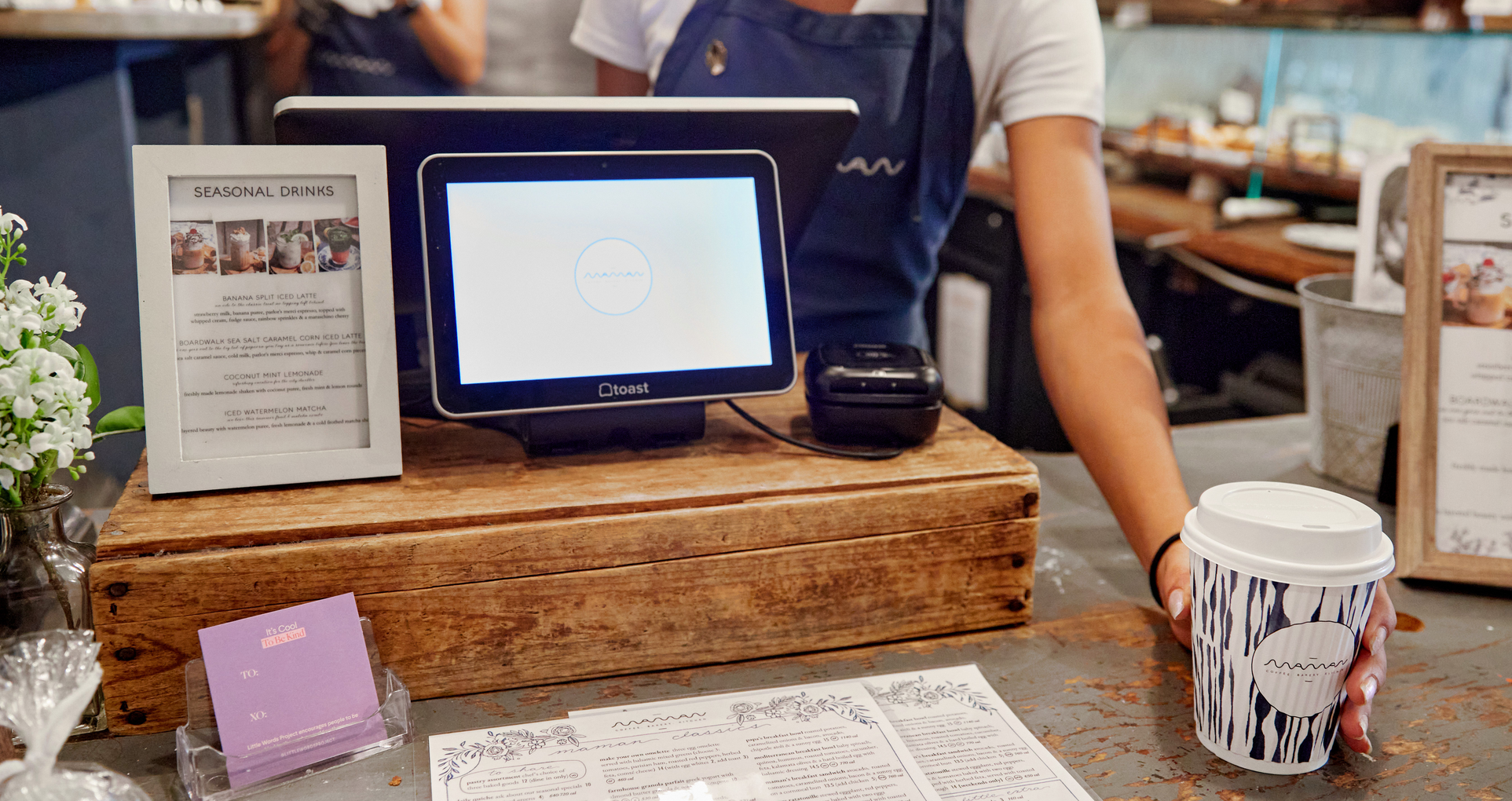

As of early 2025, the U.S. is home to more than 90,000 coffee shops, according to IBISWorld. Add in your home coffee machine, and that’s 90,001 ways to get your morning caffeine fix. With so many options, coffee has brewed itself into a central part of daily life, and yet, choosing where to sip isn’t always simple.
That’s why Toast surveyed 650 coffee drinkers across the country to better understand their habits, preferences, and motivations. From how often they buy coffee out to what flavors and promotions excite them most, we’ve gathered the key insights here.
Key Takeaways
Top consumer coffee preferences and insights in 2025
Nearly 90% of respondents buy coffee out at least once a week
Why does coffee somehow taste better when someone else makes it? Maybe for some, the day starts with a home-brewed cup, but by mid-morning or afternoon, a pick-me-up from a café feels like a treat. For 90% of respondents, buying coffee out is at least a weekly ritual, and 16% say they stop for it every single morning. Men are even more inclined to purchase coffee out daily at 18% vs. only 14% of women.
Over a third of respondents (36%) say they purchase coffee out 3-5 times per week, essentially making it part of their weekday routine. Another 37% grab it 1-2 times a week, likely treating it as a small indulgence or a weekend tradition. The bulk of coffee drinkers are consuming at least some portion of their coffee at coffee shops. Thank goodness there are 90,000 of them!
Only 11% of respondents reported that they always make coffee at home. This relatively small group represents the true loyalists to their own kitchens. But the overwhelming majority buy coffee out regularly, keeping coffee shops busy.
Coffee Shop Operations Manual Template
Use this free template to easily outline all of your operating procedures and make day-to-day operations as consistent as possible.

For 53% of respondents, taste is the strongest motivator
Taste is the primary driver when choosing one coffee shop over another, with a 53% majority. This suggests that no matter how convenient, affordable, or aesthetically pleasing a coffee shop may be, it’s ultimately the quality that keeps guests coming back.
Price is second with 20%. While affordability matters, it doesn’t eclipse the desire for excellence. Convenience follows closely at 17%, reflecting the importance of location and accessibility, especially for those who incorporate coffee into their daily routines. Men tend to care more about price (23% vs. 18%), and women care more about convenience (20% vs. 15%).
Atmosphere accounts for just 8% of responses. While ambiance can enhance the experience, it doesn’t compare to the actual product itself. Brand loyalty barely registers, with only 1% citing it as their top reason for choosing a coffee shop. In other words, guests might flirt with your brand, but they’ll commit to the place that nails that perfect coffee taste.
Subscribe to Data by Toast
Use Toast’s data insights to get ahead of the curve and track market trends on menu pricing, industry patterns, and more.
Al enviar, aceptas recibir correos electrónicos de marketing de Toast. Trataremos tu información de acuerdo con nuestra declaración de privacidad. Información adicional disponible para residentes de California aquí.
Spilling the beans: 36% of respondents discover coffee shops by word of mouth
For 36% of respondents, finding a new coffee shop is simple; just ask your friends. Guests say they discover new shops most often through word of mouth. Coffee, after all, can be a social experience. It’s no surprise that trusted voices carry the most weight in guiding where people try next.
Social media accounts for 35% of coffee shop discovery. Digital buzz has nearly caught up to traditional word of mouth in shaping coffee culture. The influence of social platforms shows how much the coffee experience has become about both taste and shareability. To improve your Instagram game, check out this helpful guide.
Meanwhile, 20% of respondents say they discover new coffee shops simply by stumbling upon them while on a walk or driving by. Being a part of the neighborhood definitely has its perks. Learn some best practices and tips for outdoor signage to help stand out.
Signs, flyers, and other traditional advertising methods play the smallest role, with just 9% of respondents citing them as a discovery channel. While they may still serve as a helpful reminder, personal recommendations and social presence are far more powerful in attracting new guests today.
Hot coffee leads, cold brew spikes in the summer
The debate of “hot or iced?” will always remain, but here, hot coffee takes the crown with 45% of respondents saying it’s their go-to, regardless of the season. Iced coffee has its following at 23%, while 28% say their preference depends on the time of year. Only 4% link their choice to where the coffee itself comes from.
Toast data reinforces these patterns with clear seasonal swings. Cold brew, in particular, is highly seasonal. Its popularity peaks in July, when customers ordered 35% more than the annual average. Regular, hot coffee is far more stable throughout the year, with demand reliably climbing in December and March.
Hot coffee is the year-round staple, and cold brew has its seasonal showtime in the summer. Coffee shops that lean into cold brew marketing during the warmer months, while continuing to promote hot coffee as the constant, can likely attract the masses.
Milk preferences: Whole milk still leads (44%), alternatives rising
Whole milk is still the favorite at 44%, with nearly half of respondents choosing it as their go-to. Half & half takes second place at 23%. People like the classics!
Still, alternative milks are carving out meaningful space in the market. Almond milk captures 17% of preferences, while oat milk has grown to 9%. Women are twice as likely to choose oat milk (12%) vs. men (6%). Dairy milk alternatives are here to stay, and likely so is the upcharge that comes with it.
Although skim milk is just 5%, it remains more popular than emerging options like cashew, soy, or pistachio, which together make up just 2%. While dairy still dominates, plant-based alternatives are no longer fringe. They’re an established part of coffee culture.
Lattes (33%) edge out cappuccinos (31%) in popularity
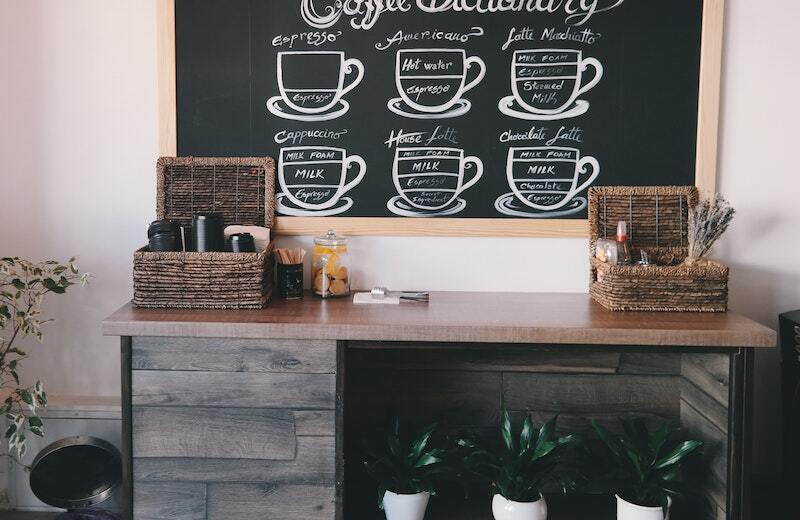
Queue the Sabrina Carpenter lyrics! Lattes are the most popular espresso beverage, with 33% of respondents naming them as their top choice. Cappuccinos secured 31% of the votes, making the preference between the two almost evenly split. Together, they represent the majority of espresso orders. Classic, milk-forward espresso drinks remain the cornerstone of café menus.
The battle of the sexes continues, as women prefer lattes (39% vs. 27%), and men tend to prefer cappuccinos (36% vs. 26%).
Mochas (21%) are also popular, but that’s where the espresso hype ends. Less than 2% of respondents selected dirty chai lattes, and only 1% said cortados. However, 12% of coffee drinkers surveyed don’t drink espresso at all. That’s [not] that me espresso.
Still, the near tie between lattes and cappuccinos illustrates that customers are always interested in the classics.
Guests want PSL and the classics
While lattes and cappuccinos dominate the espresso category, what guests put in those drinks often depends on flavor, and here, the classics take the lead. Nearly a third of respondents (29%) say they prefer classic flavors year-round. This could be flavors like vanilla and caramel, basic cream and sugar, or even just black. Sometimes the best way to tell how good the coffee actually is is to sip it on its own.
Seasonal flavors still play a powerful role in creating variety. Pumpkin spice continues to be the top seasonal contender, with 27% of respondents most excited by its return each fall. Peppermint mocha follows with 18%, particularly tied to the winter holidays, while maple or brown sugar (16%) and gingerbread (10%) round out the list with their cozy, seasonal appeal.
The data underscores that while classic flavors are the backbone of customer preference, seasonal offerings generate meaningful bursts of enthusiasm. For coffee shops, the balance lies in keeping classics always available while using limited-time flavors to drive seasonal traffic and refresh the menu.
Coffee shops as multipurpose places: 21% of respondents work from coffee shops
Coffee shops don’t just function as a place where people can get caffeine. They’re also spaces of comfort and routine. For 32% of respondents, coffee shops and bakeries are where they feel most comfortable dining solo. This is especially true for women, as 39% prefer a coffee shop when dining solo vs. only 27% of men, who instead prefer a fast casual restaurant.
Beyond dining alone, 21% of respondents also report working from coffee shops, highlighting their dual role as both social and functional spaces.
The BOGO bird gets the worm
The strongest coffee promotion is “buy one, get one free,” with 36% saying it would entice them to try a new shop. Loyalty programs are also a powerful tool, with 28% noting they’d be persuaded by a free drink upon sign-up. First-time purchase discounts (22%) add another layer of appeal for newcomers, lowering the barrier to entry.
Seasonal or limited-time specials resonate slightly less in this context at 13%. Meanwhile, social media contests or giveaways register at just 1%, suggesting that while they may boost visibility, they are not the primary drivers of in-store visits.
By aligning promotions with guests’ comfort and productivity needs, coffee shops can more effectively convert first-time visitors into loyal regulars.
Clouds in my coffee
Our data tells the classic story of what matters the most: quality. Coffee lovers care about taste, and when a cup delivers, they become advocates. Word of mouth remains one of the most powerful forces in hospitality, even today. A recommendation from a friend or coworker often carries more weight than any ad campaign, and great coffee is what sparks those conversations.
With more than 91,700 coffee shops across the U.S., what separates the memorable from the forgettable isn’t flashy branding. It’s the fundamentals. Everything else—marketing, atmosphere, and even loyalty—builds on that foundation.
Methodology
Toast conducted a blind survey of 650 U.S. adults ages 18+ on this topic on September 18, 2025. Respondents were not made aware that Toast was fielding the study. Using a standard margin of error calculation, at a confidence interval of 95%, the margin of error on average is +/- 3-5%.
AVISO LEGAL: Esta información se proporciona solo con fines informativos generales y su publicación no constituye un aval. Toast no garantiza la precisión ni la integridad de la información, el texto, los gráficos, los enlaces y otros elementos que incluye este contenido. Toast no garantiza que alcanzarás ningún resultado específico si sigues los consejos que aparecen aquí. Te recomendamos consultar con un profesional, como un abogado, contador o asesor comercial, para recibir asesoramiento específico para tu situación.
 Tendencias
