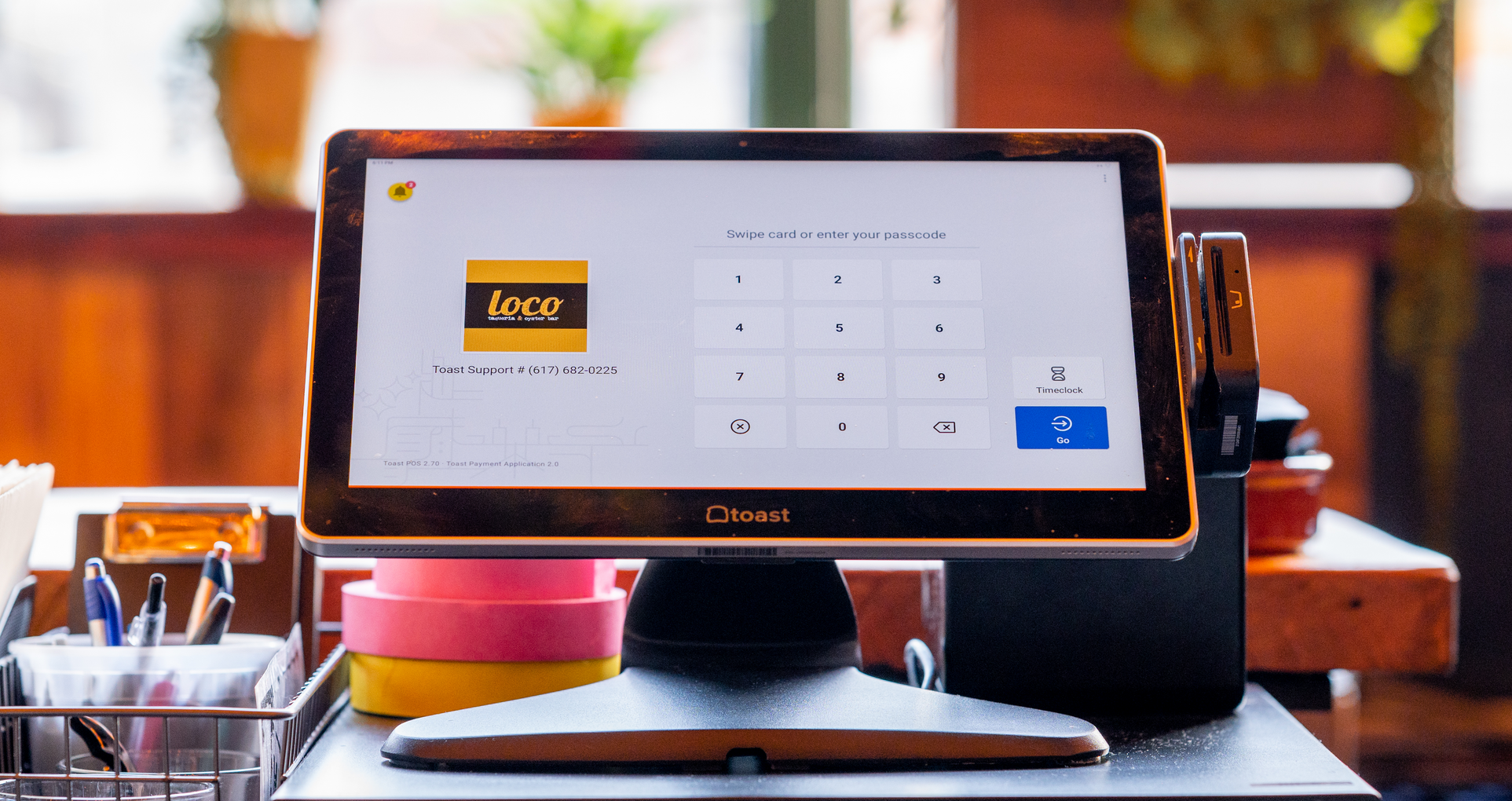
What Restaurant POS Systems Cost in Canada
A clear breakdown of restaurant POS costs in Canada, covering software, hardware, payment processing, installation, and the hidden fees operators often miss.
Author
Buying a restaurant POS system isn’t just one purchase. You’re paying for software, hardware, payment processing, installation, onboarding, and any add-ons you need, and every provider bundles those costs differently.
In Canada, software can cost from around CA$60 to CA$250 a month per terminal, while upfront hardware costs vary widely by setup. Full-service restaurants with multiple terminals, handhelds, or a kitchen display system should budget separately for recurring software fees and payment processing, since processing costs scale with card sales volume and payment mix.
That’s why comparing quotes is so difficult. Two systems with similar monthly prices can end up costing very different amounts once hardware, processing fees, and extras are factored in. Every POS purchase is a balance between controlling costs and giving staff the tools to deliver great service. Cut too much upfront and you may lose the support, reporting, or reliable hardware that keeps a busy shift running smoothly. The operators who make the best decisions compare every cost before they compare the final price.
What makes up the total cost of a restaurant POS system
The total cost of a restaurant POS system usually comes from five areas: software, hardware, payment processing, installation and training, and add-ons. Some are recurring costs; others are one-time purchases. The complication is that providers bundle them differently.
Our Restaurant POS hub breaks down how these layers come together in Toast's own plans, but the categories apply across nearly every provider in the Canadian market.
Software costs
Cloud based POS software in Canada generally runs CA$60 to CA$250 a month per terminal, with kitchen display software often priced separately at around CA$35 a month. On the higher end, Toast's own Canadian pricing starts at CA$120 a month for a starter plan covering one terminal, moving to CA$220 a month for a plan that bundles in a kitchen display system and handheld POS. The spread between vendors partly reflects what’s bundled in, including support, reporting, menu management, integrations, and access to additional modules.
Toast's survey of restaurant operators found POS software is the single tool used most regularly day to day, cited by 35% of respondents ahead of shift scheduling software at 28% and inventory management at 19%.
If the POS is the tool a team touches most, the monthly fee is closer to a cost of doing business than a discretionary expense, worth weighing against time saved rather than against the cheapest plan on a vendor's website.
User friendliness is the feature operators value most, with 41.5% ranking it above reporting and analytics (29%). Restaurants aren’t looking for the longest feature list. They want a system their staff can learn quickly and rely on when the dinner rush hits.
Hardware costs
Hardware is usually the largest upfront number in a POS decision, and the POS machine price alone can vary by hundreds of dollars depending on what's bundled in. The figures below are directional estimates rather than a confirmed quote, built from typical bundle configurations and cross-checked against vendors who do publish Canadian pricing. A terminal and card reader together typically run in the range of CA$800. A full terminal bundle, case, stand, cash drawer, receipt printer, and cabling included, lands closer to CA$1,000. A router runs roughly CA$200, an extra kitchen printer CA$200 to CA$400, and a kitchen display system around CA$100 per station. Handheld POS devices, which let servers fire orders tableside instead of walking to a terminal, run roughly CA$600 each including a card reader, plus CA$200 to CA$800 in networking hardware depending on how many handhelds a location needs.
Legacy, on premise systems carry the largest hardware bills, sometimes tens of thousands of dollars for a multi terminal setup with local servers. That matters for operators in Western Canada and Atlantic Canada weighing on premise systems against cloud based ones, since a hardware failure in a rural location can mean days of downtime waiting on a technician, versus a cloud system where a replacement terminal can often be shipped and configured remotely.
George Davis, owner of 2 Doors Down in Halifax, put it plainly in Toast's Voice of the Canadian Restaurant Industry research: "the worst thing in restaurants or retail is when power goes out to your system, or the internet goes down." That risk, not just the sticker price, is part of what hardware costs. Operators weighing a legacy holdover against a cloud upgrade can find a fuller breakdown in Should You Switch Restaurant POS Systems.
Toast's survey of restaurant owners on back of house operations found 20.5% plan to invest in POS upgrades next, close behind inventory management software at 31%.
Even amid the margin pressure, operators increasingly treat hardware refreshes as tied to performance, not as discretionary spending.
Payment processing costs
Interac debit transactions usually cost restaurants a flat fee of just a few cents. Credit card processing costs are much higher, often around 2.5% to 2.9% of the sale plus a per transaction fee, depending on the card and whether the payment is made in person or online. That’s a big difference. Two POS quotes with identical software pricing can end up costing very different amounts once real transaction volume and payment mix are taken into account.
For a restaurant doing meaningful credit card volume, a processing rate a few tenths of a percentage point higher can outweigh a difference in the monthly software fee within months. Ask any vendor to itemize this rather than accepting a bundled number. A lower advertised software price sometimes comes with a higher built in processing markup.
Installation and training costs
Onsite installation for a multi-terminal location commonly lands between CA$500 and CA$2,000 in total, a range that holds up across Canadian POS providers, depending on the number of devices and hours involved. That total breaks down roughly into remote support billed near CA$75 an hour and an onsite technician closer to CA$125 an hour, though exact rates vary by vendor. A full menu build, groups, items, and modifiers included, typically adds a few hundred dollars more if a vendor handles it. These are easy to skip past on a quote, but they determine how fast a new system reaches full speed.
Hidden costs most providers don't mention upfront
Some costs don’t show up in the first quote. A CA$0 or low monthly software fee often comes with a higher payment processing rate, so the savings on one line are recovered somewhere else. Features many operators assume are standard, like seat and course management, tab preauthorization, or detailed labour reporting, may only be available on higher-tier plans. Contract length matters too. A lower rate tied to a multi-year agreement can cost more over time than a slightly higher rate you can renegotiate as your business grows.
Quebec also has a compliance requirement most other provinces don’t. Restaurants must use a certified sales recording system connected to Revenu Québec’s WEB-SRM platform, which generates a compliance code on every bill. That became mandatory for established businesses in 2025. It’s worth asking any POS provider whether WEB-SRM certification is included and whether it’s covered by the software fee or billed separately. These costs won’t appear on a homepage pricing table, but they all feed into restaurant prime cost, where the real cost of a POS system shows up over time.
Add-on costs
Online ordering, gift card programs, and mobile ordering typically run about CA$50 a month each as standalone add-ons, with loyalty and rewards hosting priced similarly.
None of these are essential on day one, but Toast's Canadian Restaurant Industry Predictions research found 49% of owners expect online ordering and delivery platforms to be the technology trend shaping operations most in 2026, and 83% see off premise dining as important to next year's revenue. For a growing share of Canadian restaurants, online ordering isn't really an add-on anymore, even if it's priced as one, and belongs in the cost conversation from the start.
The same research found 22% of owners expect AI and automation to have the biggest operational impact in 2026, mostly in unglamorous places like inventory tracking, scheduling, and reporting.
POS cost by restaurant type
The categories above look different depending on what a restaurant actually runs. These are scenario-based estimates built from the ranges above, not a quote from a specific provider, and they cover software and hardware only. Payment processing isn't included because it scales with a restaurant's actual card sales volume and payment mix, not with terminal count, and is covered separately above
Restaurant type | Typical monthly software cost | Typical upfront hardware | Notes |
Food truck or single counter | CA$60 to CA$120 | CA$600 to CA$1,000 | One handheld or countertop terminal, minimal add-ons |
Café or quick service | CA$120 to CA$250 | CA$1,000 to CA$2,000 | One to two terminals, often a kitchen printer or small KDS |
Full service, one location | CA$300 to CA$600 | CA$3,000 to CA$6,000 | Two to four terminals, KDS, one or two handhelds |
Multi-location group | Custom quote | Scales per location | Volume pricing, centralized reporting and menu management |
Providers across the Canadian market, including Square, Lightspeed, Clover, and TouchBistro alongside Toast, price around these same layers even when the headline numbers differ, which is why the POS Comparison Tool is built to let an operator plug in their own numbers rather than compare two homepage prices directly.
How to calculate your true 12-month cost of ownership
The arithmetic is simple even when the pricing isn't. Multiply the monthly software cost for a restaurant type by 12, add the one-time hardware and installation cost, and treat payment processing as a separate line calculated from expected card sales volume and payment mix rather than folded into the monthly figure. A full-service restaurant spending about CA$400 a month on recurring software would pay roughly CA$4,800 a year before hardware, installation, and processing. Add a multi-terminal hardware setup and installation on top, and a realistic first-year total, before processing, lands closer to CA$8,000 to CA$12,000. Running that number before signing, rather than after, is what turns a homepage price into an actual budget.
The bottom line
Cost control and guest experience are often pulling in opposite directions when restaurants choose a POS system.
Operators who make good decisions don’t focus on the lowest quote. They look at software, hardware, payment processing, installation, and add-ons together, then ask what’s missing from the cheaper offer.
With margins under constant pressure, that level of scrutiny pays off. It can mean the difference between a system that improves service and gives you better data, and one that simply hides the costs elsewhere.
Get a tailored POS quote
The ranges above are a starting point, not a substitute for a quote built around a specific restaurant's transaction volume, terminal count, and add-ons. Toast's pricing page breaks down current Canadian plan structures, and a demo is the fastest way to get software, hardware, and processing priced together.
Frequently Asked Questions (FAQ)
How much does a restaurant POS system cost in Canada?
Software runs roughly CA$60 to CA$250 a month per terminal, hardware starts around CA$800 to CA$1,000 per terminal, and processing adds roughly 2.5% to 2.9% on credit plus a few cents per transaction on Interac debit. A full-service restaurant with two or three terminals should expect a first-year total, software, hardware, and installation combined, in the CA$5,000 to CA$12,000 range before processing volume is added.
What is included in the monthly cost of a restaurant POS system?
The monthly fee usually covers the core software and customer support, but reporting depth and integrations can sit behind higher tiers depending on the provider. Kitchen display software, online ordering, and loyalty are often priced as separate add-ons rather than bundled in, which is worth confirming before comparing two quotes.
Are there free POS systems for restaurants in Canada?
Some providers advertise a CA$0 monthly fee, but that cost usually resurfaces as a higher payment processing rate. A restaurant doing significant credit card volume can pay more over a year on a free plan than on one with a modest monthly fee and a lower processing rate.
How much does a POS system cost for multiple locations?
Multi-location groups typically move to a custom, volume-based quote rather than a per-terminal retail price, since providers price in centralized reporting and account management a single-location plan doesn't need. Getting an accurate number means requesting a quote directly, not multiplying a single-location price by the number of sites.
What is the difference between cloud-based and on-premise POS costs?
Cloud-based systems spread cost over a monthly fee with lower upfront hardware, and updates are typically included. On-premise systems often carry a lower software fee but a much higher hardware cost, sometimes tens of thousands of dollars for a multi-terminal setup with local servers, and repairs can mean real downtime rather than a remote fix.
What is a realistic first-year budget for a restaurant POS system in Canada?
A single-terminal quick service or café setup lands around CA$2,000 to CA$4,000 in year one once software, hardware, and installation are included. A full-service restaurant running multiple terminals, a KDS, and handhelds should plan closer to CA$8,000 to CA$12,000, with processing costs on top scaling with sales volume.
Is this article helpful?
DISCLAIMER: This information is provided for general informational purposes only, and publication does not constitute an endorsement. Toast does not warrant the accuracy or completeness of any information, text, graphics, links, or other items contained within this content. Toast does not guarantee you will achieve any specific results if you follow any advice herein. It may be advisable for you to consult with a professional such as a lawyer, accountant, or business advisor for advice specific to your situation.

Subscribe to On the line
Sign up to get industry intel, advice, tools, and honest takes from real people tackling their restaurants' greatest challenges.
By submitting, you agree to receive marketing emails from Toast. We’ll handle your info according to our privacy statement. Additional information for California residents available here.