What Is a Rotating Shift? Types, Benefits, & Best Practices
A rotating shift is a schedule where employees work different hours over time. Learn why restaurants use them and how to manage them.
作者
 Resource
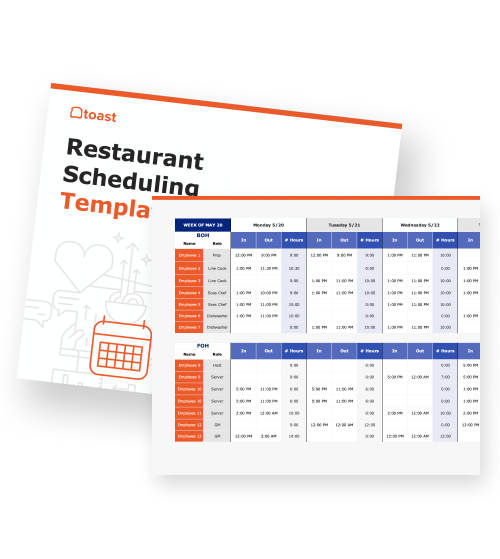
 Restaurant Scheduling Template
Use the Restaurant Scheduling Template to easily schedule your restaurant staff's shifts.
免费下载While most U.S. workers stick to a regular daytime schedule, rotating shifts are a vital part of industries that operate around the clock—like restaurants and hospitality. In fact, according to the most recent Bureau of Labor Statistics data, about 6% of U.S. workers follow rotating, irregular, or split shifts.
For restaurants, rotating schedules offer the flexibility to match staffing with customer demand, support employee growth, and keep operations running smoothly. Keep reading to explore what rotating shifts are, why restaurants use them, different types to consider, and best practices for making them work for your team!
Key takeaways
Rotating shifts involve employees working different hours over time to ensure full coverage across a restaurant’s operating hours.
Restaurants use rotating shifts to match staffing with customer demand, balance workloads, and support employee growth and retention.
Common types of rotating shifts include weekly, daily, split-week, monthly, forward, backward, and rotating day-off schedules.
Best practices for rotating shifts include planning schedules early, rotating forward when possible, and supporting employees during transitions.
Clear communication, fairness, and flexibility are essential to making rotating shifts successful for both the business and the staff.
What is a rotating shift?
A rotating shift is an employee scheduling strategy where staff alternate between different shifts over a set period of time. Instead of working the same hours each day, team members might rotate between morning, afternoon, evening, and overnight shifts according to a predetermined pattern.
This type of schedule is common in industries that operate beyond the traditional 9-to-5 window—like restaurants and hospitality—where continuous coverage is essential.
Why do restaurants use rotating shifts?
Rotating shifts offer restaurants the flexibility to meet operational needs while supporting employee satisfaction. Here’s why many restaurants rely on this scheduling approach:
Coverage for extended hours: Rotating shifts ensure consistent staffing across all hours, helping managers maintain high service standards even during early mornings, late nights, and weekends.
Greater scheduling flexibility: With employees trained across different shifts, managers have more options when accommodating time-off requests or covering unexpected absences.
Reduced burnout: Managing rotating shifts thoughtfully isn’t just about keeping operations smooth—it’s about supporting employee well-being, too.
Insight: Eric Zhou, Assistant Professor at Harvard Medical School, notes, "The research is consistent and powerful. Working and sleeping during hours misaligned with natural light for extended periods of time is not likely to be healthy for you."
Fair distribution of lucrative shifts: In restaurants, certain shifts tend to bring in more tips. Rotating schedules allow employees to share access to these high-earning periods.
Balanced teams across all shifts: Rotating rosters help managers create well-rounded teams by mixing experienced and newer employees on every shift.
Broader employee skill development: Working different shifts exposes employees to the full scope of restaurant operations—from opening duties and lunch rushes to dinner service and closing tasks.
Restaurant Scheduling Template
Use the Restaurant Scheduling Template to easily schedule your restaurant staff's shifts.

Types of rotating shifts and how they work
Depending on your restaurant’s needs, rotating shifts can be fixed, flexible, or even based on specific time periods like weekly or monthly schedules. Here are some common types of rotating shifts and how they typically work.
1. Weekly rotation
In a weekly rotation, employees work a specific shift for an entire week before switching to a different shift the following week. This type of schedule offers some consistency while still giving everyone exposure to different time periods, making it easier for employees to plan personal activities week-to-week.
Example
Week 1: Morning shifts (7:00 a.m. – 3:00 p.m.)
Week 2: Evening shifts (3:00 p.m. – 11:00 p.m.)
Week 3: Morning shifts (7:00 a.m. – 3:00 p.m.)
Week 4: Evening shifts (3:00 p.m. – 11:00 p.m.)
2. Daily rotation
A daily rotation has employees switch shifts from day to day, alternating between mornings, afternoons, or evenings within the same week. While this setup provides maximum flexibility for covering different service periods, it can be more tiring for employees due to constant changes in their routine.
Example
Monday: Morning shift (7:00 a.m. – 3:00 p.m.)
Tuesday: Evening shift (3:00 p.m. – 11:00 p.m.)
Wednesday: Morning shift (7:00 a.m. – 3:00 p.m.)
Thursday: Evening shift (3:00 p.m. – 11:00 p.m.)
Friday: Morning shift (7:00 a.m. – 3:00 p.m.)
Because daily rotations can be physically and mentally demanding, some restaurants have taken extra steps to make these shifts more sustainable. For instance, Knead Hospitality + Design shortened shift lengths, hired additional staff to share the workload, and rotated employees between stations to prevent fatigue.
Small adjustments like these can make daily rotations more manageable and help protect employee well-being.
3. Split-week rotation
A split-week rotation divides the workweek into two parts, with employees working one type of shift for the first half of the week and a different shift for the second half. This structure offers more predictability than daily rotations while still giving employees hours across multiple shifts.
Example
Monday–Wednesday: Morning shifts (7:00 a.m. – 3:00 p.m.)
Thursday–Saturday: Evening shifts (3:00 p.m. – 11:00 p.m.)
Chick-fil-A Kendall in Florida designed a system where employees work consistent three-day blocks of longer shifts each week. This approach helped improve work-life balance, reduce burnout, and uncover new talent, showing how strategic scheduling can benefit both employees and business operations.
4. Monthly rotation
In a monthly rotation, employees work the same shift for an entire month before rotating to a different one. This offers the most stability for employees, making it easier to plan their personal schedules, but it still ensures that over time, everyone shares responsibility for different service periods.
Example
April: Evening shifts (3:00 p.m. – 11:00 p.m.)
May: Morning shifts (7:00 a.m. – 3:00 p.m.)
June: Evening shifts (3:00 p.m. – 11:00 p.m.)
5. Forward rotation
A forward rotation moves employees from earlier shifts to later shifts in a natural, progressive order. This schedule tends to be easier on employees’ bodies, as it aligns better with typical sleep patterns (waking later as shifts get later).
Example
Week 1: Breakfast shift (6:00 a.m. – 2:00 p.m.)
Week 2: Lunch shift (10:00 a.m. – 6:00 p.m.)
Week 3: Dinner shift (4:00 p.m. – midnight)
6. Backward rotation
A backward rotation moves employees from later shifts to earlier shifts, forcing a "reset" of their sleep and work patterns. This can be harder on employees’ health and energy levels, but some restaurants use it when operational needs or employee availability require it.
Example
Week 1: Dinner shift (4:00 p.m. – midnight)
Week 2: Lunch shift (10:00 a.m. – 6:00 p.m.)
Week 3: Breakfast shift (6:00 a.m. – 2:00 p.m.)
7. Rotating day-off schedule
In a rotating day-off schedule, employees keep the same shift hours but alternate which days they have off each week. This approach helps distribute premium days off—like Fridays and weekends—more fairly among the team, while still providing employees with consistent start and end times.
Example
Week 1: Off on Monday
Week 2: Off on Friday
Week 3: Off on Monday
Week 4: Off on Friday
When setting up rotating day-off schedules, it’s important to watch for calendar quirks like months with five weekends. One workplace learned this the hard way when they assigned employees to fixed Saturdays without accounting for extra weekends—leading to confusion, missed shifts, and plenty of frustration.
Best practices for implementing rotating shifts
Rotating shifts can help balance staffing needs and employee satisfaction, but only if you manage them thoughtfully. Here are some best practices to keep your scheduling smooth and your team happy:
Communicate and support employees: Be transparent about why rotations are necessary, provide clear expectations, and offer support during adjustment periods. Open communication helps reduce resistance and builds trust within your team.
Create a clear rotation system: Develop a rotation pattern that’s easy for employees to understand and follow. Consistent, predictable schedules reduce confusion and help your team plan ahead.
Plan schedules well in advance: Give employees plenty of notice about their upcoming shifts, ideally two to four weeks ahead.
Consider employee input: When possible, involve your team in the scheduling process. Make an effort to accommodate scheduling conflicts like class schedules, family needs, or second jobs.
Rotate forward when possible: Forward rotation is easier on employees' bodies and sleep cycles than backward rotation, leading to less fatigue over time.
Cross-train employees for different shifts: Cross-training builds a more flexible team that can step into different roles as needed.
Balance fairness and flexibility: Distribute desirable and challenging shifts as evenly as possible to avoid tension and resentment.
Use scheduling software: Modern scheduling tools can automate rotating shifts, manage employee preferences, and make it easy for staff to view and swap shifts.
Use rotating shifts to support your business and your staff
Rotating shifts can be a powerful tool for keeping your restaurant running smoothly while supporting a happy, well-rounded team. With the right structure, clear communication, and a bit of flexibility, you can make rotating schedules work for everyone!
Employee Satisfaction Survey Template
Use this free template to understand how your staff feels about their work environment, management, and overall experience.
这篇文章有帮助吗?
免责声明:此信息仅作为一般性参考,发布并不构成认可。Toast 不保证本内容中包含的任何信息、文本、图形、链接或其他项目的准确性或完整性。Toast 不保证如果您遵循本文的任何建议,就能取得任何特定结果。您可能需要咨询专业人士,如律师、会计师或商业顾问,以获取针对您情况的具体建议。
 趋势
趋势