Retail Store Financing: How to Fund & Grow Your Business
Retail store financing can be a smart way to launch or grow your business. Discover different funding options and how to choose the right one.
作者
 RESOURCE
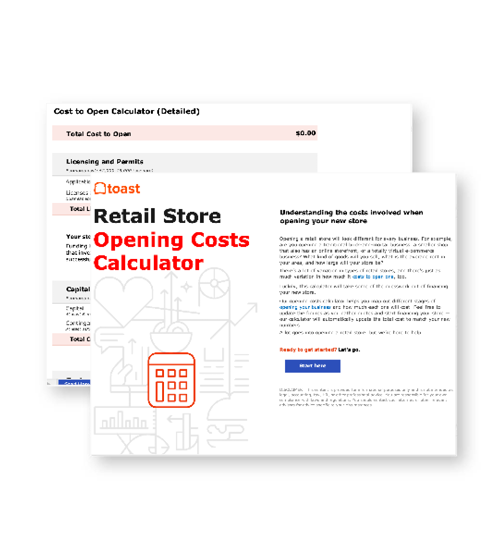
 Retail Store Opening Costs Calculator
This free calculator lays out some of the fundamental financial costs of opening a retail store, so you can start planning and bring your dream business to life.
免费下载Running a successful retail store takes more than great products and a prime location—it also requires the right financial support. From launching your business to handling seasonal slowdowns, financing can give you the boost you need to keep operations running smoothly.
In this article, we’ll break down common financing options for retail businesses, how to choose the right one for your goals, and tips to manage borrowed funds responsibly.
Key takeaways
Match the type of funding to its purpose, using short-term credit for cash gaps and long-term loans for growth.
Strong credit, organized records, and a solid business plan improve your chances of approval.
Responsible borrowing means tracking repayments, avoiding overborrowing, and investing in growth-focused initiatives.
Retail Store Opening Costs Calculator
This free calculator lays out some of the fundamental financial costs of opening a retail store, so you can start planning and bring your dream business to life.

Common types of retail store financing
Not all financing is created equal, and the best option for your retail store depends on your goals, credit profile, and how quickly you need funds. From traditional loans to flexible credit lines and alternative funding, each type comes with its own strengths and trade-offs.
1. Traditional bank loans
Bank loans are one of the most common ways to finance a retail store. They typically offer competitive interest rates and longer repayment terms, but they can also be harder to qualify for, especially if your business is new.
Pros: Lower interest rates, structured repayment schedule, credibility with lenders.
Cons: Strict eligibility requirements, lengthy approval process, collateral often required.
Best for: Established businesses with strong credit histories looking for long-term funding.
Even large retailers rely on this kind of financing to stay afloat. In 2025, Saks Global secured $350 million in commitments—including a $300 million first-in, last-out facility and a $50 million term loan—after acquiring Neiman Marcus Group.
Analysts noted the move was essential to cover overdue vendor payments and ensure holiday inventory. It underscores how critical access to traditional financing can be for retail operations of any size.
2. SBA loans
Backed by the U.S. Small Business Administration, SBA loans reduce the risk for lenders, making it easier for small businesses to access financing. While paperwork and approval can take time, these loans often come with attractive terms.
Pros: Lower down payments, longer repayment terms, easier approval than some bank loans.
Cons: Lengthy application process, significant documentation required, not ideal for urgent needs.
Best for: Small businesses seeking larger amounts of capital with more flexible terms.
The SBA is actively working to expand funding access. In 2025, the agency announced $1.1 million in grants to organizations that help small manufacturers grow, while lawmakers introduced legislation to double 7(a) loan limits from $5 million to $10 million.
These efforts highlight how SBA-backed financing remains a vital lifeline for retail and manufacturing businesses looking to expand, modernize, or weather challenging conditions.
3. Business lines of credit
A line of credit gives your retail store flexible access to funds up to a set limit. Unlike a lump-sum loan, you only borrow what you need when you need it, and you pay interest only on the amount used.
Pros: Flexible access to cash, only pay interest on what’s drawn, can cover short-term gaps.
Cons: Variable interest rates, requires discipline to avoid overuse, may have annual fees.
Best for: Covering cash flow fluctuations, seasonal inventory needs, or unexpected expenses.
Grocery giant Albertsons partnered with TreviPay to roll out a Pay by Invoice program for business buyers, including schools, local governments, and community organizations. Customers receive a dedicated line of credit with 30-day net terms, plus access to a self-serve portal for spending limits, real-time invoice tracking, and payment management.
For Albertsons, the program reduces billing errors and back-office strain, while for buyers, it offers flexible credit that mirrors a traditional business line of credit.
4. Equipment financing
Retail stores often need expensive equipment—like POS systems, display fixtures, or refrigeration—that can strain upfront budgets. Equipment financing lets you spread the cost over time while using the equipment right away.
Pros: Preserves cash flow, equipment itself often serves as collateral, predictable payments.
Cons: Can end up paying more than the equipment’s value over time, may not cover smaller purchases.
Best for: Funding large, essential equipment purchases without tying up working capital.
Japanese equipment manufacturer Komatsu reported a 15% year-over-year decline in retail finance originations in fiscal Q1 2025, as a stronger yen, tariffs, and slowing North American demand hurt its retail finance business.
With retail finance managed assets falling to $9.4 billion, Komatsu’s case illustrates how heavily equipment-dependent businesses rely on financing — and how external factors like trade policies and currency fluctuations can shape the availability and cost of that financing.
5. Merchant cash advances
A merchant cash advance (MCA) provides quick access to capital by giving you funds upfront in exchange for a percentage of future sales. While fast and convenient, MCAs tend to be one of the most expensive forms of financing.
Pros: Fast approval, minimal paperwork, repayment tied to sales volume.
Cons: High effective interest rates, daily/weekly repayments can strain cash flow.
Best for: Retailers needing immediate funding and willing to pay a premium for speed.
In 2022, Amazon launched a cash advance program in partnership with Parafin, offering sellers between $500 and $10 million without credit checks, fixed terms, or collateral requirements. Repayment comes from a set percentage of sales plus a capital fee, rather than traditional interest charges.
Amazon’s move highlights both the growing demand for flexible financing and the potential trade-offs—while it gives merchants fast, frictionless access to cash, the costs can add up compared to conventional loans.
6. Grants and alternative funding
Not all financing has to come from loans. Grants, crowdfunding, or community programs can provide cash without repayment obligations, though they’re usually competitive or require specific qualifications.
Pros: No repayment required for grants, builds community support through crowdfunding, diversifies funding sources.
Cons: Competitive and time-consuming application processes, funds may be limited or one-time only.
Best for: Businesses with unique stories, community appeal, or eligibility for industry-specific grants.
In June 2025, Anker’s eufyMake E1 became the most funded Kickstarter project of all time, raising $46.8 million against a $500,000 goal. Other well-known brands that started on Kickstarter include Oculus, Peloton, and Allbirds. As Kickstarter’s Nick Yulman put it:
“Kickstarter is a storytelling platform as well as a fundraising platform… that initial video and the whole structure of laying out, ‘I have an idea and this is why it’s important,’ is really powerful.”
Crowdfunding has also evolved into equity investment. Platforms like DealMaker allow everyday consumers to purchase shares in their favorite brands. Cocktail bar chain Death & Co has raised $5.6 million this way, while brands like Ryse, Proven Skincare, and Parker Clay have raised millions more.
How to choose the right financing option
The best financing choice depends on your store’s unique needs, repayment capacity, and long-term goals. Weighing the details up front helps you avoid costly mistakes later.
Match type to need: Use short-term credit for cash flow gaps, and long-term loans for major expansions or renovations.
Review repayment terms: Look closely at interest rates, fees, and collateral requirements to avoid surprises.
Think about cash flow: Consider how payments will affect your margins month to month, not just the total loan amount.
Check eligibility: Lenders will look at your credit history, time in business, and financial health before approval.
How to prepare your retail store for financing
Before applying for financing, you’ll want to show lenders that your business is reliable and ready for growth. Solid preparation increases your chances of approval and often leads to better terms.
Build a strong business plan: Outline your goals, market, and financial projections to show you have a clear path forward.
Maintain healthy credit: Both personal and business credit scores matter, so pay bills on time and reduce outstanding debt.
Keep financial records organized: Accurate, up-to-date balance sheets, tax returns, and cash flow statements build lender confidence.
Demonstrate fund usage: Be ready to explain how you’ll use the financing and how repayment will fit into your business model.
Tips for managing financing responsibly
Securing financing is just the first step—how you manage it determines whether it strengthens or strains your retail business. Responsible management keeps your cash flow healthy and builds trust with lenders for future opportunities.
Track repayment schedules: Stay on top of due dates to avoid late fees and protect your credit.
Borrow wisely: Only take on what you can realistically repay based on your cash flow.
Invest strategically: Use funds for initiatives that generate revenue or improve efficiency, not short-term fixes.
Reevaluate regularly: As your business grows, reassess whether your current financing still fits your needs.
Loan and behold your retail store’s future
Financing can give your retail business the momentum it needs—whether you’re just opening your doors, stocking up for a busy season, or expanding to a new location. The key is not just finding funding, but managing it responsibly so it fuels growth instead of creating strain.
With a solid plan, the right financing option, and smart repayment strategies, you can keep your business thriving for the long haul.
Retail Store Opening and Closing Checklist
Use this free PDF checklist to set your staff up for success, every shift.
FAQ’s
What is the average interest rate for retail business loans in 2025?
Rates vary depending on the lender, loan type, and your credit profile. Traditional bank loans often come with lower rates, while online lenders or short-term financing options may cost more but provide faster access to funds.
How long does it take to get approved for retail financing?
Approval timelines can range from a few days with online lenders to several weeks with banks or SBA loans. Preparing documents like financial statements and a solid business plan can speed up the process.
What credit score do I need for retail business financing?
Many lenders look for a personal credit score of 650 or higher, though requirements vary. Some financing options—like merchant cash advances—focus more on sales volume than credit.
Can I get retail financing without collateral?
Yes, unsecured loans and lines of credit are available, but they often come with stricter credit requirements or higher interest rates since the lender is taking on more risk.
What can retail business loans be used for?
Funds can support a wide range of needs, including store renovations, inventory purchases, marketing campaigns, hiring staff, or covering seasonal cash flow gaps.
How much funding can I get for my retail business?
The amount depends on your business revenue, creditworthiness, and the lender’s guidelines. Small businesses may qualify for a few thousand dollars, while established retailers with strong financials can access much larger sums.
这篇文章有帮助吗?
免责声明:此信息仅作为一般性参考,发布并不构成认可。Toast 不保证本内容中包含的任何信息、文本、图形、链接或其他项目的准确性或完整性。Toast 不保证如果您遵循本文的任何建议,就能取得任何特定结果。您可能需要咨询专业人士,如律师、会计师或商业顾问,以获取针对您情况的具体建议。
 趋势
趋势