
How to Write a Retail Store Business Plan in 2025 (Free Template)
This guide to writing a retail store business plan can help you to organize your ideas and impress potential investors.
作者
 RESOURCE
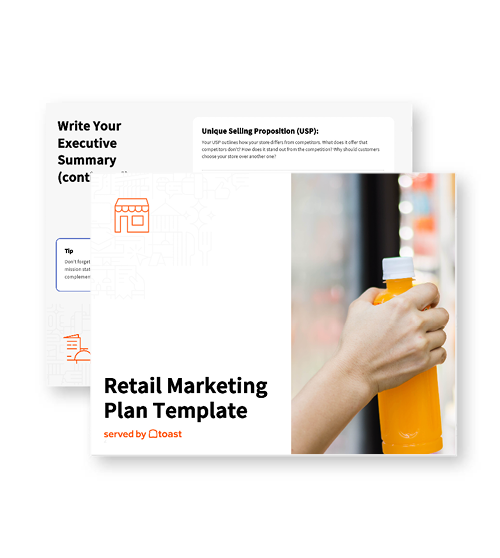
 Retail Marketing Plan
Create a marketing plan that'll drive repeat business with this customizable marketing playbook template and interactive calendar.
免费下载Retail Store Business Strategy Plan
The retail industry in the United States stands as one of the largest and most dynamic in the world, boasting a landscape where innovation and entrepreneurship thrive. Over the past few decades, the total retail sales figures in the U.S. have witnessed remarkable growth, soaring from just under three trillion U.S. dollars in 2000 to over seven trillion dollars in 2022. While growth is projected to continue in the coming years, albeit at a slightly slower pace, forecasts anticipate retail sales to reach approximately 7.9 trillion U.S. dollars by 2026, according to Statista.
This trajectory highlights the enduring appeal and vast potential within the retail market, presenting an opportune moment for aspiring entrepreneurs to venture into the domain of retailing. Opening a retail store in this dynamic environment requires a strategic business plan, market research, and a clear understanding of consumer trends to capitalize on the industry's growth and unlock success in the competitive retail landscape.
This article will help you:
Learn the essential elements of a business plan.
Write a successful retail store business plan.
Present your business plan to potential partners or investors.
Toast Retail can help create seamless guest experiences for your retail and foodservice needs
Get a free demoHow to Write a Retail Store Business Plan
Writing a retail store business plan prepares you to answer questions about the store’s concept, staffing, budget, and other critical considerations. Many retail stores require capital in the form of loans or investments–a business plan is your ticket into meetings with lenders.
Business plans guide how you and your team will carry out the daily, quarterly, and yearly operations of the retail store.Operating a retail store comes with contingencies, surprises, and unforeseeable interruptions. When the unexpected happens, you can rely on your business plan to guide you through the challenge.
Emily Thompson, owner of Almnac Supply Co. said in an interview with Being Boss Poscast, “I absolutely love thinking about how this business works in this new expanded capacity and building the systems that make it work so that everyone can do their job.”
Elements of a retail store business plan
Executive Summary
Business plans start with an executive summar that introduction all the key elements of your retail store. This section describes the store’s concept, mission, and core values–everything that makes your store unique. It also provides an overview of the budget and a description of operations.
You might think of this section as the hook of the business plan. Consider who will read the plan and how you can catch their attention. What makes your retail store unique? What market factors make your plan a recipe for success? It is good to provide clear and direct descriptions of your products and how your store fills a market gap.
Company Overview
The company overview section of your retail store’s business plan is more practical and specific description of your business. It acts as a guide to the rest of the business plan.
This section brings the rest of the business plan together. It is a good idea to show how the moving parts of your staffing plan, market analysis, finances, and operations work in tandem.
Even though it appears at the beginning, you might need to write it after you have the rest of the sections filled out.
The aesthetics of your retail store’s brand also belong in this section. Provide examples of the store’s logo and branding. These details will help readers to envision the customer experience your retail store offers.
Team and Management
Staffing is a top priority whether you want a small boutique or large warehouse store. Use this section to design a scalable staffing plan that prepares for both immediate and future staffing needs.
The team and management section of your retail store business provides a detailed look at the store’s staffing needs and management structure. This information will influence other elements of your business plan, such as the budget, so it’s important to nail down these details.
Consider what kind of jobs you plan to create. Will you hire full-time or part-time employees? What kind of benefits you are required to provide? This section is also where you can make a plan for hiring, training, retention, and promotion.
Write about how many employees you’ll need in the retail store and how many shifts you’ll need per day. Then, calculate how many managers are needed to keep things running smoothly. Will you need a general manager to oversee department managers? Your staff is responsible for your customer’s experience. Creating a strong staffing structure is a vital move toward success.
Market Analysis
The market analysis is one of the central pieces of a retail store business plan. Investors and loan officers will want to know the potential risks (and rewards) of your store. Three core areas are important here: target market, location, and competition.
Target Market
Your retail store’s target market is a snapshot of the kind of customers that will visit your store. It's good to be able to show investors that there is a demand for the kind of products you’ll be selling.
In aligning our retail store's product strategy with market segments, you should focus on three potential segments:
Low-End Market: Catering to budget-conscious consumers, offer cost-effective, quality products from reputable suppliers, ensuring affordability without compromising quality.
Mid-Market: Balancing affordability and quality, curate a diverse range of mainstream and specialty items at competitive prices, appealing to value-driven shoppers seeking reliable options.
Premium Market: For discerning customers valuing luxury and exclusivity, we provide a curated selection of high-end and artisanal products, prioritizing quality, craftsmanship, and uniqueness.
This segmentation approach allows us to address diverse consumer needs while maintaining a consistent brand identity focused on quality and value across all market segments.
Location Analysis
There are some key things to write about the location of your retail store. What kind of foot traffic visits the mall, shopping center, or downtown where your store will be? Potential investors would like to know if your store is positioned in an advantageous location.
Competitive Analysis
That brings us to an analysis of the competition in the area. If there is another gift shop in near the location you have pinpointed, try to impress investors with how your store delivers something unique and attractive.
This analysis can also tie into the marketing section–how your marketing strategy will attract your target customers. This kind of research goes a long way toward proving that your retail store is a smart business venture.
Marketing and Publicity
The marketing and publicity section of your retail store business plan will offer a comprehensive view of your marketing strategy. Setting your store up is only half the work–becoming profitable requires brand awareness to drive sales.
Building hype for your store on social media, radio, and TV can ensure that your business’s launch is a hit. Offering promotions, loyalty programs, or discounts can create regular customers and consistent sales.
It’s a good idea to allocate a specific percentage of your sales to marketing. Investors want to know how you plan to become and remain profitable. Marketing and publicity are important parts of that equation. Consider including specific examples in your business plan like the following:
Loyalty Programs: Implement a loyalty program to reward repeat customers with discounts, special offers, or exclusive access to sales and events.
Email Newsletters: Send regular newsletters to subscribers with updates on new products, promotions, and upcoming events to keep them informed and engaged.
In-Store Events: Host in-store events such as product demonstrations, workshops, or pop-up shops to attract customers and encourage them to visit your store.
Influencer Partnerships: Collaborate with influencers or bloggers in your niche to promote your products to their followers and reach a wider audience.
Cross-Promotions: Partner with complementary businesses or local organizations to cross-promote each other's products or services and expand your reach.
Online Advertising: Use online advertising platforms like Google Ads or Facebook Ads to target potential customers based on their interests, demographics, and online behavior.
Referral Program: Encourage satisfied customers to refer their friends and family to your store by offering them discounts or rewards for successful referrals.
Seasonal Promotions: Run seasonal promotions and sales for holidays, back-to-school season, or other relevant events to capitalize on increased consumer spending.
Retail Marketing Plan
Create a marketing plan that'll drive repeat business with this customizable marketing playbook template and interactive calendar.

Business Operations
The business operations section details the plan for daily workflows and ongoing demands. The day-to-day operations of your retail store make your big ideas possible. Help your investors rest easy knowing that your retail store’s operations are under control.
Systems and Equipment
Make a plan for what kind of equipment you need and factor those expenses into your start-up costs. Things like cash registers, small appliances, and computers are essential to your operations. Researching the exact pieces you want to buy can result in more accurate financial projections.
Your retail store can’t operate without a point of sale. Deciding on a system that is easy to operate for employees and powerful on the back end is crucial to your retail store’s success.
Suppliers
The importance of where you source products and necessary supplies can’t be understated. Try to find consistent, quality suppliers for your stock. And it can pay off to shop around to find the most affordable cleaning supplies.
It never hurts to have a backup supplier in case of shortages. Sourcing supplies locally can be a failsafe against surprise supply chain interruptions.
Sales Forecasts and Operating Expenses
Calculating sales and expenses can be make-or-break for new business. And finances are likely to be an investor’s main concern. There are a few different reports that you can create to help strengthen your retail store business plan: a profit and loss statement, a break-even analysis, and expected cash flow.
Profit & Loss
A profit and loss statement forecasts sales and balances them against expenses. Example profit and loss statements can help you get an idea of how to build one for your business. It will probably require some educated projections. After some thorough research, generate expense statements and sales forecasts that are as accurate as possible.
Break-even analysis
A break-even analysis compares your retail store’s expenses against projected sales and lets you imagine a timeline for when your business will become profitable. This analysis accounts for everything: labor, equipment costs, financing interest, and sales projections.
Expected cash flow
A expected cash flow report provides a breakdown of sales projections, start-up funding, and expenses. This can let investors know that you understand how much capital or investment you will need to sustain your business until it becomes profitable.
Financing and Loans
Over time, a retail store can become a great asset in an investment portfolio; many business owners need start-up financing to make their ideas into reality. There are a few avenues to obtain proper funding for a retail store. Different kinds of retail stores will require different size investments. Forbes breaks down business startup costs, saying that knowing startup costs “makes you better prepared as an entrepreneur and can improve your odds of success.”
These means of funding can help you to start your retail store:
SBA Microloans for small businesses.
Business lines of credit.
Equipment and supply financing.
Startup business grants.
Business loans and investments.
餐厅利润率计算工具
使用此免费的餐厅利润率计算工具,了解您将餐厅销售额转化为利润的效率如何。
How to present a retail store business plan
As you write and edit your retail store’s business plan, you’ll become an expert on the concept, market, and financing. Practice talking about your business idea to friends and family. That way, presentations to investors or partners will feel natural instead of rehearsed. Project confidence to impress people with how sure you are of your business’s potential for success.
It’s also a good idea to prepare a 30-second “elevator pitch” so that you can communicate all the big points of your business plan quickly. You never know when you’ll find yourself in the presence of a potential partner or investor. Another good strategy is to anticipate potential follow-up questions and have answers prepared.
Send your business plan to as many potential investors as possible. And don’t shy away from applying for helpful loans or lines of credit. You might create some valuable professional relationships along the way.
Have a detailed, 10-15 minute presentation prepared for when you secure meetings. Experiment with different ways to make your retail store sound like an exciting opportunity. The first rule of sales can help you here too: always be closing. Once you have a potential partner or investor’s attention, don’t hesitate to ask for the investments you need.
Remember to be honest and genuine when networking or presenting your business plan. Charisma and business savvy can go a long way toward building rapport and professional relationships.
Why Toast Retail is Perfect for Retail Stores
In today's competitive retail landscape, selecting the right technology is essential for both new ventures and established businesses aiming for success. Solutions like Toast retail not only streamline operations, making them more efficient, but also provide invaluable insights to optimize the financial health of the business.
By harnessing the power of point of sale technology, retailers can gain a competitive edge, improve customer satisfaction, and drive sustainable growth. Choosing the right technology sets the foundation for long-term success, empowering businesses to adapt to evolving market demands and thrive in an increasingly digital world.
The tech that redefined restaurants is now here to transform retail. Supercharge your store with the POS built for high volumes and complexity, offering everything you need to run your business on one platform. Toast's retail offering is a game-changer for businesses like convenience stores, liquor stores, and retail stores, revolutionizing how they operate and interact with customers. Here's why Toast is the perfect fit for these retail environments.
1. Helps Modernize How You Sell
Toast's intuitive, cloud-based system simplifies daily operations. Its user-friendly interface makes staff training a breeze, ensuring seamless adoption across your team. Whether it's processing payments in-store or integrating with online sales channels, Toast ensures a smooth and consistent experience for your customers regardless of how they shop.
Intuitive Cloud-Based System: Our intuitive, cloud-based system is easy to learn and easy to use. Say goodbye to complicated interfaces and hello to streamlined processes. Toast is designed to simplify your day-to-day operations, from staff training to consolidated operations, ensuring maximum efficiency and productivity.
Seamless Payment Processing: Toast’s seamless payment processing easily integrates with online payments for smoother sales every time, no matter how your customers are shopping. This integration ensures a hassle-free experience for both customers and staff, leading to increased satisfaction and faster transactions.
Flexible Order and Checkout Options: Offer flexible and efficient order and checkout options with reliable hardware including handhelds, kiosks, and guest-facing terminals. Adapt to the diverse needs of your customers and reduce wait times at checkout with Toast's versatile hardware solutions, enhancing the overall shopping experience.
2. Streamline Retail Management
Efficiency is key in retail, and Toast delivers with automated, mobile-first inventory management. Say goodbye to manual inventory tracking and hello to SmartScan, a feature that enables quick product scanning and shelf placement. Managing thousands of SKUs becomes effortless with Toast's intuitive product database and bulk update capabilities.
Automated, Mobile-First Inventory: Experience the freedom of automated, mobile-first inventory management with Toast. Create and print barcodes in bulk, and take new products from scan to shelf in seconds with our SmartScan feature. Say goodbye to tedious manual inventory tasks and hello to streamlined operations.
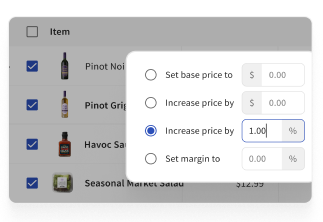
Efficient SKU Management: Easily manage thousands of SKUs with our intuitive product database and bulk updates feature. Modify, reprice, and import multiple products at once, saving valuable time and resources. With Toast, keeping track of your inventory has never been easier.
Retail-Enhanced Dashboards: Stay on top of your business with retail-specific dashboards and cost-tracking reports. Monitor trends, maximize margins, and ensure your top-selling products are always stocked, empowering you to make data-driven decisions that drive profitability.
3. Tailor Your Customer Experience
Toast empowers you to tailor the customer experience to fit your unique retail concept. Whether you're considering adding food service or expanding your offerings, Toast's flexible platform accommodates creative expansion.
Creative Expansion Opportunities: Thinking of adding food service to your retail concept? Including Kitchen Display Systems and Order Ready Boards, our flexible platform allows for creative expansion. Explore new revenue streams and enhance the overall customer experience with Toast's versatile features.
Online Ordering and Delivery Integrations: Give your guests the option to order from home with Toast’s Online Ordering and our third-party delivery integrations. Meet your customers where they are and provide convenience that keeps them coming back, increasing customer loyalty and satisfaction.
Loyalty Rewards and Personalized Offers: Be your neighborhood's favorite shop (and incentivize repeat visits) with loyalty rewards and personalized offers. Transform one-time shoppers into loyal patrons by engaging with your community and offering enticing rewards, making your store the go-to destination for your customers.
In conclusion, Toast's retail solution is more than just a point of sale system; it's a comprehensive toolkit designed to elevate your retail store to new heights. From modernizing sales processes to streamlining management and enhancing the customer experience, Toast empowers retail businesses to thrive in today's competitive market.
Toast Retail can help create seamless guest experiences for your retail and foodservice needs
Get a free demoRelated Resources
这篇文章有帮助吗?
免责声明:此信息仅作为一般性参考,发布并不构成认可。Toast 不保证本内容中包含的任何信息、文本、图形、链接或其他项目的准确性或完整性。Toast 不保证如果您遵循本文的任何建议,就能取得任何特定结果。您可能需要咨询专业人士,如律师、会计师或商业顾问,以获取针对您情况的具体建议。
