
Restaurant Host Skills: What Skills Do You Need to be a Restaurant Host
Being a host at a restaurant teaches you many valuable skills, read about them here.

作者
 RESOURCE
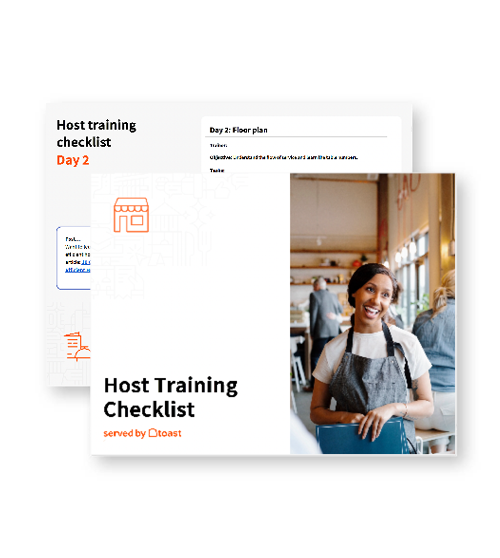
 Host Training Checklist
Use this checklist to help streamline your host training process and ensure that your new hosts get off to a great start.
免费下载
Restaurant Host Skills: Top Skills Needed to be a Restaurant Host
The role of a restaurant host or hostess is often overlooked, but it possesses immense value within the hospitality industry. Beyond greeting and seating guests, hosts play a critical role in ensuring outstanding customer experiences, optimizing table turnovers, and maintaining overall restaurant efficiency.
In this article, we will explore the valuable skills that restaurant hosts develop and enhance throughout their careers. From customer service and communication to multitasking and problem-solving, we will delve into the various skills that make restaurant hosting a valuable and rewarding profession.
Hire and Retain Great Restaurant Employees
Toast and Homebase teamed up to share tips on how to effectively hire and retain employees so you can have a happier team and reduce turnover.

8 valuable skills hosts gain from working at a restaurant
1. Customer service excellence
As the first point of contact for guests, hosts have a significant impact on the overall customer experience. Hosting provides an opportunity to develop exceptional customer service skills, including warm greetings, active listening, and effective communication. Hosts learn how to handle various guest inquiries, manage wait times professionally, and ensure the needs and expectations of diners are met. By mastering customer service skills, hosts create positive impressions, generate repeat business, and contribute to the restaurant's reputation for outstanding hospitality.
2. Effective communication
Restaurant hosts must communicate effectively with both guests and the internal staff. They relay important information to servers, managers, and other team members accurately and promptly. Clear communication regarding table availability, special requests, and reservation details can significantly impact the flow of operations. Hosts also coordinate efficient communication between the front-of-house and back-of-house teams, playing a crucial role in ensuring smooth collaboration across all restaurant areas.
3. Multitasking and time management
Hosting requires juggling multiple tasks simultaneously, making multitasking and time management essential skills. Hosts must organize seating arrangements, maintain a waitlist, and handle phone inquiries while attending to other responsibilities. By honing these skills, hosts become proficient at optimizing table turnovers, reducing wait times, and maintaining high levels of guest satisfaction. Effective time management ensures that guests are seated promptly while maintaining fairness and minimizing conflicts arising from wait times.
4. Problem-solving and conflict resolution
In a bustling restaurant environment, challenges and conflicts may arise. Restaurant hosts develop problem-solving and conflict-resolution skills to handle diverse situations with tact and diplomacy. They encounter various scenarios, such as accommodating special requests, resolving seating disputes, or responding to guest complaints. By utilizing their problem-solving skills, hosts can find creative solutions to challenges that arise, ensuring a positive outcome for both guests and the establishment.
5. Attention to detail
Attention to detail is crucial in the hosting role, as hosts are responsible for ensuring accuracy in table arrangements, reservation management, and seating preferences. Attentive hosts maintain precise records of reservations, birthdays, anniversaries, or special occasions, providing personalized and memorable dining experiences for guests. By paying attention to the smallest details, hosts contribute to the overall ambiance and create a favorable impression of the restaurant.
6. Conflict management
Conflict management is an essential skill for hosts, as they can encounter guests who may be dissatisfied or have specific demands. Hosts learn to handle conflicts calmly, empathetically, and professionally, deescalating tensions and finding mutually satisfactory solutions. Learning how to manage conflicts with composure enhances guest satisfaction, maintains a harmonious atmosphere, and fosters positive relationships between guests, staff, and management.
7. Teamwork and collaboration
Restaurant hosts interact with various team members, including servers, bussers, bartenders, and managers. Effective hosts understand the importance of teamwork and collaboration in achieving a successful dining experience. They learn to work cooperatively with each department, providing necessary information, and assisting fellow team members when needed. By fostering positive relationships and fostering a sense of unity, hosts contribute to a harmonious work environment and smooth restaurant operations.
8. Stress Management
The restaurant industry can be fast-paced and demanding, requiring hosts to manage stress effectively. Hosting provides an opportunity to develop resilience, adaptability, and a calm demeanor even during peak hours or challenging situations. By learning to handle stress, hosts maintain composure, make sound decisions, and provide exceptional service under pressure. These skills are invaluable in ensuring a positive guest experience and promoting a productive work environment.
Be the hostess with the most-est
Restaurant hosting is a dynamic role that provides immense value to the hospitality industry. Through their direct interactions with guests and collaborative efforts with the restaurant team, hosts acquire and refine a wide range of valuable skills. From customer service excellence and effective communication to multitasking and problem-solving, hosts play a pivotal role in creating exceptional dining experiences. By recognizing and acknowledging the value of hosting positions, individuals can embrace and develop these skills, paving the way for a rewarding career in the restaurant industry.
Host Training Checklist
Use this checklist to help streamline your host training process and ensure that your new hosts get off to a great start.


这篇文章有帮助吗?
免责声明:此信息仅作为一般性参考,发布并不构成认可。Toast 不保证本内容中包含的任何信息、文本、图形、链接或其他项目的准确性或完整性。Toast 不保证如果您遵循本文的任何建议,就能取得任何特定结果。您可能需要咨询专业人士,如律师、会计师或商业顾问,以获取针对您情况的具体建议。
 趋势
趋势
