What Is the Food Supply Chain & How Does It Work?
What is the food supply chain and how does it work? This guide explains every stage, key players, and why disruptions affect prices and food safety.
作者
 资源
资源 The food supply chain is the network that moves ingredients from where they’re grown or manufactured to your kitchen. While it may seem like products simply arrive at your back door, a complex system of production, packaging, food safety, inventory management, transportation, and distribution happens long before that delivery.
Each step in the food supply chain plays a role in whether an item ultimately makes it to a restaurant reliably and safely — and how consumers perceive it along the way. As nutrition specialist Keri Glassman, R.D., has explained, these stages have influenced how some people think about processed food:
“For some people, it might mean, ‘I’m not eating fast food or fried food.’ Or, ‘I’m eating only raw, vegan food prepared at home.’”
For restaurants and food businesses, the food supply chain directly impacts far more than perception. It influences food costs, consistency, safety, and customer experience. In this guide, we’ll break down what the food supply chain is, how it works, and why it matters for your operation.
Key takeaways
The food supply chain is the full system that moves ingredients from production to your kitchen.
Food distribution is just one stage within the broader food supply chain.
Every stage of the food supply chain directly impacts cost, quality, and reliability.
Disruptions at any point in the supply chain can affect menu availability and profit margins.
Understanding how the food supply chain works helps restaurants operate more consistently and proactively.
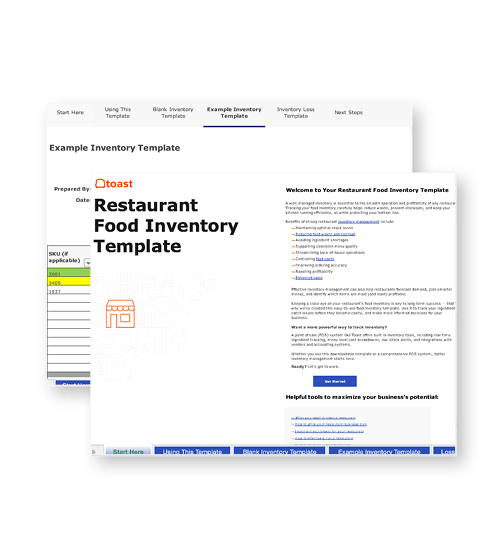
Grocery and Food Inventory Template
Use this Excel spreadsheet template to stay organized and manage your store's inventory with ease.

What is the food supply chain?
The food supply chain is the system that moves food from where it’s grown or manufactured to where it’s ultimately served. It includes every step involved in getting ingredients from their source to your kitchen — safely, efficiently, and consistently.
For restaurants and food businesses, the supply chain determines how products are sourced, stored, transported, and delivered.
Food supply chain vs. food distribution
The terms “food supply chain” and “food distribution” are often used interchangeably — but they describe different things.
The food supply chain refers to the entire journey food takes before it reaches your customers. It includes all the steps involved in sourcing, processing, transporting, storing, and delivering ingredients.
Food distribution, on the other hand, is just one part of that larger system. It focuses specifically on how food moves from suppliers or warehouses to restaurants and food businesses.
Both directly impact cost, availability, and reliability, but in simple terms:
Supply chain: The entire journey from production to service.
Distribution: One stage within that journey.
Why the food supply chain matters for restaurants
The food supply chain doesn’t just affect how ingredients arrive — it affects how your entire operation runs. From pricing and menu planning to food safety and customer satisfaction, every stage of the supply chain plays a role in your day-to-day performance.
Recent data underscores how real these impacts are. In the National Restaurant Association’s 2024 State of the Restaurant Industry survey, more than three-quarters of restaurant managers reported experiencing supply disruptions and food ordering delays in 2023. More than half said supply chain challenges forced them to adjust menu offerings.
When supply chain disruptions occur, the effects ripple through the entire business. Here’s how:
Impacts food costs: Supplier pricing, transportation expenses, and availability directly influence your ingredient costs and profit margins.
Affects menu availability: Delays or shortages can force menu changes or limited offerings.
Influences food safety and quality: Proper handling, storage, and transportation ensure products arrive fresh and safe to serve.
Determines delivery schedules: Reliable logistics help you maintain inventory levels and avoid last-minute disruptions.
Shapes the customer experience: Consistent supply supports consistent quality, which builds trust and repeat business.
How does the food supply chain work?
The food supply chain is made up of several interconnected stages — and each one plays a role in cost, quality, and reliability.
Producers
Producers are the starting point of the food supply chain. This includes farms, fisheries, ranches, and food manufacturers that grow, harvest, raise, or create raw food products. Examples of producers include:
Vegetable farms
Livestock producers
Dairy farms
Fisheries and seafood suppliers
Packaged food manufacturers
The quality, availability, and pricing of ingredients all begin at this stage. Weather, labor conditions, and global demand can influence what’s available — and at what cost.
Processors and packaging facilities
After food is harvested or manufactured, it often moves to processing facilities. Here, products may be cleaned, cut, cooked, frozen, preserved, or packaged before being sent to distributors. Processing plays an important role in preparing food for commercial kitchens. It helps:
Extend shelf life
Improve food safety
Standardize portions
Prepare products for restaurant use
Efficient processing ensures that ingredients arrive ready to store, prep, and serve — helping restaurants maintain consistency and control labor costs.
Distributors and wholesalers
Distributors and wholesalers act as the bridge between producers and restaurants. They purchase products in bulk, store them in warehouses, and fulfill restaurant orders based on demand. For most restaurants, distributors are the primary supply chain partner. They simplify procurement by offering:
Consolidated ordering across multiple product categories
Scheduled deliveries that align with kitchen needs
Access to a wide range of ingredients and supplies
Greater inventory consistency
A reliable distributor helps restaurants reduce administrative work and maintain predictable ordering cycles.
Transportation and logistics providers
Transportation and logistics providers ensure food moves safely and efficiently between each stage of the supply chain. This includes refrigerated trucking, freight carriers, warehouse coordination, and last-mile delivery.
Temperature control and delivery timing are especially critical for perishable goods. Delays, improper storage, or breaks in the cold chain can affect food safety, quality, and shelf life — which ultimately impacts restaurant operations.
Restaurants and food businesses
Restaurants, food trucks, and catering businesses are the final destination in the supply chain. At this stage, food is received, stored, prepped, cooked, and served to customers. How well each previous stage performs directly affects:
Food quality
Menu availability
Operational efficiency
Profit margins
When the supply chain runs smoothly, restaurants can focus on execution and guest experience.
Where logistics meet linguine
The food supply chain may operate behind the scenes, but it shows up in your kitchen every day. From food costs and menu availability to safety and customer satisfaction, each stage affects how smoothly your restaurant runs.
When you understand how it all connects — and stay proactive with your suppliers and inventory — you set your business up for steadier operations and fewer surprises.
FAQ
What is the food supply chain?
The food supply chain is the system that moves ingredients from where they’re grown or manufactured to where they’re ultimately served. It includes sourcing, processing, transportation, warehousing, and distribution before food reaches a restaurant.
Why does the food supply chain matter for restaurants specifically?
The food supply chain directly impacts a restaurant’s food costs, menu availability, quality, and operational consistency. Disruptions at any stage — from production to delivery — can affect pricing, inventory levels, and the overall guest experience.
What are the biggest food supply chain challenges in 2025 and 2026?
Restaurants continue to face challenges related to pricing volatility, transportation delays, labor constraints, and shifting consumer demand. Global events, weather disruptions, and economic conditions can also influence availability and cost across different product categories.
How can a restaurant reduce its food supply chain risk?
Restaurants can reduce supply chain risk by diversifying suppliers, maintaining accurate inventory systems, building strong vendor relationships, monitoring pricing trends, and keeping safety stock for critical items.
What is the difference between a food distributor and a food supplier?
A food supplier is the original source of a product, such as a farm, manufacturer, or producer. A food distributor acts as the intermediary, purchasing products from suppliers, storing them, and delivering them to restaurants and food businesses.


这篇文章有帮助吗?
免责声明:此信息仅作为一般性参考,发布并不构成认可。Toast 不保证本内容中包含的任何信息、文本、图形、链接或其他项目的准确性或完整性。Toast 不保证如果您遵循本文的任何建议,就能取得任何特定结果。您可能需要咨询专业人士,如律师、会计师或商业顾问,以获取针对您情况的具体建议。
 趋势
趋势