
How to Design a Pizzeria Floor Plan in Canada
Grab a piece of the pie and learn how to design a pizzeria floor plan in Canada.
Author
Before you stretch dough or fire up the oven, you need a floor plan that works. A well-designed layout isn’t just about fitting tables and kitchen stations—it’s about running a tighter, more profitable operation from day one. Whether you’re opening your first location or expanding your brand, how you organize your space directly affects service speed, team efficiency, and the guest experience.
Step 1: Understand What a Floor Plan Includes
A pizzeria floor plan maps out every functional area of your restaurant. It’s not just about fitting furniture—it’s about setting up your business to run efficiently.
Must-have areas:
Kitchen and prep zones (with ovens, sinks, and storage)
POS stations and cashier area
Pickup and takeout zones
Washrooms, including accessible toilets
Dining space
Staff-only areas (like break rooms or storage)
Emergency exits and clear pathways
Reminder: Building codes vary by province. Check with your local planning office.
Step 2: Prioritize Accessibility
In Canada, accessibility isn’t optional—it’s essential. But being truly inclusive goes beyond minimum legal requirements.
Design with everyone in mind:
Step-free entrances and wide walkways
Accessible toilets and properly spaced tables
Clear, visible signage
Space for mobility devices
Consumer Survey insight: 32.5% of Canadian diners say accessible washrooms are their #1 priority (Source: Toast Consumer Preferences Survey 2025, in which 200 Canadian consumers were asked about their restaurant design preferences.)
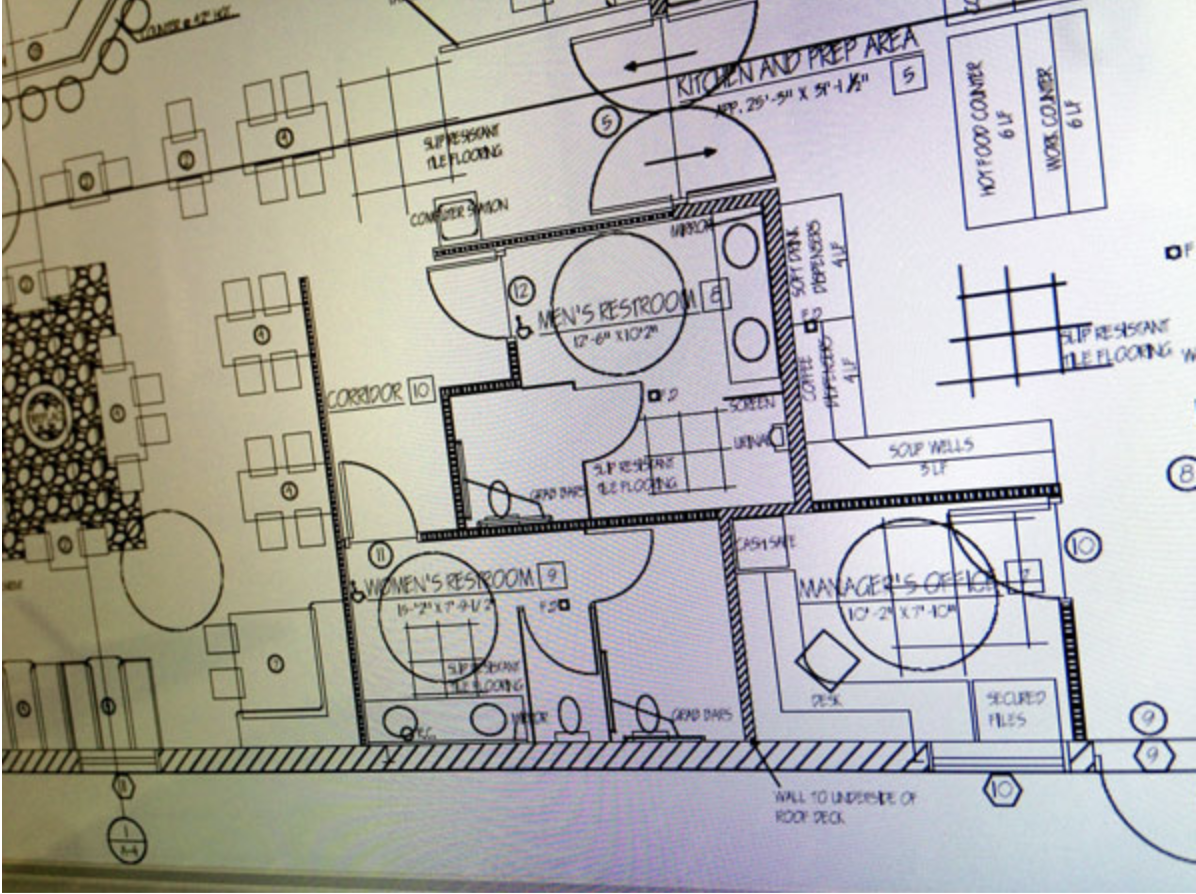
In the AutoCAD design example below, the restrooms are strategically placed in a rear corner near the back office. The plan features two restrooms, with one designed to be large enough for wheelchair accessibility.
Step 3: Break Your Space into Zones
Zoning helps both staff and guests know where to go and what to do—especially during busy service.
Key zones to include:
Order and payment area
Queue line
Dine-in area
Pickup and delivery shelf
Bar (if applicable)
Waiting area
Toast Consumer Insight: 82% of Canadians say good design influences loyalty and at least somewhat their decision to return to an establishment (Source: Toast Consumer Preferences Survey 2025).
Step 4: Choose Your Seating Strategy
Comfort matters—no matter how casual your pizzeria may be. Diners want to feel relaxed and at ease while they eat, and your seating layout plays a big role in making that happen.
Start by mixing up your seating. Two-person tables are great for couples or solo guests, while booths and bigger tables are better for families or groups. Give each guest about 1.7 to 1.9 square meters of space so things don’t feel cramped and people can move around easily. Steer clear of tight corners and blocked walkways—they just slow things down and make the space feel smaller.
Accessibility is also key. Make sure your seating layout includes options for guests using wheelchairs or mobility devices, with tables that are easy to reach and navigate around.
According to the Toast Consumer Preferences Survey 2025, 60% of Canadian guests say comfort is their top priority when dining in. Getting this part right doesn’t just improve their experience—it encourages longer visits and repeat business.
Step 5: Set Up an Efficient Kitchen
Your kitchen is where the magic happens—and speed matters. Make sure it’s designed for volume, visibility, and clear communication between back and front of house.
Key layout elements:
A clean “prep triangle” (dough, toppings, oven)
Clear sightlines from kitchen to pickup station
Strong ventilation (especially for large ovens)
Space-saving storage that’s still accessible
Integrated tools like Toast handhelds
Step 6: Don’t Forget the Bar
If you’re serving drinks, don’t treat the bar like an afterthought. It’s a big moneymaker.
Place the bar somewhere visible from the dining area so it feels open and welcoming.
Set it up in a way that makes things easy for your staff—less running around means quicker service. And the vibe matters too. Add some lounge-style seating or cozy corners to make people want to hang out longer. The longer they stay, the more they tend to spend.
Step 7: Make the Most of Outdoor Seating
A patio is a competitive edge - especially in spring and summer.
Make it work:
Ensure smooth access from the main dining area
Use weatherproof materials
Follow city bylaws for fencing, noise, and spacing
Consumer Survey insight: Over 80% of Canadian diners prefer establishments with outdoor seating (Source: Toast Consumer Preferences Survey 2025).
Step 8: Design for Digital Guests
Today’s diners expect a tech-friendly experience from the moment they walk in to the moment they pay. That means integrating digital touchpoints throughout your space.
Make sure your POS system is easily accessible at key order zones to keep service moving quickly. Offer contactless payment options—something 45% of Canadians now prefer (Source: Toast Consumer Preferences Survey 2025).
Consider adding QR code menus or self-service kiosks to reduce wait times and give guests more control over their orders. And if you’re handling takeout or delivery, clearly mark your pickup area so online orders are easy to grab and go.
Step 9: Use Tools to Build Your Plan
No design background? No problem. There are plenty of tools that can help you map out your space.
Popular floor plan tools:
ConceptDraw
CadPro
Or work with a local designer who understands hospitality workflows and permit requirements.
Restaurant Floor Plan Templates
Use these restaurant floor plan templates to get inspired as you map, or reimagine, the layout and space setup for your restaurant.

Step 10: Know the Permits You’ll Need
Building in Canada means working with municipal, health, and fire authorities. Budget for permits and inspections early in the process.
Budget checklist:
Electrical, plumbing, HVAC
Commercial kitchen equipment
Furnishings and lighting
Permit and inspection costs
Pro tip: Build relationships with permit staff—they can help you speed up approvals and avoid costly delays.
Final Thoughts
Building a great pizzeria starts with getting the layout right. When your space is intuitive, inclusive, and efficient, everything else runs smoother—staff are faster, guests are happier, and your revenue grows.
 TOAST TECH
 Built for restaurants just like yours.
Toast’s restaurant technology includes point of sale, kitchen display screens, online ordering, loyalty, analytics, payroll, and more.
Is this article helpful?
DISCLAIMER: This information is provided for general informational purposes only, and publication does not constitute an endorsement. Toast does not warrant the accuracy or completeness of any information, text, graphics, links, or other items contained within this content. Toast does not guarantee you will achieve any specific results if you follow any advice herein. It may be advisable for you to consult with a professional such as a lawyer, accountant, or business advisor for advice specific to your situation.

Subscribe to On the line
Sign up to get industry intel, advice, tools, and honest takes from real people tackling their restaurants' greatest challenges.
By submitting, you agree to receive marketing emails from Toast. We’ll handle your info according to our privacy statement. Additional information for California residents available here.