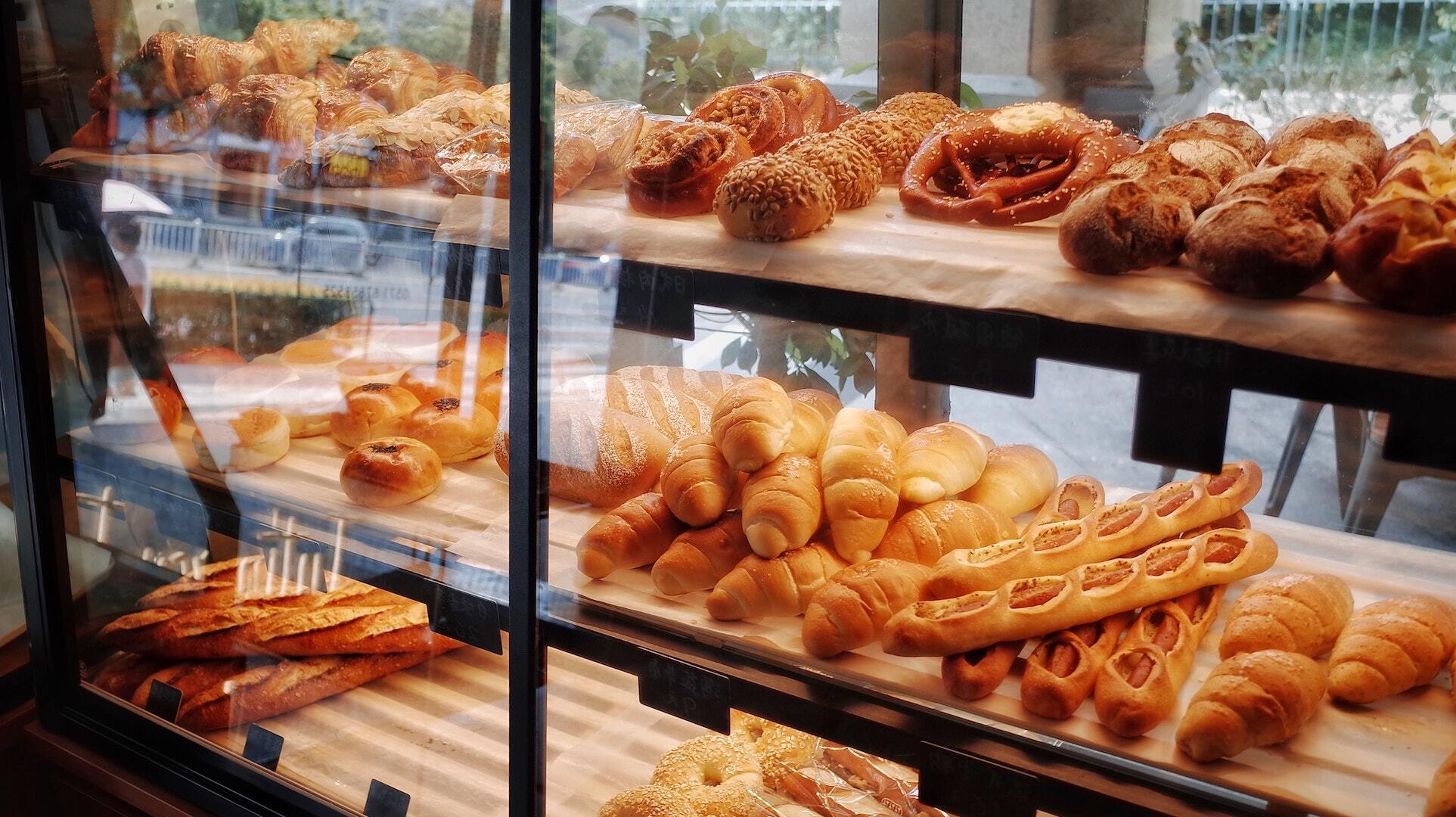
Most Profitable Bakery Items in Canada
Discover which bakery items offer the strongest margins and how to price and track them.
Author
Running a bakery in Canada right now means making every square centimetre of your display case earn its keep. Flour, butter, and labour costs have all climbed since 2022, and the consumers walking through your door are paying closer attention to price than they were two years ago.
Guests are paying closer attention to price, and they are getting quicker at judging what feels worth it. That puts pressure on every bakery menu. The items people love are not always the ones that keep your margins healthy.
Take a laminated croissant. It demands time, skill, and labour. It looks great in the cabinet and often sells out early. A scone, made in the same window with far less effort, rarely gets the same attention, yet it often carries more of the business than people realise.
This is where menu decisions become practical. You are not just choosing what looks good together. You are deciding what quietly pays the bills and what earns its place through demand.
TL;DR: The most profitable bakery items are not the flashiest ones, they are the ones that balance strong consumer demand with manageable production cost. Pricing to perceived value, tracking sell-through by item, and treating your menu as a financial document are the habits that separate busy bakeries from profitable ones.
Why Profitability Is About More Than Ingredients
Before getting to specific items, it is worth thinking about what "profitable" actually means in a bakery context. Food cost percentage is the obvious starting point, but it tells only part of the story. A croissant with a 22% food cost can be less profitable than a cookie with a 30% food cost if the croissant requires three times the labour to produce and a higher-skill baker to execute it consistently. Batch cost analysis, which combines recipe cost, portion cost, and the labour required to produce a given quantity, gives you a clearer picture of where your margins actually sit.
The other factor that Canadian bakery operators often underestimate is perceived value. According to the Toast Consumer Preferences Survey 2025, quality of ingredients ranks among the top two signals consumers use to assess whether a bakery or restaurant represents good value for money.
You have more control over pricing than ingredient cost alone would suggest. What matters is whether guests understand what they are paying for. That comes through in how you present the product, how your team talks about it, and what people can see when they walk in.
Think about a sourdough made in-house with flour from Ontario or Saskatchewan. It does not cost vastly more to produce than a basic white loaf, but it feels like a different product. That difference gives you room to price it properly.
The Items Worth Building Your Menu Around
Artisan Bread
Bread tends to carry a bakery. The ingredients are low cost, the process becomes efficient once your team finds its rhythm, and people come back for it every day.
The challenge is avoiding direct comparison with supermarkets. A plain white loaf will always be judged against what people see on grocery shelves. Artisan bread shifts that comparison. A sourdough made with a 48-hour ferment, a clear crust, and flour sourced from Ontario or Saskatchewan stands apart. It feels like a product with intent, not a staple.
That distinction lines up with where Canadian consumers are heading. The Voice of the Canadian Restaurant Industry 2025 reports that 78% are more loyal to Canadian-made products than before. Calling out local grain suppliers is not just a nice touch. It gives guests a reason to pay more and feel good about it.
Croissants and Viennoiserie
A good croissant is hard to produce consistently. That barrier works in your favour. It limits how many competitors can offer the same level of quality, and it gives you room to stand out if you commit to doing it properly.
Customers are prepared to pay for that difference, especially in larger Canadian markets. A strong croissant also gives you room to build. Chocolate and almond versions, along with savoury options like ham or cheese, let you layer your pricing without expanding your menu too far. You keep the operation tight while increasing the value of each order.
The profitability risk with croissants lies in waste. Croissants that do not sell by early afternoon deteriorate quickly, and the labour sunk into them does not recover. Tracking your sell-through rate by day of week and adjusting your production volume accordingly is the discipline that separates operators who profit from croissants from those who subsidise their display case.
Cookies and Bars
Most bakeries underestimate cookies and bars. They are one of the easier ways to protect margin. Ingredient costs stay low, production fits neatly into existing workflows, and they sell consistently.
What has changed is how customers value them. Premium cookie concepts across Canada have pushed prices up, and customers have followed. A chocolate chip cookie that is made well and presented properly can carry a higher price than it did a few years ago. Brownies follow the same pattern. A double chocolate version with fleur de sel and a named chocolate brand can sit in the five to six dollar range without friction in many urban areas.
You can also stretch the value of each visit. Offering a bag of three cookies to take away adds to the transaction without adding complexity behind the counter.
Small details on the menu make a difference. According to the Toast Consumer Preferences Survey 2025, 36% of Canadian consumers are most influenced by a “best seller” label. It outperforms chef’s recommendation, seasonal, and local ingredient tags. That is a useful lever when you want to guide choices.
A clearly labelled "house favourite" or "best seller" tag on your cookies or bars costs nothing and does measurable work at the point of decision. It also removes the hesitation that often accompanies a new visitor to your display case who is not sure what to choose.
Cheesecakes and Tarts
Cheesecakes and tarts tend to earn their place on the counter. You make one, then sell it slice by slice, which gives you a bit more control over how the numbers work out.
A New York style cheesecake is a good example. You might spend roughly $18–$22 CAD, depending on ingredients and portion size, to make it. Cut it into 10 to 12 slices, price those at $7–$9 CAD each, and the return starts to make sense pretty quickly.
The catch is consistency. If the cheesecake cracks or the tart base goes soggy, customers notice straight away. It does not take much for that to affect how the whole display is judged.
Seasonal flavours are an easy win here. You are not changing your process, just the finish. Lemon when the weather turns, maple when it cools down, cranberry around December. It keeps regulars interested and gives new customers a reason to try something.
Cinnamon Rolls and Sticky Buns
Cinnamon rolls do something most bakery items do not. People smell them before they see them, and that usually decides the purchase.
They also make sense on the numbers. The dough is straightforward, the ingredients are familiar, and once you are set up, you can produce them in batches without much friction. Customers are happy to pay more for a roll that feels generous or a bit indulgent, especially if it looks fresh out of the oven.
Where they really help is at the till. A cinnamon roll rarely feels complete on its own. It naturally leads to a coffee or tea. A quick prompt from staff, or even a small sign, is often enough. That small shift increases the value of each order, and the drink usually delivers better margin than the pastry.
Scones and Muffins
Scones and muffins are often priced too low in Canadian bakeries. They look simple, so they get treated as simple. That leaves money on the table.
A well-made blueberry scone tells a different story. If you are using Okanagan berries, finishing it with a lemon glaze, and calling out where those ingredients come from, it stops feeling basic. It feels considered. The cost to make it does not change much. The price you can charge does. That gap is worth paying attention to.
Both items also travel well, which makes them strong candidates for online ordering, catering, and corporate delivery, channels that increasingly matter as 83% of Canadian restaurant operators say off-premise dining will be important to 2026 revenue, according to the Voice of the Canadian Restaurant Industry 2025. A boxed assortment of scones for a morning meeting is a high-margin transaction that requires no additional square footage.
Bagels
Bagels are not just another product in Canada. In places like Quebec and Ontario, they carry real identity. A well-made Montreal-style bagel stands out, and once people find one they like, they tend to stick with it.
The workflow helps too. Boiling and baking in batches becomes second nature over time, which makes it easier to manage volume without slowing down the rest of the kitchen.
Where you see the impact is in how people order. A plain bagel is one thing. Add cream cheese, smoked salmon, or a seasonal topping, and the value of that order climbs quickly. Priced between eight and eleven dollars, a bagel and schmear becomes part of a regular routine for many customers. That consistency is hard to replace.
Pricing Your Items to Protect Your Margins
What you make matters. How you price it matters just as much. Many bakery operators in Canada default to copying what others charge. It is an easy reference, but it can hold you back. If your ingredients, process, or product quality are different, your pricing should reflect that.
Competitor pricing helps you understand the range. It should not decide your numbers for you. A more useful starting point is your own costs. Work out what it takes to produce each item, including ingredients, packaging, and a share of labour. Once you have that, apply your target food cost percentage. For most baked goods, that tends to sit somewhere between 25 and 35%. That gives you a floor.
From there, look at the product itself. Does it feel like it should cost more than that minimum price? If it does, you have room to move. Pricing to match how it is perceived is part of running a healthy business.
Seasonal items make this easier. When something is only available for a short window, people accept a higher price. A pumpkin spice croissant in October or a maple butter tart in February does not need to sit alongside your everyday pricing. The limited run gives you room to charge more.
Tracking What Actually Works
It is easy to fill a display case. It is harder to know what is working once it is there.
If you are not tracking sales at item level, you miss the details that matter. You need to know what sells consistently, what brings in the best margin, and what you keep throwing away.
A POS system should give you that view in real time. You can see what moves during the morning rush, what picks up later, and what never really finds a buyer. You can also see which items lead to add-ons. That level of detail makes production planning more precise and stops you spending time and labour on items that do not earn their place.
Scheduling is the other operational lever that many bakery operators leave too loose. In a production environment where early-morning prep time is expensive and critical, scheduling software integrated with payroll allows you to match your labour to your production volume without overstaffing the slow periods.
The Voice of the Canadian Restaurant Industry 2025 found that using technology to offset labour costs was among the top two adaptation strategies cited by Canadian food service operators in the current environment.
What Separates a Good Bakery from a Profitable One
Every item on your menu represents a cost, a labour demand, and a margin profile. The most useful shift you can make is learning to see it that way, not just as a creative catalogue, but as a financial document.
Items that guests love but consistently underperform on margin are worth examining honestly. Sometimes the fix is a price adjustment or a production tweak. Sometimes the right call is to remove an item entirely and redirect that capacity toward something that actually earns.
That discipline is harder in a bakery than almost anywhere else in food service, because your menu is often your identity. The financial stakes are real, though, and in the current Canadian market, the operators who reconcile both will be the ones still standing.
FAQ
What is the profit margin on bakery items in Canada?
Most baked goods sit somewhere between a 25% and 35% food cost, though the real picture depends on labour. An item with a low ingredient cost can still underperform if it takes significant time or skill to produce. Batch cost analysis, which factors in recipe cost, portion cost, and labour, gives you a more accurate read on where your margins actually sit.
What is the most profitable item to sell in a bakery?
There is no single answer, because profitability depends on your cost structure, your market, and how consistently you can execute. That said, artisan bread, cookies and bars, and scones tend to offer a reliable combination of low ingredient cost, manageable production, and strong pricing potential across most Canadian markets.
What do Canadians buy most at bakeries?
According to the Toast Consumer Preferences Survey 2025, bread is the most purchased item, followed closely by pastries. Cakes, cookies, and savoury items trail further behind. That demand pattern is worth keeping in mind when you are deciding where to focus your production.
How should I price bakery items in Canada?
Start with your batch cost, then apply a target food cost percentage to find your price floor. From there, factor in how the product is positioned and what it communicates about quality. Seasonal or limited items can carry a modest premium above your everyday pricing, and customers tend to accept this when the reason is clear.
How do I reduce waste in my bakery?
Track sell-through rates by item and by day of week, then adjust your production volumes to match actual demand rather than optimistic estimates. A POS system that gives you item-level sales data in real time makes this significantly easier and takes the guesswork out of daily production planning.
Is this article helpful?
DISCLAIMER: This information is provided for general informational purposes only, and publication does not constitute an endorsement. Toast does not warrant the accuracy or completeness of any information, text, graphics, links, or other items contained within this content. Toast does not guarantee you will achieve any specific results if you follow any advice herein. It may be advisable for you to consult with a professional such as a lawyer, accountant, or business advisor for advice specific to your situation.

Subscribe to On the line
Sign up to get industry intel, advice, tools, and honest takes from real people tackling their restaurants' greatest challenges.
By submitting, you agree to receive marketing emails from Toast. We’ll handle your info according to our privacy statement. Additional information for California residents available here.