
How Much Does It Cost to Open a Restaurant in Toronto ? [Restaurant Startup Costs]
Let's take a look at all of the financial costs that go into opening a restaurant in Toronto.

Author
 RESOURCE
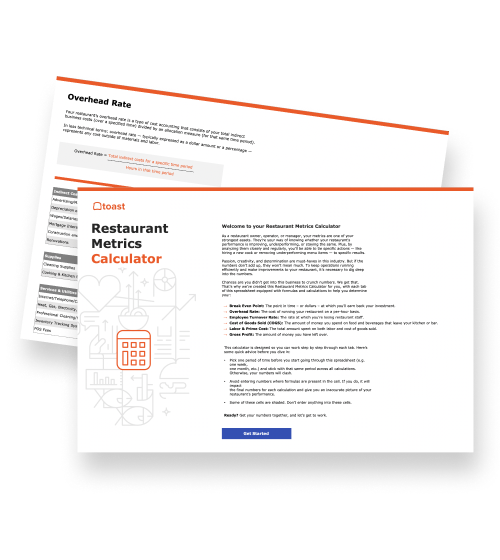
 Restaurant Metrics Calculator
Use this free calculator to calculate the key restaurant metrics needed to understand the health and success of your business.
Get Free DownloadWhether you've worked in the hospitality industry for a few years now, or are a serial entrepreneur curious to understand the workings of the restaurant world, this guide breaks down all the necessary steps and the budget needed to start a restaurant. In this article, we will also learn more about the fixed, upfront costs vs. the variable financial commitments that might pop up in your restaurant business.
The hospitality industry is an ever-booming one, but it comes with its fair share of setbacks. For example, as per retail-insider.com, the commercial food-service revenue was up by 6.9% in the first quarter of 2025, but after adjusting for inflation, Restaurants Canada expected real commercial food-service sales to grow by 2.1% in 2025 and decline by 0.7% in 2026.
So, before you begin, let’s get you prepared for creating a restaurant business model that works for you.
Restaurant Business Plan Template
No matter where you’re at in your restaurant ownership journey, a business plan will be your north star. Organize your vision and ensure that nothing is overlooked with this free template.

Jump to Preferred Section
How much does it cost to open a restaurant in Toronto?
The average total cost to start a restaurant in Toronto varies between $175,000 and upwards of $750,000. Fundamentally, the complete outlay for starting a restaurant depends on leasing fees, furniture, building costs, and the necessary permits required to get started.
Restaurant Opening Cost by Square Foot
As per gtageneralcontractors.com, the restaurant construction costs range between $150/sq ft, for a quick service restaurant and over $500/sq ft, for high-end, fine-dining restaurants with luxurious materials. Additionally, this may also depend on the locality of the restaurant, whether you lease or purchase, and the kind of experience you want to create for your customers. For restaurants utilizing hundreds or even thousands of square feet, this expense can start to add up.
If you’re considering leasing, according to thestorefront.com, restaurants face monthly rental costs ranging from $3,500 to $10,000 in Toronto.
Another popular alternative is buying a restaurant with its complete setup: furniture, fixtures, equipment, and the land. If you’re in the market to purchase a 1500-square-foot restaurant, you might just end up landing a cost on the lower end of our $250,000 to $750,000 estimate. On the flip side, when you’re starting something from scratch, the cost will be higher, but the results might match your benchmarks better. It’s essential you weigh both of your options before zooming in on one.
Please note that all the figures mentioned here are approximate costs for starting up a restaurant. While budgeting, ensure that you’re taking into account the location of your establishment, your target audience, and external socio-economic factors in your area. Having a Toronto business plan can work as a solid foundation before you put your money into the market.
Restaurant Opening Calculator
This calculator lays out some of the fundamental financial costs of opening a restaurant, so you can start planning and bring your dream restaurant to life.
Preparing for the Startup Costs
Toronto is a melting pot of cultures, so it is impossible to find a one-size-fits-all solution. Having a business strategy with a financial breakdown is one of the easiest ways you can future-proof your business. In fact, it’s best to get as granular with your restaurant startup costs as possible. When you have a detailed overview of how you’re going to be parking your money, you’ll feel more prepared while investing in everything from equipment to hiring.
As an entrepreneur, planning to fail also counts as critical planning. Even before you bring in the funding, you should dedicate efforts in strategizing and envisioning a business where almost every aspect is accounted and planned for.
Purchasing/leasing a property is just the beginning of the process. You and your team will also have to think about profit margins, designing the space, the kind of food you’ll serve, the people that would help you run this easily, and how you’d have consistent customers in your restaurant. Every piece of equipment and idea will have to be thought out thoroughly.
These intricate, moving parts can cause hiccups within your business if not addressed preemptively. For example, if you get substandard equipment even for a highly-equipped team, it’ll still create financial setbacks in the long run. Your restaurant needs to feel inviting, exciting, and satisfying. And these parts are essential to the growth of your establishment.
Before you begin, here are some of the key expenses and costs you should anticipate when starting a restaurant.
Restaurant Metrics Calculator
Use this free calculator to calculate the key restaurant metrics needed to understand the health and success of your business.
Breakdown of the Restaurant Startup Costs
This checklist serves as a great starting point as you start budgeting for your new and exciting endeavor.
1. Utilities
Even though you might not need all the equipment and services when you’re starting out your restaurant, you’ll still need to cover the basics like gas, water, and electricity to ensure a smoother process. The build-up phase will still include setting up the dining experience, doing test runs, and making tweaks wherever required.
According to directenergy.ca, Canadian restaurants spend 3-5% of their total expenses on energy.
Energy consumption in restaurants can be bifurcated on the basis of:
Food Preparation: Approximately 35%
HVAC: Heating and cooling use up to 28%
Sanitation: Sanitation and water usage is responsible for around 18%
Lighting: Lighting takes up to 13%
Refrigeration: Keeping your produce chilled uses up to 6%
Price Range: Plan to allocate 3-5% of your gross operational costs to utilities; bear in mind that larger venues might find themselves at the higher end of this spectrum.
2. Location
Picking your restaurant’s location is one of the most important decisions you could make for your business. Want high-foot-traffic while serving something on-the-go? A food truck could be perfect in downtown Toronto during service time. If your dream is of something high-concept/fine dining, Kensington Market could be your starting point. Good marketing works, but when you’re at the centre of a high-foot traffic area, you’ve already got one step into the door. Relying on loyal, intrigued patrons can only take you far.
Depending on your concept, budget, and possible target audience, you could consider the following options:
Building a new facility from the ground up and allocating budget towards fresh construction
Initiating operations within an existing building and taking over a currently functioning restaurant
Converting an existing commercial space into a dining environment
3. Interior Design and Equipment
You may have a great menu, but if your establishment doesn’t reflect the ambience and set-up to keep your restaurant startup interesting, then it’ll get more difficult to retain those customers. You might want to invest in kitchen utensils that make your staff’s lives easier, furniture & decor to reflect your brand’s identity, signages – wherever needed, and audio & video systems to complete the exciting vibe.
It can be surprisingly easy to exceed your financial plan here, so careful budget oversight is essential to keep your costs within budget. The main factors influencing the fluctuation in costs here are the kitchen appliances and furnishings, which are largely determined by the size of your kitchen and seating area.
Price Range: According to chirealestate.ca, the expected average cost is about $50,000 for furniture and about $75,000 for kitchen equipment.
4. Pre-opening Expenses
Before your restaurant even has a grand opening, you’ll need to have operations up and running. This includes deciding the menu for the launch day, pre-launch marketing efforts, and tech check to ensure everything runs smoothly.
Your staff and teams from other departments could really benefit from a comprehensive training program. Plus, remember that you should maintain a well-stocked inventory in your kitchen and freezer to cover the early days following the launch. This includes an assortment of food, utensils, drinks, glassware, water pitchers, and any additional necessities for providing a memorable experience to your visitors.
Price Average: As per chirealestate.ca, you’re recommended to have an opening inventory of about $50,000 including food and other essentials.
5. Marketing
In this day and age, you cannot skip marketing your business, especially in the online world. But that doesn’t mean, you have to go heavy on paid ads from the get-go. For instance, if you're initiating a franchise, your marketing needs may be met already. On the other hand, starting an independent restaurant in a competitive area might require significant marketing and advertising to stand out from the crowd.
If you’re launching a luxurious dining experience in busy downtown Toronto, having earned media could bolster your sales. This might look like partnering with a public relations firm for visibility, or having a social media celebrity can also help you tap into their following.
Kicking off with social media is quick, easy, and perfect to grab eyeballs from all kinds of consumers. And once your customer base grows, you could invest in email marketing to offer all kinds of discounts and early-bird access to your loyal customers. The costs tied to marketing and public relations depend on your specific business, market competitiveness, and other distinct factors unique to your situation.
Price Range: chirealestate.ca suggests setting aside 3 - 6% of total sales for marketing.
6. Capital and Contingency
Even if your restaurant is an instant hit, there will still be a necessary period of adjustment before it runs seamlessly. Generally, it's important to expect a slow climb in sales and understand that converting occasional patrons into regulars takes time. Set aside a considerable sum of money as reserves to sustain your Toronto restaurant through the first six months, a time that might feature fluctuating or reduced sales at times. This will help you be regular with payments, thus, keeping your staff and business running.
Price Range: Set aside 15-20% of your total startup expenses for contingency purposes – recommended by chirealestate.ca.
7. Exterior Finishes
Your restaurant's exterior should be as inviting as the interior. If you can redo the exterior aesthetics of your building, think about investing in its exterior design, including lighting and landscaping. Additionally, if your venue features al fresco dining, try to make the most of this feature during the warmer seasons.
Even if you don’t have the power to customize your building's exterior, it's still so important to install signage outside to tell prospective customers that you are open and set to offer them an experience to remember. A good exterior also is an integral part of offline marketing.
Price Range: Anticipate expenditures ranging from $150 to $55,000, with possible additional costs for zoning permits according to chirealestate.ca
8. Organizational and Developmental Costs
This part might be the least enjoyable aspect of starting a restaurant, but it is essential in keeping your business afloat. You need to ensure that all necessary restaurant licenses and permits are acquired and fees paid, insurance premiums deposited, and covered utility deposits for services such as gas, electricity, and water.
This task can be as exhaustive in time as it is in expenses, so start getting to know the essential licenses and permits needed to launch your restaurant in Toronto.
Price Average: According to chirealestate.ca, you’d spend approximately $1,000 - $3,000 for yearly licensing and insurance, depending on your location.
9. Professional Services
Total newcomers to Toronto’s exciting restaurant scene should avoid getting started without extra professional help. Hiring a restaurant consultant and getting advice from professionals like architects, lawyers, and interior decorators is a wise investment for a successful start.
Price Range: The costs can range from $0 to $20,000 as per chirealestate.ca, with the final amount depending on the level of professional services utilized.
10. Technology
When it comes to creating a smooth-running restaurant, your technological systems make all the difference. Every restaurant needs a point-of-sale (POS) system, and depending on your concept, extra features and technologies may be needed to enable your team to give guests the best experience.
Full-service restaurants might want a handheld POS system to turn tables faster, while fast-service restaurants might want a kitchen display system and performance metrics to gather helpful business insights. You can learn more about each here.
Price Range: Get a quote.
11. Food Cost
As this is the key part of your restaurant's offerings, you need to make sure you’re all set with the essential elements for a successful launch into Toronto’s food scene. A shortage of adequate supplies to prepare your menu offerings — especially in the opening weeks and months — might give your customers a less than favourable first taste. Keeping a complete inventory guarantees that your kitchen team has everything they need for continuous service. Plus, keep in mind that the average monthly cost for food will vary depending on your restaurant's cuisine type and menu choices.
2025 - 2026 Price Average: $12,500 is the typical food cost for restaurants opening in Toronto.
Bonus Cost: Franchise Fees
Clearly, this cost does not apply if your restaurant is independently owned, but for franchised establishments, be ready for a substantial initial financial outlay. Here is a list of common franchise costs for notable restaurant chains in Canada*:
McDonald’s: Willing to invest a minimum of $1,000,000 in combination with 75% bank financing.
Tim Horton’s: $100,000 in liquid assets and $500,000 in net worth
Mary Brown’s Chicken: $300,000 to qualify for financing
Pizza Pizza: $150,000 for the initial investment
Assembling Your Dream Team
Insufficient funding is known to thwart some of the best restaurant concepts before they even begin. The hospitality industry is already competitive, so without a restaurant startup dream team, you get farther from your ideal set-up. To avoid these pitfalls, make sure you collaborate with experts throughout the whole process. Here is a list of experts and professionals you should consider involving when setting up your Toronto restaurant:
Real estate agents
Attorneys
Accountants
General construction contractors
Marketing firms
Architects
The support of these specialists will help ensure that your business operations are set up to succeed. Whenever possible, choose professionals with specific expertise in the restaurant industry.
Opening a Restaurant Without Closing Your Bank Account
Before starting a new restaurant venture in Toronto, evaluate your financial resources and plan how to allocate them across different business areas. You might, for example, choose to allocate more of your budget to renovations rather than advertising efforts in the initial phase.
When you plan your finances carefully and strive for accuracy in your budget planning, you’re safeguarding yourself from possible mishaps. While your final costs may vary greatly from your earlier calculations, launching a restaurant in Toronto with a meticulous and well-considered budget will give you every chance of success!
Related Resources

Subscribe to On the line
Sign up to get industry intel, advice, tools, and honest takes from real people tackling their restaurants' greatest challenges.
By submitting, you agree to receive marketing emails from Toast. We’ll handle your info according to our privacy statement. Additional information for California residents available here.
Is this article helpful?
DISCLAIMER: This information is provided for general informational purposes only, and publication does not constitute an endorsement. Toast does not warrant the accuracy or completeness of any information, text, graphics, links, or other items contained within this content. Toast does not guarantee you will achieve any specific results if you follow any advice herein. It may be advisable for you to consult with a professional such as a lawyer, accountant, or business advisor for advice specific to your situation.
Subscribe to On the line
Sign up to get industry intel, advice, tools, and honest takes from real people tackling their restaurants' greatest challenges.
By submitting, you agree to receive marketing emails from Toast. We’ll handle your info according to our privacy statement. Additional information for California residents available here.