
How to Design a Café Floor Plan in Canada
Opening a cafe in Canada? Bring your vision to life with a cafe floor plan. Create a layout that works for your guests, your team, and your bottom line.
Author
Designing a café floor plan in Canada isn’t just about aesthetics. It’s about creating a space that feels good to walk into, and even better to work in. Whether you’re planning your first opening or upgrading an existing location, your layout plays a key role in how your café runs, how fast your team moves, and how long customers stay.
This guide will walk you through the essentials: functional layouts, legal must-haves, customer flow, and how to future-proof your space with technology. All rooted in what Canadians expect from their local coffee spots.
Restaurant Floor Plan Templates
Use these restaurant floor plan templates to get inspired as you map, or reimagine, the layout and space setup for your restaurant.

What Is a Café Floor Plan?
A café floor plan is a visual map of your space — the kitchen, coffee bar, ordering line, seating zones, washrooms, storage, and exits. It’s the operational heart of your business. A smart layout can improve speed of service, reduce staff fatigue, and boost customer satisfaction.
Every square metre matters — especially in high-rent markets like Toronto or Vancouver. Use your space wisely, and it becomes a growth driver.
So how do you actually design a café floor plan? Start with these essential steps.
The Key Steps to Designing a Café Floor Plan
1. Define Your Café’s Concept and Needs
Before drawing anything, get clear on your concept. Your floor plan should reflect your café’s purpose and personality. Ask:
Will it be more grab-and-go or sit-and-stay?
How many customers do you expect at peak?
Will you offer full meals, just coffee, or alcohol?
Do you need space for a full kitchen or just light prep?
This clarity shapes how much space you allocate to front of house vs. back of house — and what kind of equipment, seating, and flow you’ll need.
Toast tip: A good rule of thumb is the 60/40 split: dedicate 60% of your space to customer areas and 40% to kitchen and operations.
2. Understand Your Local Building Requirements
In Canada, your layout must comply with several key regulations:
National Building Code of Canada (NBCC)
Provincial fire, health, and safety rules
Municipal accessibility standards (e.g. clear pathways, ramp access, accessible washrooms)
Before you finalize anything, consult your local licensing authority and Restaurants Canada for specific regional guidance.
3. Sketch Out the Core Zones of Your Floor Plan
Your café should be easy to navigate for both staff and guests. A well-zoned layout typically includes:
Entrance area: Inviting with clear signage
Ordering zone: POS station should be visible and accessible
Coffee bar: Positioned for fast service and good flow
Kitchen or prep area: Optimized for safety and speed
Seating area: Mix of tables, bar seating, and lounge spots
Pickup area: Streamlined for takeout or mobile orders
Washrooms: At least one must be accessible
Staff area: For breaks, admin, and storage
Outdoor patio (if applicable): Heated and accessible
Use layout tools like SmartDraw or ConceptDraw to start mocking up zones and pathways.
4. Plan the Guest Journey Step-by-Step
Think through your layout from a customer’s point of view. Their journey should feel effortless.
Walk in: The atmosphere is clean, warm, and easy to understand
Order: The POS or self-serve kiosk is clearly visible
Wait/Pick Up: There’s space to wait without blocking others
Sit: Comfortable seating — your guests will stay longer with cozy couches
Exit: Smooth outflow with minimal congestion
Tip: Position furniture and signage to guide movement naturally. It reduces confusion — and makes the space feel calmer.
Take a look at the example below for a well-executed egress layout — every exit route is clearly marked and easily accessible.
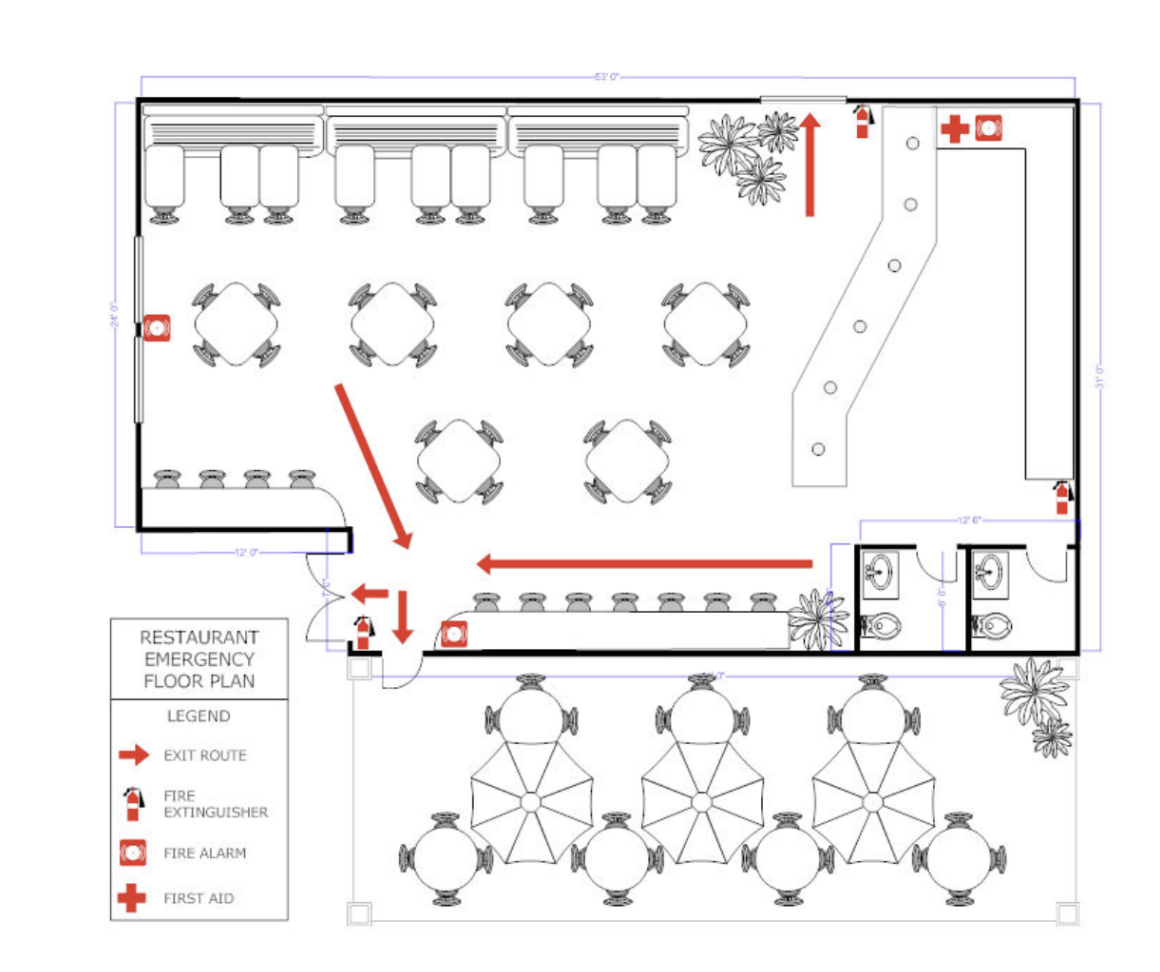
Source: AutoCad
5. Make It Comfortable and Inviting
Canadian guests expect more than good coffee — they want a space that feels welcoming and comfortable. According to Toast’s 2025 Consumer Preferences Survey, in which 200 Canadian consumers were polled on their restaurant design preferences, the top design features influencing customer satisfaction go well beyond what’s in the cup.
Over a third of Canadians (37%) say comfortable seating makes them spend longer in a café. Whether it’s soft lounge chairs or thoughtfully spaced tables, the right furniture can turn a quick stop into a longer stay. Lighting also plays a key role: 41% prefer warm, ambient lighting that creates a cozy vibe, while 26% favour the natural daylight that makes a space feel fresh and open.
Accessibility is another must. It means including grab bars and wide doors in your design, as well as wide corridors leading up to the restroom. The example just below is a good instance of a design with wide corridors, grab bars, and separate accessible restrooms within the men’s and women’s restrooms.
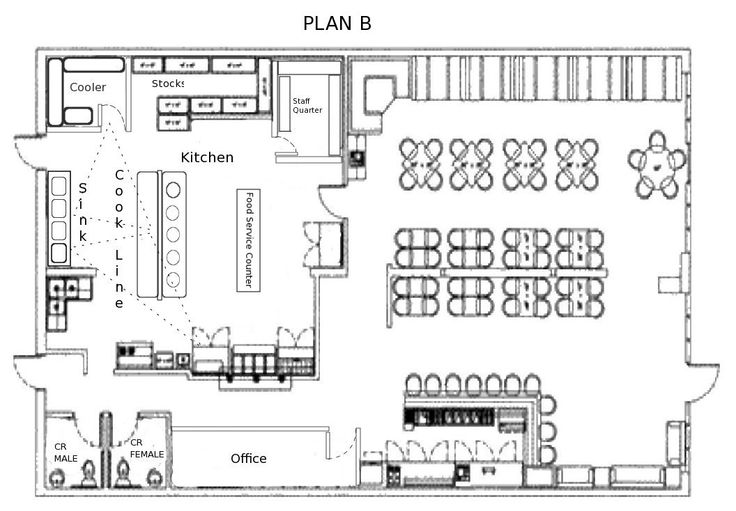
Source: AutoCad
6. Prioritize Staff Workflow
Your team’s experience matters. If the layout causes unnecessary back-and-forth or clogs up during peak hours, service will suffer.
Design with:
Efficient work zones (prep, cook, plate, serve)
Strategically placed POS stations
Clear walkways — wide enough for safety and speed
Break space for downtime or admin
7. Don’t Forget the Patio
Outdoor seating is a major draw for Canadian guests. According to Toast’s 2025 Consumer Preferences Survey, 82% of Canadians usually prefer establishments with outdoor seating.
To make the most of your patio, treat it as an extension of your café, not just an add-on. Include heaters or shade structures to make the space usable in all kinds of weather, and choose durable, weather-resistant furniture that holds up over time.
Just as importantly, ensure the patio is accessible and easy to navigate for all guests. A well-designed patio doesn’t just add seats — it builds atmosphere, extends your capacity, and creates a space for community to gather, especially during Canada’s short but cherished patio season.
8. Test Your Layout Before You Build
Before construction starts:
Use mockups or 3D tools to simulate traffic flow
Walk through the space (physically or virtually)
Get input from baristas, chefs, or managers — they’ll spot inefficiencies early
Growing With Your Business
Your café isn't just for today - it's for tomorrow too. When planning your layout, think about what might change down the road. New signature dishes? More takeout orders? The occasional live music night? Give yourself breathing room to adapt and grow.
Don't stress about getting everything perfect from day one. Focus on creating a space that makes sense for the people who matter most - your customers enjoying their experience, your team working efficiently, and you achieving your vision for the business.
The best spaces evolve over time, just like your café will.
 TOAST TECH
 Built for restaurants just like yours.
Toast’s restaurant technology includes point of sale, kitchen display screens, online ordering, loyalty, analytics, payroll, and more.
Is this article helpful?
DISCLAIMER: This information is provided for general informational purposes only, and publication does not constitute an endorsement. Toast does not warrant the accuracy or completeness of any information, text, graphics, links, or other items contained within this content. Toast does not guarantee you will achieve any specific results if you follow any advice herein. It may be advisable for you to consult with a professional such as a lawyer, accountant, or business advisor for advice specific to your situation.

Subscribe to On the line
Sign up to get industry intel, advice, tools, and honest takes from real people tackling their restaurants' greatest challenges.
By submitting, you agree to receive marketing emails from Toast. We’ll handle your info according to our privacy statement. Additional information for California residents available here.