Best Kitchen Display Systems for Restaurants in Canada
Learn how kitchen display systems can help your restaurant improve speed, accuracy, and communication during busy service.
Author
When service is smooth, the kitchen rarely gets the credit. Guests just notice the food arriving hot and orders coming out together. Little do they know that behind the scenes, it is the flow of information that makes that possible. For many Canadian restaurants, that flow still relies on paper tickets, shouted updates, or handwritten notes taped to a pass.
As labour costs rise and margins stay tight, more operators are rethinking how orders move from the front of house to the back. A kitchen display system (KDS) replaces paper chits with a digital screen that shows live orders, timing, and priorities across stations.
This guide walks through what kitchen display systems actually do, how they affect real service on a busy Saturday night, and what Canadian restaurant operators should consider before choosing one.
What is a kitchen display system?
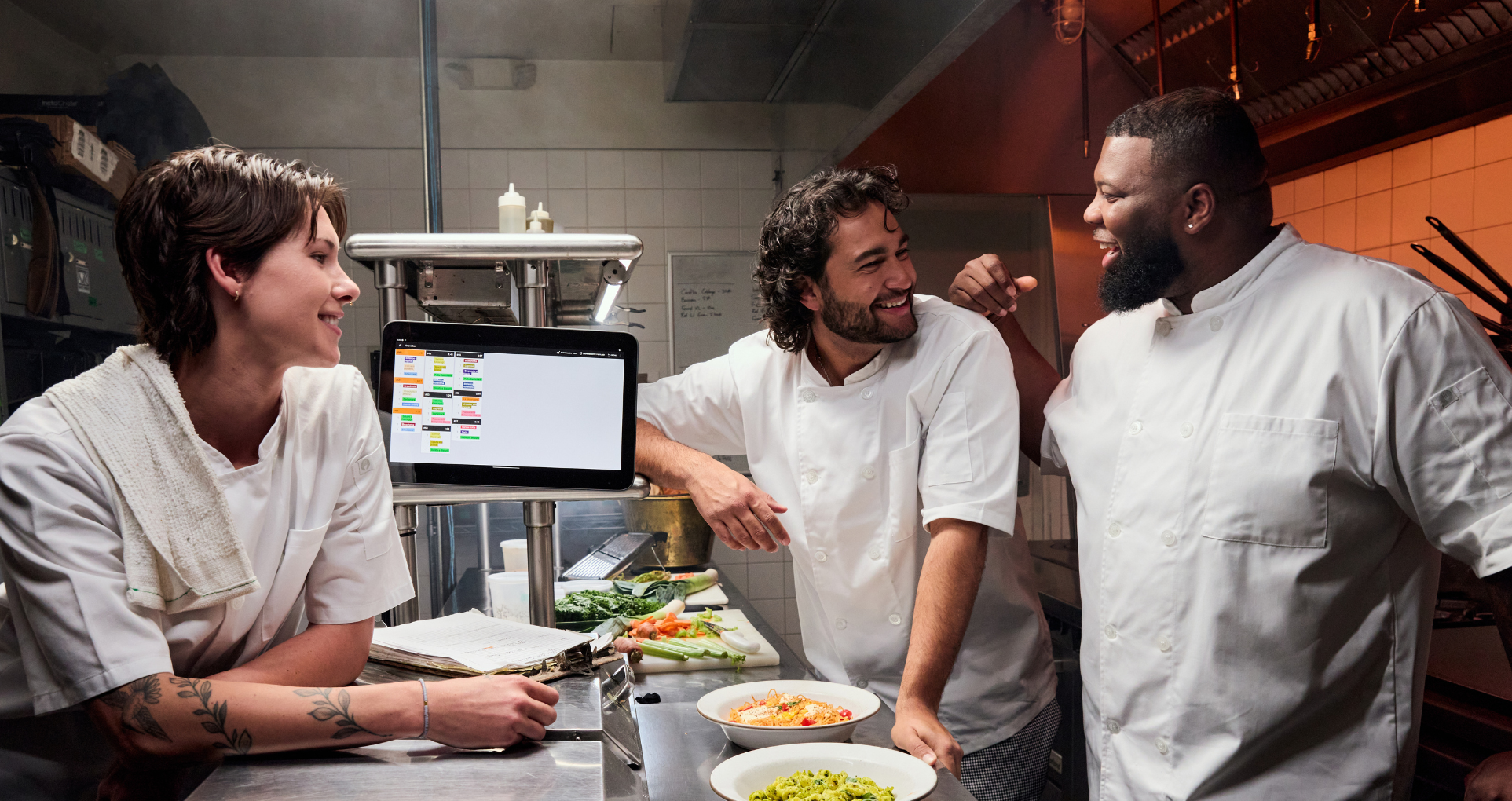
A kitchen display system is a digital screen, usually mounted at prep stations or on the pass, that shows incoming orders directly from your point of sale system. Instead of printing tickets, orders appear automatically, update in real time, and clear once items are completed.
At a basic level, this replaces paper. At a more advanced level, it becomes a shared source of truth for the entire kitchen. Line cooks can see what is coming next. Expo can see timing across stations. Front-of-house staff can see when items are ready without running into the kitchen.
For restaurants that use handheld ordering or online ordering, a KDS becomes even more important. Orders can arrive from tables, kiosks, or mobile devices simultaneously, and the kitchen needs a single place where everything lands in a clear, predictable way.
Why kitchen display systems matter more in today’s market
Canadian restaurants are operating in a particularly demanding environment. According to Restaurants Canada’s 2025 Foodservice Facts report, three in four Canadians say they are eating out less often because of the rising cost of living. Diners are looking for more value and are more price-sensitive, which can make long waits and errors even more costly for your restaurant’s reputation and bottom line. Operators are also feeling the squeeze of rising operational costs that make profitability harder to sustain.
The Voice of the Canadian Restaurant Industry 2025 report makes one thing clear: a lot of operators aren’t buying tech because they’re trying to grow fast. They’re investing in technology because they need to protect margins and keep service moving with the team they already have. Back-of-house tools like kitchen display systems support that goal by making orders easier to see and manage. When everyone is working from the same, clear information, there’s less running back and forth, fewer miscommunications between the front and back of house, and fewer “we need to redo this” moments right in the middle of a rush.
A KDS does not replace people. It helps the people you already have stay organised when the pressure is on.
How an excellent KDS supports day-to-day operations
The real difference between an average kitchen display system and a genuinely helpful one shows up during the rush. The best systems are built around how kitchens actually run when tickets are flying in and time is tight.
It starts with visibility. Orders should be easy to read at a glance. When tickets stack up digitally instead of piling up on the rail, cooks can spend their energy cooking and sequencing dishes, not sorting paper.
Station routing is another critical factor. In many kitchens, not every item belongs on the same screen. A good KDS allows items to route automatically to the correct prep area, whether that is grill, fry, cold prep, or bar. This reduces verbal handoffs and prevents items from being missed.
Timing tools add another layer of support. Being able to see how long an order has been live helps the kitchen prioritise calmly, rather than relying on memory or gut feel. For managers, that same visibility can make it easier to spot pressure points that only show up when things get busy.
Finally, strong integration with front-of-house tools helps close the loop. When servers can check order status without stepping into the kitchen, communication improves on both sides. And during a packed service, fewer interruptions can make a noticeable difference to how smoothly the whole operation runs.
Case study insight: Befikre in Toronto
Befikre is a busy Indian restaurant in Toronto with several service areas running at once. Before switching to a digital system, the kitchen relied on printed tickets to manage orders. On quieter shifts, this worked well enough, but during peak service it became harder to keep everything aligned. Paper chits piled up, chefs spent time sorting and coordinating tickets, and servers often had to step into the kitchen to ask where orders were at.
Introducing a kitchen display system changed how information moved through the restaurant. Instead of juggling stacks of paper, orders appeared on screens as soon as they were placed, with a clear view of what was in progress across different stations. This gave the kitchen a shared, real-time picture of service, reducing the need for verbal check-ins or raised voices.
Over time, those changes made the whole operation feel more controlled. Servers could check order status without interrupting the kitchen, which helped them stay focused on guests out on the floor. Managers also had better visibility into how service was flowing across stations without needing to be physically present in every part of the restaurant.
While every operation is different, Befikre’s experience shows how a well-integrated kitchen display system can bring structure and clarity to a fast-paced, high-volume environment where coordination is just as important as speed.
How kitchen display systems connect to labour efficiency
Labour remains one of the biggest challenges for Canadian restaurants. According to industry research, many operators are using technology specifically to offset labour constraints rather than to replace staff.
A kitchen display system supports this goal by reducing non-cooking tasks. When cooks are not sorting tickets or responding to constant verbal check-ins, they can stay focused on prep and execution. When servers are not running into the kitchen for updates, they spend more time with guests.
Over time, those small improvements start to make a real difference. When the kitchen isn’t being interrupted as often, mistakes are less likely to creep in. When orders arrive in a clearer, more predictable flow, service feels calmer even during the rush. And for managers, having real order data to look at makes it easier to spot where a bit of extra training, a station tweak, or a layout change could take pressure off the team when it matters most.
What Canadian restaurants should consider when evaluating options
Not every kitchen display system is a good fit for every operation. Before choosing one, it helps to think beyond the screen itself.
Integration should be a top priority. A KDS works best when it is part of a single, connected platform that includes POS, handhelds, and reporting. Systems that require manual syncing or third-party connectors often create more complexity than they remove.
Reliability matters just as much as the feature list. In a Canadian winter, power cuts or internet outages happen. A system that can keep the kitchen moving, or recover quickly, when connectivity drops can be the difference between a manageable service and a rough night.
Ease of use is just as important. In hospitality, teams change often, and you don’t always have the luxury of long training sessions. A kitchen display system should feel familiar quickly, so new hires can pick it up without slowing everyone else down.
It’s also worth thinking ahead. Whether you’re adding another prep station, introducing a new service style, or opening a second location, your KDS should be able to grow with you. The goal is a system that adapts as your operation changes, not one you have to rethink every time your restaurant evolves.
Where Toast fits into the picture
Toast’s kitchen display system is built to be part of one connected restaurant setup, not a standalone screen in the corner of the kitchen. Orders move straight from the POS, handhelds, kiosks, or online ordering onto kitchen screens in real time, so there’s no re-entering tickets or juggling multiple systems when things get busy.
For Canadian operators, that kind of connection can remove a lot of everyday friction. Menu changes made at the POS automatically reflect in the kitchen. Orders can be routed to the right prep stations so each part of the kitchen focus on what it needs to make next. Timing tools make it easier to see what’s backing up and what’s moving smoothly, while reporting gives managers a clearer picture of how service actually runs over the course of a shift.
When the kitchen and the floor are working from the same view of service, alignment comes more naturally — even on nights when the restaurant is full and the pressure is on.
Final takeaway
The best kitchen display systems earn their keep when your restaurant is under real pressure. When margins are tight and guest expectations are high, having clear, reliable systems behind the scenes can be what turns a hectic rush into a service that feels steady and manageable.
If you are evaluating kitchen display systems for your restaurant, the next step is seeing how they would work with your existing setup, your menu, and your team.
Is this article helpful?
DISCLAIMER: This information is provided for general informational purposes only, and publication does not constitute an endorsement. Toast does not warrant the accuracy or completeness of any information, text, graphics, links, or other items contained within this content. Toast does not guarantee you will achieve any specific results if you follow any advice herein. It may be advisable for you to consult with a professional such as a lawyer, accountant, or business advisor for advice specific to your situation.

Subscribe to On the line
Sign up to get industry intel, advice, tools, and honest takes from real people tackling their restaurants' greatest challenges.
By submitting, you agree to receive marketing emails from Toast. We’ll handle your info according to our privacy statement. Additional information for California residents available here.