
Restaurant Risk Assessment: How To Spot & Stop Hazards
Safety issues can lead to accidents, fines, or damage. Learn how to conduct a restaurant risk assessment and spot hazards before they cost you.
作者
 RESOURCE
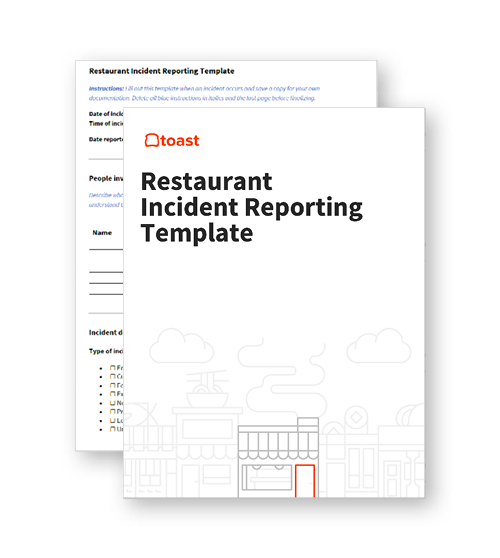
 Restaurant Incident Reporting Template
Use this free template to keep a clear, consistent record of accidents, employee issues, and guest complaints while protecting your business in the process.
免费下载In the restaurant industry, surprises are inevitable. From a wobbly step in the hallway to an overworked walk-in cooler, small issues can turn into big problems fast if they’re not caught early. Fortunately, a strong restaurant risk assessment can help you protect your guests, your team, your reputation, and your bottom line.
In this guide, we’ll walk you through the most common risks restaurants face and show you how to assess and address them—so you can keep your operation safe and running smoothly.
Key takeaways
A restaurant risk assessment is a proactive plan to identify and address hazards before they cause harm or financial loss.
Common risks range from food safety and workplace accidents to equipment failures, legal issues, and reputation damage.
The process involves four steps: identify hazards, evaluate risks, implement controls, and monitor regularly.
Involving your staff in spotting and reporting hazards ensures nothing slips through the cracks.
Ongoing reviews and updates keep your restaurant safe, compliant, and prepared for the unexpected.
餐厅竞争分析模板
使用这个免费模板,即可在同一文档中评估竞争对手、分析市场情况并确定餐厅的优势所在。

What is a restaurant risk assessment?
A restaurant risk assessment is your game plan for spotting and fixing potential problems before they can hurt your guests, staff, or bottom line. Instead of waiting for something to go wrong, you’re taking a proactive look at your operation—everything from how food is stored to whether that wobbly step in the back hallway needs attention.
While safety is a big part of it, a good risk assessment also helps you:
Stay on the right side of health, safety, and labor laws
Avoid surprise costs from equipment breakdowns or accidents
Protect the hard-earned reputation of your restaurant
Think of it like a pre-shift checklist—but for your entire business. The goal is to catch the small stuff early, so it never turns into a big, expensive headache.
Common risks in restaurants
Even the best-run kitchens have a few hidden hazards. The trick is knowing where they like to hide, so you can spot them early and keep your team, guests, and business safe.
Food safety risks
When it comes to food, safety isn’t just important—it’s non-negotiable. A single mistake can lead to illness, a bad review, or a visit from the health department. T
This isn’t just about avoiding fines or passing inspections—it’s about protecting the trust your guests place in you every time they take a bite. Lachlan Sands, President of the Institute of Culinary Education's Los Angeles campus, explained:
“From a philosophical perspective, we are asking our guests to trust us with something very personal. We are asking them to place their faith in us that the food that they are about to consume is safe and healthful… Whether you work in fine dining or fast food, the credo is always the same… Food safety is paramount.”
That trust is fragile—and once it’s broken, it’s hard to win back. To keep standards high and guests confident, watch out for:
Cross-contamination: When raw meats, seafood, or allergens mingle with ready-to-eat foods.
Improper storage temperatures: Cold food that’s not cold enough, or hot food that cools down too quickly.
Expired or spoiled ingredients: Sometimes hiding in the back of the walk-in just waiting to cause trouble.
Workplace safety risks
Kitchens are fast-paced, high-energy environments—but that also means plenty of ways for accidents to happen. Safety in the kitchen is paramount, so watch out for:
Slips, trips, and falls: Spilled liquids, cluttered walkways, or uneven flooring can take someone down in a hurry.
Burns and cuts: Hot pans, sharp knives, and open flames don’t mix well with distraction.
Improper lifting and ergonomics: Heavy boxes of produce or awkward kitchen layouts can put unnecessary strain on your team.
Poor ventilation or loud equipment: Over time, these can affect staff comfort, health, and focus.
Operational & financial risks
Even the smoothest service can hit a snag if the tools you rely on stop working—or if unexpected costs creep in. In fact, according to NEXT Insurance, equipment breakdown was the most frequent insurance claim made by restaurants between 2021 and 2024, making it a top priority to monitor and maintain. Common threats include:
Equipment failure: From a busted walk-in cooler to a malfunctioning fryer, downtime can mean lost sales (and a lot of stress).
Power outages: Service grinds to a halt when the lights (and POS) go out.
Theft or fraud: Both internal and external theft can eat into profits.
WiFi outages: When the internet is down, your POS needs to keep functioning so you can serve customers without interruptions. This is one of the most common restaurant POS problems you can stumble upon.
Compliance & legal risks
Restaurants juggle a long list of rules and regulations. Falling short can lead to fines, lawsuits, or even a forced shutdown. Watch for:
Health code violations: Poor sanitation, improper food handling, or pests can get you dinged during inspections.
Labor law noncompliance: Issues like unpaid overtime or missed breaks can put you on the wrong side of the law.
Alcohol service infractions: Serving minors or overserving guests can lead to heavy penalties (and a serious reputation hit).
Reputational risks
Your restaurant’s reputation is one of its most valuable assets—and one of the easiest things to damage if you’re not careful. In the age of Yelp, Google, TikTok, and Instagram, one poorly handled moment can spiral into a PR headache.
Raul Medina, owner of Mexican vegan restaurant La Venganza, knows firsthand how tempting it can be to fire back at criticism—but also how damaging that can be if emotions take over.
“I have so many people that are dependent on this job that it's outside of me… It's not worth it at the end of the day to stress yourself out, to stress out employees, or to put a bad name on your brand because your emotional response is bad.”
Medina’s approach is a reminder that sometimes the best response is no response—especially when your livelihood and your staff’s well-being are on the line. Common reputational risks include:
Negative online reviews: One bad experience can spread quickly on Yelp, Google, or TikTok.
Difficult guests: A heated exchange or viral video of an incident can cause lasting damage if not handled calmly and professionally.
Social media incidents: From poorly handled complaints to viral videos taken out of context.
Publicized foodborne illness cases: Few things scare off guests faster than a headline linking your restaurant to an outbreak.
How to conduct a restaurant risk assessment
A risk assessment might sound formal, but at its core, it’s just a smart way to keep people safe. By breaking the process into four simple steps, you can make safety a natural part of your workflow instead of an afterthought.
1. Identify hazards
Think of this as your restaurant’s “detective work.” You’re looking for anything that could cause harm to guests, staff, or your bottom line.
Walk through every area: Kitchen, dining room, storage, bar, restrooms, and even those dusty corners behind equipment.
View with fresh eyes: Pretend you’re seeing your space for the first time and spotting potential trouble.
Cover all hazard types: From food safety issues (like improper storage temps) to trip hazards, faulty equipment, or security concerns.
Ask your team: They see the daily snags, like a cooler door that won’t seal or the slick spot by the dish pit.
Document on the spot: Write hazards down immediately so nothing slips through the cracks.
2. Evaluate risks
Now that you’ve spotted the hazards, it’s time to figure out which ones deserve your attention first. This step is all about sizing up the likelihood and impact of each risk.
Rate likelihood: How often could this hazard happen — daily, occasionally, or rarely?
Gauge severity: If it does happen, will it cause minor inconvenience or major damage?
Prioritize the big ones: Focus on hazards that are both likely and have serious consequences.
Consider costs: Some risks might not harm people but could drain your finances (think equipment breakdowns or theft).
Document your rankings: Keep your notes clear so you can act on the most urgent issues first.
3. Implement controls
This is where you roll up your sleeves and put safeguards in place to reduce or eliminate the risks you’ve flagged.
Fix hazards outright: Repair broken equipment, replace frayed cords, and swap out expired inventory.
Add preventative measures: Install non-slip mats, set up food thermometer checks, or add security cameras where needed.
Update procedures: Adjust prep steps, storage guidelines, or cleaning routines to close safety gaps.
Train your team: Make sure staff know the new processes and understand why they matter.
Have backups ready: Keep spare equipment or alternative suppliers on hand to avoid downtime.
4. Monitor and review
Risk assessment isn’t a one-and-done task — it’s an ongoing part of running a safe, smooth restaurant.
Check regularly: Schedule monthly or quarterly walkthroughs to spot new issues before they escalate.
Track incidents: Keep a simple log of accidents, equipment failures, or customer complaints to identify patterns.
Follow up on fixes: Make sure solutions you’ve put in place are still working as intended.
Stay current: Keep up with changes in health codes, labor laws, and industry best practices.
Involve the team: Encourage staff to speak up when they see something that could be improved.
Make safety your secret ingredient
Running a restaurant comes with its share of surprises—but a solid risk assessment helps make sure they’re the good kind. By spotting hazards early and putting smart fixes in place, you can create a safe, welcoming space for everyone who walks through your doors.
FAQ
How often should I conduct restaurant risk assessments?
At minimum, perform a full assessment once or twice a year. However, quick monthly or quarterly check-ins help catch new issues before they escalate.
What's the most critical risk area for restaurants?
Food safety is typically the top priority because it directly impacts guest health, compliance, and your reputation.
Should I use digital or manual assessment tools?
Digital tools streamline tracking, updates, and reporting, but a simple checklist works too—what matters most is consistency and thoroughness.
How do I prioritize risk mitigation efforts?
Focus on hazards that are both likely to occur and could cause serious harm or major financial impact.
What documentation is required for risk assessments?
Keep clear records of identified hazards, risk ratings, actions taken, and follow-up dates—both for internal tracking and regulatory compliance.
这篇文章有帮助吗?
免责声明:此信息仅作为一般性参考,发布并不构成认可。Toast 不保证本内容中包含的任何信息、文本、图形、链接或其他项目的准确性或完整性。Toast 不保证如果您遵循本文的任何建议,就能取得任何特定结果。您可能需要咨询专业人士,如律师、会计师或商业顾问,以获取针对您情况的具体建议。
 趋势
趋势
