The 7 Best Ways to Improve Restaurant Operations in 2026
Discover 7 proven ways to strengthen restaurant operations, from smarter inventory management to centralized reporting and better FOH-BOH communication.
作者
 资源
资源 Restaurant operations refer to the systems, workflows, and day-to-day decisions that keep a restaurant running smoothly. From food costs to labor scheduling, strong operations help restaurants control costs, improve service, and perform more consistently under pressure.
In this guide, you’ll learn practical ways to improve restaurant operations, including how to manage inventory, labor, reporting, communication, and real-time decision-making.
Key takeaways
Strong restaurant operations depend on consistent systems for inventory, labor, communication, and reporting.
Food and labor costs are easier to control when restaurants track the right KPIs and operational data regularly.
Better FOH and BOH communication helps reduce service errors, improve pacing, and create more consistent guest experiences.
Centralized technology systems help restaurants manage dine-in, takeout, delivery, and reporting more efficiently.
Real-time reporting and operational visibility help operators respond faster to problems during service.
SOP 模板
此模板可帮助您为整个业务创建标准操作程序,从而保持一致性并轻松培训员工。

1. Control food costs, waste, and inventory variance
Food cost is one of the most important operational metrics in a restaurant. According to Toast restaurant cost research, food costs typically account for 28–35% of revenue for most restaurant concepts, which means small inefficiencies can quickly impact profitability.
Strong inventory systems help operators reduce waste, improve purchasing decisions, and maintain more consistent margins over time.
Food cost percentage: Track ingredient costs as a percentage of revenue to monitor profitability.
Waste and shrinkage: Identify spoilage, over-portioning, theft, and inventory loss before they compound.
Actual vs. theoretical food cost: Compare expected inventory usage against actual spending to spot operational gaps.
Portion control: Standardize serving sizes to reduce overuse and improve cost accuracy.
FIFO and par levels: Use first-in, first-out inventory practices and set ingredient par levels to avoid spoilage and over-ordering.
Supplier price fluctuations: Monitor changing ingredient costs so you can adjust purchasing, pricing, or menu strategy.
Real-time inventory visibility: Tools like Toast xtraCHEF track ingredient-level costs, invoice changes, and waste patterns automatically.
2. Build smarter labor schedules and improve retention
Labor is typically one of the largest operating expenses for restaurants. According to the National Restaurant Association, salaries and wages represented a median of 36.5% of sales for full-service restaurants in 2024.
Effective labor management means aligning staffing levels with demand while also creating a better employee experience. Retention directly impacts operational consistency, training costs, and guest experience.
Forecast staffing demand: Use historical sales trends and peak periods to build smarter schedules.
Cross-train employees: Multi-role staff create more flexibility during busy shifts and callouts.
Monitor labor cost percentage: Track labor costs consistently to avoid overscheduling or understaffing.
Improve scheduling transparency: Predictable schedules help employees plan ahead and reduce frustration.
Reduce turnover costs: Hiring and training new employees repeatedly increases labor costs and disrupts workflows.
Streamline payroll and scheduling: Toast Payroll connects scheduling, tips, and wages in one system for easier labor management.
Offer payroll flexibility: Toast Pay Card gives employees faster access to earned wages, improving flexibility and employee experience.
3. Improve communication between FOH and BOH
When communication breaks down between the front and back of house, service slows down fast. Missed modifiers, lost tickets, and poor pacing can all impact guest experience during busy shifts.
Improve ticket flow: Orders should move quickly and clearly from servers to the kitchen.
Increase expeditor visibility: Expo teams need real-time visibility into ticket status and kitchen pacing.
Reduce service errors: Clear communication minimizes missed modifiers and incorrect orders.
Hold pre-shift meetings: Review specials, reservations, 86’d items, and staffing updates before service begins.
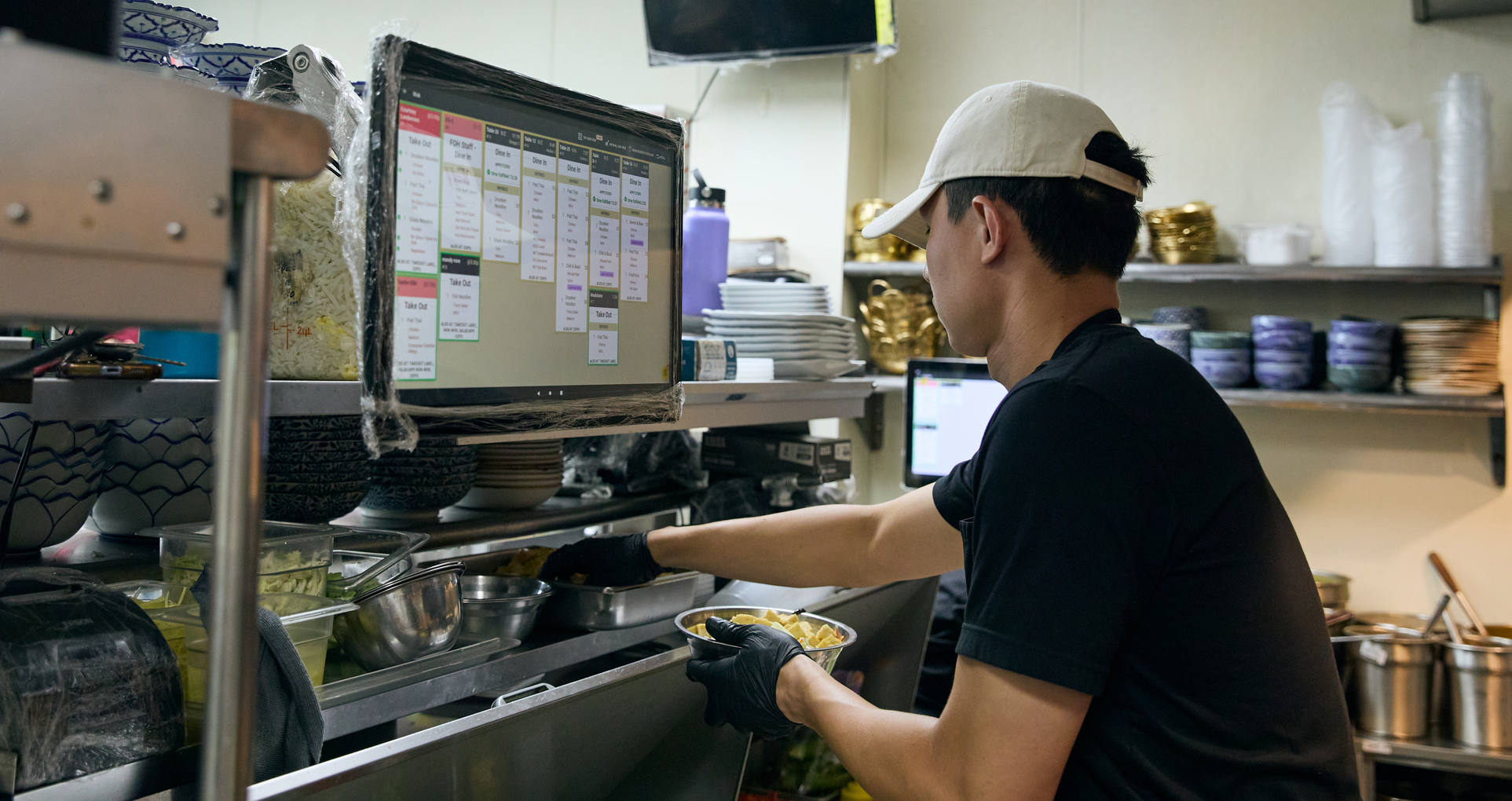
Use kitchen display systems: Toast’s Kitchen Display System organizes tickets by station and updates orders in real time, helping FOH and BOH stay aligned during service.
4. Standardize systems with restaurant SOPs
Standard operating procedures (SOPs) help ensure tasks are completed the same way across shifts, employees, and locations. Without documented systems, restaurants often rely too heavily on individual employees instead of repeatable processes.
Opening and closing checklists: Create consistent routines for setup, shutdown, and shift transitions.
Prep procedures: Standardize recipes, prep lists, and portioning to maintain quality and reduce waste.
Cleaning standards: Define cleaning responsibilities and schedules to improve safety and organization.
Guest complaint handling: Give staff clear procedures for resolving issues quickly and professionally.
Improve consistency: SOPs help restaurants train employees faster, reduce mistakes, and maintain more reliable service.
5. Centralize ordering and reporting across every sales channel
Modern restaurants often manage dine-in, takeout, delivery, and online ordering simultaneously. Centralized systems help restaurants manage every sales channel more consistently.
Manage multiple ordering channels: Coordinate dine-in, takeout, delivery, and online orders from one system.
Reduce operational gaps: Disconnected platforms can create duplicate work, inconsistent reporting, and communication breakdowns.
Improve reporting accuracy: Unified systems make it easier to track sales, labor, and operational performance across channels.
Simplify workflows: Staff can work more efficiently when orders and payments flow through one platform.
Centralize restaurant operations: Toast POS combines order management, payment processing, and sales reporting across channels to improve operational visibility and consistency.
Employee Handbook Template
Outline your restaurant’s staff policies in this customizable Word doc to help restaurant management and staff get on the same page.
6. Track the restaurant KPIs that matter
Tracking the right KPIs helps operators evaluate profitability, service efficiency, and overall operational performance over time. The most useful restaurant metrics connect directly to costs, sales, and service quality.
Food cost percentage: Measure ingredient costs as a percentage of revenue to monitor profitability.
Labor cost percentage: Track staffing costs against sales to keep scheduling aligned with demand.
Prime cost: Combine labor and food costs to measure your two largest operating expenses together.
Table turns: Monitor how often tables are seated during service to evaluate efficiency and revenue potential.
Average check size: Track guest spending patterns and menu performance over time.
Ticket times: Measure how quickly orders move through the kitchen and reach guests.
Weekly vs. monthly tracking: Weekly reporting helps operators identify trends and correct issues faster than monthly reviews.
7. Use real-time reporting to respond faster during service
Real-time visibility helps operators react faster to operational issues instead of waiting until the end of the shift or week to review reports. That kind of operational visibility is becoming increasingly important as restaurants deal with rising costs and tighter margins. As Bo Davis, CEO and co-founder of MarginEdge, explained:
“Operators who understand what inflation means for their restaurant — and act on it in real time — will be the ones who stay ahead of whatever the next wave brings.”
Monitor live sales activity: Track performance across dayparts and sales channels in real time.
Identify operational slowdowns early: Spot bottlenecks, service delays, or unusual sales patterns before they escalate.
Adjust operations during service: Make faster decisions around staffing, prep, pacing, or ordering workflows.
Access reporting from anywhere: Mobile reporting tools allow operators to stay connected even away from the POS terminal.
Surface insights automatically: Tools like Toast IQ highlight trends and recommended actions without requiring operators to manually dig through reports.
Maintain real-time visibility: Toast Now gives operators live reporting access directly from their phone.
Better systems, better service
Operational data and reporting are essential for improving restaurant performance, but some of the most valuable operational feedback still comes directly from guests — especially regulars who notice consistency issues over time. As Sawsan Abublan, co-owner of Shawarma Press, explained:
“I always ask my regulars, ‘how’s the food today?’ … because you are my repeat customer. If something is wrong, you would know.”
The most effective operators don’t rely on guesswork or disconnected tools. They build repeatable systems, monitor the right metrics, use technology to stay proactive, and continuously gather feedback.
FAQ
What are the main components of restaurant operations?
Restaurant operations typically include inventory management, labor scheduling, FOH and BOH communication, food preparation, customer service, financial tracking, and reporting systems.
What is a good prime cost percentage for a restaurant?
Most restaurants aim to keep prime cost — the combined total of food and labor costs — below 60% of revenue, though targets can vary by concept.
How do I reduce food waste in my restaurant?
Restaurants can reduce food waste by standardizing portion sizes, using FIFO inventory practices, setting ingredient par levels, and tracking waste and shrinkage consistently.
What KPIs should restaurant operators track weekly?
Key restaurant KPIs include food cost percentage, labor cost percentage, prime cost, average check size, table turns, and ticket times.
How does technology improve restaurant operations?
Restaurant technology helps automate workflows, improve communication, centralize reporting, and give operators real-time visibility into sales, labor, inventory, and service performance.
What are the biggest operational challenges for restaurants in 2026?
Many restaurants continue to face rising labor costs, food price volatility, staffing shortages, and the challenge of managing multiple sales channels efficiently.


这篇文章有帮助吗?
免责声明:此信息仅作为一般性参考,发布并不构成认可。Toast 不保证本内容中包含的任何信息、文本、图形、链接或其他项目的准确性或完整性。Toast 不保证如果您遵循本文的任何建议,就能取得任何特定结果。您可能需要咨询专业人士,如律师、会计师或商业顾问,以获取针对您情况的具体建议。
 趋势
趋势