How to Understand FDA Requirements for Restaurant Menu Labeling
Discover what restaurant menu labeling is and how to handle regulations handed down from the Food and Drug Administration (FDA).

作者
 RESOURCE
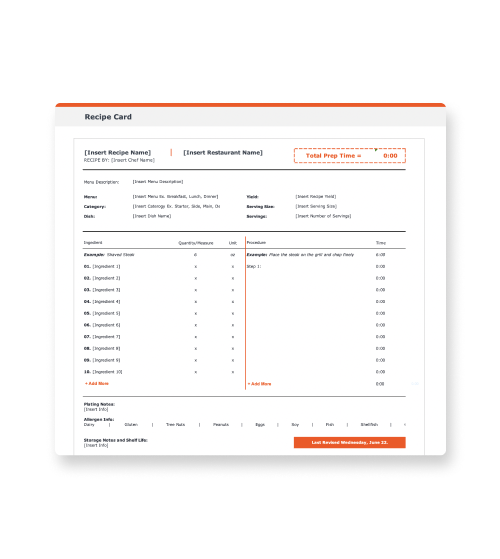
 Recipe Card Template
Train your team with this recipe card template, a customizable Excel sheet that outlines recipe requirements for chefs and back of house staff.
免费下载Menu labeling can be a crucial checkbox for growing restaurant businesses.
This practice — enforced by the U.S. Food and Drug Administration (FDA) — requires American restaurant operations of a certain size to provide nutrition information and calorie counts for menu items.
Understanding the significance of nutrition labeling and listing calorie information for menu items can be pivotal in addressing the concerns surrounding health, obesity, and informed food choices.
In this article, you’ll learn what restaurant menu labeling is and why it can be an essential box to check for growing restaurants. You’ll discover regulations handed down from the Food and Drug Administration (FDA)— as well as see the importance of nutrition labeling and listing calorie information for your menu items.

餐厅经营者见解报告
了解来自真实餐厅经营者的见解,这有助于您在迈向 2024 年及未来之际,将当前和计划中的餐厅技术堆栈与同行进行比较。

What is menu labeling for restaurant foods
Menu labeling is a requirement for restaurants to provide nutrition information and calorie counts for their menu items.
This regulation is enforced by the Food and Drug Administration (FDA) and aims to provide guidance for industry consumers to make informed choices about their food choices. By displaying calorie information and additional nutrition information, restaurants help customers understand the nutritional content of the dishes they are ordering.
This can be particularly important for individuals with specific dietary needs or those trying to manage their total calorie content and calorie needs.
In terms of nutrition labeling, the final rule states that covered establishments are required to disclose the number of calories contained in standard items on menus and menu boards. Additionally, businesses must provide written nutrition information for standard menu items upon request, including details such as total fat, saturated fat, trans fat, cholesterol, sodium, total carbohydrates, sugars, fiber, protein, and more nutrients.
Two statements must also be displayed - one indicating that written nutrition information is available upon request and the other mentioning the daily calorie intake recommendation.
The compliance date for the nutrition labeling of standard menu items was set into effect on May 7, 2018.
According to the National Restaurant Association (NRA), the FDA encouraged operators to continue to comply with the menu-labeling rules during the coronavirus health crisis but have not been enforcing the requirements. That enforcement went back into effect in November 2023.
Which restaurants need to worry about food labeling
The menu labeling requirements apply to restaurants and similar retail food establishments that are part of a chain with 20 or more locations.
These establishments must be doing business under the same name and offering substantially the same menu items to be subject to menu labeling rules. This often includes chain restaurants, fast food establishments, cafeterias, self-service food stores, convenience stores, grocery stores, movie theaters, coffee shops, and entertainment venues.
It's essential for all these establishments to understand and comply with the menu labeling regulations to avoid penalties and ensure they are providing accurate and useful information to their customers.
What menu items require food labeling?
Here’s a breakdown of what menu items need to be labeled and which don’t — for qualifying establishments — according to a menu labeling rule fact sheet from the FDA.
Foods that are generally covered: Standard menu items (including alcoholic beverages), combination meals, variable menu items, food on display (including “grab and go” items), self-service food and beverages
Foods that are typically exempt: Custom orders, daily specials, foods that are part of a customary market test, temporary menu items, general use condiments, foods that are not on a menu or menu board and are not on display or self-service
Importance of compliance with the FDA for menu labeling requirements
Compliance with FDA menu labeling regulations is crucial for several reasons.
Calorie labeling is a legal requirement that must be adhered to in order to avoid potential penalties. Failure to comply can result in criminal penalties (section 6), the seizure of food by the government, and civil action in federal court.
Non-compliance with menu labeling regulations can create bad press for restaurant chains and other establishments. This can potentially harm their reputation and lead to decreased customer trust and satisfaction.
In addition to legal considerations, menu labeling is important for public health. By providing nutrition information, restaurants contribute to helping individuals make healthier food choices and better manage their caloric intake. This can have a positive impact on reducing the prevalence of obesity and related health issues.
餐厅经营者见解报告
了解来自真实餐厅经营者的见解,这有助于您在迈向 2024 年及未来之际,将当前和计划中的餐厅技术堆栈与同行进行比较。
Tactics for consistently calculating standard menu item nutrition facts
Consistently calculating nutrition facts for standard menu items can be a challenge, especially for restaurants with a complex and ever-changing menu. However, some tactics can help simplify and streamline this process.
Using food costing and inventory management software can aid in programmatic recipe building, allowing restaurants to accurately calculate the nutritional content of their menu items. By integrating these tools with invoice automation software, restaurants can ensure they have access to up-to-date ingredient information and easily track changes in recipes.
By implementing efficient systems and processes, restaurants can consistently calculate and provide accurate nutrition facts for their menu items, fulfilling the requirements of menu labeling regulations.
Menu boards, mobile apps, and other technologies for implementing restaurant menu labeling
Abiding by menu labeling laws across multiple locations can be challenging without the right technologies and systems in place. For restaurants with 20 or more locations, having a digital display system strategy can be crucial to ensure compliance with FDA regulations.
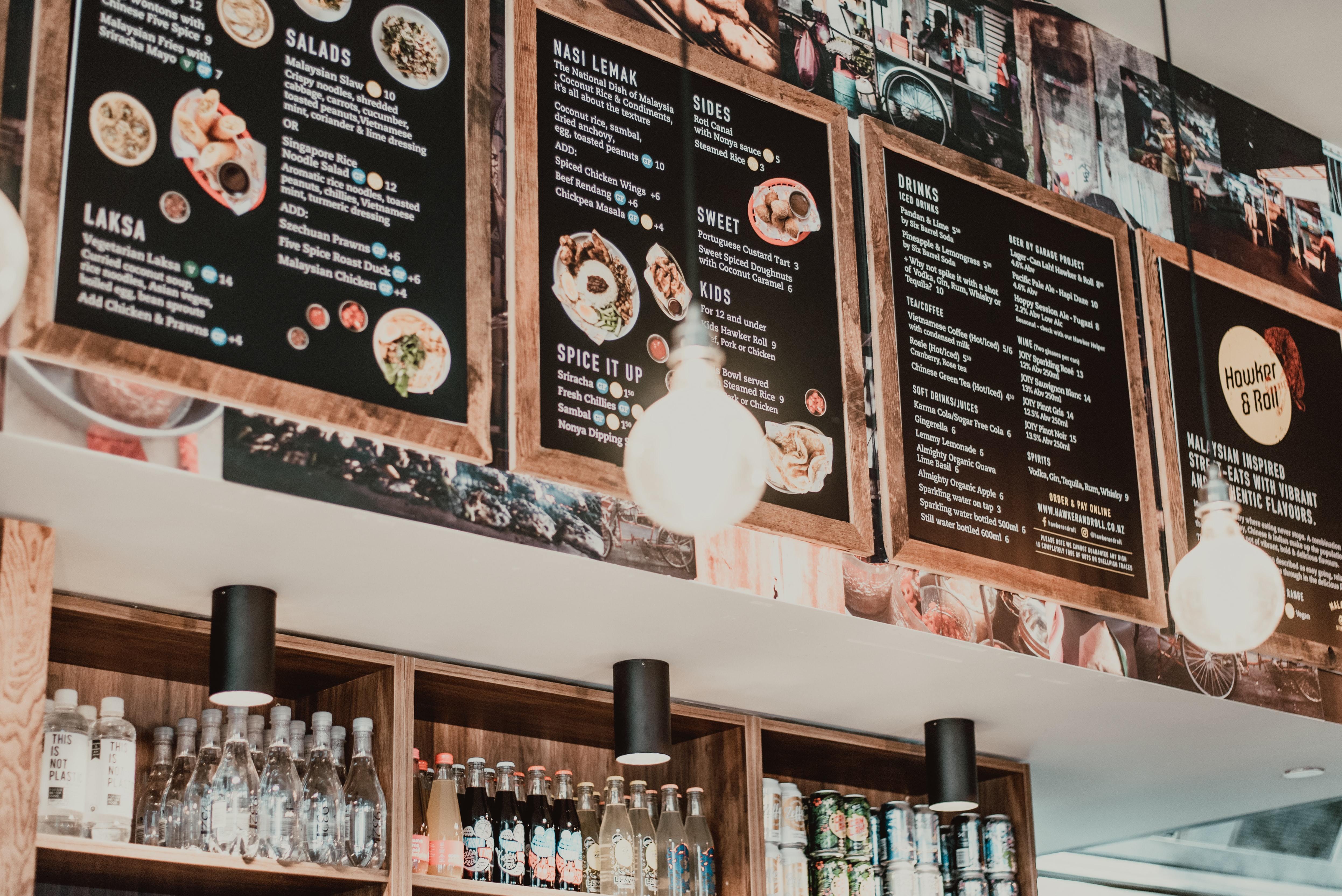
Digital menu boards can be easily updated with accurate nutrition information and calorie counts, providing customers with the information they need to make informed choices.
Additionally, mobile apps can play a role in menu labeling by displaying nutrition information and offering customization options for customers to see the impact of changes on the nutritional content of their orders.
By leveraging technologies like digital menu boards and mobile apps, restaurants can effectively implement menu labeling across their operations, providing transparency and empowering customers to make healthier dining choices.
Harnessing operational efficiencies of robust restaurant tech stack
Menu labeling is an essential requirement for growing restaurants.
Qualifying restaurant businesses can use technology to consistently provide nutrition information and calorie counts that help customers make informed choices about their food choices.
The right restaurant technology platform can provide a seamless process for operators and managers to meet menu labeling requirements. Particularly valuable is a system that integrates menu price changes in a point of sale system (POS) through to menu boards and/or restaurant apps and online ordering platforms.
 TOAST TECH
 Built for restaurants just like yours.
Toast’s restaurant technology includes point of sale, kitchen display screens, online ordering, loyalty, analytics, payroll, and more.
这篇文章有帮助吗?
免责声明:此信息仅作为一般性参考,发布并不构成认可。Toast 不保证本内容中包含的任何信息、文本、图形、链接或其他项目的准确性或完整性。Toast 不保证如果您遵循本文的任何建议,就能取得任何特定结果。您可能需要咨询专业人士,如律师、会计师或商业顾问,以获取针对您情况的具体建议。
 趋势
趋势