
Menu Engineering: A Glossary of Menu Terms to Know
Menu engineering is taking over the restaurant world, but what exactly is it? And why is it important? Before you start, you should be familiar with these menu engineering terms.

作者
 资源
资源 Menu engineering and design are hot topics in the restaurant industry right now.
Restaurateurs are becoming increasingly aware of the impact that a strategic and data-driven menu can have on their bottom line and restaurant cost control. Maybe they're inserting visual cues to draw attention or calculating costs down to the ounce. Either way, it's clear menus are no longer simply a list of dishes.
With this new wave of menu research comes a lot of terms that are becoming more commonplace in the restaurant industry. Here's a brief index of what you'll need to know to re-engineer your menu for maximum profitability.
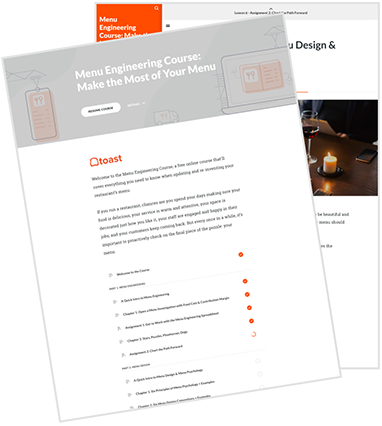
It's time to get your menu into shape. Enroll in Menu Engineering Bootcamp for 5 lessons and 50+ tips on menu engineering and restaurant menu design. This course is free, and you can start whenever you're ready.

菜单工程课程
参加本课程,充分发挥菜单的作用。学习菜单心理学与设计、在线菜单管理,以及如何调整菜单以提升销售额。

15 Restaurant Menu Engineering Terms
Menu Engineering
The study and optimization of a menu based on the popularity and profitability of menu items. Menu engineering is a data-driven practice restaurant owners use to increase revenue and reduce waste.
Menu Design
A subset of menu engineering focused on the visual science and appeal of a restaurant’s menu. Menu design should reflect a restaurant’s brand and personality while taking into account consumer psychology and visual aesthetics.
Brand
The core associations that a consumer has with a business. A restaurant’s “brand” is the first thing that comes to mind when a guest hears the name. It’s often the components that set this business apart from others.
Cost of Goods Sold (COGS)
A mathematical equation to determine the cost required to create each of the food and beverage items on the menu. It is the sum of beginning and purchased inventory subtracted by final inventory. COGS is particularly important for menu engineering because lowering it has a direct correlation to a more profitable restaurant.
Food Cost Percentage
A mathematical equation that calculates the percentage of a menu item cost that the restaurant takes as profit. It’s calculated by dividing the cost to create the menu item by the price of the item. The difference is the percentage that the restaurant makes on each sale of that item.
15 Restaurant Menu Engineering Terms
Menu Engineering
The study and optimization of a menu based on the popularity and profitability of menu items. Menu engineering is a data-driven practice restaurant owners use to increase revenue and reduce waste.
Menu Design
A subset of menu engineering focused on the visual science and appeal of a restaurant’s menu. Menu design should reflect a restaurant’s brand and personality while taking into account consumer psychology and visual aesthetics.
Brand
The core associations that a consumer has with a business. A restaurant’s “brand” is the first thing that comes to mind when a guest hears the name. It’s often the components that set this business apart from others.
Cost of Goods Sold (COGS)
A mathematical equation to determine the cost required to create each of the food and beverage items on the menu. It is the sum of beginning and purchased inventory subtracted by final inventory. COGS is particularly important for menu engineering because lowering it has a direct correlation to a more profitable restaurant.
Food Cost Percentage
A mathematical equation that calculates the percentage of a menu item cost that the restaurant takes as profit. It’s calculated by dividing the cost to create the menu item by the price of the item. The difference is the percentage that the restaurant makes on each sale of that item.
Contribution Margin
A mathematical equation that measures a menu item’s profitability over time. By subtracting food costs within a certain time period from menu item sales within that same period, restaurateurs can use this metric to measure how sales affect income and how costs are affected over time.
Stars
The quadrant of items in a menu engineering chart that are both highly profitable and highly popular. These are the items that should be consistent on the menu and used in promotions whenever possible.
Plowhorses
The quadrant of items in a menu engineering chart that are very popular but not very profitable for the business. These are likely the items that guests expect to see, but may need to have ingredients or portion size modified to improve margin.
Puzzles
The quadrant of items in a menu engineering chart that are highly profitable to the restaurant but aren’t popular with guests. These are potentially hidden gems that need to be reinvented by lowering prices, changing their position on the menu, or packaging them a different way.
Dogs
The quadrant of items in a menu engineering chart that are neither popular or profitable. Most likely, these items should be removed from your menu and replaced with more profitable dishes.
Menu Psychology
The application of consumer behavior theories to menu design. Menu item organization, placement, and visual cues can be strategically implemented based on what we know about human psychology.
Paradox of Choice
The theory that more choices can actually lead to increased confusion and poor decisions. In menu engineering, studies have shown that there is a sweet spot between too few and too many choices.
Decoy Effect
A psychological phenomenon that says people are more likely to change their preference between two options when a third, less appealing option, is introduced to show the “value” of the most expensive option. In menu engineering, this is the science of bundling options to improve their perceived value.
Semantic Salience
The impact that a symbol has on a particular situation or decision-making process. This is often used to define the impact that a dollar sign on a menu item (or lack thereof) has on the perceived value.
Sensory Descriptors
Words and phrases that appeal directly to a person’s sight, smell, hearing, taste, or feeling. These words, like “succulent,” “smooth,” and “aromatic,” are often used in menu item descriptions to draw out a specific reaction from the guest.
Now that you're familiar with the key terms, get started revamping your menu for maximum profitability. Start the Menu Engineering Course today.
Related Menu Ideas
餐厅成本控制指南
使用本指南,您可以了解更多有关餐厅成本、如何跟踪成本以及如何最大限度地提高盈利能力的信息。
这篇文章有帮助吗?
免责声明:此信息仅作为一般性参考,发布并不构成认可。Toast 不保证本内容中包含的任何信息、文本、图形、链接或其他项目的准确性或完整性。Toast 不保证如果您遵循本文的任何建议,就能取得任何特定结果。您可能需要咨询专业人士,如律师、会计师或商业顾问,以获取针对您情况的具体建议。
 趋势
趋势

