
Liquor Store Financing: How to Fund Your Alcohol Retail Business
Explore liquor store financing options including SBA loans, traditional bank loans, and equipment financing. Learn eligibility requirements, loan types, and application steps for 2025.

作者
 RESOURCE
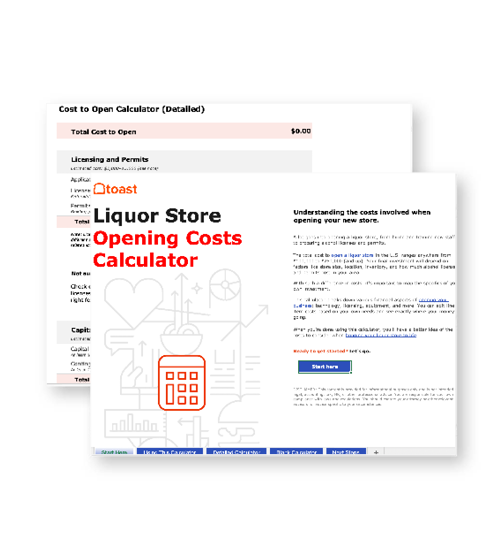
 Liquor Store Opening Costs Calculator
This free calculator lays out some of the fundamental financial costs of opening a liquor store, so you can start planning and bring your dream business to life.
免费下载Opening or expanding a liquor store requires substantial capital for inventory, real estate, equipment, and working expenses. Understanding available financing options helps aspiring and current liquor store owners make informed decisions about funding their businesses. This guide explores the primary financing methods, eligibility requirements, and application processes for liquor store financing in 2025.
Key takeaways:
SBA 7(a) and 504 loans offer the best financing options for liquor stores with competitive rates and long terms.
Traditional bank loans and equipment financing provide alternatives for established stores or specific equipment needs.
Down payments usually range from 10–20%, but 100% financing is possible in certain purchase scenarios.
Lenders prefer 680+ credit scores and solid financials, though liquor industry experience isn’t always required.
Microloans, CDFIs, and professional advisors can help borrowers with limited credit or smaller funding needs.
Business Loan Calculator
Use this free calculator to understand how different loan amounts, interest rates, and terms will impact your payments and overall costs.

SBA loan programs for liquor stores
Small Business Administration loans remain among the most popular financing options for liquor stores due to competitive rates and favorable terms.
SBA 7(a) loans
The 7(a) loan program is SBA's primary business loan program for providing financial assistance to small businesses. These loans work well for liquor stores because they offer flexibility in how funds can be used.
The maximum loan amount for a 7(a) loan is $5 million. Liquor store owners can use 7(a) loans for working capital, inventory purchases, equipment acquisition, debt refinancing, and business acquisitions.
If you are purchasing a business without a building, the maximum term of the loan is 10 years. If purchasing real estate, terms extend to 25 years.
SBA 504 loans
SBA 504 loans are designed for very specific purposes primarily land, buildings, and equipment. This allows you to purchase the land and improve it with drainage, pavement, parking areas, and then construct your building on that land.
The 504/CDC program offers a maximum loan amount of $5 million, but provides up to $5.5 million for small manufacturers and eligible energy public policy projects.
These loans f are best suited for real estate purchases or major equipment investments since they can’t be used for working capital or inventory.
Important SBA restrictions
You should know that you can’t typically use SBA loans to buy a liquor license. However, liquor licenses can transfer as part of a business acquisition, which addresses this limitation for buyers purchasing existing stores.
Traditional bank financing
Commercial banks offer various loan products for liquor store owners, though approval requirements tend to be stricter than SBA loans.
Conventional business loans
Traditional bank loans provide another financing avenue, though they typically require stronger credit profiles and more substantial down payments than SBA options. Banks often prefer established businesses with proven track records.
Interest rates on conventional loans vary based on market conditions, creditworthiness, and loan terms. The average small-business bank loan interest rate ranged from 6.7% to 11.5% in the second quarter of 2025.
Equipment financing
Equipment financing allows liquor stores to purchase refrigeration units, point-of-sale systems, shelving, and other necessary equipment. The equipment itself serves as collateral, often making approval easier than unsecured loans.
Terms typically range from 3-7 years depending on the equipment's expected lifespan and value.
Business lines of credit
A business line of credit allows you to access capital as it's needed for your business. This revolving credit option works well for managing inventory fluctuations, seasonal demands, and short-term cash flow needs.
Lines of credit provide flexibility since you only pay interest on the amount actually drawn, not the entire credit limit.
Down payment requirements
Understanding typical down payment expectations helps liquor store buyers plan their capital needs.
Standard down payments
Most conservative lenders will offer financing with 10% down, but there are SBA lenders who will consider zero down. The specific down payment required depends on the lender, loan type, borrower qualifications, and whether real estate is included.
100% financing options
It’s possible to obtain 100% financing if you need a loan for a liquor store in scenarios where you are purchasing a building you have been leasing, moving from leasing space to owning a building, or expanding your business by purchasing a competitor.
It is also possible to purchase a liquor store by getting the seller to finance 10% of the purchase price by way of a standby note. Specifically, if the seller is willing to hold a loan for 10% of the purchase price and forego the receipt of payments for 24 months, then the buyer doesn’t need a down payment.
Eligibility requirements
Lenders evaluate multiple factors when considering liquor store financing applications.
General SBA requirements
To be eligible for 7(a) loan assistance, businesses must be located in the U.S.. The business must operate as a for-profit entity, meet SBA size standards for small businesses, and demonstrate ability to repay the loan.
Credit and experience considerations
Liquor business experience is not necessarily required to get a loan. It can really help, but most lenders can get comfortable with borrowers with some level of business or business management experience, especially if the seller is willing to stay on for a little while to help you learn what you need to know.
Lenders typically require good personal credit scores, generally 680 or higher, though requirements vary by lender and loan program. Stronger credit profiles receive more favorable terms and rates.
Financial documentation
Expect to provide tax returns, financial statements, business plans, and cash flow projections. For business acquisitions, lenders require detailed information about the target business including sales records, profit and loss statements, and lease agreements.
Application process
Understanding the loan application timeline and requirements helps manage expectations.
Timeline expectations
Depending on your lender and the type of SBA loan you apply for, it can take one to three months to receive funds. Traditional bank loans may process faster, while SBA loans require more comprehensive review.
SBA preferred lenders can make final credit decisions without sending applications to the SBA, allowing them to speed up the loan approval timeline. Citizens Bank says it can approve and close SBA loans in about 45 days.
Required documentation
Typical application requirements include personal and business tax returns (usually 3 years), business financial statements, personal financial statements, business plan with financial projections, proof of business licenses and permits, purchase agreement (for acquisitions), and lease agreements for rented spaces.
Finding lenders
You can use SBA's Lender Match tool to connect with a participating SBA lender. You will apply for your loan directly through your lender.
For SBA loans specifically, seek out lenders with substantial liquor store financing experience and preferably SBA Preferred Lender status for faster processing.
Interest rates and fees
Understanding the full cost of financing helps compare options effectively.
Current rate environment
The Federal rate was cut by 0.25% in September 2025, delivering the rate cut policy makers suspected would come in the second half of 2025. When the Fed lowers interest rates, business loan rates, including those for SBA 7(a) loans, tend to decrease as well.
Interest rates for SBA 504 loans are tied to the 10-year U.S. Treasury note and are typically around 5% to 7% of the amount financed.
SBA guarantee fees
For the 2026 fiscal year, which runs from Oct. 1, 2025 to Sept. 30, 2026, the fees are: Loans of $150,000 or less: 0.25% of the guaranteed portion. Loans from $150,001 to $700,000: 3% of the guaranteed portion. Loans from $700,001 to $5 million: 3.5% of the guaranteed portion up to $1,000,000, plus 3.75% over $1,000,000.
These one-time fees can often be financed into the loan amount rather than paid upfront.
Alternative financing options
Beyond traditional loans, liquor store owners can explore additional funding sources.
Microloans
Loans of $50,000 or less help businesses and certain non-profit childcare centers. Microloans are provided by intermediary lenders. These smaller loans work well for minor equipment purchases, working capital needs, or inventory financing.
Community Development Financial Institutions
Community development financial institutions (CDFIs) are banks, credit unions, and community lenders that provide financial products and services to local residents and businesses in low-income communities. CDFI loans typically offer competitive interest rates and more flexible qualification requirements than traditional commercial bank loans.
Equipment leasing
Leasing refrigeration equipment, point-of-sale systems, and other major assets provides an alternative to purchasing. Leasing requires less upfront capital and often includes maintenance, though total costs typically exceed purchase prices over time.
Key considerations for liquor store buyers
Several unique factors affect liquor store financing beyond standard business loan considerations.
Cash flow verification
This industry is also infamous for over-reporting expenses or under-reporting cash sales. This presents a hurdle for the banks' appraisal process and can thus lead to a refusal of the loan application.
Buyers should conduct thorough due diligence, verify reported revenues through multiple sources, and work with experienced business valuation professionals when acquiring existing stores.
Inventory considerations
Liquor inventory represents substantial value and requires significant working capital. Lenders evaluate inventory turnover rates, storage capacity, and inventory management systems when assessing loan applications.
Real estate factors
Location critically impacts liquor store success. Lenders evaluate foot traffic, parking availability, proximity to competitors, and local demographic factors when financing liquor stores.
Resources for liquor store financing
Several organizations and tools can help navigate the financing process.
Government resources
The U.S. Small Business Administration provides comprehensive information about loan programs, eligibility requirements, and lender connections. Their website offers educational resources, application guidance, and lender matching tools.
Financial information
NerdWallet's small business loans guide offers independent reviews of lenders, comparison tools, and educational content about various financing options. Their SBA loan guide provides detailed information about government-backed financing.
Professional advisors
Consider consulting with accountants, attorneys, and business brokers experienced in liquor store transactions. These professionals provide valuable guidance through the financing process and help identify potential issues before they derail applications.
Liquor Store Opening and Closing Checklist
Use this free PDF checklist to help your staff keep track of opening and closing tasks and set them up for success, every single day.
Frequently asked questions
How much money do I need to start a liquor store?
Startup costs vary significantly based on location, store size, and business model. In addition to working capital for initial operations, you may need anywhere from $100K-$500K. That amount would cover the following expenses:
Inventory ($50K-$150K)
Build-out and equipment ($30K-100K)
Licenses and permits (anywhere from $5K-$50K depending on your state)
SBA loans can finance most of these costs with appropriate down payments.
Can I get financing with bad credit?
While challenging, financing options exist for borrowers with credit issues. Community Development Financial Institutions often have more flexible credit requirements. Some lenders (including private lenders) consider applications from borrowers with credit scores in the 600s, particularly for equipment financing or when substantial down payments are available. However, lenders assume a greater risk when making loans to borrowers with lower credit scores, so these loans typically have higher interest rates and more restrictive terms.
How long does the SBA loan application process take?
SBA loan timelines typically range from 45-90 days from application to funding. SBA Preferred Lenders often process applications faster, sometimes within 30-45 days. Traditional bank loans may close in 30-60 days. Equipment financing and lines of credit generally have the shortest approval timelines at 1-2 weeks.
What can I use liquor store financing for?
Liquor store financing can cover business acquisitions, real estate purchases, equipment and fixtures, inventory, working capital, renovations and improvements, and debt refinancing. Remember that SBA loans typically cannot be used to purchase liquor licenses though licenses can transfer as part of business acquisitions.
Do I need liquor industry experience to get approved?
While helpful, liquor industry experience isn't always mandatory. Lenders evaluate overall business management experience, financial strength, and business plans. Having the seller available for transition training can address experience gaps. Stronger applications from experienced operators receive better terms, but newcomers with solid business backgrounds can still qualify.
Should I buy an existing liquor store or start from scratch?
Both approaches have merits. Existing stores provide established customer bases, proven locations, and immediate cash flow, making financing easier. Starting fresh allows custom location selection and systems but requires longer timelines to profitability. Most lenders prefer financing existing businesses with track records over startups, resulting in better terms and higher approval rates for acquisitions.
这篇文章有帮助吗?
免责声明:此信息仅作为一般性参考,发布并不构成认可。Toast 不保证本内容中包含的任何信息、文本、图形、链接或其他项目的准确性或完整性。Toast 不保证如果您遵循本文的任何建议,就能取得任何特定结果。您可能需要咨询专业人士,如律师、会计师或商业顾问,以获取针对您情况的具体建议。
 趋势
趋势
