
How to Become a Bartender With No Experience
Becoming a bartender takes determination, dedication, and a willingness to start at the bottom and work your way up. Here's how to get started.

作者
 RESOURCE
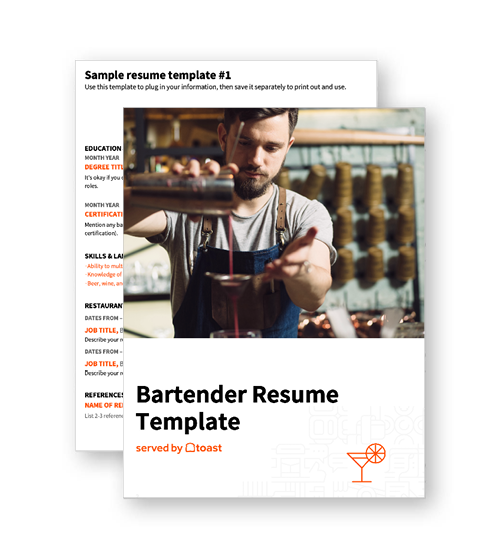
 Bartender Resume Template
Use this easy-to-use Microsoft Word template to showcase your experience and secure your next bartending role!
免费下载How to Become a Bartender With No Experience
Breaking into the bartending industry without prior experience can seem daunting, but with strategic planning and persistence, it's entirely achievable.
Bartending jobs offer great money, flexible schedules, and skills you can use anywhere. Here's how to get started from scratch and land your first gig behind the bar.
The best part? You don't need a fancy degree to make this happen - just some practical knowledge, a bit of training, and determination to get your foot in the door.
Understanding the bartending profession
Before diving in, it's important to understand what professional bartending entails. Modern bartenders do much more than pour drinks - they create experiences, manage inventory, handle money, and serve as the face of an establishment.
According to recent data, the average bartender's salary in the United States typically ranges between $16,500 and $31,000 annually, depending on experience, location, and the establishment.
What many newcomers don't realize is that tips can significantly increase earnings. Bartenders can boost their income through tips, which can amount to an additional $50 to $300 or more per day, depending on the establishment and the bartender's skill level. Customers typically tip between 15% and 20% of the total bill.
Experience also plays a significant role in earning potential. Entry-level bartenders with less than 1 year of experience earn about $23,152 annually. With 1-2 years of experience, the average salary increases to $23,646, and for 2-4 years of experience, pay typically rises to $24,722.
Start with entry-level positions
The most practical way to enter the bartending world with no experience is by taking entry-level positions in bars or restaurants. Most experienced bartenders recommend starting as a barback if you want to learn the profession. This position requires no experience, only a willingness to work hard. Barbacks essentially act as the bartender's assistant, handling tasks like cleaning, restocking, and heavy lifting, which puts them in an excellent position to learn and observe.
Working as a barback might be physically demanding, but the benefits are substantial:
You'll gain invaluable insights into bar operations
You'll build relationships with experienced bartenders who can mentor you
You'll demonstrate your work ethic to management
You'll learn the inventory and tools of the trade firsthand
Most professional bartenders didn't start out as bartenders. They began as servers or barbacks, learned the fundamentals, and worked their way up. Starting in these roles is not only easier to achieve without experience but allows you to learn the industry from the ground up.
Consider bartending education
While on-the-job training through entry-level positions is valuable, formal education can accelerate your journey and make you more competitive.
In many states, obtaining a bartender license requires completing a 40-hour course that includes both classroom learning and practical lab time, followed by passing written and practical exams. These courses typically cover:
Mixology fundamentals and drink recipes
Alcohol types and properties
Responsible alcohol service principles
Customer service skills
Bar management and inventory
Legal and ethical responsibilities
Bartending certification can make finding employment much easier and help make you a more skilled professional. Many states require an Alcohol Server Certification (bartending license) before anyone can sell or serve alcohol.
The cost of bartending education varies. Basic online courses can cost up to $200, while in-class sessions may cost anywhere up to $700. For example, the New York Bartending School charges $695 for a 40-hour class.
Develop essential bartending skills
Beyond formal education, there are several key skills you should develop to succeed as a bartender:
Technical skills
Drink knowledge: Learn classic cocktail recipes and their variations
Pouring techniques: Practice consistent and accurate pouring
Speed and efficiency: Develop the ability to handle multiple orders simultaneously
Bar tool proficiency: Become comfortable using shakers, jiggers, strainers, and other tools
POS system operation: Familiarize yourself with point-of-sale systems
At busy bars, efficiency and consistency are essential. Many bartenders are turning to pre-batched cocktails to keep up with high customer demand while maintaining quality. Popular options include sangria, espresso martinis, and margaritas.
Soft skills
Customer service: Develop excellent interpersonal and communication abilities
Memory: Train yourself to remember basic recipes, faces, and regular customers' preferences
Multitasking: Practice handling multiple tasks under pressure
Problem-solving: Learn to deal with difficult situations calmly and effectively
Teamwork: Develop the ability to coordinate with other staff members
Starting as a bartender is all about building the basics and practicing your skills. You don't need a ton of experience to get started - begin by learning essential drink recipes, practicing basic techniques, and getting familiar with ingredients and bar tools.
Create a targeted resume
Even with no direct bartending experience, you can create a bartender resume that highlights relevant skills and experiences.
When applying for bartending positions with no experience, emphasize skills that transfer well to bartending, such as customer service, reliability, communication, and teamwork. Much of a bartender's responsibilities involve speaking to patrons in casual conversations and business transactions.
Here's how to structure your bartending resume with no experience:
Contact Information: Include your name, phone number, email, and address
Objective Statement: Express your enthusiasm for bartending and willingness to learn
Skills Section: Highlight relevant transferable skills (customer service, multitasking, cash handling)
Education: Include your high school diploma, college education, and any bartending courses
Work Experience: Focus on customer service roles and emphasize transferable skills
Certifications: List relevant certifications, like alcohol awareness training
References: Include references who can vouch for your work ethic and reliability
Bartender Resume Template
Use this easy-to-use Microsoft Word template to showcase your experience and secure your next bartending role!

Job hunting strategies
With your education and resume ready, it's time to begin your job search. Here are a few effective strategies:
Cast a wide net
Apply to a variety of establishments, both small and large, and try to be available for whatever scheduling needs they may have. For example, taking morning bartender shifts at a hotel may sound unusual, but could provide valuable entry-level experience.
Target the right venues
Before applying, figure out what kind of bar you want to work at. There are many types - country clubs, banquet halls, hotel bars, taverns, pubs, nightclubs, lounges - and each has a different feel and requires different skills.
Consider chain restaurants
Chain restaurants may be more flexible about experience requirements than some other establishments. A bartending position at these restaurants may also come with more comprehensive training and company literature that teaches special drinks.
Network aggressively
Use a direct approach by reaching out to bars and restaurants to inquire about potential openings. This proactive method demonstrates your initiative and interest. Also, cultivate positive relationships with hiring managers by thanking them for their time and expressing interest in future opportunities.
Prepare for interviews
Once you secure an interview, preparation is key:
Research the establishment: Understand their concept, clientele, and drink menu
Dress professionally: Aim for neat, clean attire that matches the establishment's style
Prepare for common questions: Be ready to discuss why you want to be a bartender and what skills you bring
Show enthusiasm: Express genuine interest in learning and growing within the establishment
Be honest about experience: Acknowledge your lack of experience but emphasize your eagerness to learn
Prepare for bartender interview questions like "What attracts you to bartending specifically?" and "Why do you think you'd be good in this role?" Focus on showcasing your relevant skills such as multitasking, problem-solving, and customer service, even if your experience isn't directly related to bartending.
Learning on the job
Once you land your first bartending job, the learning continues:
Shadow experienced bartenders: Watch and learn from those who have mastered the craft
Ask questions: Don't be afraid to ask for clarification or guidance
Practice during slow periods: Use downtime to perfect your technique
Request feedback: Ask for constructive criticism from managers and colleagues
Stay updated: Keep learning about new drinks, techniques, and trends
Bartending can be demanding, especially on busy nights. You must be ready to recall hundreds of cocktails, ensure customers are happy, and remain vigilant about safety.
The path forward
Remember that becoming a successful bartender is a journey, not an overnight transformation. Becoming a bartender takes determination, dedication, and a willingness to start at the bottom and work your way up. At the end of all that working and learning, you'll have a fun, exciting, and well-paying job.
So take that first step, whether it's enrolling in a bartending course, applying for a barback position, or reaching out to local establishments. The journey to becoming a bartender starts with your willingness to learn and grow in this dynamic and rewarding profession.
这篇文章有帮助吗?
免责声明:此信息仅作为一般性参考,发布并不构成认可。Toast 不保证本内容中包含的任何信息、文本、图形、链接或其他项目的准确性或完整性。Toast 不保证如果您遵循本文的任何建议,就能取得任何特定结果。您可能需要咨询专业人士,如律师、会计师或商业顾问,以获取针对您情况的具体建议。
 趋势
趋势