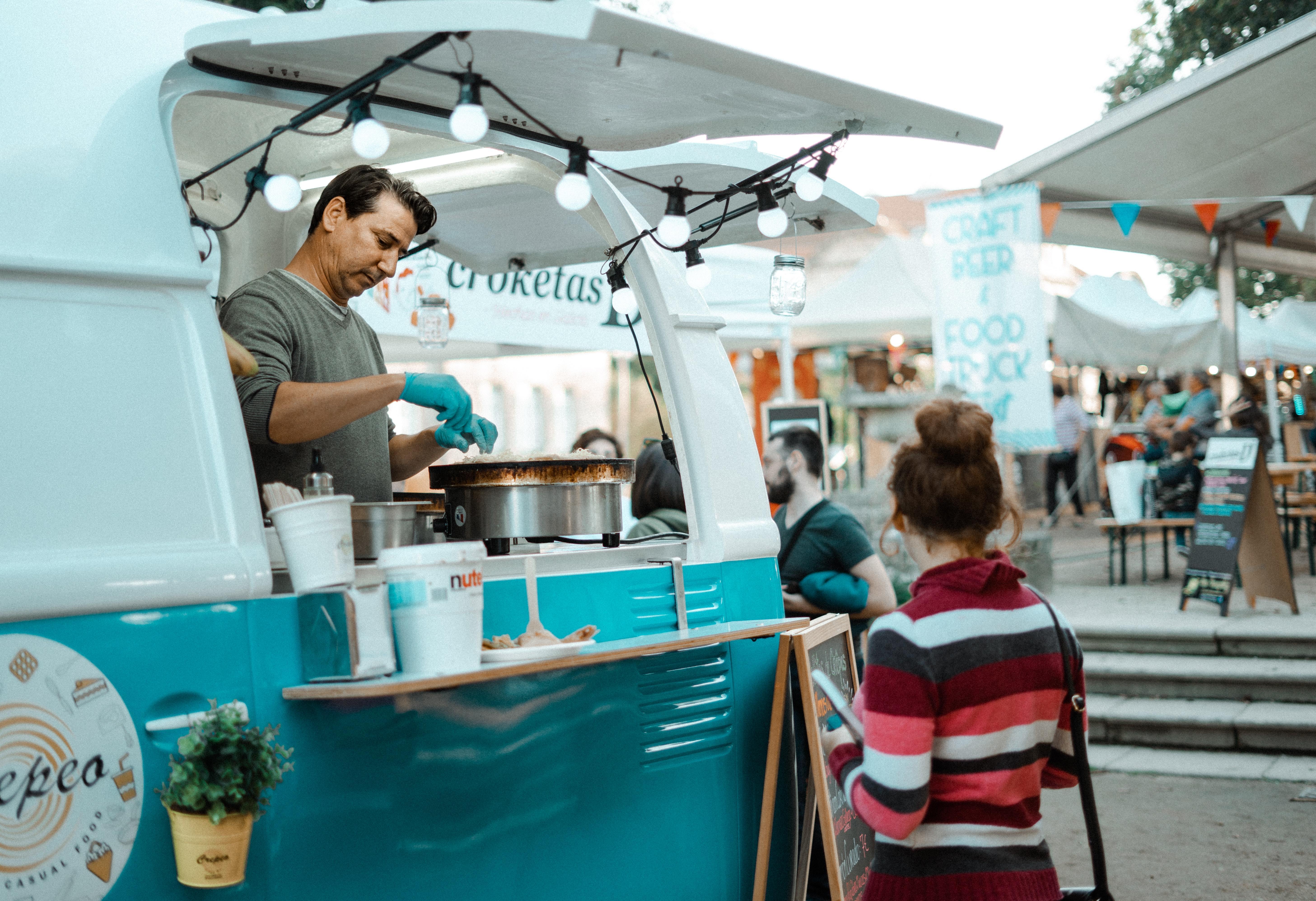
How Much Does a Food Trailer Cost? Key Factors & Budget Tips in 2025
Picking the right food trailer requires balancing upfront and long-term costs. Learn how much food trailers cost and how to find one within your budget.
作者

Food Truck Profit Margin Calculator
Use this free Food Truck Profit Margin Calculator to help consistently capture and track your profit margin.
免费下载Food trailers offer a flexible, lower-cost way to launch a food business — but they’re not always cheap. From size and layout to equipment, materials, and customization, prices can range from a few thousand dollars for a used shell to well over $100,000 for a fully equipped custom build.
Whether you’re looking to serve tacos at festivals, coffee at farmers markets, or run a full-service kitchen on wheels, understanding what goes into the cost of a food trailer is the first step toward planning your budget — and your success.
Key takeaways
Food trailers are more affordable than restaurants but can still cost tens of thousands depending on size, equipment, and customization.
Layout and equipment choices have major cost implications — a well-designed small trailer can outperform a larger, poorly planned one.
Health codes and permitting can be complex and costly, especially if retrofits are needed or your city has strict regulations.
Customization boosts brand identity and efficiency but adds to build time and expenses — prioritize what truly supports your workflow.
Buying, leasing, or renting each has trade-offs — choose based on your long-term goals, budget, and how committed you are to the business.
Food Truck Profit Margin Calculator
Use this free Food Truck Profit Margin Calculator to help consistently capture and track your profit margin.

How much do food trailers cost?
Food trailer prices can vary wildly depending on size, equipment, and customization — but most businesses can expect to spend between $20,000 and $120,000 for a fully functional unit.
On the low end, you might find used trailers on platforms like eBay for as little as $6,000–$10,000, though these typically require upgrades to meet modern health and safety codes. On the other end of the spectrum, custom-built concession trailers can exceed $150,000, with some high-end models listed for over $200,000.
Keep in mind that these costs generally cover the trailer itself — not the permits, initial inventory, POS system, or ongoing costs of running a mobile food business. That said, starting with a food trailer is still much more affordable than opening a brick-and-mortar restaurant, making it a popular choice for first-time operators, caterers, and growing mobile brands. Here’s a rough breakdown of typical ranges:
Entry-level / basic builds: $15,000–$30,000
Mid-tier / semi-custom builds: $30,000–$60,000
High-end / fully customized builds: $60,000–$120,000+
Factors affecting food trailer pricing
Food trailers come in all shapes, sizes, and price points — and the final cost depends on more than just the sticker price. From the size of your trailer to the type of equipment inside, several factors impact how much you’ll need to invest.
1. Size and layout
The size of your trailer is one of the biggest factors influencing cost. Larger trailers require more materials, more interior finishing, and more capacity for equipment — which all increase the price. Think carefully about how much space your concept really needs — and remember that every extra foot adds cost.
Smaller trailers: Often more affordable but may limit your menu or require more frequent restocking.
Mid-sized and large trailers: Give you more room to prep, cook, and serve, but come with higher costs for both the build and ongoing operations.
2. Equipment and utilities
A trailer with full cooking capabilities will always cost more than one focused on vending or prepackaged food. Remember, each of these utilities also adds weight and power demands, which may affect your trailer design and towing setup. Be sure to prioritize the tools your menu actually needs, which might include:
Cooking equipment like griddles, fryers, ovens, or steam tables — these add significant cost and often require fire safety features.
Refrigeration and cold storage are essential for many menus, especially when handling perishable ingredients.
Sinks, water tanks, and plumbing are typically required for food prep and handwashing, and they must meet health code standards.
Ventilation systems, propane hookups, electrical wiring, and fire suppression systems add complexity — and cost.
3. Build quality and materials
Not all trailers are built the same — and the materials used have a big impact on both upfront cost and long-term durability. Cheaper builds might save money initially but could lead to higher maintenance or replacement costs down the line.
Stainless steel interiors are the gold standard for food safety and cleanability, but they’re more expensive than alternatives like aluminum or coated wood.
Insulated walls and durable flooring help maintain temperature, reduce wear and tear, and support heavy foot traffic and equipment.
High-quality fabrication ensures the trailer can handle constant movement, frequent cleaning, and the demands of daily service.
4. Customization
Customizing your trailer can boost brand identity and improve efficiency, but it also increases the overall cost. From eye-catching wraps to unique interior layouts, even small personalizations add up. Think of customization as an investment in marketing and operations.
Exterior graphics and signage help you stand out and build recognition, especially in competitive food truck scenes.
Custom shelving, prep stations, or storage solutions can make your workflow smoother — but usually require more design and fabrication time.
Unique builds like fold-out counters, rooftop displays, or themed decor are great for branding, but may complicate permits or maintenance.
Customization also lets you maximize space for your specific needs. For example, Teppanyaki chef Armando Moya opted for a performance-focused layout that eliminated unneeded equipment to make room for essentials. The chef explained:
“My truck has two giant windows and two grills… I didn’t want a fryer, so we were able to add two extra coolers and a built-in rice cooker, something you only see in restaurants.”
5. Health and safety code compliance
Food trailers must meet local health and fire safety standards — and those requirements can affect your bottom line. The more cooking you plan to do onsite, the more complex your trailer’s systems may need to be. Check with your local health department early in the process. Meeting these standards isn’t optional, and retrofitting later can be expensive and time-consuming.
Ventilation and hood systems are required for trailers with grills, fryers, or other high-heat cooking equipment.
Plumbing and wastewater systems must meet local health codes, especially if you're prepping food or washing dishes inside the trailer.
Fire suppression systems may be mandatory for trailers with open flames or fryers — and they can be a significant additional cost.
In some cities, fees and zoning rules go even further. In Chowchilla, CA, food trailer operators like Digna and Adonay Díaz faced proposed costs of up to $100 per day or $36,500 annually, plus strict placement rules that required permission from nearby restaurants. Ultimately, the couple relocated their trailer to Madera — where the same permit cost just $614 per year.
6. Power setup
How your trailer is powered plays a big role in both the upfront cost and ongoing expenses. Some setups require more infrastructure, while others offer more flexibility or savings over time. Choosing the right power setup comes down to where you’ll operate and how much electricity your equipment demands.
Generators are a common choice, especially for trailers operating in parks, parking lots, or other off-grid locations. However, they can be noisy, require fuel, and need regular maintenance.
Shore power hookups let you connect to a nearby power source — often a good option for semi-permanent setups or trailers parked at commissary kitchens or food truck parks.
Battery-based systems (including solar setups) are growing in popularity for low-power trailers like coffee carts or vending units, but the upfront cost can be high depending on capacity needs.
7. New vs. used
New trailers come with warranties, modern features, and fully customized options — but they’re also more expensive. Used trailers can be a great way to save, but they come with more risk and may need retrofitting. Whether new or used, always factor in the cost of any changes or inspections you’ll need to pass local permitting requirements.
New trailers: Ideal if you want something built around your concept from day one. You’ll pay more, but you’ll also get a setup that meets current health and safety codes with no surprises.
Used trailers: You can find good deals. Just make sure to inspect carefully for wear, outdated systems, or non-compliant builds that might require costly upgrades.
8. Rent, lease, or buy
How you acquire your trailer can significantly impact your upfront and long-term costs. Each option comes with trade-offs depending on your budget, business goals, and flexibility needs.
Buying gives you full ownership and control. It’s the most expensive upfront, but over time it can be more cost-effective — especially if you plan to operate for years or customize heavily.
Leasing can be a good middle ground. You pay a monthly fee, often with an option to buy later. This lets you get started without the full purchase cost, but the long-term expense may be higher.
Renting is typically short-term and best for events, pop-ups, or test runs. It’s the most flexible and lowest commitment option, but you’ll have limited customization and may face availability issues.
If you’re just testing your concept or only need a trailer occasionally, renting or leasing might make more sense. But if you’re in it for the long haul, buying usually gives you the most value and control.
Tips for finding an affordable food trailer
Whether you're just getting started or trying to keep startup costs low, there are ways to save without cutting corners on safety or quality:
Buy used — but inspect carefully: You can often find pre-owned trailers at a steep discount, especially on sites like Craigslist, eBay, or dedicated marketplaces. Just be sure to inspect before you commit.
Consider partial builds: Some sellers offer “shell” trailers with plumbing or electrical installed but no kitchen equipment. This gives you a lower entry point and lets you outfit it gradually as your budget allows.
Look outside your area: Prices can vary by region, so cast a wide net when searching. Even with transport costs, buying from another state can sometimes be cheaper.
Ask about financing or lease-to-own options: Some builders and dealers offer payment plans, which can help spread out costs — but be sure to read the fine print.
Stick to what you actually need: Fancy add-ons and specialty equipment drive up costs fast. Start with the must-haves for your current menu and service style. You can always upgrade later.
Remember “hidden” costs: Upfront pricing is just one piece of the puzzle. Don’t forget to factor in long-term expenses like utilities, generator fuel, maintenance, equipment repairs, and local permitting requirements. For instance, Sergio Trujillo, owner of Desnudo Coffee in Austin, TX, detailed costs associated with the city’s permitting requirements:
“For us it requires about a two-day process… One day for sure we are closed, because the trailer has to go there at the time slot that we get assigned. But the day before we have to start moving the whole setup.”
Don’t let food trailer costs run you off the road
Whether you're buying new, shopping used, or considering a lease, understanding what drives food trailer pricing helps you make smarter decisions and avoid costly surprises. Start with a business plan: clarify your menu, space needs, and service goals. From there, you can build (or buy) a trailer that fits your concept — without blowing your budget!
这篇文章有帮助吗?
免责声明:此信息仅作为一般性参考,发布并不构成认可。Toast 不保证本内容中包含的任何信息、文本、图形、链接或其他项目的准确性或完整性。Toast 不保证如果您遵循本文的任何建议,就能取得任何特定结果。您可能需要咨询专业人士,如律师、会计师或商业顾问,以获取针对您情况的具体建议。
 趋势
趋势