
What Are Drive Through Restaurants & Why Are They Popular?
Drive through restaurants are built for speed and convenience. Explore what they are, how they started, and why they're so popular today.

作者
 RESOURCE
 Opening a Fast Casual Restaurant Checklist
So many things go into opening a fast casual restaurant. With this free PDF checklist, you'll set your new business up for success.
免费下载Few dining innovations have shaped everyday life quite like the drive-through. Whether it’s grabbing a morning coffee, picking up dinner on the way home, or satisfying a late-night craving, drive-through restaurants have become a daily routine for many Americans.
What makes them so enduring is simple: they blend speed, convenience, and accessibility in a way that traditional dining can’t always match. In this article, we’ll look at what drive-through restaurants are, how they started, why they remain so popular, and how they operate behind the scenes.
Key takeaways
Drive-through restaurants let customers order and pick up food without leaving their cars.
They began in America’s mid-20th-century car culture and quickly spread through fast food chains.
Their popularity comes from convenience, speed, accessibility, and flexibility for busy lifestyles.
Behind the scenes, drive-throughs rely on efficient layouts, technology, and staffing to keep orders moving.
Drive-throughs continue to evolve with digital menus, mobile ordering, and AI-driven tools.
What are drive through restaurants?
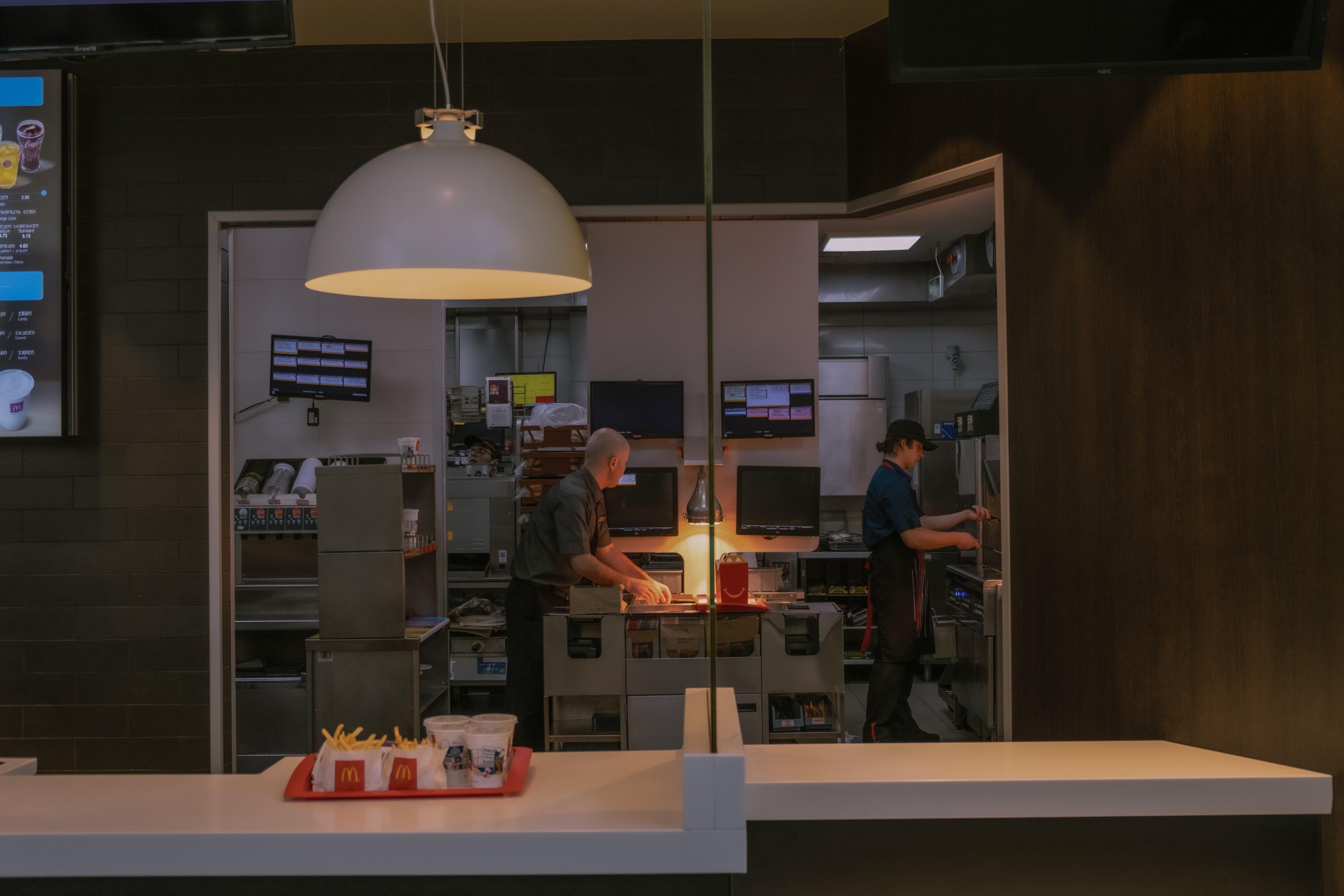
Drive-through restaurants are designed to let customers order and pick up food without ever leaving their car. Instead of walking inside, diners place their order at a menu board or speaker system, drive to a window to pay, and then receive their meal at another window. It’s all about speed and convenience — making it possible to grab a meal on the go.
While fast food chains like burger spots and taco shops are the most common examples, drive-throughs aren’t limited to them. Coffee shops, bakeries, and even pharmacies have adopted the same model, showing just how versatile the format can be.
How did drive through restaurants start?
Drive-through restaurants grew out of America’s car culture in the mid-20th century. As more families bought cars and suburban life expanded, people wanted ways to eat that fit into their busy, mobile routines. Restaurants began experimenting with ways to serve food directly to customers without requiring them to leave their vehicles.
The first drive-ins, where carhops brought meals out to parked cars, set the stage. But in the 1940s and 1950s, some restaurants went a step further by adding drive-through lanes with dedicated order windows. Fast food chains quickly saw the potential: serving more customers, faster, without the need for as much indoor space.
By the 1970s and 1980s, drive-throughs had become a cornerstone of fast food, with major brands designing entire locations around them. What started as a novel experiment turned into a lasting part of dining culture.
Why are drive through restaurants popular?
Drive-through restaurants continue to thrive because they meet customers where they are: busy, on the go, and looking for convenience. They offer quick service without the need to park, go inside, or wait for table service. Here are a few reasons why drive-throughs remain so popular:
Convenience: Customers can order and pick up meals without leaving their car.
Speed: Faster service compared to sit-down dining.
Accessibility: Easier for parents with kids, commuters, and those with limited mobility.
Flexibility: Ideal for quick coffee runs, late-night snacks, or meals on the road.
Contactless appeal: Gained even more traction during the pandemic as a safer, low-touch option.
餐厅运营手册模板
使用这份免费模板,您可以轻松列出所有运营程序,并确保日常运营尽可能一致。

How drive through restaurants operate
Drive-throughs may look simple from the customer side, but behind the scenes they rely on thoughtful design, technology, and teamwork to keep things moving quickly. From the layout of the lanes to the roles of staff members, every detail is geared toward speed and accuracy. Key elements of how drive-through restaurants operate include:
Layout: A clear lane with menu boards, order points, payment windows, and pickup windows.
Ordering systems: Speakers, headsets, and increasingly digital kiosks or app integration to streamline orders.
Menu boards: Traditionally static, but now often digital to allow updates, promotions, and easier reading.
Staffing: Dedicated team members handle order-taking, payment, and food prep to reduce bottlenecks.
Technology: POS systems, timers, and even AI tools help improve order accuracy and track service speed.
Traffic flow management: Signs, lane markings, and sometimes double lanes keep cars moving efficiently.
From carhops to the fastlane
Drive-through restaurants have come a long way from their early days in America’s car culture. What started as a novel way to grab a burger on the go has grown into a dining format that millions rely on every day — from coffee runs to late-night snacks.
As technology evolves and customer expectations change, drive-throughs will keep adapting with digital menus, mobile ordering, and even AI-driven service. What won’t change is their appeal: quick, convenient, and perfectly suited to busy lives.
FAQ
Which restaurant chain has the fastest drive-through service?
Taco Bell consistently ranks as one of the fastest, with average service times of just over four minutes.
What was the first drive-through restaurant?
Kirby’s Pig Stand, founded in 1921 in Dallas-Fort Worth, is credited as the first. It started as a drive-in with carhops, then introduced the concept of a drive-through window to serve more customers efficiently.
How much of fast-food sales come from drive-throughs?
Estimates vary, but studies suggest anywhere from 40% to 70% of fast-food sales are made through drive-through lanes.
Which chain has the most accurate drive-through orders?
Chick-fil-A leads in order accuracy, with more than 9 out of 10 orders filled correctly.
How is artificial intelligence being used in drive-throughs?
AI is being tested to speed up ordering, reduce errors, and free up staff. Examples include voice assistants that take orders, smart menu boards that suggest items, and predictive systems that help kitchens prepare for peak demand.
AI Prompt Library for Restaurants
Use these AI prompts to help get the specific, practical guidance your restaurant needs.
这篇文章有帮助吗?
免责声明:此信息仅作为一般性参考,发布并不构成认可。Toast 不保证本内容中包含的任何信息、文本、图形、链接或其他项目的准确性或完整性。Toast 不保证如果您遵循本文的任何建议,就能取得任何特定结果。您可能需要咨询专业人士,如律师、会计师或商业顾问,以获取针对您情况的具体建议。
 趋势
趋势
