How to Open a Delivery Only Restaurant: A Step-by-Step Guide
Ghost kitchens have a low barrier to entry, and demand for takeout is high. Explore how to open a delivery only restaurant from concept to launch.
作者
 RESOURCE
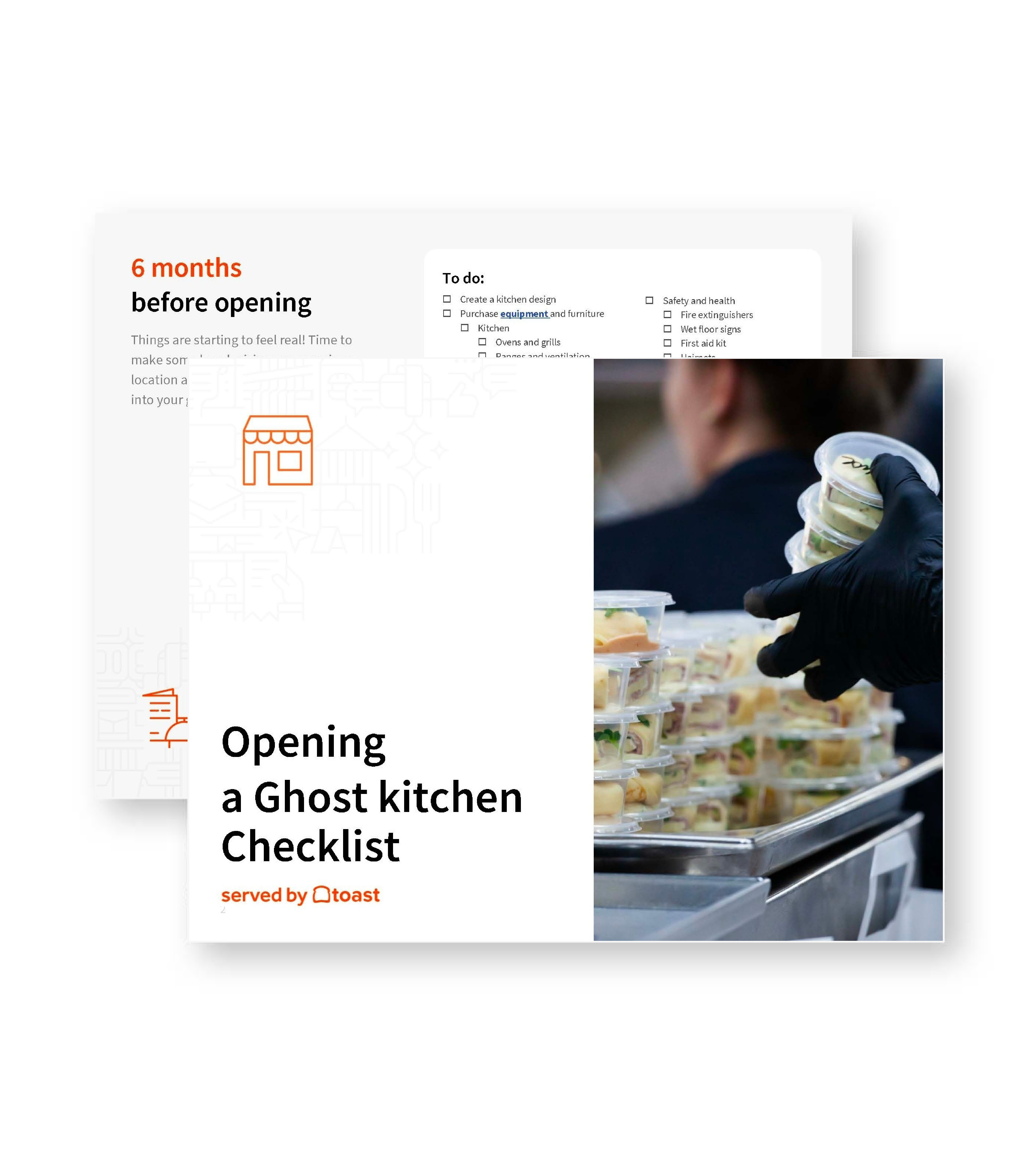
 Opening a Ghost Kitchen Checklist
So many things go into opening a ghost kitchen. With this free PDF checklist, you'll set your new business up for success.
免费下载Diners today often blend takeout and dine-in equally, with a Toast delivery trend survey finding that 30% of adults say they order delivery about as often as they visit a restaurant. Nearly 40% place takeout or delivery orders 3–5 times a month, and convenience is a major driver—especially on busy workdays.
For operators, that demand creates a huge opportunity. A delivery-only restaurant lets you meet customers where they already are, without the costs of a full dining room. With the right menu, technology, packaging, and workflow, you can build a delivery-first concept that’s efficient, profitable, and built for scale.
In this guide, we’ll walk through every step of opening a delivery-only restaurant so you can launch with confidence and create a seamless experience for hungry customers.
Key takeaways
Delivery-only restaurants offer a low-cost, flexible way to meet rising demand for takeout.
Success starts with a clear concept, strong branding, and a delivery-friendly menu.
Smart technology—POS integrations, online ordering, and KDS—keeps operations efficient.
Thoughtful packaging, workflow design, and staff training ensure consistent guest experiences.
Data-driven adjustments help refine your menu, improve efficiency, and scale your business.
定期自动补货库存表模板
借助这份可定制的定期自动补货库存表模板,无缝跟踪库存。

1. Define your delivery-only concept
Your concept sets the foundation for everything else—your menu, branding, pricing, and customer expectations. A strong delivery-only concept should fill a real need in your market while staying simple enough to execute consistently during busy rushes.
Identify your niche: Comfort food, bowls, wings, plant-based, global street food, late-night specialties, and more.
Match your menu to demand and competition: Look at what’s popular locally and where your restaurant can stand out.
Clarify your brand identity: Define your tone, menu style, and packaging aesthetic so your concept feels cohesive across delivery apps.
Set the right price point: Ensure your pricing reflects food costs, delivery fees, and customer expectations.
2. Conduct market research
Before launching, it’s crucial to understand who you’re serving and what the competition looks like. Delivery-only restaurants thrive when they fill a gap in the local market and offer something that customers can’t already get from existing options.
Analyze local delivery trends: Identify peak times, popular cuisines, and neighborhoods with high online ordering activity.
Study competitors on delivery apps: Review menus, pricing, ratings, photos, and order volumes.
Spot market gaps: Look for underserved cuisines, unfilled time windows, or areas lacking strong delivery options.
Validate pricing and demand: Confirm that customers are willing to pay your target price point and that your area can support expected order volume.
3. Build a delivery-friendly menu
A successful delivery-only menu is built around food that travels well, tastes great on arrival, and can be prepared efficiently. Your goal is to avoid items that wilt, melt, spill, or decline in quality during transit.
Prioritize travel-friendly items: Choose dishes that maintain texture, temperature, and presentation.
Use modular ingredients: Build multiple dishes from overlapping components to streamline prep and reduce waste.
Plan packaging early: Select containers that keep food hot (or cold), protect moisture, and maintain structure.
Optimize for speed and consistency: Design menu items that can be executed quickly during peak demand.
4. Determine your operating model
Your operating model will shape your costs, layout, flexibility, and long-term scalability. Delivery-only restaurants have more options than traditional dine-in spots, so choosing the right setup early on can help you control overhead and grow efficiently.
Compare all costs: Consider rent, utilities, equipment needs, and ongoing operating expenses.
Evaluate shared or ghost kitchens: These turnkey facilities offer lower upfront investment, built-in infrastructure, and shorter launch timelines.
Assess independent space options: Leasing your own kitchen gives full control but requires more capital and buildout.
Consider running multiple brands: Some operators use one kitchen to power several virtual brands, increasing revenue potential without adding new locations.
One high-profile example is TikTok Kitchen, a delivery-only concept launched by TikTok in partnership with Virtual Dining Concepts.
Operating through a ghost-kitchen model inside existing restaurant kitchens, TikTok Kitchen offered an ever-changing menu of viral recipes—from baked feta pasta to corn ribs—and scaled quickly across hundreds of U.S. locations.
5. Estimate startup costs and build your budget
A clear budget helps you understand your true launch costs and avoid surprises. Delivery-only restaurants tend to have lower startup expenses than dine-in concepts, but you’ll still need to plan carefully for equipment, tech, and early operating needs.
Kitchen rent or ghost kitchen fees: Monthly costs vary widely by city and facility type.
Equipment, smallwares, and storage: Focus on essentials that support your streamlined delivery menu.
Technology tools: POS, online ordering, KDS, inventory tools, and delivery platform integrations.
Permits, licenses, and insurance: Budget for required regulations and safety compliance.
Initial food and packaging inventory: Stock ingredients and delivery-ready packaging that matches your menu.
6. Secure permits, licensing, and insurance
Even without a dining room, delivery-only kitchens must meet the same health and safety standards as traditional restaurants. Ensure you’re properly licensed before accepting your first order.
Food service license and inspections: Meet local health department requirements for commercial kitchen operations.
Business registration: Form your business entity and comply with local tax rules.
Health and safety requirements: Follow sanitation, storage, and temperature guidelines specific to takeout and delivery.
Delivery-related insurance: Protect your business with coverage for drivers, third-party partnerships, and liability needs.
7. Set up your kitchen and equipment
A delivery-only kitchen should be designed for speed, consistency, and efficient movement. With no dine-in traffic to navigate, every station can be arranged to support high-volume prep and rapid order turnover.
Optimize your layout for speed: Position stations to minimize steps between prep, cook, and pack.
Choose essential cookline equipment: Select ovens, fryers, grills, or specialty tools that fit your cuisine and volume needs.
Organize prep, cold storage, and packaging stations: Keep ingredients and packaging materials within easy reach of the cookline.
Install KDS and POS systems: Ensure all orders—website, app, and third-party—flow into one unified order management system.
8. Choose and integrate your ordering technology
Your ordering tech stack is the backbone of a successful delivery-only restaurant. When all systems communicate seamlessly, you avoid tablet overload, reduce errors, and offer a smooth guest experience from order to pickup.
Website ordering: Encourage direct orders with lower commission fees and better brand control.
Third-party delivery marketplaces: Expand reach through DoorDash, Uber Eats, and Grubhub.
POS integrations: Sync all channels to eliminate manual entry and consolidate tickets.
Order throttling and menu syncing: Adjust availability during rushes and keep menus consistent everywhere.
Customer communication tools: Provide pickup instructions, SMS updates, and substitute options.
9. Develop delivery logistics and packaging systems
Delivery-only restaurants depend on thoughtful handoff workflows and packaging built for travel. The right systems ensure orders leave the kitchen quickly, arrive intact, and keep guests coming back.
Pickup shelves and driver workflows: Create clear zones for organized, fast handoffs.
Travel-friendly packaging: Use containers that maintain temperature, prevent leaks, and preserve presentation.
Clear labeling: Include reheating instructions, allergen notes, and item modifiers.
In-house vs. third-party delivery: Decide whether your team or outsourced couriers will handle deliveries based on cost, demand, and control.
10. Hire and train your team
Even without a dining room, a delivery-only restaurant still needs a well-trained, efficient team. Staff should be skilled in high-volume prep, fast packaging, and communicating clearly during busy periods. The goal is predictable execution—every order leaving the kitchen should look and taste the same.
Determine staffing needs: Prep cooks, line cooks, expeditors/packagers, and possibly a delivery coordinator.
Train for speed and consistency: Focus on portioning, packaging quality, and timing.
Implement BOH communication systems: Use KDS screens, headsets, or messaging tools to keep the kitchen aligned.
Create training materials for order surges: Standardize workflows, especially if running multiple concepts under one roof.
11. Create your brand, photos, and menu listings
Your digital storefront is your restaurant—strong branding and high-quality photos will directly influence conversion rates. The more appealing and clear your listings are, the more likely guests are to choose you over competitors.
Develop your visual brand identity: Logo, colors, tone, and packaging that support your concept.
Capture high-quality photos: Use images specifically optimized for delivery apps, where food must stand out visually.
Write compelling menu descriptions: Highlight flavors, dietary callouts, and delivery-friendly qualities.
Organize your menu for upselling: Use categories, add-ons, and combos to guide guests through the ordering flow.
12. Launch your marketing and promotions strategy
To gain traction quickly, delivery-only restaurants need a strong promotional push across apps and owned channels. Early momentum helps increase visibility in marketplace algorithms and drive repeat orders.
Promote your brand across delivery apps: Boost rankings with launch promotions or platform-sponsored placements.
Offer first-time order promotions: Options like free delivery or a percentage off can help attract new guests.
Use social media and local partnerships: Build awareness beyond the delivery apps and create community connections.
Encourage repeat orders: Use loyalty tools, email campaigns, or SMS alerts for limited-time specials and reordering.
13. Run a soft launch and adjust based on real-time data
Before going full scale, a soft launch allows you to test your systems, menu, and workflows with real customers. This early window is invaluable for identifying bottlenecks, refining packaging, and ensuring your kitchen can handle the pace of incoming orders. Small adjustments now can dramatically improve long-term efficiency.
Start with limited hours or a limited menu: Reduce complexity while you test your core items.
Track ticket times and packaging issues: Watch how long orders take and whether items arrive intact.
Monitor customer feedback: Use reviews, direct messages, or delivery app notes to pinpoint pain points.
Adjust workflows, pricing, and staffing: Refine operations based on actual demand patterns.
14. Use analytics to optimize operations
Data is one of the biggest advantages of running a ghost kitchen. With insights from your POS, KDS, and delivery platforms, you can make smarter decisions that improve profitability, reduce waste, and meet guest expectations more consistently.
Monitor bestsellers and low performers: Identify which items drive revenue—and which to retire or rework.
Evaluate delivery zones and peak times: Optimize your delivery radius and staffing schedule.
Forecast inventory using POS/KDS data: Prevent shortages, reduce over-ordering, and maintain consistent quality.
Iterate on menu and marketing strategy: Use real performance data to refine pricing, combos, promotions, and descriptions.
No dining room? No problem!
Opening a delivery-only restaurant is an exciting opportunity to build a food business that’s fast, flexible, and built for how people actually eat today.
Local Kitchens, for example, began as a ghost kitchen during the pandemic and has since expanded into a small but growing chain with more than a dozen locations across California. With the right systems in place, you can create an operation that feels smooth for your team and incredibly convenient for your guests.
SOP 模板
此模板可帮助您为整个业务创建标准操作程序,从而保持一致性并轻松培训员工。
FAQ
How much does it cost to start a delivery-only restaurant?
Startup costs vary widely depending on your market and operating model. Shared or ghost kitchen spaces typically require far less upfront investment than a standalone buildout, since equipment and utilities are already in place.
How long does it take for a ghost kitchen to become profitable?
Profitability depends on order volume, menu pricing, operating costs, and how quickly you build visibility on delivery apps. Many operators see traction within a few months, especially with strong branding, efficient workflows, and consistent execution.
What profit margins can I expect?
Margins vary, but delivery-only operations often benefit from lower overhead compared to traditional dine-in restaurants. Costs like rent, labor, and utilities are typically reduced, while packaging and delivery fees become larger considerations.
Do I need a commercial kitchen, or can I cook from home?
In most cases, you must operate from a licensed commercial kitchen that meets local health and safety regulations. Home kitchens generally cannot be used for commercial food production unless you fall under cottage-food laws.
Should I use third-party delivery or manage my own?
Third-party platforms offer instant reach and built-in demand but charge commissions that affect margins. Managing your own delivery gives you more control and lower per-order costs but requires staff, insurance, and logistics planning.
What types of food work best for delivery-only restaurants?
Menus built around items that travel well tend to perform best. Think bowls, rice and noodle dishes, fried chicken, tacos, burritos, burgers, salads with sturdier greens, and comfort-food classics.
餐厅经营计划模板
无论您处于餐厅经营的何种阶段,一份经营计划都将是您的指路明灯。利用这份免费模板梳理自己的愿景,确保万无一失。

这篇文章有帮助吗?
免责声明:此信息仅作为一般性参考,发布并不构成认可。Toast 不保证本内容中包含的任何信息、文本、图形、链接或其他项目的准确性或完整性。Toast 不保证如果您遵循本文的任何建议,就能取得任何特定结果。您可能需要咨询专业人士,如律师、会计师或商业顾问,以获取针对您情况的具体建议。
 趋势
趋势