What Is a Credit Card Authorization Form & How Does It Work?
A credit card authorization form documents a cardholder’s consent to a charge. Learn how it works, when to use one, and what to include.
作者
A credit card authorization form is a written record giving a restaurant permission to charge a card for a specific purchase, fee, or payment schedule.
Restaurants typically use one when the cardholder is not present or a charge will happen later, such as a catering deposit, final event balance, or cancellation fee. The form documents consent, but it does not approve the transaction or guarantee protection from a dispute.
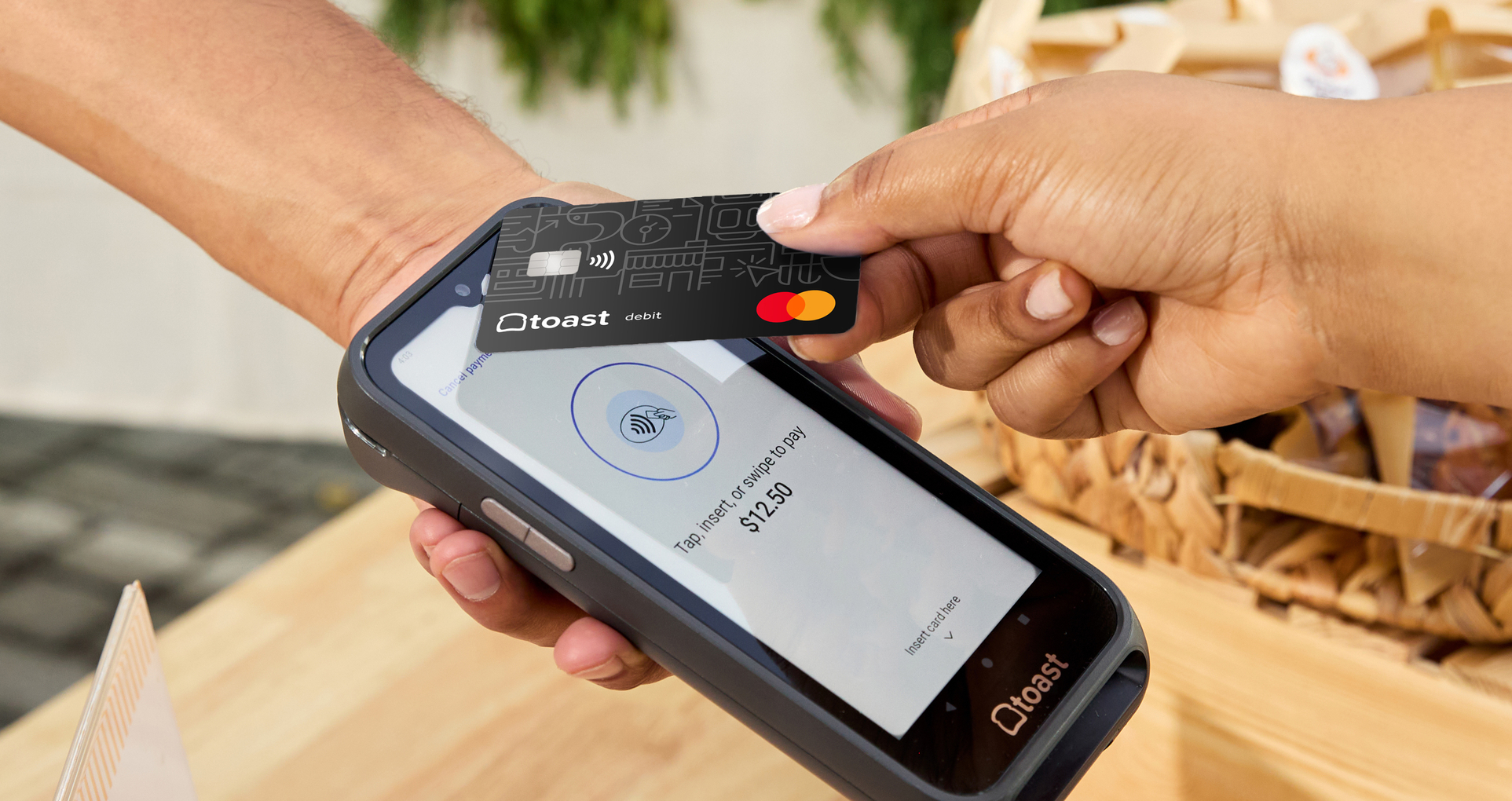
The restaurant must still submit the payment to the card issuer through a secure processing system. Toast Payments supports that step with in-person and online payment processing, payment-data encryption, and PCI DSS-compliant services.
This guide explains when credit card authorization forms are useful, what they should include, and how restaurants can handle them securely.
Key takeaways
A credit card authorization form documents consent for a specific charge but does not approve the payment or prevent disputes.
Restaurants use authorization forms mainly for future, recurring, or card-not-present charges.
The form should clearly state the charge amount, purpose, timing, and cancellation or refund terms.
Payment details should be collected through a secure, PCI DSS-compliant system, and card verification codes must never be stored.
餐厅 POS 机系统比较工具
这是一个免费、可定制的餐厅 POS 机系统比较工具,可用于在 Excel 电子表格中研究和比较 POS 机系统。

What is a credit card authorization form?
A credit card authorization form is written evidence that a cardholder agreed to a clearly described charge. It should answer four basic questions: who approved the charge, what the charge covers, how much may be charged, and when the transaction may occur.
Restaurants most commonly use authorization forms for card-not-present transactions or future purchases. If a guest pays at the restaurant through the normal checkout process, a separate form is generally unnecessary.
The person signing the form should be the cardholder or someone authorized to use the card. The form should also use precise payment terms instead of giving the restaurant open-ended permission to charge an unspecified amount.
Credit card authorization form vs. payment authorization
A credit card authorization form is not the same as the authorization performed by a payment processor. Signing a form does not confirm that funds or credit are available. The restaurant must still submit the transaction through the payment authorization process, and the issuer can approve or decline it.
Term | What it means |
Credit card authorization form | The cardholder’s documented permission for the merchant to make a specified charge |
Payment authorization | The card issuer’s approval after a transaction is submitted for processing |
Card preauthorization | A temporary hold used to confirm that funds or credit are available |
Payment capture | The step that finalizes an authorized payment for settlement |
Why do restaurants use credit card authorization forms?
Credit card authorization forms help restaurants establish clear payment terms when a transaction cannot be completed through the usual in-person checkout process.
Document consent: Record what the cardholder agreed to pay.
Define the payment: Establish the amount, purpose, timing, and conditions.
Support remote payments: Let an authorized cardholder pay without being physically present.
Manage future charges: Cover deposits, scheduled installments, final balances, or recurring payments.
Reduce misunderstandings: Give the restaurant and cardholder the same written terms.
Standardize procedures: Give employees a consistent process for handling approved future charges.
Support dispute responses: Add documentation that may help demonstrate what the cardholder authorized.
Card-network rules can also require documented consent for certain future charges. For example, the American Express Merchant Regulations require merchants using recurring billing to disclose material terms, obtain express consent, retain evidence of that consent, and provide written confirmation to the cardholder.
An authorization form also does not prevent a cardholder from disputing a charge or guarantee that the restaurant will win. During the chargeback dispute process, contracts, invoices, receipts, cancellation policies, correspondence, and proof that the restaurant delivered the agreed services may also be relevant.
What should a credit card authorization form include?
A useful authorization form should be specific enough that both parties can understand exactly what was approved. Whenever possible, the form should reference a securely stored payment method instead of displaying complete card details.
Restaurant information: Legal or operating name, address, and contact details.
Cardholder information: Name, billing address, phone number, and email.
Transaction details: The event, order, reservation, invoice, or account covered.
Authorized amount: An exact amount, maximum amount, or clearly explained calculation.
Payment timing: The charge date, installment schedule, or recurring frequency.
Additional charges: Whether taxes, gratuities, service fees, damages, or approved overages are included.
Cancellation and refund terms: Conditions affecting deposits, refunds, and fees.
Payment reference: The card brand and last four digits or a secure payment token.
Authorization statement: Plain-language confirmation of what the cardholder permits.
Signature: The cardholder’s signature and date.
Restaurant contact: Instructions for questions, cancellations, or withdrawal of recurring authorization.
Depending on the transaction, a separate restaurant invoice can itemize the charges and payment terms while the authorization form records the cardholder’s consent. Restaurants should collect payment credentials through a secure payment page, processor, or tokenized card-on-file workflow when possible.
餐厅运营手册模板
使用这份免费模板,您可以轻松列出所有运营程序,并确保日常运营尽可能一致。
When should restaurants use a credit card authorization form?
Authorization forms are situational tools, not a requirement for every credit card payment. They are most useful when the cardholder will not complete the transaction in person or when permission covers a later charge.
1. Catering and private events
Catering and private-event contracts often divide large balances into deposits, progress payments, and final charges. The authorization should connect each permitted charge to the contract and its payment schedule.
Deposit: State the amount and charge date.
Interim payments: List each milestone or explain how its amount will be calculated.
Final balance: Define when it becomes due and how approved adjustments will be handled.
Cancellation terms: Identify refundable and nonrefundable amounts.
Supporting records: Retain contracts, invoices, approvals, and event correspondence under a secure retention policy.
For example, a client might authorize a $1,000 deposit when signing the contract, a second payment two weeks before the event, and the remaining approved balance after the final guest count is confirmed. Each charge should be clearly covered by the agreement.
Toast Catering & Events supports custom quotes and contract terms that customers can approve before paying, along with online invoicing and payment-status tracking. This keeps event terms, invoices, and payments connected throughout the booking process.
2. Large-party reservations, no-shows, and cancellation fees
A restaurant may require a deposit, prepayment, or authorization for a clearly disclosed no-show or late-cancellation fee. The guest should see and accept the amount, cancellation window, and conditions before completing the reservation.
Covered reservation: Identify the date, time, and party size.
Fee amount: State the exact fee or explain how it is calculated.
Cancellation window: Define the deadline for canceling without a charge.
Exceptions: Explain how emergencies or restaurant-initiated cancellations are handled.
Guest consent: Capture acknowledgement of the policy before confirming the booking.
A signature does not automatically make a no-show fee enforceable. Enforceability can depend on the agreement, applicable law, card-network rules, and processor requirements, so restaurants should review their policies with the appropriate professionals.
Toast Tables lets restaurants offer reservations and bookable experiences with prepayment while connecting booking, payment, and reporting information. Upfront payment can help secure revenue and reduce no-shows without relying on an unsecured form containing complete card details.
3. Third-party and corporate payments
An authorization form may be appropriate when one person pays for meals or services provided to someone else. Examples include an employer covering a team dinner, a company paying for a recurring meal order, or a parent paying for a private event. The form should:
Identify the cardholder and the restaurant guest or event contact.
Describe the purchase being covered.
State whether taxes, gratuities, service charges, add-ons, or overages are included.
Establish a maximum amount if the final total is not known.
Provide the cardholder with a receipt for the completed charge.
Without these details, the cardholder and restaurant may have different expectations about what the payment covers.
4. Recurring or scheduled charges
Restaurants may need ongoing authorization for memberships, meal programs, recurring catering orders, or scheduled corporate purchases. The agreement should make the continuing nature of the charges clear.
Amount: State the fixed amount or how each charge will be calculated.
Frequency: Define how often the card will be charged.
Start and end dates: Explain when billing begins and whether it continues until canceled.
Cancellation: Tell the cardholder how to withdraw permission.
Price changes: Explain how new prices will be communicated and approved.
Card security: Do not retain the card verification code for future charges.
If the amount, frequency, or other material terms change, obtain any additional consent required by the relevant card network, processor, or law before submitting another charge.
How to use a credit card authorization form
Restaurants that store, process, or transmit cardholder data should follow the Payment Card Industry Data Security Standard, commonly known as PCI DSS.
One especially important rule concerns the card verification code, also called a CVV, CVC, CID, or similar name. PCI compliance prohibits storing this code after authorization—even if it is encrypted or the cardholder has given permission. Use the form through a clear, secure process:
Define the transaction: Identify the order, event, reservation, fee, or payment schedule the customer is authorizing.
Disclose every material term: Present the amount, timing, cancellation policy, refund conditions, and possible additional charges.
Collect affirmative consent: Obtain the cardholder’s signature or another appropriate record showing that they accepted the terms.
Collect payment details securely: Use a secure processor, payment link, or tokenized card-on-file workflow rather than asking customers to send complete card details through ordinary email or text.
Process only approved charges: Do not exceed the amount or purpose described in the authorization without obtaining any additional consent required.
Provide a receipt: Give the cardholder a record of each completed charge, including the amount and date.
Retain only necessary records: Keep authorization documents only as long as required for a legitimate business, legal, or regulatory purpose, then dispose of them securely.
Access to retained forms should be limited to employees who need the information. Paper forms should be stored securely and destroyed appropriately, while electronic records should be protected through suitable access controls and security measures.
Document authorization and process payments securely
A credit card authorization form records who approved a charge, what they approved, and when the transaction may occur. It should document consent without becoming an unnecessary repository for complete card details.
Once the terms are approved, Toast Payments provides the secure system for processing the actual transaction, with payment-data encryption, online fraud monitoring, and PCI DSS-compliant services. This separation helps restaurants document authorization while keeping sensitive payment data within a restaurant-focused payment platform.
SOP 模板
此模板可帮助您为整个业务创建标准操作程序,从而保持一致性并轻松培训员工。
FAQ
Is a credit card authorization form legally binding?
Yes, it can be legally binding when it clearly documents the cardholder’s consent and meets applicable contract laws, although enforceability varies by jurisdiction.
Can I store a customer’s full credit card number on an authorization form?
Avoid storing the full card number on the form, use a secure payment token or the last four digits instead, and never retain the CVV after authorization under PCI DSS.
Do I need a new authorization form for each charge?
Not always—a single form can cover scheduled or recurring charges, but you may need fresh consent if the amount, timing, or other important terms change.
What happens if a customer disputes a charge I have an authorization form for?
The form can support your response to the dispute, but it does not guarantee that the card issuer will decide in your favor.
Are digital credit card authorization forms accepted by card networks?
Yes, digital forms are generally accepted when they clearly capture consent and comply with card-network, processor, and applicable electronic-signature requirements.
How long should I keep credit card authorization forms?
Keep each form only as long as required by applicable laws, card-network or processor rules, and your documented business-retention policy.


这篇文章有帮助吗?
免责声明:此信息仅作为一般性参考,发布并不构成认可。Toast 不保证本内容中包含的任何信息、文本、图形、链接或其他项目的准确性或完整性。Toast 不保证如果您遵循本文的任何建议,就能取得任何特定结果。您可能需要咨询专业人士,如律师、会计师或商业顾问,以获取针对您情况的具体建议。
