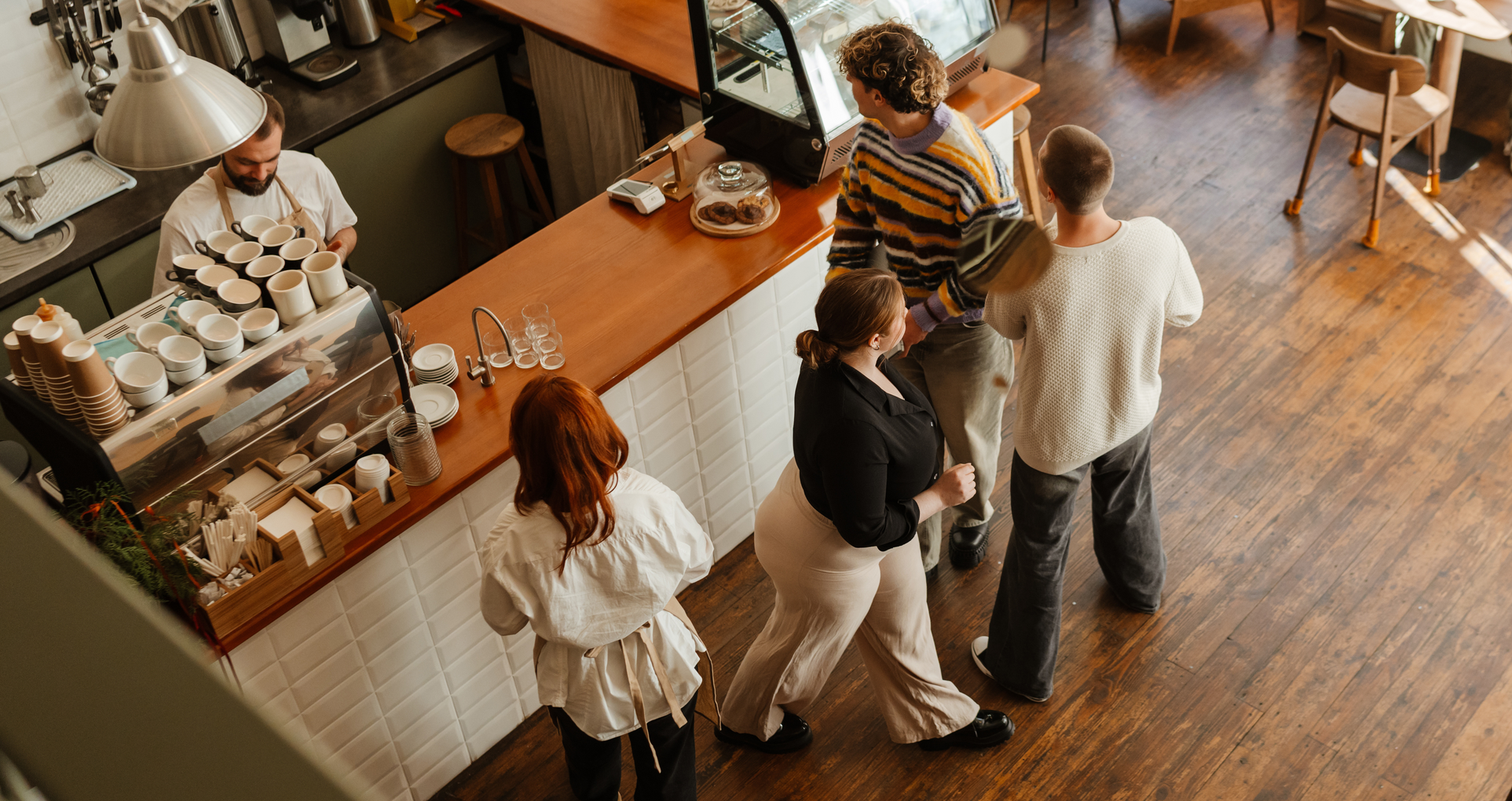
The core of your business’s stability may be found right by the host stand. It’s a small group of regulars that show up again and again, order freely, and treat your dining room like it’s their own—because in many ways, it is.
New data from Toast and Resy (Q1 2026) puts a number on it: Just 7% of a restaurant's guest base accounts for multiple visits, yet this group could drive up to 50% of total order volume.1 Half of everything your restaurant does—every ticket, every server run, every trip to the pass—potentially flows from a fraction of your regulars.
Key takeaways
A small segment of repeat guests—around 7% of your guest base—may be driving up to half your total order volume, making retention a higher-leverage investment than most operators realize.
Acquisition tools like gift cards and search traffic skew heavily toward one-time visitors. Without a system for capturing guest data and following up, a good first visit rarely turns into a second.
Regulars spend more per check, tip more generously, and try new menu items at higher rates than first-time guests—but only when they feel at home. Recognition drives that behavior more than rewards do.
Most regulars don’t leave after a single bad experience. They drift away after gradual declines in food quality, service warmth, or value—which means retention is an ongoing operational commitment, not a one-time fix.
Knowing who your regulars are starts with having guest data in the first place. Visit frequency, spend per visit, and loyalty enrollment are the most reliable signals—and reachability is what makes any retention strategy actionable.
Why do a small group of regulars drive up to 50% of revenue?
Consider two guests who both spend $60 on a Saturday night. One is a first-timer who found you on Google. The other has been in four times this year. On paper, that Saturday looks identical. But the second guest already paid their acquisition cost three visits ago. They show up already won over, looking forward to ordering their favorite item from the menu.
Think of your revenue as a pipeline. Marketing brings people through the door, but the return on that investment compounds as guests keep coming back. Acquisition cost is a one-time expense; retention is where it pays off. When just 7% of your guest base is generating up to half your order volume, small improvements in restaurant customer retention have outsized effects. Keeping one more regular per shift—or pulling a drifting guest back into rotation—carries a different financial weight than acquiring a new one.
Regulars also visit more often and spend more when they do. Toast survey data2 (April 2026, 1,500 U.S. adults who dine out or order at least twice monthly) found that 34% of regulars report spending more per check when they feel at home. Familiarity with the menu reduces ordering hesitation, making high‑margin specials an easier sell. Our survey also found that regulars are 80% more likely to try a new menu item than a first‑time guest. Maybe they’ll add an appetizer and a second round—without needing to be talked into any of it.
The tip line reflects that comfort, too. According to Toast survey data, 77% of regulars tip more at places where they feel known, with many leaving an extra 10% to 15% on top of their standard gratuity. That’s money your staff earns simply because you’ve elevated the customer experience restaurant guests remember.
Why isn’t acquisition alone enough to grow sustainably?
There’s a tendency in restaurant marketing to keep the focus on growth: spend on ads, fill seats, repeat. That model works at the top of the customer journey restaurant—awareness, discovery, first visits—but it creates a problem if there’s no system for what happens next.
Gift cards, for instance, struggle to build long-term relationships: 57% of orders on the Toast platform are anonymous, meaning there’s no guest data to power a follow-up. Referrals from search engines skew toward one-time visitors, too, with 83% of search-driven orders in Toast’s data coming from guests who hadn’t ordered before.
Acquisition is a constant pressure, and it should be. New guests matter. But if 50% of your revenue is riding on 7% of your guest base, it’s worth paying attention to.
How do I identify the 7% driving up to 50% of revenue?
Visit frequency. Pull your guest list and sort by number of visits over the past 90 days. The guests with three or more visits in that window are your working definition of a regular. This cohort is small, but the revenue concentration tends to be steep.
Spend per visit, not just total spend. A guest who comes in twice and drops $200 each time is different from a guest who comes in ten times and spends $40. Both matter, but for different reasons. Look at average check size alongside frequency to understand the full picture.
Loyalty enrollment. Guests in your loyalty program are already raising their hand. Even if they don’t visit at the highest frequency, they’ve opted into a relationship, and they’re reachable, which matters for everything that comes next.
Once you know who they are, you can start treating them accordingly.
What retention strategies keep regulars coming back?
Retention happens at two levels: the operational and the personal. Both matter, and neither works well without the other.
At the operational level, consistency is the baseline. According to Toast survey data, 43% of diners who stopped visiting a restaurant they once considered a regular spot cited gradual regressions as the reason—a decline in food quality (31%), price increases (22%), or a drop in service (15%). Regulars don’t leave after one bad experience, but a pattern of small ones. Maintaining the quality that made them regulars in the first place is the most fundamental retention strategy.
At the personal level, recognition does the work that consistency alone can’t. Toast survey data found that 48% of guests say being remembered—by name, by usual order, by the fact that they’ve been there before—is what makes them feel most valued. That’s more than double the share who said points-based rewards mattered most. Yet only 30% say they always receive that level of recognition at the places they visit most.
The Regulars Report describes the guest journey in terms of a lifecycle: from discovery to recognition to habit. The transition from one-time visitor to regular tends to happen in the middle of that arc, when a guest first feels that the restaurant knows them.
What this means for restaurant operators
Knowing who your regulars are, being able to reach them, and giving them a reason to come back tends to produce a more stable business than one built primarily on acquisition. It starts with having guest data in the first place: a name attached to an order, an email that powers a follow-up, a loyalty enrollment that turns an anonymous visit into a trackable relationship.
The Regulars Report, produced in partnership with Resy, goes deeper on the full lifecycle of a regular—how guests find you, what keeps them coming back, and what finally drives them away. If 7% of your guest base is doing this much work, it’s worth understanding exactly who they are. Read the full report to get all of the insights.
免责声明:此信息仅作为一般性参考,发布并不构成认可。Toast 不保证本内容中包含的任何信息、文本、图形、链接或其他项目的准确性或完整性。Toast 不保证如果您遵循本文的任何建议,就能取得任何特定结果。您可能需要咨询专业人士,如律师、会计师或商业顾问,以获取针对您情况的具体建议。